Kirjojen hintavertailu. Mukana 12 390 323 kirjaa ja 12 kauppaa.

Kirjailija

Helen Pilcher

Kirjat ja teokset yhdessä paikassa: 14 kirjaa, julkaisuja vuosilta 2017-2026, suosituimpien joukossa This Book May Cause Side Effects: The Curious and Dangerous Power of the Nocebo Effect, Placebo's Evil Twin. Vertaile teosten hintoja ja tarkista saatavuus suomalaisista kirjakaupoista.

14 kirjaa

Kirjojen julkaisuhaarukka 2017-2026.

This Book May Cause Side Effects: The Curious and Dangerous Power of the Nocebo Effect, Placebo's Evil Twin
In This Book May Cause Side Effects, Dr. Helen Pilcher explores the "nocebo" effect--the shadow side of the placebo--and shows how our convictions can sometimes quite literally harm us Take the COVID vaccine. If you experienced side effects from your COVID vaccine, there is a 76% chance that these were caused by your belief that you would experience them--not by the mRNA circulating your system. Or, even more extreme, take the case of Sam Shoeman: Although his diagnosis of late-stage esophageal cancer turned out to be erroneous, he was nonetheless dead in months. The power of words, especially from health-care providers, is so formidable that even a wrong diagnosis can actually kill. Our health, or lack of it, is as much about our expectations about illness and its causes as it about damaged cells or wayward hormones. And because we can never fully step outside our cultural context, it's only by understanding these effects that we can hope to prevent them. This Book May Cause Side Effects explores a range of contemporary and historical examples of the nocebo effect, from "hex deaths" to TikTok "illfluencers" to functional neurological disorders, or real illnesses with real symptoms that nonetheless lack any kind of physical basis. Although the nocebo effect has always existed, the advent of the Internet has accelerated its spread. Thankfully, though, Dr. Helen Pilcher also walks us through steps we can take individually and culturally to avoid invoking the nocebo, like reevaluating our relationship to technology, setting up risk-minimizing guidelines in health-care settings, and even crowbarring open-label placebo therapies and nocebo-blocking medicines into the pharmacological toolkit. This Book May Cause Side Effects tells us that though our own minds construct the nocebo effect, it is also in our power to stop it.

This Book May Cause Side Effects

This Book May Cause Side Effects

Helen Pilcher

Atlantic Books
2026
sidottu
Illness is not simply a matter of biology. Our thoughts, conscious or otherwise, can make us feel pain or become unwell. If you experienced side effects from your Covid vaccine, the chances are that these were caused by your belief that you would experience them. When a nurse tells you 'this is going to hurt', it generally does - but perhaps it shouldn't. In this revelatory study, neuroscientist Helen Pilcher explores the hidden impact of the 'nocebo effect' - the placebo's evil twin. Medical studies have proven the nocebo effect to cause pain, nausea, paralysis, seizures, and even blindness. The nocebo effect impacts how we grow sick and grow old, explains why people who don't have food allergies have dietary intolerances, and why adults and teenagers are equally susceptible to catching tics through social media. From Havana Syndrome to hex deaths, chronic pain and mystery illnesses, this book explains what happens when illness, psychology and society meet - and shows us what we can do to become less ill and more well.
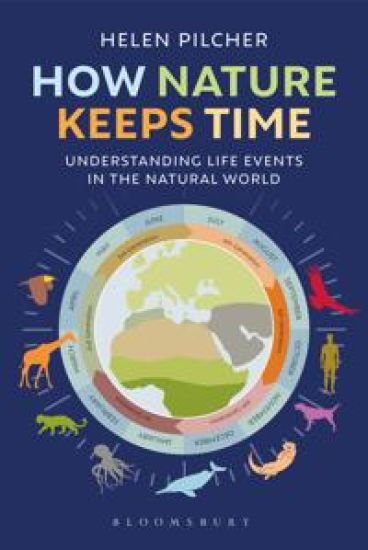
How Nature Keeps Time

How Nature Keeps Time

Helen Pilcher

BLOOMSBURY PUBLISHING PLC
2023
sidottu
An accessible and thought-provoking introduction to timespans in the natural world, featuring more than 80 beautifully designed diagrams and charts.Which organisms live the longest? How does the natural world recover from wildfires? How long do eggs take to hatch? What are the world’s fastest- and slowest- growing plants? Which species invest the most in parental care?The graphic number line is a potent pattern that explains much of our world, from the life cycle of immortal jellyfish to the perfect amount of time for a ‘good sleep’. Beautifully illustrated with reader-friendly infographics and stunning colour photography, How Nature Keeps Time visually maps the amounts of time bounded by growth, distance, age, reproduction, sleep, death and other key behaviours. Join science and comedy writer Helen Pilcher as she examines a broad range of species from across the world and throughout time. As our natural world draws our attention to its plight, this fascinating book offers a calm, clear-thinking series of visual explanations based on the ultimate objective measure – time.
The Time Nature Keeps: A Visual Guide to the Cycles and Time Spans of the Natural World
Take a visual journey of discovery through the animal and plant kingdoms--and uncover the extraordinary rhythms of nature Here are the answers to all kinds of curious questions, including: How long do eggs take to hatch? Do dogs really need more sleep than humans? What are the world's fastest- and slowest-growing plants? And many more These infographics shed light on the truly remarkable range of the natural world--how plants and animals grow and age, sleep and migrate, and reproduce and die. Spanning ideas both big and small--from evolution to animal behavior--The Time Nature Keeps is a visual trove of nature's clocks that brings the world's cadences to life before our eyes.
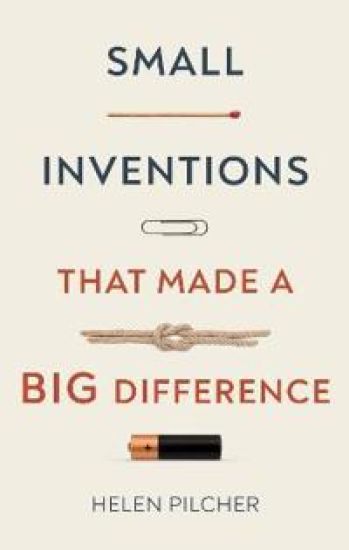
Small Inventions That Made a Big Difference

Small Inventions That Made a Big Difference

Helen Pilcher

Welbeck Publishing Group
2021
sidottu
Pockets, matches, spectacles, postage stamps. Whether it's the stitches that hold our clothes together or the syringes that deliver life-saving vaccines, small things really do make a big difference. Yet these modest but essential components of everyday life are often overlooked.Science and comedy writer Helen Pilcher shares the unexpected stories of 50 humble innovations – from the accidental soldering of two bits of metal that created the pacemaker, to the eighteenth-century sea captain whose ingenious invention paved the way for the filming of Star Wars – and celebrates the joy of the small yet mighty.
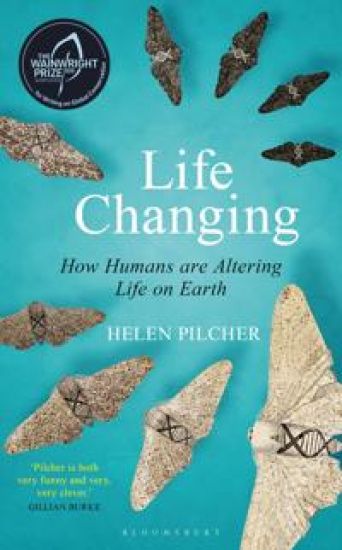
Life Changing

Life Changing

Helen Pilcher

Bloomsbury Sigma
2021
nidottu
SHORTLISTED FOR THE WAINWRIGHT PRIZE FOR WRITING ON GLOBAL CONSERVATION 'Pilcher is both very funny and very, very clever.' Gillian Burke 'Richly entertaining throughout.' Sunday Times For the last three billion years or so, life on Earth was shaped by natural forces. Evolution tended to happen slowly, with species crafted across millennia. Then, a few hundred thousand years ago, along came a bolshie, big-brained, bipedal primate we now call Homo sapiens, and with that, the Earth’s natural history came to an abrupt end. We are now living through the post-natural phase, where humans have become the leading force shaping evolution. This thought-provoking book considers the many ways that we’ve altered the DNA of living things and changed the fate of life on earth. We have carved chihuahuas from wolves and fancy chickens from jungle fowl. We’ve added spider genes to goats and coral genes to tropical fish. It’s possible to buy genetically-modified pets, eat genetically-modified fish and watch cloned ponies thunder up and down the polo field. Now, as our global dominance grows, our influence extends far beyond these species. As we warm our world and radically reshape the biosphere, we affect the evolution of all living things, near and far, from the emergence of novel hybrids such as the pizzly bear, to the entirely new strains of animals and plants that are evolving at breakneck speed to cope with their altered environment. In Life Changing, Helen introduces us to these post-natural creations and talks to the scientists who create, study and tend to them. At a time when the future of so many species is uncertain, we meet some of the conservationists seeking to steer evolution onto firmer footings with novel methods like the ‘spermcopter’, coral IVF and plans to release wild elephants into Denmark. Helen explores the changing relationship between humans and the natural world, and reveals how, with evidence-based thinking, humans can help life change for the better.
Visual Learning: Biology: An Illustrated Guide for All Ages

Visual Learning: Biology: An Illustrated Guide for All Ages

Barron's Educational Series; Helen Pilcher

Barrons Educational Services
2020
nidottu
Barron's new Visual Learning series breaks down complex science concepts into clear, captivating illustrations for the visual learner With large, colorful graphics, including maps, diagrams, and labeled illustrations and clear supporting text, Visual Learning: Biology is an invaluable resource for readers of all ages who want to learn science in an easy and engaging way. Learn key biology topics including: CellsGeneticsMetabolismPlant and animal structure and functionHuman health and diseaseEcologyBiology in the 21st century, and much more.
The Pocket Book of Garden Experiments

The Pocket Book of Garden Experiments

Helen Pilcher

Bloomsbury Wildlife
2020
sidottu
A beautifully designed activity book filled with fascinating garden experimentsWith 80 experiments for the whole family to discover and enjoy,The Pocket Book of Garden Experiments contains easy-to-follow instructions for activities that will stretch your imagination and bring out your inner scientist.- Make an ecosystem in a jar- Find out why leaves change colour- Turn potatoes into slime- Calculate the heights of trees- Make a sound map of your gardenEach experiment takes inspiration from the natural world and the fascinating things that live in it.
Mind Maps: Biology

Mind Maps: Biology

Helen Pilcher

The History Press Ltd
2020
nidottu
Biology is the natural science that studies life on our planet: from fungi to fossils and ecosystems to extremophiles, there is a whole world waiting to be discovered.Mind Maps: Biology helps you to understand the natural world and to learn its language by exploring ten mind maps, which are powerful tools for visual learning and understanding. Complex ideas are explained using text and illustrations that are easy to follow. Featuring specially commissioned, hand-drawn maps, diagrams and doodles, together with an expert analysis of concepts, this book provides a wealth of visual information across a range of complex subjects.
Bring Back the King

Bring Back the King

Helen Pilcher

Bloomsbury Sigma
2017
nidottu
If you could bring back just one animal from the past, what would you choose? It can be anyone or anything from history, from the King of the Dinosaurs, T. rex, to the King of Rock ‘n’ Roll, Elvis Presley, and beyond. De-extinction – the ability to bring extinct species back to life – is fast becoming reality. Around the globe, scientists are trying to de-extinct all manner of animals, including the woolly mammoth, the passenger pigeon and a bizarre species of flatulent frog. But de-extinction is more than just bringing back the dead. It’s a science that can be used to save species, shape evolution and sculpt the future of life on our planet. In Bring Back the King, scientist and comedy writer Helen Pilcher goes on a quest to identify the perfect de-extinction candidate. Along the way, she asks if Elvis could be recreated from the DNA inside a pickled wart, investigates whether it’s possible to raise a pet dodo, and considers the odds of a 21st century Neanderthal turning heads on public transport. Pondering the practicalities and the point of de-extinction, Bring Back the King is a witty and wry exploration of what is bound to become one of the hottest topics in conservation – if not in science as a whole – in the years to come. READ THIS BOOK – the King commands it.