Kirjojen hintavertailu. Mukana 12 317 362 kirjaa ja 12 kauppaa.

Kirjailija

Helen Pluckrose

Kirjat ja teokset yhdessä paikassa: 8 kirjaa, julkaisuja vuosilta 2020-2024, suosituimpien joukossa Cyniska teorier : så görs allt till en fråga om ras, genus och identitet - och blir skadligt för alla. Vertaile teosten hintoja ja tarkista saatavuus suomalaisista kirjakaupoista.

8 kirjaa

Kirjojen julkaisuhaarukka 2020-2024.

The Counterweight Handbook

The Counterweight Handbook

Helen Pluckrose

Swift Press
2024
pokkari
Diversity, equity and inclusion programmes have the admirable goal of creating a welcoming environment for everyone. Increasingly, however, people are realising that the way they are commonly practised isn’t simply an extension of past civil rights movements. Instead, they’re often intertwined with Critical Social Justice ideology, which imposes its principles and punishes any disagreement. Mild questions about Critical Social Justice claims – like all white people being racists or all minorities being oppressed, or sex differences having no biological basis – are met with curt commands by DEI trainers and HR officers: ‘Educate yourself,’ ‘Do the work,’ ‘Listen and learn.’ Advancements at work and school often depend on agreeing with these beliefs. Critical Social Justice ideology poses a real threat to rights and democracy, yet speaking out risks social backlash. When choosing between compliance and ethical opposition, what’s the right path? Based on the author’s years of experience studying, exposing and fighting Critical Social Justice ideology and advising people and organisations struggling with it, The Counterweight Handbook is designed to help people address Critical Social Justice problems in the most ethical and effective way possible.
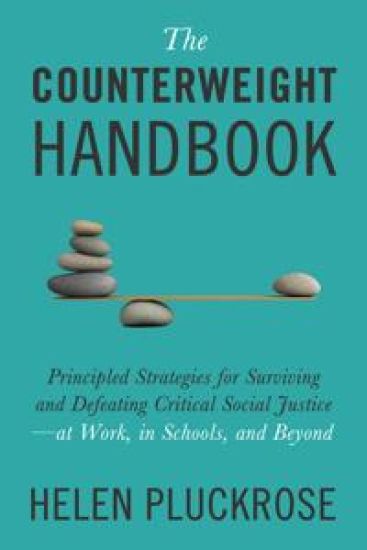
The Counterweight Handbook

The Counterweight Handbook

Helen Pluckrose

Pitchstone Publishing
2023
sidottu
Over the last several years, organizations and institutions throughout the West—both public and private—have adopted comprehensive diversity, equity, and inclusion policies and mandated new forms of employee and student training on antiracism, unconscious bias, gender diversity, cultural sensitivity, and related topics. The stated goals of these programs are often reasonable if not noble—to create a more welcoming space and inclusive environment for all. But such training, when based on the activist ideology known as Critical Social Justice, crosses an illiberal line when participants are required to affirm beliefs they do not hold. Indeed, the mildest questions about or objections to common teachings in these sessions—that all white people are racists, that all underrepresented minorities are oppressed or useful tools of the majority, that sex and gender differences have no biological basis—are regularly met with pat commands: "Educate yourself," "Do the work," "Listen and learn."At work, raises, promotions, and even future employment may well depend on one's nodding approval during such training. At school, grades, nominations, and awards may be contingent upon one's active agreement with these ideological beliefs. When faced with such a predicament—between silent submission and risky if ethical opposition—what is a person to do?The Counterweight Handbook provides individuals with a practical and easily navigable guide to understanding and addressing the issues that are likely to arise when this activist ideology is implemented in their organization or institution. It also teaches them what to do when they are asked to affirm their commitment to beliefs they simply do not hold, undergo training in an ideology they cannot support, or submit themselves to antiscientific testing and retraining of their "unconscious" minds. It is for everyone who wishes to push back against the hostile work and educational environments such training inevitably creates—or who fears being fired, censored, or cancelled for their sincere beliefs and principled convictions.
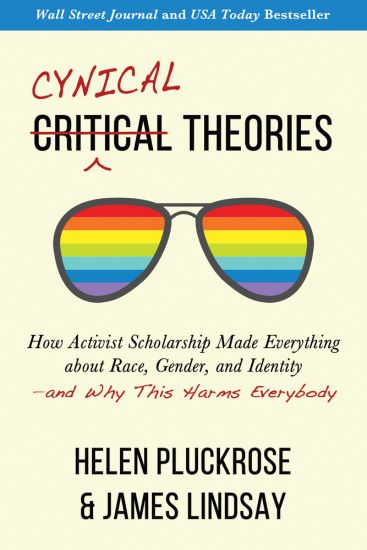
Cynical Theories

Cynical Theories

James Lindsay; Helen Pluckrose

Pitchstone Publishing
2022
pokkari
Wall Street Journal, USA Today, and Publishers Weekly Bestseller! Times, Sunday Times, and Financial Times Book-of-the-Year Selection! Have you heard that language is violence and that science is sexist? Have you read that certain people shouldn't practice yoga or cook Chinese food? Or been told that being obese is healthy, that there is no such thing as biological sex, or that only white people can be racist? Are you confused by these ideas, and do you wonder how they have managed so quickly to challenge the very logic of Western society? In this probing and intrepid volume, Helen Pluckrose and James Lindsay document the evolution of the dogma that informs these ideas, from its coarse origins in French postmodernism to its refinement within activist academic fields. Today this dogma is recognizable as much by its effects, such as cancel culture and social-media dogpiles, as by its tenets, which are all too often embraced as axiomatic in mainstream media: knowledge is a social construct; science and reason are tools of oppression; all human interactions are sites of oppressive power play; and language is dangerous. As Pluckrose and Lindsay warn, the unchecked proliferation of these anti-Enlightenment beliefs present a threat not only to liberal democracy but also to modernity itself. While acknowledging the need to challenge the complacency of those who think a just society has been fully achieved, Pluckrose and Lindsay break down how this often-radical activist scholarship does far more harm than good, not least to those marginalized communities it claims to champion. They also detail its alarmingly inconsistent and illiberal ethics. Only through a proper understanding of the evolution of these ideas, they conclude, can those who value science, reason, and consistently liberal ethics successfully challenge this harmful and authoritarian orthodoxy—in the academy, in culture, and beyond.
Social (In)justice

Social (In)justice

Helen Pluckrose; James Lindsay

Pitchstone Publishing
2022
sidottu
This is a book about ideas. Specifically, this is a book about the evolution of a certain set of ideas, and how these ideas have come to dominate every important discussion about race, gender, and identity today. Have you heard someone refer to language as literal violence, or say that science is sexist? Or declare that being obese is healthy, or that there is no such thing as biological sex? Or that valuing hard work, individualism, and even punctuality is evidence of white supremacy? Or that only certain people—depending on their race, gender, or identity—should be allowed to wear certain clothes or hairstyles, cook certain foods, write certain characters, or play certain roles? If so, then you’ve encountered these ideas. As this reader-friendly adaptation of the internationally acclaimed bestseller Cynical Theories explains, however, the truth is that many of these ideas are recent inventions, are not grounded in scientific fact, and do not account for the sheer complexity of social reality and human experience. In fact, these beliefs often deny and even undermine the very principles on which liberal democratic societies are built—the very ideas that have allowed for unprecedented human progress, lifted standards of living across the world, and given us the opportunity and right to consider and debate these ideas in the first place! Ultimately, this is a book about what it truly means to have a just and equal society—and how best to get there.Cynical Theories is a Wall Street Journal, USA Today, and Publishers Weekly bestseller. Named a 2020 Book of the Year by The Times, Sunday Times, and Financial Times, it is being translated into more than fifteen languages.
Cyniska teorier : så görs allt till en fråga om ras, genus och identitet - och blir skadligt för alla
Har du hört att ord kan utgöra våld eller att vetenskap är sexistisk? Har du läst att vissa människor inte borde utöva yoga eller laga kinesisk mat för det är kulturell appropriering? Eller fått höra att det kan vara hälsosamt att vara överviktigt, att det inte finns något sådant som biologiskt kön eller att bara vita människor kan vara rasistiska? Är du förvirrad av dessa idéer och undrar över hur de så framgångsrikt lyckats utmana det västerländska samhällets sunda förnuft?Helen Pluckrose och James Lindsay berättar hur tillämpad kritisk teori, den dogmatiska lära som ligger till grund för dessa idéer har utvecklats – från det rudimentära ursprunget i fransk postmodernism och Frankfurtskola till dess förverkligande inom aktivistiska akademiska discipliner. Idag kan dessa teorier kännas igen lika mycket genom deras manifestationer, som t ex cancel culture, deplatforming och uthängning i sociala media, som av dess principer, vilka alltför ofta omfamnas som oproblematiska självklarheter i media: kunskap är en social konstruktion, vetenskap och förnuft är verktyg för förtryck eller all mänsklig interaktion handlar ytterst om förtryckande maktutövning, och ord är farliga.Författarna varnar för den okontrollerade spridningen av dessa idéer sprungna ur motupplysningen, eftersom de utgör ett hot – inte bara mot den liberala demokratin – utan även mot moderniteten i sig och dess humanistiska och vetenskapliga landvinningar. Samtidigt som de erkänner behovet av att ifrågasätta självgodheten hos dem som anser att vi redan skulle ha uppnått ett rättvist samhälle fullt ut, visar Pluckrose och Lindsay hur aktivisterna ofta gör betydligt mer skada än nytta. Inte minst för just de marginaliserade grupper som de påstår sig företräda. Författarna gör också reda för den alarmerande inkonsekventa och intoleranta moral som förespråkas.Endast genom en korrekt förståelse av dessa idéers innehåll och framväxt kan de som värdesätter vetenskap, förnuft och konsekvent liberal etik, med framgång utmana denna destruktiva och auktoritära ortodoxi inom akademin och samhället i stort
Cynical Theories

Cynical Theories

Helen Pluckrose; James Lindsay

Swift Press
2021
pokkari
BOOK OF THE YEAR in The Times, the Sunday Times and the Financial Times Have you heard that language is violence and that science is sexist? Or been told that being obese is healthy, that there is no such thing as biological sex, or that only white people can be racist? Are you confused by these ideas, and do you wonder how they have managed so quickly to challenge the very logic of Western society? Helen Pluckrose and James Lindsay document the evolution of the dogma behind these ideas, from its origins in French postmodernism to its refinement within activist academic fields. Today this dogma is recognisable as much by its effects, such as cancel culture and social-media pile-ons, as by its assertions, which are all too often taken as read: knowledge is a social construct; science and reason are tools of oppression; all human interactions are sites of oppressive power play; and language is dangerous. As they warn, the unchecked proliferation of these beliefs present a threat to liberal democracy. While acknowledging the need to challenge the complacency of those who think a just society has been fully achieved, Pluckrose and Lindsay break down how often-radical activist scholarship does far more harm than good, not least to those marginalised communities it claims to champion.
Cynical Theories

Cynical Theories

Helen Pluckrose; James A Lindsay

Pitchstone Publishing
2020
sidottu
Wall Street Journal, USA Today, and Publishers Weekly Bestseller!Times, Sunday Times, and Financial Times Book-of-the-Year Selection! Have you heard that language is violence and that science is sexist? Have you read that certain people shouldn't practice yoga or cook Chinese food? Or been told that being obese is healthy, that there is no such thing as biological sex, or that only white people can be racist? Are you confused by these ideas, and do you wonder how they have managed so quickly to challenge the very logic of Western society?In this probing and intrepid volume, Helen Pluckrose and James Lindsay document the evolution of the dogma that informs these ideas, from its coarse origins in French postmodernism to its refinement within activist academic fields. Today this dogma is recognizable as much by its effects, such as cancel culture and social-media dogpiles, as by its tenets, which are all too often embraced as axiomatic in mainstream media: knowledge is a social construct; science and reason are tools of oppression; all human interactions are sites of oppressive power play; and language is dangerous. As Pluckrose and Lindsay warn, the unchecked proliferation of these anti-Enlightenment beliefs present a threat not only to liberal democracy but also to modernity itself.While acknowledging the need to challenge the complacency of those who think a just society has been fully achieved, Pluckrose and Lindsay break down how this often-radical activist scholarship does far more harm than good, not least to those marginalized communities it claims to champion. They also detail its alarmingly inconsistent and illiberal ethics. Only through a proper understanding of the evolution of these ideas, they conclude, can those who value science, reason, and consistently liberal ethics successfully challenge this harmful and authoritarian orthodoxy—in the academy, in culture, and beyond.