Kirjojen hintavertailu. Mukana 12 246 273 kirjaa ja 12 kauppaa.

Kirjailija

Helen Rappaport

Kirjat ja teokset yhdessä paikassa: 29 kirjaa, julkaisuja vuosilta 1999-2026, suosituimpien joukossa Ekaterinburg. Vertaile teosten hintoja ja tarkista saatavuus suomalaisista kirjakaupoista.

29 kirjaa

Kirjojen julkaisuhaarukka 1999-2026.

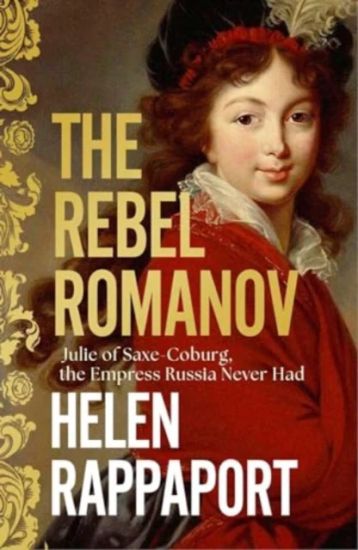
The Rebel Romanov

The Rebel Romanov

Helen Rappaport

SIMON SCHUSTER LTD
2026
pokkari
'What a wonderful book! The storytelling, the research, the deep love of her subject -- this must be the climax of Rappaport's long and illustrious career' Lucy Worsley To Queen Victoria she was Aunt Julie; to Catherine the Great she was Grand Duchess Anna Feodorovna, granddaughter-in-law. This is the story of Princess Juliane-Henriette-Ulrike of Saxe-Coburg, the Rebel Romanov. Born in 1781 in a small impoverished duchy of Germany, Julie's quiet life took a fairy-tale turn when she married into the Russian Imperial Family - the Romanovs. But this world of baroque splendour, of opulent palaces and grandeur, was no happily ever after. Taken to Russia at just fourteen, her marriage was hastily brokered to save the Saxe-Coburg duchy from financial ruin. Her husband, Grand Duke Konstantin, was cruel and abusive, Julie was uprooted from her home, family, language and culture. As Russia and Europe were thrown into tumult by the murder of Emperor Paul and the rise of Napoleon, Julie finally made her escape back to Germany, where she lived for two decades as a social pariah, denied a divorce by the Imperial Family. Forced to give up two illegitimate children to protect her family's honour, she eventually built a life for herself in Switzerland, where she entertained poets and philosophers, regaling them with tales from the Russian court. Helen Rappaport recreates the extraordinary life of this forgotten figure. In doing so she sheds new light on the Romanovs, reveals the sacrifices Julie made to further her family's interests - her brother became king of Belgium, her sister gave birth to Queen Victoria - and investigates the true nature of Julie's relationship with Tsar Alexander I. Rich in history, drama and royal intrigue, Julie's remarkable story is told at last.
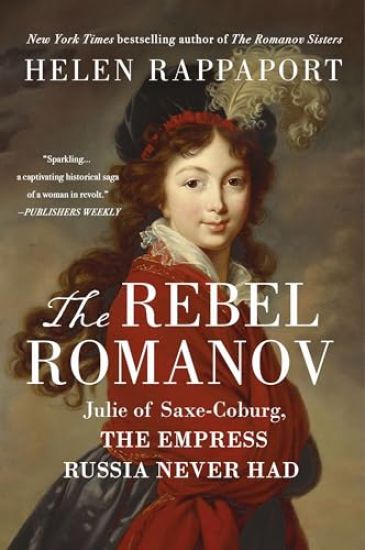
The Rebel Romanov: Julie of Saxe-Coburg, the Empress Russia Never Had
From the New York Times bestselling author of The Romanov Sisters comes the story of a courageous young Imperial Grand Duchess who scandalized Europe in search of freedom. In 1795, Catherine the Great of Russia was in search of a bride for her grandson Constantine, who stood third in line to her throne. In an eerie echo of her own story, Catherine selected an innocent young German princess, Julie of Saxe-Coburg, aunt of the future Queen Victoria. Though Julie had everything a young bride could wish for, she was alone in a court dominated by an aging empress and riven with rivalries, plotting, and gossip--not to mention her brute of a husband, who was tender one moment and violent the next. She longed to leave Russia and her disastrous marriage, but her family in Germany refused to allow her to do so. Desperate for love, Julie allegedly sought consolation in the arms of others. Finally, Tsar Alexander granted her permission to leave in 1801, even though her husband was now heir to the throne. Rootless in Europe, Julie gave birth to two--possibly three--illegitimate children, all of whom she was forced to give up for adoption. Despite entreaties from Constantine to return and provide an heir, she refused, eventually finding love with her own married physician. At a time when many royal brides meekly submitted to disastrous marriages, Julie proved to be a woman ahead of her time, sacrificing her reputation and a life of luxury in exchange for the freedom to live as she wished. The Rebel Romanov is the inspiring tale of a bold woman who, until now, has been ignored by history.
The Rebel Romanov: Julie of Saxe-Coburg, the Empress Russia Never Had
From the New York Times bestselling author of The Romanov Sisters comes the story of a courageous young Imperial Grand Duchess who scandalized Europe in search of freedom. In 1795, Catherine the Great of Russia was in search of a bride for her grandson Constantine, who stood third in line to her throne. In an eerie echo of her own story, Catherine selected an innocent young German princess, Julie of Saxe-Coburg, aunt of the future Queen Victoria. Though Julie had everything a young bride could wish for, she was alone in a court dominated by an aging empress and riven with rivalries, plotting, and gossip--not to mention her brute of a husband, who was tender one moment and violent the next. She longed to leave Russia and her disastrous marriage, but her family in Germany refused to allow her to do so. Desperate for love, Julie allegedly sought consolation in the arms of others. Finally, Tsar Alexander granted her permission to leave in 1801, even though her husband was now heir to the throne. Rootless in Europe, Julie gave birth to two--possibly three--illegitimate children, all of whom she was forced to give up for adoption. Despite entreaties from Constantine to return and provide an heir, she refused, eventually finding love with her own married physician. At a time when many royal brides meekly submitted to disastrous marriages, Julie proved to be a woman ahead of her time, sacrificing her reputation and a life of luxury in exchange for the freedom to live as she wished. The Rebel Romanov is the inspiring tale of a bold woman who, until now, has been ignored by history.
The Rebel Romanov

The Rebel Romanov

Helen Rappaport

SIMON SCHUSTER LTD
2025
sidottu
'What a wonderful book! The storytelling, the research, the deep love of her subject -- this must be the climax of Rappaport's long and illustrious career' Lucy Worsley To Queen Victoria she was Aunt Julie; to Catherine the Great she was Grand Duchess Anna Feodorovna, granddaughter-in-law. This is the story of Princess Juliane-Henriette-Ulrike of Saxe-Coburg, the Rebel Romanov. Born in 1781 in a small impoverished duchy of Germany, Julie's quiet life took a fairy-tale turn when she married into the Russian Imperial Family - the Romanovs. But this world of baroque splendour, of opulent palaces and grandeur, was no happily ever after. Taken to Russia at just fourteen, her marriage was hastily brokered to save the Saxe-Coburg duchy from financial ruin. Her husband, Grand Duke Konstantin, was cruel and abusive, Julie was uprooted from her home, family, language and culture. As Russia and Europe were thrown into tumult by the murder of Emperor Paul and the rise of Napoleon, Julie finally made her escape back to Germany, where she lived for two decades as a social pariah, denied a divorce by the Imperial Family. Forced to give up two illegitimate children to protect her family's honour, she eventually built a life for herself in Switzerland, where she entertained poets and philosophers, regaling them with tales from the Russian court. Helen Rappaport recreates the extraordinary life of this forgotten figure. In doing so she sheds new light on the Romanovs, reveals the sacrifices Julie made to further her family's interests - her brother became king of Belgium, her sister gave birth to Queen Victoria - and investigates the true nature of Julie's relationship with Tsar Alexander I. Rich in history, drama and royal intrigue, Julie's remarkable story is told at last.
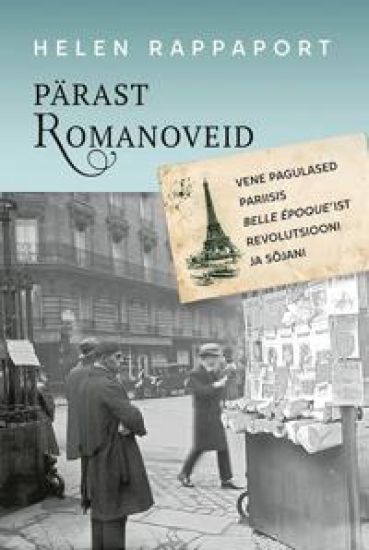
Pärast romanoveid. Vene pagulased Pariisis belle epoque'ist revolutsiooni ja sojani
Pariisi on ikka peetud erilise kultuurieluga, heade veinide ja toitude ning viimaste moodide linnaks. Samas on see olnud pelgupaik neile, kes põgenevad tagakiusamise eest, ja iseäranis palju tuli neid Pariisi enne ja pärast revolutsiooni Venemaal ning Romanovite kukutamist. Aastaid olid vene aristokraadid nautinud kõike seda, mida belle epoque'i ajastu Pariis pakkus. Pariisis saatis suur menu ka Sergei Djagilevi truppi Ballets Russes ja siit sai alguse helilooja Igor Stravinski karjäär. Bolshevistlik riigipööre Venemaal sundis aga kümneid tuhandeid venelasi kodumaalt puupaljana lahkuma. Palju niisuguseid pagulasi jõudis (sageli pärast pikki eksirännakuid) Prantsusmaale ja eriti Pariisi. Siin püüti kõikvõimalikel viisidel elatist teenida, aga kõige sagedamini tuli meestel leppida tööga tehastes või taksojuhi ametit pidades, palju vene pagulasnaisi leidis aga tööd moetööstuses õmblejate, aga ka modellide ja moeloojatena. Andekad haritlased, kunstnikud, kirjanikud ja filosoofid olid sunnitud elama peost suhu, sest ainult üksikutele, kas kõige andekamatele või siis kõige ettevõtlikumatele, naeratas õnn. Nii algas siin Marc Chagalli edukas kunstnikutee, Pariis sai koduks kogu maailma ooperilavad vallutanud Fjodor Shaljapinile. Osa Venemaal kodusõjas bolshevike vastu võidelnud pagulastest ei kaotanud lootust, et kommunistlik rezhiim Venemaal õnnestub kukutada, ja püüdis ka ise midagi korda saata. Pagulaste enamiku osaks aga jäigi vaesus ja suur igatsus lootusetult kaotatud kodumaa järele.Helen Rappaport (snd 1947) on Briti ajaloolane ja kirjanik. Ta õppis vene keelt ja ajalugu Leedsi ülikoolis, kus osales ka ülikooli teatriringis. Kuni 1980. aastate lõpuni tegi ta näitlejana karjääri Briti televisioonis ja filmides, siis aga loobus näitlemisest oma teise armastuse, ajaloo kasuks. Ajaloolasena on ta spetsialiseerunud Victoria ajastule ja revolutsioonilisele Venemaale. Eesti keeles on temalt varem ilmunud "Jekaterinburg. Romanovite viimased päevad" (2009), "Neli õde. Suurvürstinnade Romanovite kadumaläinud elud" (2016), "Revolutsiooni küüsis. Petrograd 1917" (2017) ja "Võidujooks Romanovite päästmise nimel. Tõde salajaste plaanide taga Venemaa keiserliku perekonna päästmiseks" (2019).
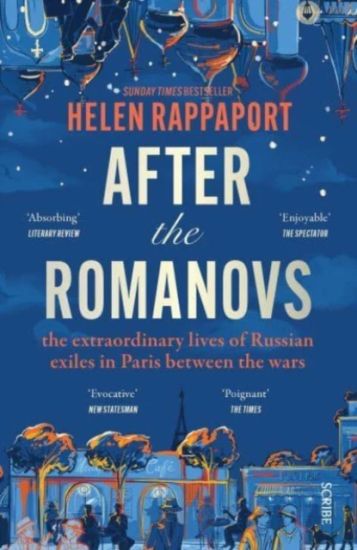
After the Romanovs: Russian Exiles in Paris from the Belle Époque Through Revolution and War
From Helen Rappaport, the New York Times bestselling author of The Romanov Sisters comes After the Romanovs, the story of the Russian aristocrats, artists, and intellectuals who sought freedom and refuge in the City of Light. Paris has always been a city of cultural excellence, fine wine and food, and the latest fashions. But it has also been a place of refuge for those fleeing persecution, never more so than before and after the Russian Revolution and the fall of the Romanov dynasty. For years, Russian aristocrats had enjoyed all that Belle poque Paris had to offer, spending lavishly when they visited. It was a place of artistic experimentation, such as Diaghilev's Ballets Russes. But the brutality of the Bolshevik takeover forced Russians of all types to flee their homeland, sometimes leaving with only the clothes on their backs. Arriving in Paris, former princes could be seen driving taxicabs, while their wives who could sew worked for the fashion houses, their unique Russian style serving as inspiration for designers like Coco Chanel. Talented intellectuals, artists, poets, philosophers, and writers struggled in exile, eking out a living at menial jobs. Some, like Bunin, Chagall and Stravinsky, encountered great success in the same Paris that welcomed Americans like Fitzgerald and Hemingway. Political activists sought to overthrow the Bolshevik regime from afar, while double agents from both sides plotted espionage and assassination. Others became trapped in a cycle of poverty and their all-consuming homesickness for Russia, the homeland they had been forced to abandon. This is their story.
After the Romanovs

After the Romanovs

Helen Rappaport

Scribe Publications
2023
pokkari
A TLS AND PROSPECT BOOK OF THE YEAR The scintillating story of the Russian aristocrats, artists, and intellectuals who sought refuge in interwar Paris. The fall of the Romanov dynasty in 1917 forced thousands of Russians to flee their homeland with only the clothes on their backs. Many came to France’s glittering capital, Paris. Former princes drove taxicabs, while their wives found work in the fashion houses. Intellectuals, artists, poets, philosophers, and writers eked out a living at menial jobs; some found success until the economic downturn of the 1930s hit. In exile, White Russians sought to overthrow the Bolshevik regime from afar, and double agents plotted from both sides. Many Russians became trapped in a cycle of poverty and their all-consuming homesickness. This is their story.
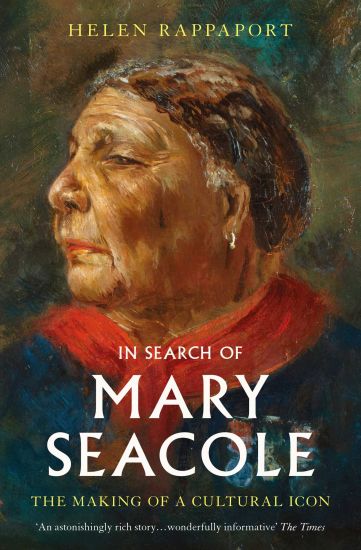
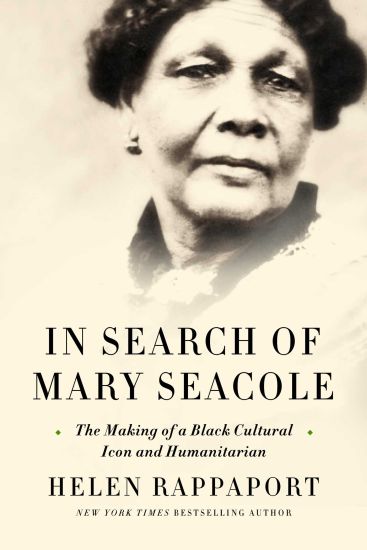
In Search of Mary Seacole: The Making of a Black Cultural Icon and Humanitarian
From New York Times bestselling author Helen Rappaport comes a superb and revealing biography of Mary Seacole that is testament to her remarkable achievements and corrective to the myths that have grown around her. Raised in Jamaica, Mary Seacole first came to England in the 1850s after working in Panama. She wanted to volunteer as a nurse and aide during the Crimean War. When her services were rejected, she financed her own expedition to Balaclava, where her reputation for her nursing--and for her compassion--became almost legendary. Popularly known as 'Mother Seacole', she was the most famous Black celebrity of her generation--an extraordinary achievement in Victorian Britain. She regularly mixed with illustrious royal and military patrons and they, along with grateful war veterans, helped her recover financially when she faced bankruptcy. However, after her death in 1881, she was largely forgotten. More recently, her profile has been revived and her reputation lionized, with a statue of her standing outside St Thomas's Hospital in London and her portrait--rediscovered by the author--now on display in the National Portrait Gallery. In Search of Mary Seacole is the fruit of almost twenty years of research and reveals the truth about Seacole's personal life, her "rivalry" with Florence Nightingale, and other misconceptions. Vivid and moving, In Search of Mary Seacole shows that reality is often more remarkable and more dramatic than the legend.
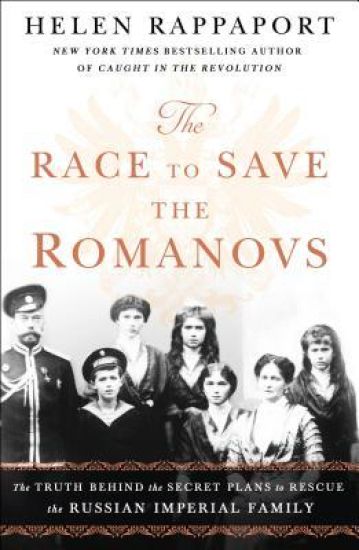
Race to Save the Romanovs

Race to Save the Romanovs

Helen Rappaport

St. Martin's Griffin
2019
pokkari
In this international bestseller investigating the murder of the Russian Imperial Family, Helen Rappaport embarks on a quest to uncover the various plots and plans to save them, why they failed, and who was responsible. The murder of the Romanov family in July 1918 horrified the world, and its aftershocks still reverberate today. In Putin's autocratic Russia, the Revolution itself is considered a crime, and its anniversary was largely ignored. In stark contrast, the centenary of the massacre of the Imperial Family was commemorated in 2018 by a huge ceremony attended by the Patriarch of the Russian Orthodox Church. While the murders themselves have received major attention, what has never been investigated in detail are the various plots and plans behind the scenes to save the family--on the part of their royal relatives, other governments, and Russian monarchists loyal to the Tsar. Rappaport refutes the claim that the fault lies entirely with King George V, as has been the traditional view for the last century. The responsibility for failing the Romanovs must be equally shared. The question of asylum for the Tsar and his family was an extremely complicated issue that presented enormous political, logistical and geographical challenges at a time when Europe was still at war. Like a modern day detective, Helen Rappaport draws on new and never-before-seen sources from archives in the US, Russia, Spain and the UK, creating a powerful account of near misses and close calls with a heartbreaking conclusion. With its up-to-the-minute research, The Race to Save the Romanovs is sure to replace outdated classics as the final word on the fate of the Romanovs.
Race to Save the Romanovs

Race to Save the Romanovs

Helen Rappaport

Random House UK
2019
pokkari
On 17 July 1918, the whole of the Russian Imperial Family was murdered. There were no miraculous escapes. The former Tsar Nicholas, his wife Alexandra, and their children - Olga, Tatiana, Maria, Anastasia and Alexey - were all tragically gunned down in a blaze of bullets.Historian Helen Rappaport sets out to uncover why the Romanovs' European royal relatives and the Allied governments failed to save them. It was not, ever, a simple case of one British King's loss of nerve. In this race against time, many other nations and individuals were facing political and personal challenges of the highest order.In this incredible detective story, Rappaport draws on an unprecedented range of unseen sources, tracking down missing documents, destroyed papers and covert plots to liberate the family by land, sea and even sky. Through countless twists and turns, this revelatory work unpicks many false claims and conspiracies, revealing the fiercest loyalty, bitter rivalries and devastating betrayals as the Romanovs, imprisoned, awaited their fate.A remarkable new work of history from Helen Rappaport, author of Ekaterinburg: The Last Days of the Romanovs.
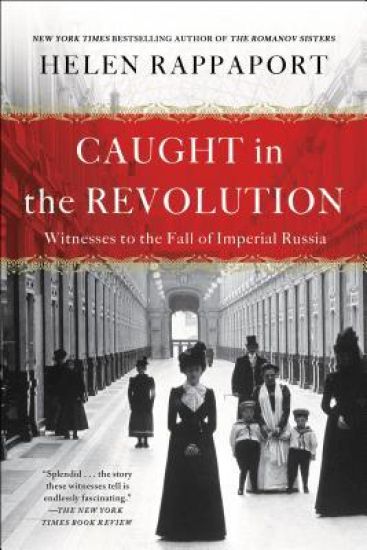
Caught in the Revolution: Witnesses to the Fall of Imperial Russia
From the New York Times bestselling author of The Romanov Sisters, Caught in the Revolution is Helen Rappaport's masterful telling of the outbreak of the Russian Revolution through eye-witness accounts left by foreign nationals who saw the drama unfold. Between the first revolution in February 1917 and Lenin's Bolshevik coup in October, Petrograd (the former St Petersburg) was in turmoil - felt nowhere more keenly than on the fashionable Nevsky Prospekt. There, the foreign visitors who filled hotels, clubs, offices and embassies were acutely aware of the chaos breaking out on their doorsteps and beneath their windows. Among this disparate group were journalists, diplomats, businessmen, bankers, governesses, volunteer nurses and expatriate socialites. Many kept diaries and wrote letters home: from an English nurse who had already survived the sinking of the Titanic; to the black valet of the US Ambassador, far from his native Deep South; to suffragette leader Emmeline Pankhurst, who had come to Petrograd to inspect the indomitable Women's Death Battalion led by Maria Bochkareva. Helen Rappaport draws upon this rich trove of material, much of it previously unpublished, to carry us right up to the action - to see, feel and hear the Revolution as it happened to an assortment of individuals who suddenly felt themselves trapped in a "red madhouse."
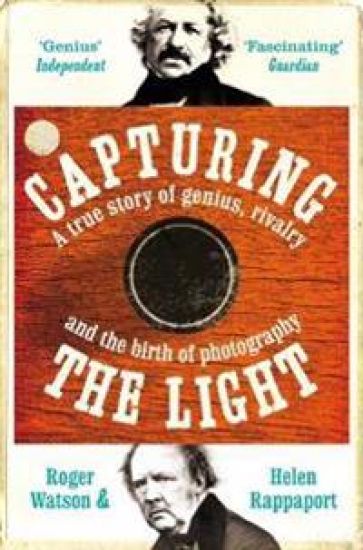
Capturing the Light

Capturing the Light

Roger Watson; Helen Rappaport

Macmillan
2018
pokkari
Capturing the Light starts with a tiny scrap of purple-tinged paper, 176 years old and about the size of a postage stamp. On it you can just make out a tiny, ghostly image of a gothic window, an image so small and perfect that it ‘might be supposed to be the work of some Lilliputian artist’: the world’s first photographic negative. This captivating book traces the lives of two very different men in the 1830s, both racing to be the first to solve one of the world’s oldest problems: how to capture an image and keep it for ever. On the one hand there is Henry Fox Talbot: a quiet, solitary gentleman-amateur tinkering away on his farm in the English countryside. On the other Louis Daguerre, a flamboyant, charismatic French showman in search of fame and fortune. Only one question remains: who will get there first?
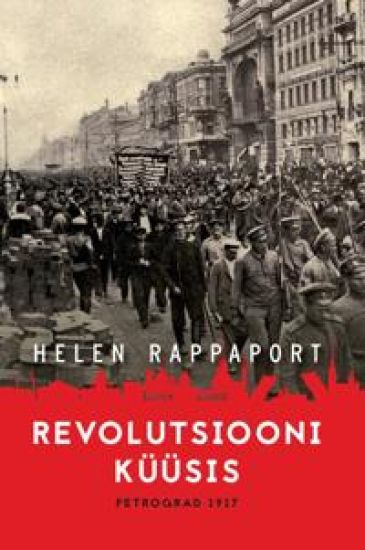
Caught in the Revolution

Caught in the Revolution

Helen Rappaport

Cornerstone
2017
pokkari
Between the first revolution in February 1917, and Lenin's Bolshevik coup in October, Petrograd was in turmoil. Foreign visitors who filled hotels, bars and embassies were acutely aware of the chaos breaking out on their doorsteps. Among them were journalists, diplomats, businessmen, governesses and volunteer nurses.
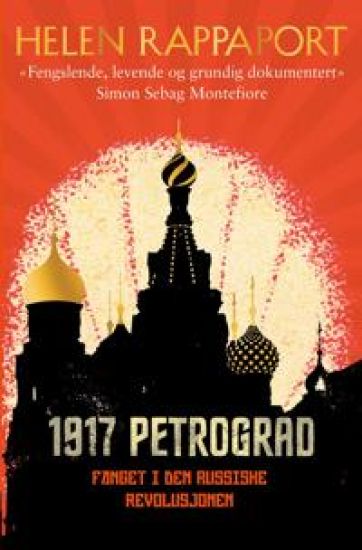
1917 Petrograd: fanget i den russiske revolusjonen
Mellom den første revolusjonen i februar 1917 og Lenins bolsjevik-kupp i oktober samme år var Petrograd (tidligere St. Petersburg) i opprør. Midt i dramaet befant det seg en stor og sammensatt gruppe utlendinger – diplomater, journalister, forretningsmenn, bankierer, guvernanter, frivillige sykepleiere og selskapsløver i utlendighet. Mange skrev dagbok og sendte brev hjem – blant dem en engelsk sykepleier som hadde overlevd «Titanic» og den amerikanske ambassadørens svarte kammertjener. Helen Rappaport baserer fortellingen på dette svært rike materialet, hvorav mye aldri før har vært publisert. Det bringer oss rett inn i de blodige hendelsene, der vi ser, føler og hører revolusjonen slik den artet seg for de som var til stede.Den russiske revolusjonen har 100-årsmarkering i 2017. En bok for alle med interesse for historie og internasjonale samfunnsspørsmål.«En fengslende, levende og grundig dokumentert krønike om den russiske revolusjonen.»Simon Sebag Montefiore" ...spennande fortalt og med mykje dramatikk" Tom Hetland, Bergens Tidende"Denne boken er begavet historieskriving ... et dypdykk i både kjente og mer ukjente kilder - alt i en billedrik kontrastering man sjelden ser maken til." Johan O. Jensen, Adresseavisa«100-årsmarkeringen av den russiske revolusjon vil utløse mange bøker. Det skal godt gjøres å skape noe bedre enn denne høyst originale, grundige og suverent konstruerte fortellingen.»Daily Telegraph
The Romanov Sisters: The Lost Lives of the Daughters of Nicholas and Alexandra
A 12-WEEK NEW YORK TIMES BESTSELLER "Helen Rappaport paints a compelling portrait of the doomed grand duchesses." --People magazine "The public spoke of the sisters in a gentile, superficial manner, but Rappaport captures sections of letters and diary entries to showcase the sisters' thoughtfulness and intelligence." --Publishers Weekly (starred review) From the New York Times bestselling author of The Last Days of the Romanovs and Caught in the Revolution, The Romanov Sisters reveals the untold stories of the four daughters of Nicholas and Alexandra. They were the Princess Dianas of their day--perhaps the most photographed and talked about young royals of the early twentieth century. The four captivating Russian Grand Duchesses--Olga, Tatiana, Maria and Anastasia Romanov--were much admired for their happy dispositions, their looks, the clothes they wore and their privileged lifestyle. Over the years, the story of the four Romanov sisters and their tragic end in a basement at Ekaterinburg in 1918 has clouded our view of them, leading to a mass of sentimental and idealized hagiography. With this treasure trove of diaries and letters from the grand duchesses to their friends and family, we learn that they were intelligent, sensitive and perceptive witnesses to the dark turmoil within their immediate family and the ominous approach of the Russian Revolution, the nightmare that would sweep their world away, and them along with it. The Romanov Sisters sets out to capture the joy as well as the insecurities and poignancy of those young lives against the backdrop of the dying days of late Imperial Russia, World War I and the Russian Revolution. Helen Rappaport aims to present a new and challenging take on the story, drawing extensively on previously unseen or unpublished letters, diaries and archival sources, as well as private collections. It is a book that will surprise people, even aficionados.
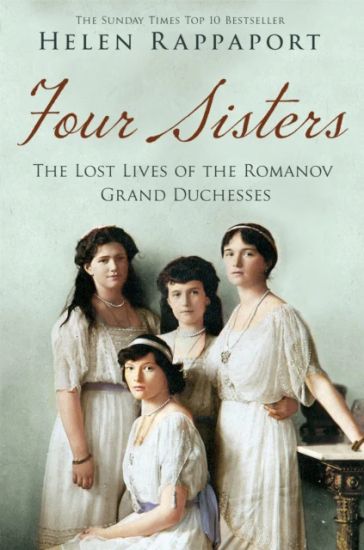
Four Sisters: The Lost Lives of the Romanov Grand Duchesses
The haunting true story of the four daughters of Russia's last Tsar, brutally murdered in 1918. In Four Sisters, acclaimed biographer Helen Rappaport offers readers the most authoritative account yet of the Grand Duchesses Olga, Tatiana, Maria and Anastasia. Drawing on their own letters and diaries, she paints a vivid picture of their lives in the dying days of the Romanov dynasty.We see, almost for the first time, their journey from a childhood of enormous privilege, throughout which they led a very sheltered and largely simple life, to young womanhood – their first romantic crushes, their hopes and dreams, the difficulty of coping with a mother who was a chronic invalid and a haemophiliac brother, and, latterly, the trauma of the revolution and its terrible consequences.Compellingly readable, meticulously researched and deeply moving, Four Sisters gives these young women a voice, and allows their story to resonate for readers almost a century after their death.'An astoundingly intimate tale of domestic life lived in the crucible of power' – Observer
Capturing the Light: The Birth of Photography, a True Story of Genius and Rivalry
An intimate look at the journeys of two men--a gentleman scientist and a visionary artist--as they struggled to capture the world around them, and in the process invented modern photography During the 1830s, in an atmosphere of intense scientific enquiry fostered by the industrial revolution, two quite different men--one in France, one in England--developed their own dramatically different photographic processes in total ignorance of each other's work. These two lone geniuses--Henry Fox Talbot in the seclusion of his English country estate at Lacock Abbey and Louis Daguerre in the heart of post-revolutionary Paris--through diligence, disappointment and sheer hard work overcame extraordinary odds to achieve the one thing man had for centuries been trying to do--to solve the ancient puzzle of how to capture the light and in so doing make nature 'paint its own portrait'. With the creation of their two radically different processes--the Daguerreotype and the Talbotype--these two giants of early photography changed the world and how we see it. Drawing on a wide range of original, contemporary sources and featuring plates in colour, sepia and black and white, many of them rare or previously unseen, Capturing the Light by Roger Watson and Helen Rappaport charts an extraordinary tale of genius, rivalry and human resourcefulness in the quest to produce the world's first photograph.