Kirjojen hintavertailu. Mukana 12 595 353 kirjaa ja 12 kauppaa.
Kirjailija
Helen Smith
Kirjat ja teokset yhdessä paikassa: 27 kirjaa, julkaisuja vuosilta 2010-2025, suosituimpien joukossa S.P.I.R.I.T.. Vertaile teosten hintoja ja tarkista saatavuus suomalaisista kirjakaupoista.
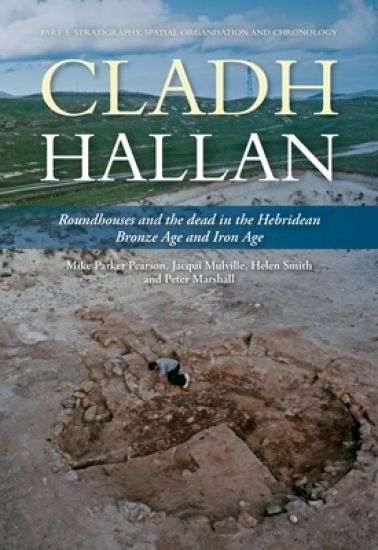
This first of two volumes presents the archaeological evidence of a long sequence of settlement and funerary activity from the Beaker period (Early Bronze Age c. 2000 BC) to the Early Iron Age (c. 500 BC) at the unusually long-occupied site of Cladh Hallan on South Uist in the Western Isles of Scotland. Particular highlights of its sequence are a cremation burial ground and pyre site of the 18th–16th centuries BC and a row of three Late Bronze Age sunken-floored roundhouses constructed in the 10th century BC. Beneath these roundhouses, four inhumation graves contained skeletons, two of which were remains of composite collections of body parts with evidence for post-mortem soft tissue preservation prior to burial. They have proved to be the first evidence for mummification in Bronze Age Britain.Cladh Hallan's remarkable stratigraphic sequence, preserved in the machair sand of South Uist, includes a unique 500-year sequence of roundhouse life in Late Bronze Age and Iron Age Britain. One of the most important results of the excavation has come from intensive environmental and micro-debris sampling of house floors and outdoor areas to recover patterns of discard and to interpret the spatial use of 15 domestic interiors from the Late Bronze Age to the Early Iron Age. From Cladh Hallan’s roundhouse floors we gain intimate insights into how daily life was organized within the house - where people cooked, ate, worked and slept. Such evidence rarely survives from prehistoric houses in Britain or Europe, and the results make a profound contribution to long-running debates about the sunwise organisation of roundhouse activities. Activity at Cladh Hallan ended with the construction and abandonment of two unusual double-roundhouses in the Early Iron Age. One appears to have been a smokery and steam room, and the other was used for metalworking.
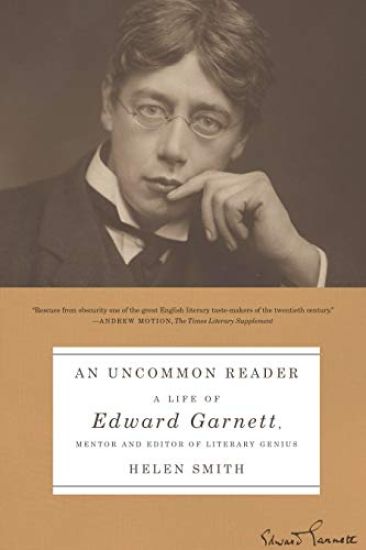
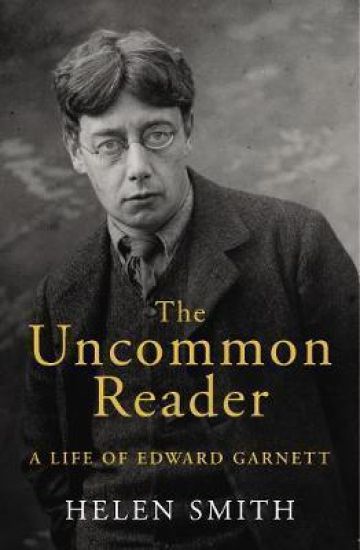
One of The Sunday Times' (U.K.) Books of the Year "Garnett's life will not need to be written again." --Andrew Morton, Times Literary SupplementA penetrating biography of the most important English-language editor of the early twentieth century During the course of a career spanning half a century, Edward Garnett--editor, critic, and reader for hire--would become one of the most influential men in twentieth-century English literature. Known for his incisive criticism and unwavering conviction in matters of taste, Garnett was responsible for identifying and nurturing the talents of a generation of the greatest writers in the English language, from Joseph Conrad to John Galsworthy, Henry Green to Edward Thomas, T. E. Lawrence to D. H. Lawrence. In An Uncommon Reader, Helen Smith brings to life Garnett's intimate and at times stormy relationships with those writers. ("I have always suffered a little from a sense of injustice at your hands," Galsworthy complained in a letter.) All turned to Garnett for advice and guidance at critical moments in their careers, and their letters and diaries--in which Garnett often features as a feared but deeply admired protagonist--tell us not only about their creative processes, but also about their hopes and fears. Beyond his connections to some of the greatest minds in literary history, we also come to know Edward as the husband of Constance Garnett--the prolific translator responsible for introducingTolstoy, Dostoevsky, and Chekhov to an English language readership--and as the father of David "Bunny" Garnett, who would make a name for himself as a writer and publisher. "Mr. Edward Garnett occupies a unique position in the literary history of our age," E. M. Forster wrote. "He has done more than any living writer to discover and encourage the genius of other writers, and he has done it without any desire for personal prestige." An absorbing and masterfully researched portrait of a man who was a defining influence on the modern literary landscape, An Uncommon Reader asks us to consider the multifaceted meaning of literary genius.
This second of two volumes presents archaeological and scientific studies of a wide range of materials from the unusually long-occupied Bronze Age and Iron Age site of Cladh Hallan on South Uist in the Western Isles of Scotland. These include metalworking debris, copper-alloy, gold and iron artifacts, bone and antler tools and ornaments, flint and quartz tools, coarse stone tools, pumice, shale ornaments and fuel ash slag. The metalworking assemblage, from casting weapons, tools and ornaments, is exceptional in its size and in its being stratified within a domestic context of production. Metal tools and ornaments, some placed as special deposits on house floors, include a gold-plated penannular ring and an iron object stratified within an 11th-century BC house floor, among the earliest finds of iron artefacts in Britain. The enormous and well-preserved environmental assemblage includes faunal remains of land mammals, whales, fish, birds and marine and terrestrial molluscs. Sheep were the most numerous domestic species within an assemblage of over 150,000 land mammalian remains, and Cladh Hallan has the largest collection of canine remains for any settlement in British later prehistory. Carbonized plant remains derive principally from cultivation of barley and associated weeds of cultivation. The site’s assemblage provides extensive material for chemical analysis of food residues, isotopic analysis of animal and human remains, osteological analysis of human remains, histological analysis of their processes of diagenesis, and genetic analysis of ancient DNA from animal and human remains. These analyses include full investigation of the human remains from two composite inhumations that had formerly been mummified, the first discovery of this mortuary practice in prehistoric Britain. The book concludes with a synthesis of results presented in the two volumes, presenting the rich insights provided by research on Cladh Hallan into life and death in the 2nd and early 1st millennia BC.
A collection of eye-catching 3D effect crochet patterns for different sized blankets and throws, that all have an optical illusion effect. These cleverly designed geometric blankets look impressive but are actually simple to make because the designer only uses one technique, intarsia crochet, and simple stitches. There are 15 different designs in a variety of sizes from smaller throws through to large afghans. All of the crochet blanket patterns are written out in full and there are large charts for each of the designs for crocheters who prefer to follow charts. All of the blankets are made with Scheepjes Truly Scrumptious aran-weight yarn, which is made from recycled plastic bottles. This means that the blankets work up quickly and have a lovely drape as well as being visually striking. All of the patterns use the crochet intarsia technique and there instructions for how to prepare your yarn in separate balls before you get started so you don’t end up in a tangle. There are also step-by-step instructions for how to work crochet intarsia including advice on changing colour. Please note that the patterns are written using US crochet terms, but there is a conversion table for UK terms, along with US/UK hook sizes, at the front of the book. The blanket projects include a variety of sizes, with the largest measuring 51 x 36 inches. There are instructions for how to increase the size of the blankets by adding a border as well as decorative details including tassels and pom poms. There are also instructions for how to alter the drape of the blankets by changing the hook size you use. The ‘Getting Started’ section explains the concept behind the illusion blanket designs and the importance of colour, with advice on choosing alternative colours. This is illustrated with photos of swatches showing variations of the same design with alternative colour combinations. The front section includes information about what the best yarns and hooks to use are as well as the other tools and materials featured. The General Techniques includes step-by-step instructions and diagrams for the basic stitches as well as the finishing techniques that will ensure your blankets look their best.
“This book takes the reader through the challenges of working with teams, the various contexts and understanding of what team effectiveness means. It provides support for team leaders, managers, supervisors and practitioners alike and therefore it is a ‘must read’ for all those in these roles.”Professor Bob Garvey, Leeds Business School, UK“This book confirms to me that great team leaders and team managers have a coaching mindset, coaching skills and coaching behaviours at their core. This book demonstrates how best to be ‘coach-minded’ and gives lots of advice on how to be an excellent manager as coach (MAC) in terms of fostering confidence, humility, learning and exchange within a team.”Dr Jenni Jones, Associate Professor in Coaching and Mentoring, University of Wolverhampton, UKIn today’s ever-changing workplace, it is important for managers and team leadersto be able to navigate challenges arising from unproductive or dysfunctional behaviour among team members. A Coach’s Guide to Team Building applies a unique coaching perspective to tackle the complex issues facing teams and their leaders. Applying psychology principles in coaching and coaching leadership has the potential to help managers adapt to hybrid teams, flexible working and portfolio careers. With insightful case studies and the utilisation of interview data throughout, this book contains practical tools, offers solutions to real team problems and shares key learnings from coaching, psychology and professional practice. The interviewees spanned multiple sectors, with insights into industries such as banking, education and engineering, readers can benefit from the flexible, effective approach to successfully creating and leading teams.The book:- Provides a range of practical tools, from ‘how-to’ guides to checklists- Explores the challenges of building diversity and inclusivity into any team- Covers a range of industries and team dynamicsThe unique blend of expertise and insight from the authors will benefit academics, coaching practitioners, and team leaders alike. Whether you are an experienced team leader or novice manager, this book offers solutions to problems facing real teams.Helen Smith is Faculty Head of Coaching and Mentoring in the Department of People and Performance at Manchester Metropolitan University. UK. Helen previously served as a Board Member of the European Mentoring and Coaching Council (EMCC) UK for over two years and is a founding member of The Greater Manchester Coaching Hub (GMCH).Tony Wall is Professor at Liverpool Business School, Liverpool John Moores University, UK and holds visiting roles in Sweden and Vietnam. Tony has published 200+ works, including global policy reports for EMCC Global. He has received numerous accolades including the Advance-HE National Teaching Fellowship and Santander International Research Excellence Awards.
We have dubbed Hinterland Issue 6 our ‘non-fiction fiction special’, in which we explore the curious space where fiction and non-fiction intersect and interact. To that end Heather Martin (The Reacher Guy) recalls how she came to write the biography of Lee Child, author of the Jack Reacher series; Nick Bradley (The Cat and The City) shares some of the photographs taken on his commute in Tokyo, an experience later tapped into for his debut novel; Ashley Hickson-Lovence (The 392) tells the true story of how Ruel Fox (nearly) led Norwich City to football greatness; we explore Tash Aw’s literary archive; and share a conversation with Helen Smith (The Uncommon Reader) about renowned editor Edward Garnett, all alongside a stand-out selection of reportage, memoir, essay and flash non-fiction.
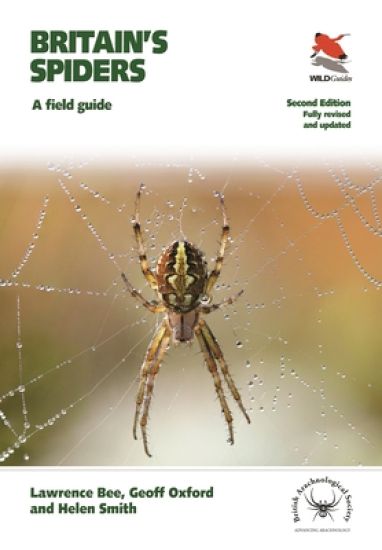
A comprehensively updated edition of an identification guide that was named a Guardian Best Nature Book of the Year Now in a comprehensively revised and updated new edition, Britain's Spiders is a guide to all 38 of the British families, focussing on spiders that can be identified in the field. Illustrated with a remarkable collection of photographs, it is designed to be accessible to a wide audience, including those new to spider identification. This book pushes the boundaries of field identification for this challenging group, combining information on features that can be seen with the naked eye or a hand lens with additional evidence from webs, egg sacs, behaviour, phenology, habitats and distributions. Individual accounts cover 404 species-all of Britain's "macro" spiders and the larger money spiders, with the limitations to field identification clearly explained. This new edition includes nine species new to Britain, many recent name changes, updated distribution maps and species information, new guides to help identify spider families and distinctive species, and the latest species checklist. A guide to spider families, based on features recognizable in the field, focussing on body shape and other characteristics, as well as separate guides to webs and egg-sacs Detailed accounts and more than 700 stunning photographs highlight key identification features for each genus and species, and include information on status, behaviour and habitats Up-to-date distribution maps, and charts showing adult seasonality Introductory chapters on the biology of spiders, and where, when and how to find them, including equipment needed in the field A complete list of the spiders recorded in Britain, indicating the ease of identification as well as rarity and conservation status Information on how to record spiders and make your records count, and guidance on how to take your interest further New to this edition: coverage of nine species new to Britain, updated species information and distribution maps, identification guides to spider families and distinctive species, and the latest species checklist
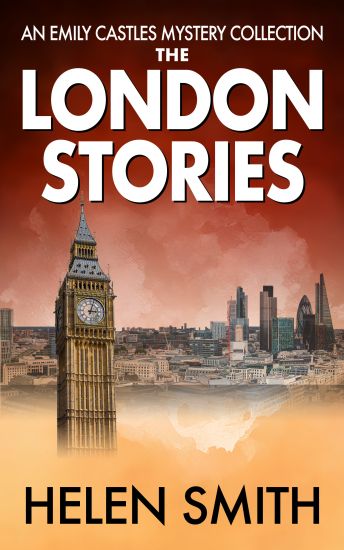
This is a short story. When amateur sleuth Emily Castles and her friend Dr. Muriel meet Gareth Crabbe, newly-appointed poet-in-residence at Brixton's windmill, he reveals that an intruder has been breaking in at night. While Emily and Dr. Muriel try to discover the identity of the intruder, Gareth must find the inspiration to write a poem, or funding for his residency will be withdrawn and the Gala Open Day at the windmill will be ruined.
When amateur sleuth Emily Castles joins a community theatre project in Edinburgh, she begins to suspect that she has been recruited by a cult. When a fellow performer goes missing, she must risk her life to investigate...PRAISE FOR THE EMILY CASTLES MYSTERY SERIESHelen Smith manages to pack in surprises and plot twists, creating a story that is fully engaging from start to finish. As a wallflower turned super-sleuth, Emily Castles is a wonderful protagonist and I'm eager to read more of her adventures. -Her Book SelfI love Helen Smith's writing. Her brand of mystery, shot through with clever observational humour and the sharpest of wit, is something that's been missing from the genre for far too long.-Alex Marwood, Edgar award winning author of The Wicked GirlsHelen Smith has created a great little cozy series with the charming Emily Castles.-Criminal ElementEmily Castles is one character you cannot help but fall in love with -Julie's Book ReviewsHelen Smith has created a great little cozy series with the charming Emily Castles.-Criminal ElementVery funny indeed... There seems to be a winning line on every page.-The BookbagDelightful-Shots Magazine
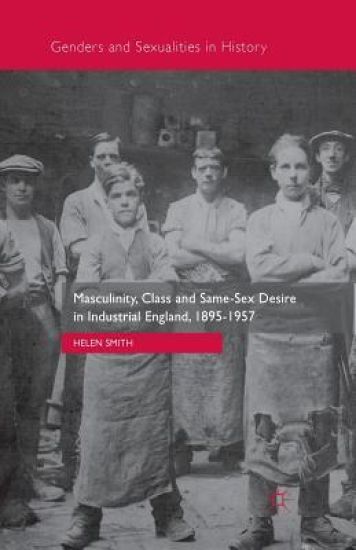
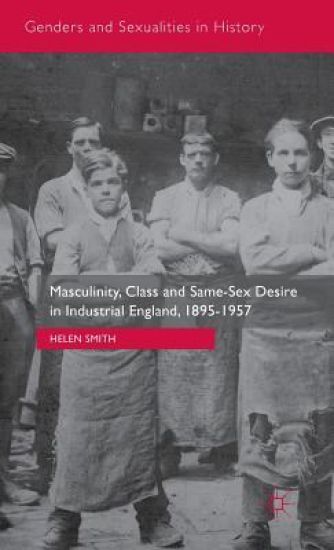
Masculinity, Class and Same-Sex Desire in Industrial England, 1895-1957 explores the experiences of men who desired other men outside of the capital. In doing so, it offers a unique intervention into the history of sexuality but it also offers new ways to understand masculinity, working-class culture, regionality and work in the period.
THE SUNDAY TIMES LITERATURE BOOK OF THE YEAR 2017Over a career spanning nearly fifty years Edward Garnett â?? editor, critic and publisherâ??s reader â?? would become one of the most influential men in twentieth-century British literature.
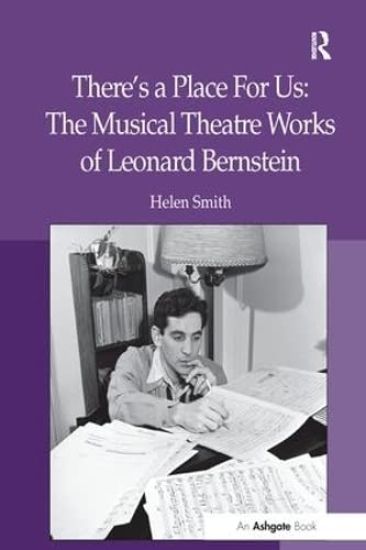
Leonard Bernstein was the quintessential American musician. Through his careers as conductor, pianist, teacher and television personality he became known across the US and the world, his flamboyance and theatricality making him a favourite with audiences, if not with critics. However, he is perhaps best remembered as a composer, particularly of the musical West Side Story, and for songs such as 'America', 'Tonight' and 'Somewhere'. Dr Helen Smith takes an in-depth look at all eight of Bernstein's musical theatre works, from the early On the Town written by the 26-year-old composer at the start of his career, to his second and last opera A Quiet Place in 1983; in between these two pieces he composed music for Trouble in Tahiti, Wonderful Town, Candide, West Side Story, Mass and 1600 Pennsylvania Avenue. These works are analysed and considered against a background of musical and social context, as well as looking at Bernstein's other orchestral, choral and chamber works. One important aspect examined is Bernstein's use of motifs in his theatre compositions, which takes them out of the realms of Broadway and into the sphere of symphonic writing. Smith provides an indispensable overview of the musical theatre works of an eclectic composer, and shows what it is that constitutes the Bernstein 'sound'.
Masculinity, Class and Same-Sex Desire in Industrial England, 1895-1957 explores the experiences of men who desired other men outside of the capital. In doing so, it offers a unique intervention into the history of sexuality but it also offers new ways to understand masculinity, working-class culture, regionality and work in the period.
American society has become anti-male. Men are sensing the backlash and are consciously and unconsciously going "on strike." They are dropping out of college, leaving the workforce and avoiding marriage and fatherhood at alarming rates. The trend is so pronounced that a number of books have been written about this "man-child" phenomenon, concluding that men have taken a vacation from responsibility simply because they can. But why should men participate in a system that seems to be increasingly stacked against them? As Men on Strike demonstrates, men aren't dropping out because they are stuck in arrested development. They are instead acting rationally in response to the lack of incentives society offers them to be responsible fathers, husbands and providers. In addition, men are going on strike, either consciously or unconsciously, because they do not want to be injured by the myriad of laws, attitudes and hostility against them for the crime of happening to be male in the twenty-first century. Men are starting to fight back against the backlash. Men on Strike explains their battle cry.