Kirjojen hintavertailu. Mukana 12 209 086 kirjaa ja 12 kauppaa.

Kirjailija

Helen Tookey

Kirjat ja teokset yhdessä paikassa: 7 kirjaa, julkaisuja vuosilta 2003-2026, suosituimpien joukossa Hinterland. Vertaile teosten hintoja ja tarkista saatavuus suomalaisista kirjakaupoista.

7 kirjaa

Kirjojen julkaisuhaarukka 2003-2026.

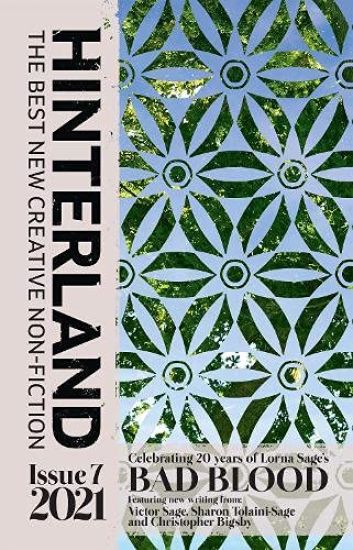
Hinterland

Hinterland

Lorna Sage; Sharon Tolaini-Sage; Christopher Bigsby; Victor Sage; Katrina Naomi; Ivan Pope; Helen Tookey

UEA Publishing Project
2021
nidottu
This Spring issue of Hinterland celebrates the limitless reach of life writing. Between them, our writers explore adoption, suicide, sexual assault, the AIDS crisis, conscription, grandparents, trauma, and the enduring influence of Elizabeth Bishop. Headlining this issue we celebrate a work seminal to the genre of life writing: Lorna Sage’s Bad Blood, with a collection of exclusive-to-Hinterland pieces by Christopher Bigsby, Victor Sage and Sharon Tolaini-Sage, with a foreword by Kathryn Hughes, that illuminate and respond to the legacy of Sage’s memoir, now entering its third decade of continuous publication.
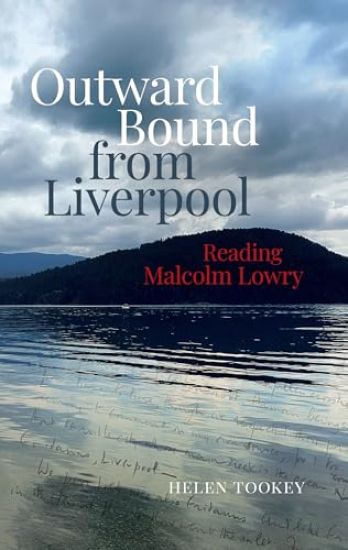
Outward Bound from Liverpool: Reading Malcolm Lowry

Outward Bound from Liverpool: Reading Malcolm Lowry

Helen Tookey

LIVERPOOL UNIVERSITY PRESS
2026
nidottu
Weaving together literary criticism, memoir and place-writing, this book takes the reader on an immersive journey through the landscapes – textual and geographical, remembered and reimagined – of the Wirral-born novelist, poet and short-story writer Malcolm Lowry (1909–57). At the same time, it follows the author’s own evolving engagement with Lowry as she uses him to ‘think with’, turning his texts and her readings of them through unexpected angles, exploring questions of place and belonging, exile and home. Moving through the various terrains of Lowry’s life and work – Liverpool and the Wirral peninsula, where he grew up; Dollarton in British Columbia, where he found his always-threatened idyll; the terrain of the archive; and the richly textured, symbolic landscapes of his writing itself – the book offers a compelling, lyrical and often moving account of a sustained readerly engagement with a writer and what it can enable. At the same time, it pays tribute to the humour, beauty and passion to be found in Lowry’s writing, to his deeply felt sense of place and his prescient concern for the natural world. Outward Bound from Liverpool explores how reading can change us, and shows why Malcolm Lowry is a writer very much worth reading – and re-reading – today.
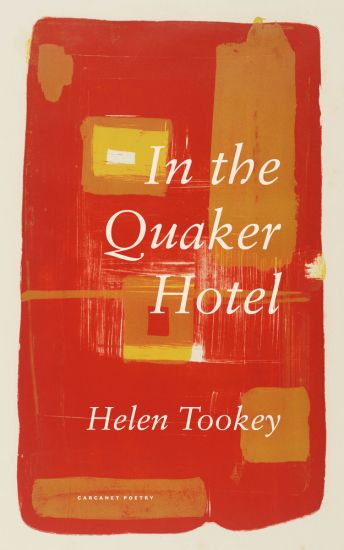
In the Quaker Hotel

In the Quaker Hotel

Helen Tookey

CARCANET PRESS LTD
2022
nidottu
In the title poem, the speaker sits at the window of a small hotel room. The room is a holding zone, a temporary stopping-place between memory and possibility. In the Quaker Hotel is full of questions about the world. Rooted in nature, the poems are fearful for it. They move out through identifiable landscapes (Merseyside, north Wales, Nova Scotia, southern France) to off-kilter, tilted places beyond our immediate reality. We are temporary guests in these places and in our own lives. Who will come after us, how will they see things: 'who will tend the bees / in the communal garden'? Helen Tookey experiments with form and theme, as in her earlier books Missel-Child (Carcanet, 2014, shortlisted for the Seamus Heaney First Collection Prize) and City of Departures (Carcanet, 2019, shortlisted for the 2019 Forward Prize for Best Collection).
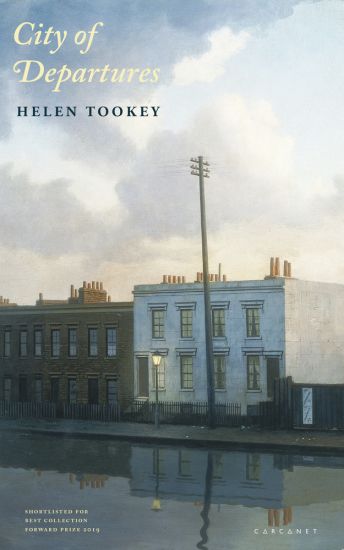
City of Departures

City of Departures

Helen Tookey

Carcanet Press Ltd
2019
nidottu
Shortlisted for The 2019 Forward Prize for Best Collection. City of Departures is Helen Tookey’s second Carcanet collection, following her 2014 Missel-Child, an `exceptional volume … from a powerful and intelligent imagination’ (Jeffrey Wainwright). City of Departures is a collection of uncanny spaces and fleeting encounters, an urban patchwork of glimpsed moments and chance affiliations. Through them, Tookey explores the ways in which we create meaning and connection in these kinds of spaces, and how the nature of those connections—often temporary and provisional—affects who we are, and who we are becoming. Tookey’s work has a new formal inventiveness and experimental temperament. The collection mixes prose and verse, and a multitude of voices and structures mingle on its pages. The poems connect through repeated images, themes and tones, which echo and re-echo. Their loci are neglected houses and gardens, canals, wrecked boats… liminal worlds where absence has a presence of its own, fertile ground for ghosts, fantasies, memories, and dreams.
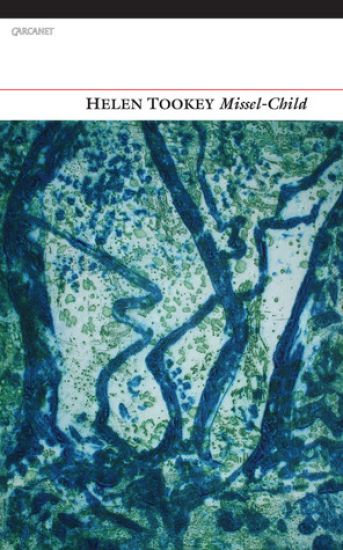
Missel-Child

Missel-Child

Helen Tookey

Carcanet Press Ltd
2014
nidottu
According to the seventeenth-century herbarium The Garden of Eden, a ‘missel-child’ is a mysterious being found beneath a mistletoe-covered tree – a changeling, perhaps, ‘whereof many strange things are conceived’. Helen Tookey’s first full collection of poems starts from the missel-child to explore archaeologies of identity, place and language. She is a formally inventive writer, using collage and syllabics, exploring elegy and myth. The poems in this book create a space in which language enables something to be said and also to be shown.
Anaïs Nin, Fictionality and Femininity

Anaïs Nin, Fictionality and Femininity

Helen Tookey

Oxford University Press
2003
sidottu
Helen Tookey presents a new study of Anaïs Nin (1903-77), focusing both on the cultural and historical contexts in which her work was produced and received, and on the different versions of Nin herself - as a modernist, a woman writer, a public (and controversial) figure in the women's liberation movement, and as a set of conflicting and often extreme representations of femininity. The author shows how contextual feminist approaches shed light on Nin (who moved from Paris modernism of the 1930s to US second-wave feminism of the 1970s), and how this sheds light on key issues and conflicts within feminist thinking since the 1970s, particularly questions of identity, femininity, and psychoanalysis. Anaïs Nin: Fictionality and Femininity provides new readings of Nin through contemporary feminist approaches, using Nin to make an intervention into critical debates around modernism, feminism, and psychoanalysis, writing and identity, fictionality and femininity.