Kirjojen hintavertailu. Mukana 12 595 353 kirjaa ja 12 kauppaa.

Kirjailija

Helen Vendler

Kirjat ja teokset yhdessä paikassa: 26 kirjaa, julkaisuja vuosilta 1969-2025, suosituimpien joukossa Liberties Journal of Culture and Politics. Vertaile teosten hintoja ja tarkista saatavuus suomalaisista kirjakaupoista.

26 kirjaa

Kirjojen julkaisuhaarukka 1969-2025.

Liberties Journal of Culture and Politics

Liberties Journal of Culture and Politics

Michael Ignatieff; Mary Gaitskill; Sergei Lebedev; Antonia Bouis; Karen Solie; Michael Walzer; David A. Bell; Justin E.H. Smith; Michael C. Kimmage; Andrew Scull; Robert Alter; Steven B. Smith; Benjamin Moser; Helen Vendler; John Hodgen; Adam Zagajewski

Liberties Journal Foundation
2023
pokkari
Liberties, a Journal of Culture and Politics, is essential reading for those engaged in the cultural and political issues of our time. In this issue of Liberties: Michael Ignatieff - The Mind’s Emancipation; Mary Gaitskill - The Trials of the Young; Sergei Lebedev - Putin’s Philosopher: A Memoir; Michael Walzer - Moral Concern; Justin E. H. Smith – The Happiness Industrial Complex; Andrew Scull – The Fashions in Trauma; David A. Bell – The Triumph of Anti-Politics in America; Michael Kimmage – A Defense of Delight in a Dark Time; Robert Alter – Proust and the Mystification of the Jews; Steven B. Smith – What is a Statesman?; Benjamin Moser – Rembrandt’s shadows; Helen Vendler – The Poetry of Charm; Celeste Marcus – Priorism, or the Joshua Katz Affair; Leon Wieseltier – Problems and Struggles; and, new poems by Karen Solie, Adam Zagajewski, and John Hodgen.Published quarterly, Liberties, is a collection of the most significant writers today as well as launching the voices of tomorrow.Liberties features serious, independent, stylish, and controversial essays by significant writers and introduces the next generation of writers and poets to inspire and impact the intellectual and creative lifeblood of today’s culture and politics. Nobel Prize winners, leading op-ed writers, well-known non-fiction writers, rising talents, and poets from around the world are part of the Liberties series.There’s a reason why engaged citizens, cultural warriors, political leaders, opinion makers, and activists from across the cultural and political spectrum read and cherish Liberties.
The Prelude

The Prelude

William Wordsworth; Helen Vendler

Brandeis University Press
2024
sidottu
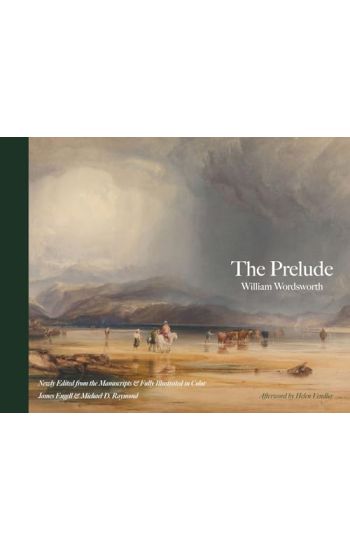
A gorgeous new edition of the definitive text of Wordsworth’s The Prelude, with full-color contemporaneous illustrations that illuminate this epic poem. With a new afterword by Helen Vendler. The Prelude, William Wordsworth’s masterful autobiographical work composed in blank verse, is generally considered the poem at the heart of the Romantic movement and one of the great poems in the English language. In this fully illustrated and annotated edition, the work receives the treatment it deserves. Inspired by his dear friend, Samuel Taylor Coleridge, the poem charts the development of the author’s mind from childhood to his experiences in Cambridge, London, the Alps, and France, touching on subjects ranging from leisure to literature, nature to imagination, and everything in between. A meditation on the self, this work still stands as a masterpiece of English literature and is here complemented and enhanced by two hundred contemporaneous color plates that illuminate the text. Scrupulously selected and newly re-edited from the definitive manuscripts in existence, the marginal notes and glosses provide an extra touch that makes this a truly enlightening reading experience. Helen Vendler’s afterword is an appreciation of the poem which also puts in it context for American readers.
Liberties Journal of Culture and Politics

Liberties Journal of Culture and Politics

Elliot Ackerman; Durs Grünbein; Thomas Chatterton Williams; Anita Shapira; Adam Zagajewski; Sally Satel; R.B. Kitaj; Matthew Stephenson; Helen Vendler; David Haziza; A.E. Stallings; Paul Berman; Clara Collier; Michael Kimmage; Peg Boyers

Liberties Journal Foundation
2021
pokkari
“A Meteor of Intelligent Substance” “Something was Missing in our Culture, and Here It Is” Liberties – A Journal of Culture and Politics features new essays and poetry from some of the world's best writers and artists to inspire and impact the intellectual and creative lifeblood of our current culture and today's politics. This summer issue of Liberties includes: Elliot Ackerman on Veterans Are Not Victims; Durs Grünbein on Fascism and the Writer; R.B. Kitaj’s Three Tales; Thomas Chatterton Williams on The Blessings of Assimilation; Anita Shapira on The Fall of Israel’s House of Labor; Sally Satel on Woke Medicine; Matthew Stephenson On Corruption’s Honey and Poison; Helen Vender on Wallace Stevens; David Haziza on Illusions of Immunity; Paul Berman on the Library of America; Clara Collier’s nostalgia for strong women in film; Michael Kimmage on American Inquisitions; Leon Wieseltier (editor) on the high price of Stoicism; Celeste Marcus (managing editor) on a Native American Tragedy; and new poetry from Adam Zagajewski, A.E. Stallings, and Peg Boyers.
Liberties Journal of Culture and Politics

Liberties Journal of Culture and Politics

Anthony Julius; Nicholas Lemann; Alfred Brendel; Paul Berman; Jorie Graham; Fouad Ajami; Jack Goldsmith; Edward Luttwak; Roberto Calasso; Ishion Hutchinson; Walter Sheidel; Helen Vendler; Robert Alter; Daryl Michael Scott; Rosanna Warren; Alastair Macaulay; David Greenberg

Liberties Journal Foundation
2021
pokkari
Liberties – A Journal of Culture and Politics features original essays and poetry from some of today’s best writers and artists to inspire and impact the intellectual and creative lifeblood of culture and politics. This issue of Liberties includes: Anthony Julius on censorship of the arts; Nicholas Lemann on rescuing capitalism; Alfred Brendel on playing Beethoven; Paul Berman on the George Floyd uprising; Fouad Ajami’s story of an honor killing; Jack Goldsmith on conservatives and the courts; Edward Luttwak on understanding China; Roberto Calasso on when journals mattered; Walter Scheidel on life after covid; Helen Vendler on the poet Robert Hayden; Robert Alter on Lolita today; Daryl Michael Scott on the 13th Amendment; Alastair Macaulay on Balanchine; David Greenberg on renaming our heritage; new poetry from Jorie Graham, Ishion Hutchinson, and Rosanna Warren; and, Leon Wieseltier (editor) and Celeste Marcus (managing editor).
Liberties Journal of Culture and Politics

Liberties Journal of Culture and Politics

Michael Ignatieff; Laura Kipnis; David Grossman; Ramachandra Guha; Thomas Chatterton Williams; Hannah Sullivan; Mark Lilla; Helen Vendler; Sean Wilentz; Adam Zagajewski; Louise Glück; James Wolcott; Andrea Marcolongo; Eli Lake; Sally Satel; Moshe Halbertal; Joshua Bennett; David Thomson; Julius Margolin; Clara Collier; Shawn McCreesh

Liberties Journal Foundation
2021
pokkari
Liberties - A Journal of Culture and Politics features new essays and poetry from some of today’s best writers and artists, along with introducing new talent, to inspire and impact the intellectual and creative lifeblood of culture and politics. This inaugural issue of Liberties includes: Michael Ignatieff on liberalism and the environment; Laura Kipnis cheers transgression; David Grossman on literature and peace; Ramachandra Guha on the Indian tragedy; Thomas Chatterton Williams on the real James Baldwin; Mark Lilla on the power of indifference; Helen Vendler on Yeats' The Second Coming; Sean Wilentz on abolition and American origins; Adam Zagajeweski on Gustav Mahler; James Wolcott on America’s modern Jacobins; Andrea Marcolongo on how language defines us; Eli Lake on the birth of American unexceptionalism; Sally Satel on the riddle of addiction; Moshe Halbertal on creating a democratic Jewish state; David Thomson on the wonder of Terrence Malick; Julius Margolin’s memoir confronting hatred; Clara Collier on plague literature; Shawn McCreesh’s personal look at a youthful community of addiction; new poetry from the most recent winner of the Nobel Prize in Literature, Louise Glück, Joshua Bennett, and Hannah Sullivan; and, Leon Wieseltier (editor) and Celeste Marcus (managing editor).
Dickinson

Dickinson

Helen Vendler

The Belknap Press
2012
nidottu
“The best close reader of poems to be found on the literary pages.”—Seamus Heaney“[Vendler’s] succinct but astute readings of Emily Dickinson’s poetry are little kernels of insight into a wickedly keen poetic mind.”—Hillary Kelly, New RepublicAn interpretive introduction to Dickinson’s brilliant, enigmatic verse from the unrivaled doyenne of close reading.Seamus Heaney, Denis Donoghue, William Pritchard, Marilyn Butler, Harold Bloom, and many others have praised Helen Vendler as one of the best readers of our time. Here, Vendler applies her critical powers to 150 selected poems of Emily Dickinson. As she did in The Art of Shakespeare’s Sonnets, she serves as an incomparable guide, illuminating both stylistic and imaginative features of the poems.Vendler’s selection highlights the astounding variety of Dickinson’s work, “from her first-person poems to the poems of grand abstraction, from her ecstatic verses to her unparalleled depictions of emotional numbness, from her comic anecdotes to her painful poems of aftermath.” In accompanying commentaries Vendler also acquaints us with Dickinson the writer, “the inventive conceiver and linguistic shaper of her perennial themes.” All of Dickinson’s preoccupations—death, religion, love, the natural world, the nature of thought—are explored here in detail, but Vendler always takes care to emphasize the poet’s startling imagination and the ingenuity of her linguistic invention. Whether exploring less-familiar poems or favorites we thought we knew, Vendler offers a unique window into Dickinson’s oeuvre—her incredible range, her unique path of poetic development, and her mastery of what Wordsworth called “the history and science of feeling.” Lucid and accessible, this will long remain an indispensable reference for students of Dickinson and readers of lyric poetry.
Last Looks, Last Books

Last Looks, Last Books

Helen Vendler

Princeton University Press
2010
sidottu
In Last Looks, Last Books, the eminent critic Helen Vendler examines the ways in which five great modern American poets, writing their final books, try to find a style that does justice to life and death alike. With traditional religious consolations no longer available to them, these poets must invent new ways to express the crisis of death, as well as the paradoxical coexistence of a declining body and an undiminished consciousness. In The Rock, Wallace Stevens writes simultaneous narratives of winter and spring; in Ariel, Sylvia Plath sustains melodrama in cool formality; and in Day by Day, Robert Lowell subtracts from plenitude. In Geography III, Elizabeth Bishop is both caught and freed, while James Merrill, in A Scattering of Salts, creates a series of self-portraits as he dies, representing himself by such things as a Christmas tree, human tissue on a laboratory slide, and the evening/morning star. The solution for one poet will not serve for another; each must invent a bridge from an old style to a new one. Casting a last look at life as they contemplate death, these modern writers enrich the resources of lyric poetry.
Invisible Listeners

Invisible Listeners

Helen Vendler

Princeton University Press
2007
pokkari
When a poet addresses a living person--whether friend or enemy, lover or sister--we recognize the expression of intimacy. But what impels poets to leap across time and space to speak to invisible listeners, seeking an ideal intimacy--George Herbert with God, Walt Whitman with a reader in the future, John Ashbery with the Renaissance painter Francesco Parmigianino? In Invisible Listeners, Helen Vendler argues that such poets must invent the language that will enact, on the page, an intimacy they lack in life. Through brilliantly insightful and gracefully written readings of these three great poets over three different centuries, Vendler maps out their relationships with their chosen listeners. For his part, Herbert revises the usual "vertical" address to God in favor of a "horizontal" one-addressing God as a friend. Whitman hovers in a sometimes erotic, sometimes quasi-religious language in conceiving the democratic camerado, who will, following Whitman's example, find his true self. And yet the camerado will be replaced, in Whitman's verse, by the ultimate invisible listener, Death. Ashbery, seeking a fellow artist who believes that art always distorts what it represents, finds he must travel to the remote past. In tones both tender and skeptical he addresses Parmigianino, whose extraordinary self-portrait in a convex mirror furnishes the poet with both a theory and a precedent for his own inventions. By creating the forms and speech of ideal intimacy, these poets set forth the possibility of a more complete and satisfactory human interchange--an ethics of relation that is uncoerced, understanding, and free.
Poets Thinking

Poets Thinking

Helen Vendler

Harvard University Press
2006
nidottu
“In reminding us to look at and listen to the actual words on the page...Vendler invites us to expand our response to experience, and to find in it—if we are both attentive and lucky—beauty and solace.”—Christopher Benfey, New York Review of BooksThe grand dame of poetic criticism defends lyric poetry as a product of fierce intelligence as much as creative inspiration.Poetry has often been considered an irrational genre, more expressive than logical, more meditative than given to coherent argument. And yet, in each of the four very different poets she considers here, Helen Vendler reveals a style of thinking in operation. All poets of any value are thinkers, she argues, even if no two think alike. The four poets taken up in this volume—Alexander Pope, Walt Whitman, Emily Dickinson, and William Butler Yeats—come from three different centuries and three different nations, and their styles of thinking are characteristically idiosyncratic. Vendler gives us Pope performing as a satiric miniaturizer, remaking in verse the form of the essay; Whitman writing as a poet of repetitive insistence for whom thinking must be followed by rethinking; Dickinson experimenting with plot to characterize life’s unfolding; and Yeats thinking in images, using montage in lieu of argument.With customary lucidity and vigor, Vendler pores over these poets’ lines to find evidence of thought in lyric, from subtle stylistic shifts that embody changes of mind to images that serve as condensations of concepts and emotions. Far more than in (frequently well-worn) themes, she demonstrates that poetic genius resides in open-ended contemplation: the interminable work of recalling, evaluating, and structuring experience in verse. Never linear or merely propositional, poems show us the human mind in process, inviting us to participate in experiential discoveries as they unfold.
Coming of Age as a Poet

Coming of Age as a Poet

Helen Vendler

Harvard University Press
2004
nidottu
“Brilliant ...full of perceptions and rewards that send one scurrying back to the text.” —John Bayley, New York Review of BooksThe finest reader of her generation retraces four great poets’ first steps across the threshold of genius.To find a personal style is, for a writer, to become an adult; and to write one’s first “perfect” poem—a poem that wholly and successfully embodies that style—is to come of age as a poet. By looking at the precedents, circumstances, and artistry of the first perfect poems composed by John Milton, John Keats, T. S. Eliot, and Sylvia Plath, Coming of Age as a Poet offers rare insight into this mysterious process, and into the indispensable period of learning and experimentation that precedes such poetic achievement.Milton’s “L’Allegro,” Keats’s “On First Looking into Chapman’s Homer,” Eliot’s “The Love Song of J. Alfred Prufrock,” and Plath’s “The Colossus” are the poems that Helen Vendler considers, exploring each as an accession to poetic confidence, mastery, and maturity. In meticulous and sympathetic readings of the poems, and with reference to earlier youthful compositions, she delineates the context and the terms of each poet’s self-discovery—illuminating the private, intense, and ultimately heroic effort and endurance that precede the creation of any memorable poem.With characteristic precision, authority, and grace, Vendler helps us to appreciate anew the conception and the practice of poetry, and to observe firsthand the living organism that breathes through the lines of a great poem.
Inhabit the Poem: Last Essays

Inhabit the Poem: Last Essays

Helen Vendler

THE LIBRARY OF AMERICA
2025
sidottu
In 13 essays, the great poetry critic offers her final word on the poems and poets who have meant the most to her, from Walt Whitman and Emily Dickinson to Wallace Stevens and Sylvia Plath Helen Vendler was our greatest reader of poetry, a scholar who illuminiated its inner mechanisms and emotional roots for a wide audience. Always attentive to the stylistic and imaginative features of a poem, Vendler addresses the work of a wide range of American, English, and Irish poets--both the canonical and the unexpected--in 13 essays: - Walt Whitman, author of the first PTSD poem- Sylvia Plath, and the lost poetry of motherhood- William Cowper, James Merrill, and A. R. Ammons on poetric charm- Emily Bront and Emily Dickinson, linked by a poetic mystery- Ocean Vuong and the shaping imagination of poetry today- Wallace Stevens and the enigma of beauty. In these and other essays Vendler demonstrates once again why the Irish poet Seamus Heaney called her "the best close reader of poems to be found on the literary pages." The thirteen poignant essays gathered here were all published in the last three years of Vendler's life, in Liberties magazine, and intended as her final book. The author's preface was completed only three days before her death, at age ninety.
Liberties Journal of Culture and Politics

Liberties Journal of Culture and Politics

Cass R. Sunstein; Carissa Veliz; Ekaterina Pravilova; Richard Taruskin; Claire Malroux; Richard Wolin; Mark Polizzotti; Jonathan Zimmerman; Marissa Grunes; Andrew Butterfield; Scott Spillman; Leora Batnitzky; Helen Vendler; Jared Marcel Pollen; Paula Bohince

Liberties Journal Foundation
2022
nidottu
“A Meteor of Intelligent Substance”“Something was Missing in our Culture, and Here It Is”"Invaluable""Liberties is THE place to be. Change starts in the mind.” Liberties, a journal of Culture and Politics, is essential reading for those engaged in the cultural and political issues and causes of our time. Liberties features serious, independent, stylish, and controversial essays by significant writers and leaders throughout the world; new poetry; and, introduces the next generation of writers and voices to inspire and impact the intellectual and creative lifeblood of today’s culture and politics.In this issue of Liberties: Cass R. Sunstein - The Supreme Court Gone Wrong; Carissa Veliz - Digitization is Surveillance; Ekaterina Pravilova - The Autocrat’s War; Richard Taruskin - What is Bad Taste; Jonathan Zimmerman - Memoirs of a White Savior; Richard Wolin - The Cult of Carl Schmitt; Mark Polizzotti - Surrealism and Cancellation; Andrew Butterfield - Dante During Covid; Scott Spillman - The Strange History of the Slave Songs; Leora Batnitzky - The Sacrifice of Edith Stein; Helen Vendler - Sylvia Plath on Motherhood; Jared Marcel Pollen - Was Havel Right?; Celeste Marcus - The Curse of the Radical Israeli Right; Leon Wieseltier - The Future of Nature; and new poems by Claire Malroux, Marissa Grunes, Paula Bohince.
Liberties Journal of Culture and Politics

Liberties Journal of Culture and Politics

Laura Kipnis; Dorian Abbot; Bernard-Henri Levy; Bruce D. Jones; Durs Grunbein; David Greenberg; Ingrid Rowland; Clara Collier; David A. Bell; Morten Hoi Jensen; Nathaniel Mackey; Robert Cooper; Steven M. Nadler; Helen Vendler; Haris Vlavianos

Liberties Journal Foundation
2022
pokkari
“A Meteor of Intelligent Substance”“Something was Missing in our Culture, and Here It Is”"Liberties is THE place to be."Liberties, a journal of Culture and Politics, is essential reading for those engaged in the cultural and political issues and causes of our time. Liberties features serious, independent, stylish, and controversial essays by significant writers and leaders throughout the world; new poetry; and, introduces the next generation of writers and voices to inspire and impact the intellectual and creative lifeblood of today’s culture and politics.In this issue of Liberties: Laura Kipnis on Genders Without Fear; Dorian Abbot’s call to arms - Science to Politics: Drop Dead; Bernard Henri-Lévy on What is Reading?; Bruce D. Jones on today’s reality of Taiwan, China, America; David Greenberg examines The War on Objectivity; Helen Vendler on Art vs. Stereotypes through the work of Marianne Moore; Ingrid Rowland captures Thucydides on our Conflicts; David A. Bell exposes the Greatest Enemy of Democracy in France; Robert Cooper reports on Myanmar, Atrocity in the Garden of Eden; Steven M. Nadler on Bans and Excommunications, Then and Now; Morten Høi Jensen on the State of Literary Biography; Clara Collier on Women with Whips — Joan Crawford, Marlene Dietrich, Barbara Stanwyck; Celeste Marcus on Unknown Heroes of Modern Art; Leon Wieseltier reveals Christianism in Modern Politics; and, new poetry from Durs Grünbein, Nathaniel Mackey, and Haris Vlavianos.
Liberties Journal of Culture and Politics

Liberties Journal of Culture and Politics

Mamtimin Ala; Richard Thompson Ford; Jaroslaw Anders; Sean Wilentz; Ange Mlinko; Benjamin Moser; Jonathan Zimmerman; Leonard Cohen; Cass R. Sunstein; Mark Lilla; Helen Vendler; Holly Brewer; Shaul Tchernikhovsky; David Thomson

Liberties Journal Foundation
2021
pokkari
“A Meteor of Intelligent Substance”“Something was Missing in our Culture, and Here It Is”"Liberties is THE place to be. Change starts in the mind."Liberties, a journal of Culture and Politics, is essential reading for those engaged in the cultural and political issues and causes of our time. Liberties features serious, independent, stylish, and controversial essays by significant writers and leaders throughout the world; new poetry; and, introduces the next generation of writers and voices to inspire and impact the intellectual and creative lifeblood of today’s culture and politics.This issue of Liberties includes: new work from Nobel Prize winner Mario Vargas Llosa; drawings by Leonard Cohen published for the first time; Mamtimin Ala’s essay on China’s genocide of the Uyghurs; Jaroslaw Anders’ analysis of the crisis in Belarus; Cass R. Sunstein on liberalism inebriated; Richard Thompson Ford on what slavery does and does not explain; Sean Wilentz on the historical strategy of the Republican Party; Benjamin Moser writes about translation as a form of tourism in literary life; Jonathan Zimmerman on the scandal of college teaching; Mark Lilla on cults of innocence and their victims; Helen Vendler on Adrienne Rich; Holly Brewer on race and enlightenment; David Thomson asks, What shall we watch now?; Celeste Marcus (managing editor) on the legend of Alice Neel; Leon Wieseltier (editor) on Zionism’s beautiful stubbornness of survival; and new poetry from Ange Mlinko and Shaul Tchernikhovsky, translated by Robert Alter.
The Ocean, the Bird, and the Scholar

The Ocean, the Bird, and the Scholar

Helen Vendler

Harvard University Press
2018
nidottu
“One of [Vendler’s] finest books, an impressive summation of a long, distinguished career.”—Charles Simic, New York Review of BooksA Times Higher Education Book of the Week.A lively collection of the great critic’s later work showcases her unswerving and deeply personal dedication to good poetry. One of our foremost commentators on poetry examines the work of a broad range of nineteenth- and twentieth-century English, Irish, and American poets. The Ocean, the Bird, and the Scholar gathers two decades’ worth of Helen Vendler’s essays, book reviews, and occasional prose—including the 2004 Jefferson Lecture—in a single volume. Taken together, they serve as a reminder that if the arts and the patina of culture they cast over the world were deleted, we would, in Wallace Stevens’s memorable formulation, inhabit “a geography of the dead.” These essays also remind us that without the enthusiasm, critiques, and books of each century’s scholars, there would be imperfect perpetuation and transmission of culture.All of the modern poets who have long preoccupied Vendler—Wallace Stevens, Seamus Heaney, John Ashbery, and Jorie Graham—are fully represented, as well as others, including Langston Hughes, Allen Ginsberg, Robert Lowell, Elizabeth Bishop, Amy Clampitt, James Merrill, A. R. Ammons, and Mark Ford. And Vendler reaches back into the poetic tradition, tracing the influence of Keats, Yeats, Whitman, T. S. Eliot, and others in the work of today’s poets. As ever, her readings help to clarify the imaginative novelty of poems, giving us a rich sense not only of their formal aspects but also of the passions underlying their linguistic and structural invention. The Ocean, the Bird, and the Scholar is an eloquent plea for the centrality, both in humanistic study and modern culture, of poetry’s beautiful, subversive, sustaining, and demanding legacy.
Our Secret Discipline

Our Secret Discipline

Helen Vendler

The Belknap Press
2007
sidottu
“An intellectual feast.” —John Leonard, Harper’s MagazineA monumental study reveals the patient and meticulous labor behind the Irish Nobel laureate’s immaculate poetic craft.The fundamental difference between rhetoric and poetry, according to Yeats, is that rhetoric is the expression of one’s quarrels with others while poetry is the expression (and sometimes the resolution) of one’s quarrel with oneself. This is where Helen Vendler’s Our Secret Discipline begins. Through exquisite attention to outer and inner forms, Vendler explores the most inventive reaches of the poet’s mind. This book is a space-clearing gesture, an attempt to write about lyric forms in Yeats in unprecedented and comprehensive ways. The secret discipline of the poet is his vigilant attention to forms—whether generic, structural, or metrical. Yeats explores the potential of such forms to give shape and local habitation to volatile thoughts and feelings.Helen Vendler remains focused on questions of singular importance: Why did Yeats cast his poems into the widely differing forms they ultimately took? Can we understand Yeats’s poetry better if we pay attention to its form, both its internal architectonic and its external organization into conventional verse structures? Chapters of the book take up many Yeatsian ventures, such as the sonnet, the lyric sequence, paired poems, blank verse, and others. With elegance and precision, Vendler offers brilliant insights into the creative process and speculates on Yeats’s aims as he writes and rewrites some of the most famous poems in modern literature.
The Art of Shakespeare’s Sonnets

The Art of Shakespeare’s Sonnets

Helen Vendler

The Belknap Press
1999
nidottu
“A great achievement, the work of an author with an almost devout passion for good poems.”—Frank Kermode, New Republic“Criticism of the Sonnets, and by extension, critical accounts of poetry, will never be the same again.”—Tom Paulin, London Review of BooksThe definitive guide to Shakespeare’s Sonnets from the most accomplished critic of our time.More than four centuries after its initial publication, William Shakespeare’s Sonnets is still very much a living text. Despite all the regalia of its Elizabethan English, despite its baroque grammatical dislocations, Shakespeare’s major work of lyric poetry remains an inexhaustible source of literary wonder. In detailed commentaries on each of the 154 sonnets, Helen Vendler offers a lucid analysis of the verse stylings that we have come to call “Shakespearean.” The supreme accomplishment of these fourteen-line poems, Vendler demonstrates, lies not in their often-conventional themes and images—love and death, roses and thorns, summer’s heat and winter’s cold—nor in some hidden, deeper meaning, but in the seemingly effortless virtuosity of their arrangements. Shakespeare’s sly subversions, his boundless capacity for formal invention, and his uncanny ability to breathe life into even the most commonplace metaphors betray a poetic imagination that has never yet found its equal.Presented alongside both the original and the modernized texts, Vendler’s commentaries not only illuminate the sheer abundance of Shakespeare’s rhetorical strategies and his dynamic use of the sonnet form; they also reveal the sharp satire and scandalous irreverence that he directs toward everything from traditional sexual mores to Petrarchan views of love. Above all, Vendler provides an unparalleled view of a poetic mind at work, both Shakespeare’s and her own.
Soul Says

Soul Says

Helen Vendler

The Belknap Press
1996
nidottu
“Vendler again demonstrates—if proof were needed—why she is the finest poetry reviewer in the country.”—Boston GlobeThe renowned critic of Stevens, Keats, and Herbert turns an incisive gaze to her contemporaries, from Louise Glück to Rita Dove.Lyric poetry, says the incomparable Helen Vendler, is defined by immediacy. If the novel aspires to represent life in all its complexity, with characters woven into their manifold historical and sociological contexts, lyric captures the human being in the here and now: as a fragment, an eruption, or a “set of warring passions independent of time and space.” Fiction constructs selfhood, but poetry gives us the soul. Drawing its title from a poem by Jorie Graham, Soul Says collects twenty-one of Vendler’s best essays on the force, beauty, and formal intricacies of late-twentieth-century verse. Whether meditating on Graham’s roving cinematography of the mind, anatomizing the inversions of classical elegy in Allen Ginsberg’s “Kaddish,” or exploring Charles Simic’s sinister landscapes, Vendler makes difficult poetry accessible and helps readers appreciate the depth and richness of even the simplest texts. Through her perceptive eyes we see how lyric poetry, pulsing with musicality, uses arrangement, pacing, and metaphor to illuminate the hidden corners of inner life. Inner life cannot be entirely disentangled from the history: Rita Dove cannot write as if she were unencumbered by her life as a Black woman in America any more than Seamus Heaney can avoid his experience as a Northern Irishman who lived through the Troubles. But Vendler’s painstaking attention to form—Dove’s angular stanzas, Heaney’s organicism—brilliantly reveals how such great poets exceed the sum of their biographical parts. To read their poetry is to see their lives transfigured, and, in the process, to reconsider our own.