

Kirjailija
Helena Machado
Kirjat ja teokset yhdessä paikassa: 11 kirjaa, julkaisuja vuosilta 2012-2026, suosituimpien joukossa Ethical Assemblages of Artificial Intelligence. Vertaile teosten hintoja ja tarkista saatavuus suomalaisista kirjakaupoista.
11 kirjaa
Kirjojen julkaisuhaarukka 2012-2026.

Ethical Assemblages of Artificial Intelligence
Helena Machado; Susana Silva
SPRINGER VERLAG, SINGAPORE
2025
sidottu
This book critically examines the ethical challenges of Artificial Intelligence (AI), focusing on facial recognition and AI-assisted reproductive technologies. It explores how these issues intertwine with social and political processes and power dynamics in digital societies. What defines ethical versus unethical in the realm of AI? Why do some ethical debates dominate, while others are overlooked? Which actors and institutions align or diverge in these discussions? To address these questions, the authors introduce the concept of "ethical assemblages," offering fresh perspectives on the complexities of AI ethics and their impact on socio-technoscientific structures.
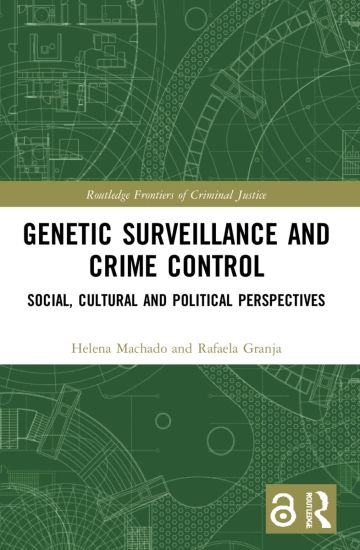
Genetic Surveillance and Crime Control
Helena Machado; Rafaela Granja
TAYLOR FRANCIS LTD
2023
nidottu
Genetic Surveillance and Crime Control presents a new empirical and conceptual framework for understanding trends of genetic surveillance in different countries in Europe and in other jurisdictions around the world. The use of DNA or genome for state-level surveillance for crime governance is becoming the norm in democratic societies. In the post-DNA, contemporary modes of criminal identification are gradually changing through the increasing expansion of transnational sharing of DNA data, along with the development of highly controversial genetic technologies that pose acute challenges to privacy and generate fears of discrimination, racism and stigmatization. Some questions that guide this book are: How is genetic surveillance in the governance of crime intertwined with society, ethics, culture, and politics? What are the views and expectations of diverse stakeholders –scientists, police agencies, and non-governmental organizations? How can social sciences research about genetic surveillance accommodate socio-cultural and historical differences, and be sensitive to specificities of post-authoritarian societies in Europe? Taking an interdisciplinary approach focused on challenges to genetic privacy, human rights and citizenship in contemporary societies , this book will be of interest to students and scholars of social studies of science and technology, sociology, criminology, law and policing, international relations and forensic sciences.
Genetic Surveillance and Crime Control presents a new empirical and conceptual framework for understanding trends of genetic surveillance in different countries in Europe and in other jurisdictions around the world. The use of DNA or genome for state-level surveillance for crime governance is becoming the norm in democratic societies. In the post-DNA, contemporary modes of criminal identification are gradually changing through the increasing expansion of transnational sharing of DNA data, along with the development of highly controversial genetic technologies that pose acute challenges to privacy and generate fears of discrimination, racism and stigmatization. Some questions that guide this book are: How is genetic surveillance in the governance of crime intertwined with society, ethics, culture, and politics? What are the views and expectations of diverse stakeholders –scientists, police agencies, and non-governmental organizations? How can social sciences research about genetic surveillance accommodate socio-cultural and historical differences, and be sensitive to specificities of post-authoritarian societies in Europe? Taking an interdisciplinary approach focused on challenges to genetic privacy, human rights and citizenship in contemporary societies , this book will be of interest to students and scholars of social studies of science and technology, sociology, criminology, law and policing, international relations and forensic sciences.

Modes of Bio-Bordering
Nina Amelung; Rafaela Granja; Helena Machado
SPRINGER VERLAG, SINGAPORE
2021
nidottu
This open access book explores how biometric data is increasingly flowing across borders in order to limit, control and contain the mobility of selected people, namely criminalized populations. It introduces the concept of bio-bordering, using it to capture reverse patterns of bordering and ordering practices linked to transnational biometric data exchange regimes. The concept is useful to reconstruct how the territorial foundations of national state autonomy are partially reclaimed and, at the same time, partially purposefully suspended. The book focuses on the Prüm system, which facilitates the mandatory exchange of forensic DNA data amongst EU Member States. The Prüm system is an underexplored phenomenon, representing diverse instances of bio-bordering and providing a complex picture of the hidden (dis)integration of Europe. Particular legal, scientific, technical and political dimensions related to the governance and uses of biometric technologies in Germany, the Netherlands,Poland, Portugal and the United Kingdom are specifically explored to demonstrate both similar and distinct patterns.

Modes of Bio-Bordering
Nina Amelung; Rafaela Granja; Helena Machado
Springer Verlag, Singapore
2020
sidottu
This open access book explores how biometric data is increasingly flowing across borders in order to limit, control and contain the mobility of selected people, namely criminalized populations. It introduces the concept of bio-bordering, using it to capture reverse patterns of bordering and ordering practices linked to transnational biometric data exchange regimes. The concept is useful to reconstruct how the territorial foundations of national state autonomy are partially reclaimed and, at the same time, partially purposefully suspended. The book focuses on the Prüm system, which facilitates the mandatory exchange of forensic DNA data amongst EU Member States. The Prüm system is an underexplored phenomenon, representing diverse instances of bio-bordering and providing a complex picture of the hidden (dis)integration of Europe. Particular legal, scientific, technical and political dimensions related to the governance and uses of biometric technologies in Germany, the Netherlands,Poland, Portugal and the United Kingdom are specifically explored to demonstrate both similar and distinct patterns.

Forensic Genetics in the Governance of Crime
Rafaela Granja; Helena Machado
Saint Philip Street Press
2020
sidottu
This open access book uses a critical sociological perspective to explore contemporary ways of reformulating the governance of crime through genetics. Through the lens of scientific knowledge and genetic technology, Machado and Granja offer a unique perspective on current trends in crime governance. They explore the place and role of genetics in criminal justice systems, and show how classical and contemporary social theory can help address challenges posed by social processes and interactions generated by the uses, meanings, and expectations attributed to genetics in the governance of crime. Cutting-edge methods and research techniques are also integrated to address crucial aspects of this social reality. Finally, the authors examine new challenges emerging from recent paradigm shifts within forensic genetics, moving away from the construction of evidence as presented in court to the production of intelligence guiding criminal investigations. This work was published by Saint Philip Street Press pursuant to a Creative Commons license permitting commercial use. All rights not granted by the work's license are retained by the author or authors.

Forensic Genetics in the Governance of Crime
Rafaela Granja; Helena Machado
Saint Philip Street Press
2020
pokkari
This open access book uses a critical sociological perspective to explore contemporary ways of reformulating the governance of crime through genetics. Through the lens of scientific knowledge and genetic technology, Machado and Granja offer a unique perspective on current trends in crime governance. They explore the place and role of genetics in criminal justice systems, and show how classical and contemporary social theory can help address challenges posed by social processes and interactions generated by the uses, meanings, and expectations attributed to genetics in the governance of crime. Cutting-edge methods and research techniques are also integrated to address crucial aspects of this social reality. Finally, the authors examine new challenges emerging from recent paradigm shifts within forensic genetics, moving away from the construction of evidence as presented in court to the production of intelligence guiding criminal investigations. This work was published by Saint Philip Street Press pursuant to a Creative Commons license permitting commercial use. All rights not granted by the work's license are retained by the author or authors.

Forensic Genetics in the Governance of Crime
Helena Machado; Rafaela Granja
Springer Verlag, Singapore
2020
sidottu
This open access book uses a critical sociological perspective to explore contemporary ways of reformulating the governance of crime through genetics. Through the lens of scientific knowledge and genetic technology, Machado and Granja offer a unique perspective on current trends in crime governance. They explore the place and role of genetics in criminal justice systems, and show how classical and contemporary social theory can help address challenges posed by social processes and interactions generated by the uses, meanings, and expectations attributed to genetics in the governance of crime. Cutting-edge methods and research techniques are also integrated to address crucial aspects of this social reality. Finally, the authors examine new challenges emerging from recent paradigm shifts within forensic genetics, moving away from the construction of evidence as presented in court to the production of intelligence guiding criminal investigations.

The real heroes of television crime shows in the twenty-first century are no longer police detectives but forensic technologies. The immense popularity of high-tech crime television shows has changed the way in which crime scene work is viewed. The term 'CSI-effect' was coined to signify a situation where people's views and practices have been influenced by such media representations, e.g. judges and jurors putting more weight on forensic evidence that has been produced with high-tech tools - in particular, DNA evidence - than on other kinds of evidence. While considerable scholarly attention has been paid to examining the CSI effect on publics, jurors, judges, and police investigators, prisoners' views on forensic technologies and policing have been under-explored. Drawing on a research sample of over 50 interviews carried out with prisoners in Portugal and Austria, this groundbreaking book shows how prisoners view crime scene traces, how they understand crime scene technologies, and what effect they attribute to the existence of large police databases on their own lives, careers, and futures. Through critically engaging with STS, sociological and criminological perspectives on the use of DNA technologies within the criminal justice system, this work provides the reader with valuable insights into the effect of different legal, political, discursive, and historical configurations on how crime scene technologies are utilized by the police and related to by convicted offenders.

The real heroes of television crime shows in the twenty-first century are no longer police detectives but forensic technologies. The immense popularity of high-tech crime television shows has changed the way in which crime scene work is viewed. The term 'CSI-effect' was coined to signify a situation where people's views and practices have been influenced by such media representations, e.g. judges and jurors putting more weight on forensic evidence that has been produced with high-tech tools - in particular, DNA evidence - than on other kinds of evidence. While considerable scholarly attention has been paid to examining the CSI effect on publics, jurors, judges, and police investigators, prisoners' views on forensic technologies and policing have been under-explored. Drawing on a research sample of over 50 interviews carried out with prisoners in Portugal and Austria, this groundbreaking book shows how prisoners view crime scene traces, how they understand crime scene technologies, and what effect they attribute to the existence of large police databases on their own lives, careers, and futures. Through critically engaging with STS, sociological and criminological perspectives on the use of DNA technologies within the criminal justice system, this work provides the reader with valuable insights into the effect of different legal, political, discursive, and historical configurations on how crime scene technologies are utilized by the police and related to by convicted offenders.