

Kirjailija
Hélène Landemore
Kirjat ja teokset yhdessä paikassa: 8 kirjaa, julkaisuja vuosilta 2017-2027, suosituimpien joukossa Politics Without Politicians. Vertaile teosten hintoja ja tarkista saatavuus suomalaisista kirjakaupoista.
8 kirjaa
Kirjojen julkaisuhaarukka 2017-2027.

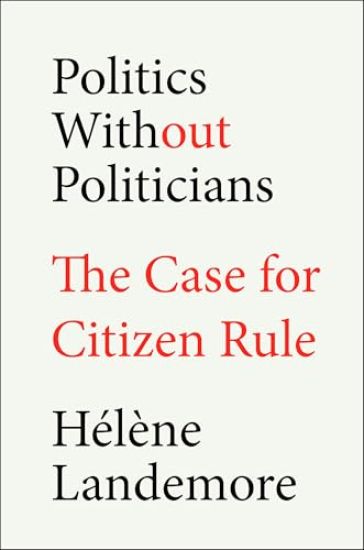
Politicians have failed us. But democracy doesn't have to. Bought by special interests, detached from real life, obsessed with re-election. Politicians make big promises, deliver nothing, and keep the game rigged in their favor. But what can we do? In Politics Without Politicians, acclaimed political theorist H l ne Landemore lays out a radical idea: What if we didn't need politicians at all? What if everyday people--under the right conditions--could govern better than the elites in office? Landemore dismantles the myths that keep power in the hands of the few--the claim that ordinary people are too biased, too ignorant, too easily swayed. The truth? Politicians have the same flaws, but with far greater incentives to serve special interests. Meanwhile, when regular citizens deliberate, they make smarter, fairer, and more forward-thinking decisions. This book reimagines democracy as it was meant to be: A system where power truly belongs to the people--not just at the ballot box, but in shaping the laws and policies that govern our lives.A politics free from corruption--where deliberation, not campaign cash and corporate lobbying, drives decision-making.A democracy where everyone has a voice--not just the wealthiest, most connected, or most powerful. With sharp analysis and real-world examples--from citizens' assemblies shaping constitutional change to deliberative councils tackling climate policy---Landemore shows how we can move beyond a broken system and reclaim democracy for ourselves. This is not a book about what's wrong--it's a manifesto for what's possible. If you've ever felt powerless, Politics Without Politicians will show you how "we the people" can take back democracy.
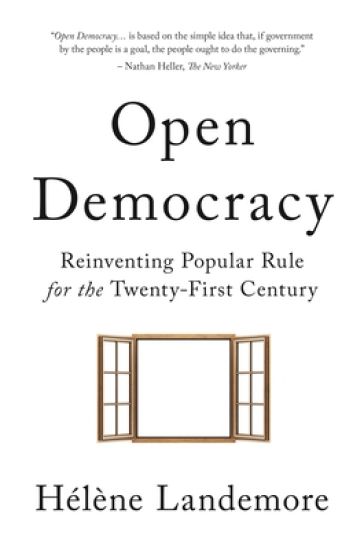
"Open Democracy envisions what true government by mass leadership could look like."—Nathan Heller, New YorkerHow a new model of democracy that opens up power to ordinary citizens could strengthen inclusiveness, responsiveness, and accountability in modern societies To the ancient Greeks, democracy meant gathering in public and debating laws set by a randomly selected assembly of several hundred citizens. To the Icelandic Vikings, democracy meant meeting every summer in a field to discuss issues until consensus was reached. Our contemporary representative democracies are very different. Modern parliaments are gated and guarded, and it seems as if only certain people—with the right suit, accent, wealth, and connections—are welcome. Diagnosing what is wrong with representative government and aiming to recover some of the lost openness of ancient democracies, Open Democracy presents a new paradigm of democracy in which power is genuinely accessible to ordinary citizens.Hélène Landemore favors the ideal of “representing and being represented in turn” over direct-democracy approaches. Supporting a fresh nonelectoral understanding of democratic representation, Landemore recommends centering political institutions around the “open mini-public”—a large, jury-like body of randomly selected citizens gathered to define laws and policies for the polity, in connection with the larger public. She also defends five institutional principles as the foundations of an open democracy: participatory rights, deliberation, the majoritarian principle, democratic representation, and transparency.Open Democracy demonstrates that placing ordinary citizens, rather than elites, at the heart of democratic power is not only the true meaning of a government of, by, and for the people, but also feasible and, today more than ever, urgently needed.
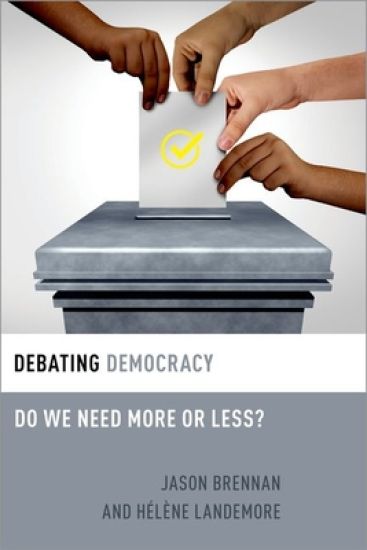
Around the world, faith in democracy is falling. Russia, Turkey, and Venezuela have moved from flawed democracies to authoritarian regimes. Brexit and the rise of far-right parties show that even stable Western democracies are struggling. Partisanship and mutual distrust are increasing. What, if anything, should we do about these problems? In this accessible work, leading philosophers Jason Brennan and Hélène Landemore debate whether the solution lies in having less democracy or more. Brennan argues that democracy has systematic flaws, and that democracy does not and cannot work the way most of us commonly assume. He argues the best solution is to limit democracy's scope and to experiment with certain voting systems that can overcome democracy's problems. Landemore argues that democracy, defined as a regime that distributes power equally and inclusively, is a better way to generate good governance than oligarchies of knowledge. To her, the crisis of "representative democracy" comes in large part from its glaring democratic deficits. The solution is not just more democracy, but a better kind, which Landemore theorizes as "open democracy."

Around the world, faith in democracy is falling. Russia, Turkey, and Venezuela have moved from flawed democracies to authoritarian regimes. Brexit and the rise of far-right parties show that even stable Western democracies are struggling. Partisanship and mutual distrust are increasing. What, if anything, should we do about these problems? In this accessible work, leading philosophers Jason Brennan and Hélène Landemore debate whether the solution lies in having less democracy or more. Brennan argues that democracy has systematic flaws, and that democracy does not and cannot work the way most of us commonly assume. He argues the best solution is to limit democracy's scope and to experiment with certain voting systems that can overcome democracy's problems. Landemore argues that democracy, defined as a regime that distributes power equally and inclusively, is a better way to generate good governance than oligarchies of knowledge. To her, the crisis of "representative democracy" comes in large part from its glaring democratic deficits. The solution is not just more democracy, but a better kind, which Landemore theorizes as "open democracy."
"Open Democracy envisions what true government by mass leadership could look like."—Nathan Heller, New YorkerHow a new model of democracy that opens up power to ordinary citizens could strengthen inclusiveness, responsiveness, and accountability in modern societies To the ancient Greeks, democracy meant gathering in public and debating laws set by a randomly selected assembly of several hundred citizens. To the Icelandic Vikings, democracy meant meeting every summer in a field to discuss issues until consensus was reached. Our contemporary representative democracies are very different. Modern parliaments are gated and guarded, and it seems as if only certain people—with the right suit, accent, wealth, and connections—are welcome. Diagnosing what is wrong with representative government and aiming to recover some of the lost openness of ancient democracies, Open Democracy presents a new paradigm of democracy in which power is genuinely accessible to ordinary citizens.Hélène Landemore favors the ideal of “representing and being represented in turn” over direct-democracy approaches. Supporting a fresh nonelectoral understanding of democratic representation, Landemore recommends centering political institutions around the “open mini-public”—a large, jury-like body of randomly selected citizens gathered to define laws and policies for the polity, in connection with the larger public. She also defends five institutional principles as the foundations of an open democracy: participatory rights, deliberation, the majoritarian principle, democratic representation, and transparency.Open Democracy demonstrates that placing ordinary citizens, rather than elites, at the heart of democratic power is not only the true meaning of a government of, by, and for the people, but also feasible and, today more than ever, urgently needed.
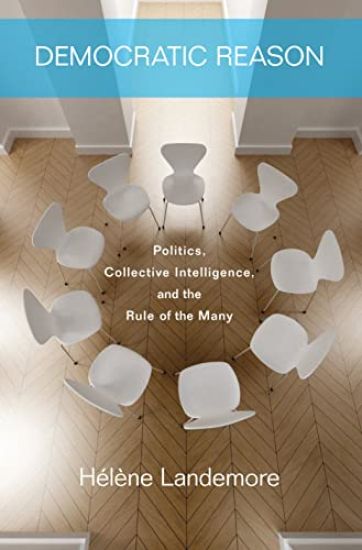
Individual decision making can often be wrong due to misinformation, impulses, or biases. Collective decision making, on the other hand, can be surprisingly accurate. In Democratic Reason, Helene Landemore demonstrates that the very factors behind the superiority of collective decision making add up to a strong case for democracy. She shows that the processes and procedures of democratic decision making form a cognitive system that ensures that decisions taken by the many are more likely to be right than decisions taken by the few. Democracy as a form of government is therefore valuable not only because it is legitimate and just, but also because it is smart. Landemore considers how the argument plays out with respect to two main mechanisms of democratic politics: inclusive deliberation and majority rule. In deliberative settings, the truth-tracking properties of deliberation are enhanced more by inclusiveness than by individual competence. Landemore explores this idea in the contexts of representative democracy and the selection of representatives. She also discusses several models for the "wisdom of crowds" channeled by majority rule, examining the trade-offs between inclusiveness and individual competence in voting. When inclusive deliberation and majority rule are combined, they beat less inclusive methods, in which one person or a small group decide. Democratic Reason thus establishes the superiority of democracy as a way of making decisions for the common good.