Kirjojen hintavertailu. Mukana 12 151 351 kirjaa ja 12 kauppaa.

Kirjailija

Helge Kragh

Kirjat ja teokset yhdessä paikassa: 32 kirjaa, julkaisuja vuosilta 1970-2026, suosituimpien joukossa Niels Bohr and the Quantum Atom. Vertaile teosten hintoja ja tarkista saatavuus suomalaisista kirjakaupoista.

32 kirjaa

Kirjojen julkaisuhaarukka 1970-2026.

Niels Bohr and the Quantum Atom

Niels Bohr and the Quantum Atom

Helge Kragh

Oxford University Press
2012
sidottu
Niels Bohr and the Quantum Atom is the first book that focuses in detail on the birth and development of Bohr's atomic theory and gives a comprehensive picture of it. At the same time it offers new insight into Bohr's peculiar way of thinking, what Einstein once called his 'unique instinct and tact'. Contrary to most other accounts of the Bohr atom, the book presents it in a broader perspective which includes the reception among other scientists and the criticism launched against it by scientists of a more conservative inclination. Moreover, it discusses the theory as Bohr originally conceived it, namely, as an ambitious theory covering the structure of atoms as well as molecules. By discussing the theory in its entirety it becomes possible to understand why it developed as it did and thereby to use it as an example of the dynamics of scientific theories.
Naturvidenskabens ildsjæle

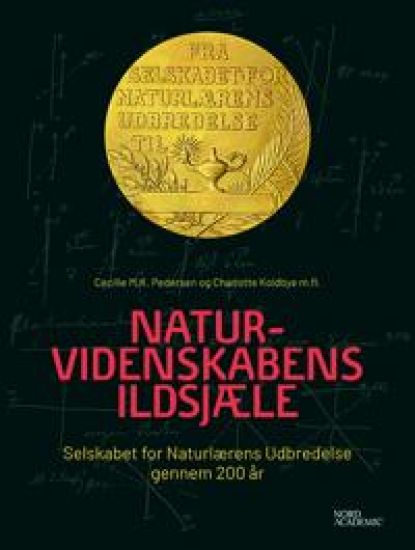
Naturvidenskabens ildsjæle

Cecilie M.K. Pedersen; Charlotte Koldbye; Anja C. Andersen; Martin Bech; Hans Buhl; Henning Haack; Erik Høg; Anja Skaar Jacobsen; Mogens Høgh Jensen; Helge Kragh; Poul R. Kruse; Rosa Nan Leunbach; Gregers Mogensen; Kristian Hvidtfelt Nielsen; Anita Kildebæk Nielsen; Dorte Olesen; Jens Olaf Pepke Pedersen; Annette Buhl Sørensen; Laila Zwisler

G. E. C. Gads Forlag
2024
sidottu
Selskabet for Naturlærens Udbredelse, i daglig tale SNU, blev sat i verden for at formidle naturvidenskab til en bredere offentlighed. Det blev stiftet i 1824 af H.C. Ørsted, og det var dels hans ambition at fremme almen oplysning og dannelse, dels at naturvidenskaben skulle komme samfundet til gavn i form af anvendelse inden for de praktiske fag og i industrien. I denne bog fortælles SNUs 200-årige historie. Det er historien om Selskabets udvikling og udfordringer gennem tiden, fx som følge af skiftende tidsånd, historiske begivenheder og den politiske dagsorden, men ikke mindst om en række af de markante videnskabsfolk, som gennem tiden har været medlemmer eller er blevet tildelt Selskabets H.C. Ørsted Medalje – koryfæer og veritable fyrtårne som H.C. Ørsted selv og Nobelprismodtagere som Niels Bohr, Aage Bohr og Morten Meldal, og andre, som i dag ikke er almindeligt kendt, fx Martin Knudsen, der lagde grunden til moderne havforskning, S.P.L. Sørensen, der opfandt pH-skalaen, og Danmarks første kvindelige fysiker Kirstine Meyer.
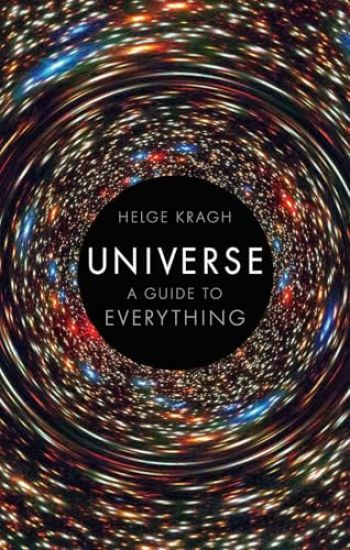
Universe

Universe

Helge Kragh

REAKTION BOOKS
2026
sidottu
The physical universe is a most peculiar concept, not only different from the objects it contains but also from space itself. Cosmology – the science that seeks to explain it – has always differed from other sciences, drawing on philosophy and even theology. These influences remain, even in today’s data-driven cosmological models. This accessible and far-reaching book traces the development of cosmological thought from antiquity to the twenty-first century, with particular focus on the foundational work of Einstein, Hubble and others in the early twentieth century. It explores how modern theories rest on a surprisingly fragile base and argues that many cosmic mysteries may remain permanently unsolved. Rich in historical and philosophical insight, this is a lucid guide to what we know – and perhaps cannot know – about the universe.
Aftryk - Tidslinje

Aftryk - Tidslinje

Helge Kragh

Gyldendal undervisning
2026
muu
Murens fald i 1989 er det første nedslag på denne tidslinje over nyere historie, som Danmark deler med verden, og som vi deler med hinanden. Plakaten giver et overblik over udvalgte begivenheder, som spænder fra det lokale til det globale, og understøtter elevernes arbejde med kronologi og historiske sammenhænge. Brug tidslinjen til at tale om de udvalgte begivenheder, og hvilke historiske processer de repræsenterer. På den måde kan den også inspirere klassen til at udvikle deres egen alternative tidslinje over nyere historie og fx tilføje de år, som er udeladt. Plakaten måler 80 x 60 cm.
The Names of Science

The Names of Science

Helge Kragh

Oxford University Press
2024
sidottu
The history of science is echoed in the development of its language and the names chosen for its technical terms. The Names of Science examines in detail how, over time, new words have entered the scientific lexicon and how some of them, but far from all, have survived to the present. Why is a transistor called a transistor and not something else? Why was the term 'scientist' only coined in 1834, and why was the name regarded as controversial for a long time afterwards? There is a story behind every scientific word we use today. In this work, Helge Kragh tells many of these stories, taking a broad historical perspective from the Renaissance to the present. By combining elements of linguistics with the history of the natural sciences including physics, chemistry, and astronomy, this book offers a new and innovative perspective on the historical development of the natural sciences. Following an introductory list of useful linguistic terms, the book is structured in six chapters, which cover important phases in the history of science, dealing with a vast range of scientific terminology from physics, chemistry, geology, astronomy, to cosmology. It also considers, if only briefly, how English - and not, say, Latin or French - developed to become the internationally accepted language of science. Contrary to other works dealing with the subject, The Names of Science pays serious attention to the historical dimension of scientific language, and to the way in which scientists have, sometimes unconsciously, acted as linguists and neologists in their research work.
The Names of Science

The Names of Science

Helge Kragh

Oxford University Press
2024
nidottu
The history of science is echoed in the development of its language and the names chosen for its technical terms. The Names of Science examines in detail how, over time, new words have entered the scientific lexicon and how some of them, but far from all, have survived to the present. Why is a transistor called a transistor and not something else? Why was the term 'scientist' only coined in 1834, and why was the name regarded as controversial for a long time afterwards? There is a story behind every scientific word we use today. In this work, Helge Kragh tells many of these stories, taking a broad historical perspective from the Renaissance to the present. By combining elements of linguistics with the history of the natural sciences including physics, chemistry, and astronomy, this book offers a new and innovative perspective on the historical development of the natural sciences. Following an introductory list of useful linguistic terms, the book is structured in six chapters, which cover important phases in the history of science, dealing with a vast range of scientific terminology from physics, chemistry, geology, astronomy, to cosmology. It also considers, if only briefly, how English - and not, say, Latin or French - developed to become the internationally accepted language of science. Contrary to other works dealing with the subject, The Names of Science pays serious attention to the historical dimension of scientific language, and to the way in which scientists have, sometimes unconsciously, acted as linguists and neologists in their research work.
Æter / Aether

Æter / Aether

Christopher Sand-Iversen; Helge Kragh; Tone Roald

-
2024
pokkari
Bogen Æter er lavet i forbindelse med udstillingen af samme navn, som blev vist påKunstCentret Silkeborg Bad 13. januar – 2. juni 2024. Projektet tog begrebet ’æter’ op sommetafor for det, der ikke kan måles og vejes. Ved at udfordre deres materialers fysiskebegrænsninger, blev kunstnernes værker også til broer mellem domæner. De forskellige fagligheder der har arbejdet sammen om projektet, har udviklet ny viden og tilgange til ideen om æteren gennem research, der har fokuseret ikke kun på koncepter men også materialerne, som den altid foranderlige æter interagerer med.The book Aether was produced in connection with the exhibition of the same name, shown at Silkeborg Bad Art Centre from 13 January to 2 June 2024. The project took up the concept of ‘the ether’ as a metaphor for that which cannot be measured and weighed. By challenging the physical restraints of their materials, the artists’ works also became bridges between domains. The different specialists who have worked together on the project have developed new knowledge and approaches to the idea of the ether, through research focused not only on concepts but also the materials, with which the ever-changing ether interacts.Koncept og kuratering / Concept and curationVinni Frederiksen og/and Ane Fabricius ChristiansenVærker af / Works byHanne FriisAnett BiliczkiGrethe WittrockKasper KjeldgaardBarbara SkovmandAne Fabricius ChristiansenInge Lise WestmanLise Seier PetersenVinni FrederiksenErna SkúladottírPekka PaikkariPipaluk LakeEssays af / byHelge Krah, Neils Bohr InstituteChristopher Sand-Iversen, SixtyEight Art InstituteTone Roald, University of CopenhagenSoftcover, 216 sider, fuld farve.
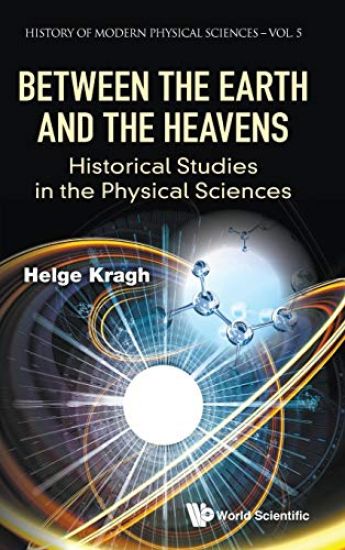
Between The Earth And The Heavens: Historical Studies In The Physical Sciences
Consisting of separate cases organized by chapter and divided into independent sections, this is no ordinary history of science book. Between the Earth and the Heavens is an episodic history of modern physical sciences covering the chronological development of physics, chemistry and astronomy since about 1860. Integrating historical authenticity and modern scientific knowledge, the cases within deal with the often surprising connections between science done in the laboratory (physics, chemistry) and science based on observation (astronomy, cosmology).Between the Earth and the Heavens presupposes an interest in and a certain knowledge of the physical sciences, but it is written for non-specialists and includes only a limited number of equations which are all clearly explained in simple terms. For readers who wish to delve further, the book is fully documented and ends with a bibliography of cited quotations and other relevant sources.
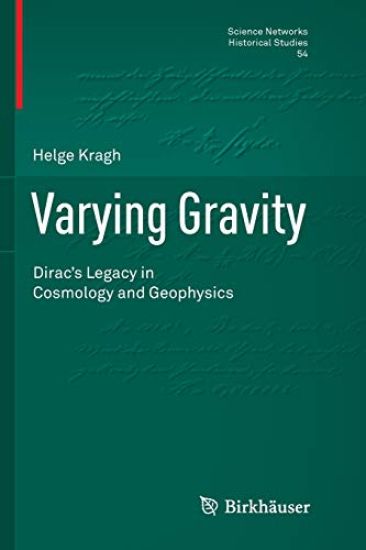
Varying Gravity

Varying Gravity

Helge Kragh

Birkhauser Verlag AG
2018
nidottu
The main focus of this book is on the interconnection of two unorthodox scientific ideas, the varying-gravity hypothesis and the expanding-earth hypothesis. As such, it provides a fascinating insight into a nearly forgotten chapter in both the history of cosmology and the history of the earth sciences.The hypothesis that the force of gravity decreases over cosmic time was first proposed by Paul Dirac in 1937. In this book the author examines in detail the historical development of Dirac’s hypothesis and its consequences for the structure and history of the earth, the most important of which was that the earth must have been smaller in the past.
From Transuranic to Superheavy Elements

From Transuranic to Superheavy Elements

Helge Kragh

Springer International Publishing AG
2018
nidottu
The story of superheavy elements - those at the very end of the periodic table - is not well known outside the community of heavy-ion physicists and nuclear chemists. But it is a most interesting story which deserves to be known also to historians, philosophers, and sociologists of science and indeed to the general public. This is what the present work aims at. It tells the story or rather parts of the story, of how physicists and chemists created elements heavier than uranium or searched for them in nature. And it does so with an emphasis on the frequent discovery and naming disputes concerning the synthesis of very heavy elements. Moreover, it calls attention to the criteria which scientists have adopted for what it means to have discovered a new element. In this branch of modern science it may be more appropriate to speak of creation instead of discovery. The work will be of interest to scientists as well as to scholars studying modern science from a meta-perspective.
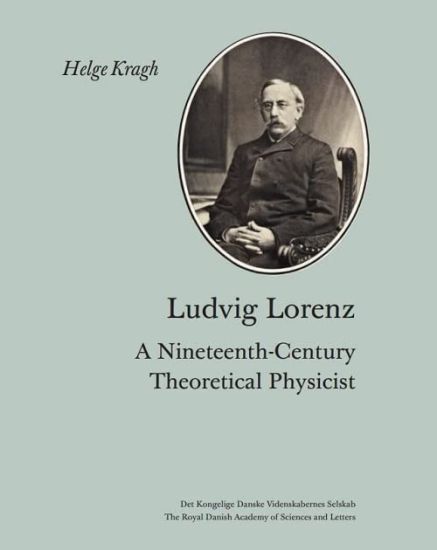
Ludvig Lorenz

Ludvig Lorenz

Helge Kragh

Det Kongelige Danske Videnskabernes Selskab
2018
nidottu
Ludvig Valentin Lorenz (1829-1891) was Denmark's first theoretical physicist of international recognition. Although generally considered a secondary figure in the history of science, he contributed importantly to a wide range of subjects ranging from materials science to fundamental theories of optics and electrodynamics.Apart from his theoretical work he was also a brilliant experimenter who felt as much at home in his laboratory as behind his desk. Today his name is eponymously associated with terms such as the Lorenz gauge, the Lorenz-Lorentz formula, the Lorenz-Mie theory and the Lorenz number.
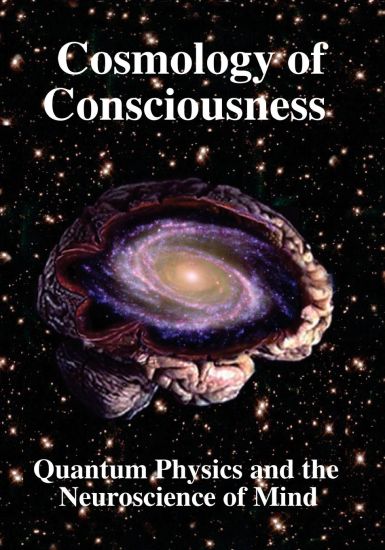
Cosmology of Consciousness: Quantum Physics & Neuroscience of Mind

Cosmology of Consciousness: Quantum Physics & Neuroscience of Mind

Helge Kragh; Michael Mensky; Nicholas Campion

Science Publishers
2017
nidottu
1. How Consciousness Becomes the Physical Universe. Menas Kafatos, Rudolph E. Tanzi, and Deepak Chopra2. Cosmological Foundations of Consciousness. Chris King3. The Origin of the Modern Anthropic Principle. Helge Kragh4. Consciousness in the Universe: Neuroscience, Quantum Space-Time Geometry. Roger Penrose, and Stuart Hameroff5. What Consciousness Does: A Quantum Cosmology of Mind. Chris J. S. Clarke6. Quantum Physics & the Multiplicity of Mind: Split-Brains, Fragmented Minds, Dissociation, Quantum Consciousness. R. Joseph7. Logic of Quantum Mechanics and Phenomenon of Consciousness. Michael B. Mensky8. Evolution of Paleolithic Cosmology and Spiritual Consciousness. R. Joseph9. Alien Life and Quantum Consciousness, Randy D. Allen10. Evolution of Consciousness in the Ancient Corners of the Cosmos. R. Joseph11. How Consciousness Became the Universe R. Joseph12. Cosmology and Psyche in the Classical World: Plato, Aristotle, Zeno, Ptolemy, Nicholas Campion 13. Was There A Ptolemaic Revolution in AncientEgyptian Astronomy? Nicholas Campion
Varying Gravity

Varying Gravity

Helge Kragh

Birkhauser Verlag AG
2016
sidottu
The main focus of this book is on the interconnection of two unorthodox scientific ideas, the varying-gravity hypothesis and the expanding-earth hypothesis. As such, it provides a fascinating insight into a nearly forgotten chapter in both the history of cosmology and the history of the earth sciences.The hypothesis that the force of gravity decreases over cosmic time was first proposed by Paul Dirac in 1937. In this book the author examines in detail the historical development of Dirac’s hypothesis and its consequences for the structure and history of the earth, the most important of which was that the earth must have been smaller in the past.
Julius Thomsen

Julius Thomsen

Helge Kragh

Det Kongelige Danske Videnskabernes Selskab
2016
nidottu
Julius Thomsen (1826-1909) was a prominent Danish chemist who acquired fame for his systematic and meticulous measurements of the thermal effects associated with chemical processes. For this work he received numerous honours, among them the Davy Medal from the Royal Society. Apart from his position as one of the founders of classical thermodynamics, he also has a place in the history of chemical technology due to his invention of a method of producing soda from the Greenlandic mineral cryolite. This invention resulted in a major industrial enterprise which was of great importance to Danish economy. Keenly interested in the electrical sciences, Thomsen constructed a new type of battery which for a while attracted international attention. Last but not least, he made significant contributions to the understanding of the periodic system in terms of the hypothesis of composite atoms. He ended his career by questioning if argon was really a chemical element.
Tænkepauser 13-24

Tænkepauser 13-24

Verner Møller; Anne Marie Pahuus; Dorthe Berntsen; Bertel Nygaard; Ulrik Uggerhøj; Helge Kragh; Ole Høiris; Jesper Sørensen; Gorm Toftegaard Nielsen; Carsten Bagge Laustsen; Dan Ringgaard; Katrine Frøkjær Baunvig

Aarhus Universitetsforlag
2015
nidottu
Tænkepauser 13-24. Tænkeboks 2: Kroppen, Kærlighed, Erindring, Håb, Tid, Sandhed, Mennesket, Magi, Loven, Terror, Litteratur og Romantik
Higher Speculations

Higher Speculations

Helge Kragh

Oxford University Press
2015
nidottu
Throughout history, people have tried to construct 'theories of everything': highly ambitious attempts to understand nature in its totality. This account presents these theories in their historical contexts, from little-known hypotheses from the past to modern developments such as the theory of superstrings, the anthropic principle, and ideas of many universes, and uses them to problematize the limits of scientific knowledge. Do claims to theories of everything belong to science at all? Which are the epistemic standards on which an alleged scientific theory of the universe - or the multiverse - is to be judged? Such questions are currently being discussed by physicists and cosmologists, but rarely within a historical perspective. This book argues that these questions have a history and that knowledge of the historical development of 'higher speculations' may inform and qualify the current debate on the nature and limits of scientific explanation.
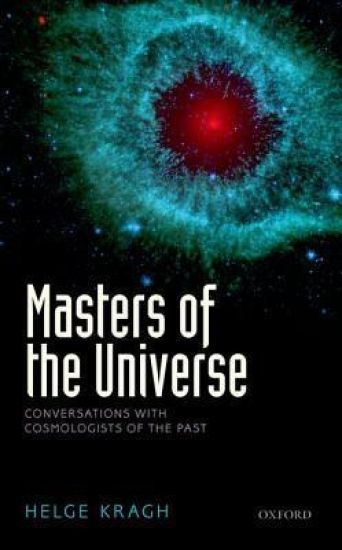
Masters of the Universe

Masters of the Universe

Helge Kragh

Oxford University Press
2014
sidottu
How did our modern picture of the universe come into being? Masters of the Universe tells this fascinating story in an unusual format that blends factual and fictional elements. It is based on a series of interviews that a fictional person conducted with leading astronomers and physicists between 1913 and 1965. Among the interviewed scientists are giants such as Albert Einstein, Edwin Hubble, and George Gamow, but also scientists who are less well known today or not primarily known as cosmologists such as Karl Schwarzschild, Paul Dirac, and Svante Arrhenius. By following the interviews the reader gets a lively and "almost authentic" impression of the problems that faced this early generation of cosmologists. Although the interviews are purely fictional, a product of the author's imagination, they could have taken place in just the way that is described. They are solidly based on historical facts and, moreover, supplemented with careful annotations and references to the literature. In this way the book bridges the gap between scholarly and popular history of science.
Sandhed

Sandhed

Helge Kragh

AARHUS UNIVERSITY PRESS
2014
nidottu
Den kan vAere ilde hort, hel og halv, og den hele far du fra born og fulde folk. Der er sandt at sige tale om sandheden. Eller maske sandheder, for der er flere udgaver. Astronomer mener ikke lAengere, Pluto er en planet, men det gjorde de engang. Nogle tror, Jesus er sandheden, andre Koranen. Uanset hvad vil en ungkarl altid vAere ugift. Alt er nemlig ikke relativt. Din lognedetektor styres heldigvis hverken af born eller berusede, men af Helge Kragh, professor i videnskabshistorie ved Aarhus Universitet, og han har sandt for dyden tAenkt sig at sige dig et par sandheder.
Higher Speculations

Higher Speculations

Helge Kragh

Oxford University Press
2011
sidottu
Throughout history, people have tried to construct 'theories of everything': highly ambitious attempts to understand nature in its totality. This account presents these theories in their historical contexts, from little known hypotheses from the past to modern developments such as the theory of superstrings, the anthropic principle and ideas of many universes, and uses them to problematize the limits of scientific knowledge. Do claims to theories of everything belong to science at all? Which are the epistemic standards on which an alleged scientific theory of the universe - or the multiverse - is to be judged? Such questions are currently being discussed by physicists and cosmologists, but rarely within a historical perspective. This book argues that these questions have a history and that knowledge of the historical development of 'higher speculations' may inform and qualify the current debate of the nature and limits of scientific explanation.