Kirjojen hintavertailu. Mukana 12 595 353 kirjaa ja 12 kauppaa.

Kirjailija

Helmut Müller-Sievers

Kirjat ja teokset yhdessä paikassa: 4 kirjaa, julkaisuja vuosilta 2012-2026, suosituimpien joukossa The Science of Literature. Vertaile teosten hintoja ja tarkista saatavuus suomalaisista kirjakaupoista.

4 kirjaa

Kirjojen julkaisuhaarukka 2012-2026.

The Novel Experience

The Novel Experience

Helmut Müller-Sievers

CORNELL UNIVERSITY PRESS
2026
pokkari
The Novel Experience introduces new approaches to the study of narrative fiction, for scholars, critics, teachers, and readers. At the heart of this concise book is a conception of experience that is influenced by the third-century Buddhist thinker Nagarjuna on the fictionality of truth and the emptiness of reality. Combining this insight with Nietzsche's method of intellectual genealogy and William James's transformation of emotion into "pure experience," Helmut Müller-Sievers proposes a way to talk about the experience of reading a novel that suspends the rush to judgment and ever-new "turns" in modes of interpretation. In its meditative corporeality, it is also beyond the grasp of any AI. For Müller-Sievers, every experience is novel and every novel is an experience. He explicates this parallelism through philosophical works that privilege experience over knowledge (without denying the importance of understanding). Interspersing analyses of Nagarjuna, Nietzsche, and James with personal essays about the lived experience of reading works like Ellison's Invisible Man and Kleist's The Marquise of O, The Novel Experience shows that reading about experiences in novels has a transformative effect on the reader's understanding of what it is to experience. Teachers and readers should attend to these changes, acknowledging their singularity while creating a community within which they can abide.
The Novel Experience

The Novel Experience

Helmut Müller-Sievers

CORNELL UNIVERSITY PRESS
2026
sidottu
The Novel Experience introduces new approaches to the study of narrative fiction, for scholars, critics, teachers, and readers. At the heart of this concise book is a conception of experience that is influenced by the third-century Buddhist thinker Nagarjuna on the fictionality of truth and the emptiness of reality. Combining this insight with Nietzsche's method of intellectual genealogy and William James's transformation of emotion into "pure experience," Helmut Müller-Sievers proposes a way to talk about the experience of reading a novel that suspends the rush to judgment and ever-new "turns" in modes of interpretation. In its meditative corporeality, it is also beyond the grasp of any AI. For Müller-Sievers, every experience is novel and every novel is an experience. He explicates this parallelism through philosophical works that privilege experience over knowledge (without denying the importance of understanding). Interspersing analyses of Nagarjuna, Nietzsche, and James with personal essays about the lived experience of reading works like Ellison's Invisible Man and Kleist's The Marquise of O, The Novel Experience shows that reading about experiences in novels has a transformative effect on the reader's understanding of what it is to experience. Teachers and readers should attend to these changes, acknowledging their singularity while creating a community within which they can abide.
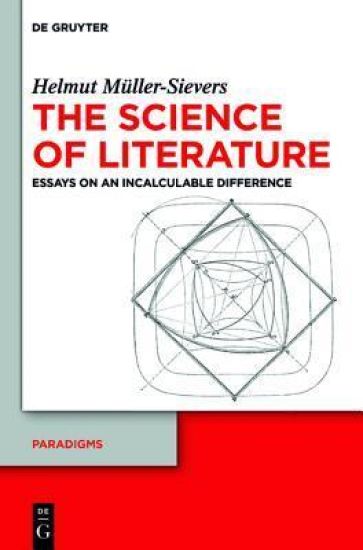
The Science of Literature

The Science of Literature

Helmut Müller-Sievers; David E. Wellbery

De Gruyter
2015
sidottu
One of the most contentious questions in contemporary literary studies is whether there can ever be a science of literature that can lay claim to objectivity and universality, for example by concentrating on philological criticism, by appealing to cognitive science, or by exposing the underlying media of literary communication. The present collection of essays seeks to open up this discussion by posing the question’s historical and systematic double: has there been a science of literature, i.e. a mode of presentation and practice of reference in science that owes its coherence to the discourse of literature? Detailed analyses of scientific, literary and philosophical texts show that from the late 18th to the late 19th century science and literature were bound to one another through an intricate web of mutual dependence and distinct yet incalculable difference. The Science of Literature suggests that this legacy continues to shape the relation between literary and scientific discourses inside and outside of academia.
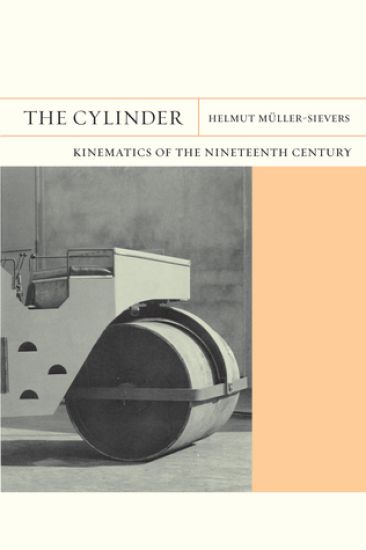
The Cylinder

The Cylinder

Helmut Müller-Sievers

University of California Press
2012
pokkari
"The Cylinder" investigates the surprising proliferation of cylindrical objects in the nineteenth century, such as steam engines, phonographs, panoramas, rotary printing presses, silos, safety locks, and many more. Examining this phenomenon through the lens of kinematics, the science of forcing motion, Helmut Muller-Sievers provides a new view of the history of mechanics and of the culture of the industrial revolution, including its literature that focuses on the metaphysics and aesthetics of motion. Muller-Sievers explores how nineteenth-century prose falls in with the specific rhythm of cylindrical machinery, re-imagines the curvature of cylindrical spaces, and conjoins narrative progress and reflection in a single stylistic motion. Illuminating the intersection of engineering, culture, and literature, he argues for a concept of culture that includes an epoch's relation to the motion of its machines.