Kirjojen hintavertailu. Mukana 12 390 323 kirjaa ja 12 kauppaa.

Kirjailija

Henning Friis Poulsen

Kirjat ja teokset yhdessä paikassa: 2 kirjaa, julkaisuja vuosilta 2004-2013, suosituimpien joukossa Three-Dimensional X-Ray Diffraction Microscopy. Vertaile teosten hintoja ja tarkista saatavuus suomalaisista kirjakaupoista.

2 kirjaa

Kirjojen julkaisuhaarukka 2004-2013.

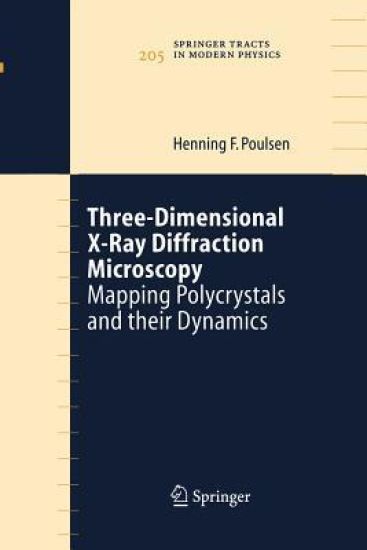
Three-Dimensional X-Ray Diffraction Microscopy

Three-Dimensional X-Ray Diffraction Microscopy

Henning Friis Poulsen

Springer-Verlag Berlin and Heidelberg GmbH Co. K
2013
nidottu
Three-dimensional x-ray diffraction (3DXRD) microscopy is a novel experimental method for structural characterisation of polycrystalline materials. The position, morphology, phase, strain and crystallographic orientation of hundreds of grains or sub-grain embedded within mm-cm thick specimens can be determined simultaneously. Furthermore, the dynamics of the individual structural elements can be monitored during typical processes such as deformation or annealing. The book gives a comprehensive account of the methodology followed by a summary of selected applications. The method is presented from a mathematical/crystallographic point-of-view but with sufficient hands-on details to enable the reader to plan his or her own experiments. The scope of applications includes work in materials science and engineering, geophysics, geology, chemistry and pharmaceutical science.
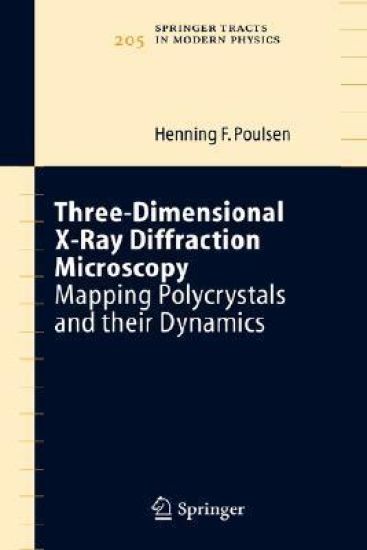
Three-Dimensional X-Ray Diffraction Microscopy

Three-Dimensional X-Ray Diffraction Microscopy

Henning Friis Poulsen

Springer-Verlag Berlin and Heidelberg GmbH Co. K
2004
sidottu
Three-dimensional x-ray diffraction (3DXRD) microscopy is a novel experimental method for structural characterisation of polycrystalline materials. The position, morphology, phase, strain and crystallographic orientation of hundreds of grains or sub-grain embedded within mm-cm thick specimens can be determined simultaneously. Furthermore, the dynamics of the individual structural elements can be monitored during typical processes such as deformation or annealing. The book gives a comprehensive account of the methodology followed by a summary of selected applications. The method is presented from a mathematical/crystallographic point-of-view but with sufficient hands-on details to enable the reader to plan his or her own experiments. The scope of applications includes work in materials science and engineering, geophysics, geology, chemistry and pharmaceutical science.