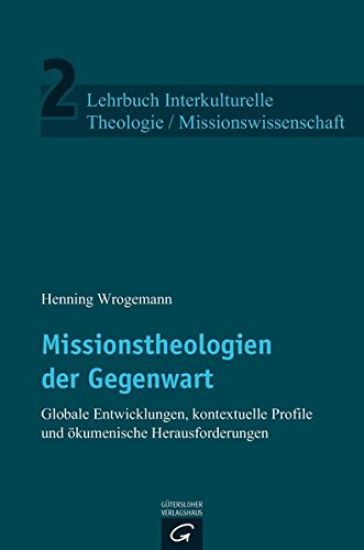
Kirjojen hintavertailu. Mukana 12 495 294 kirjaa ja 12 kauppaa.

Kirjailija

Henning Wrogemann

Kirjat ja teokset yhdessä paikassa: 15 kirjaa, julkaisuja vuosilta 2012-2025, suosituimpien joukossa Bibel Und Koran: Christen Und Muslime in Dialog Und Differenz. Vertaile teosten hintoja ja tarkista saatavuus suomalaisista kirjakaupoista.

15 kirjaa

Kirjojen julkaisuhaarukka 2012-2025.

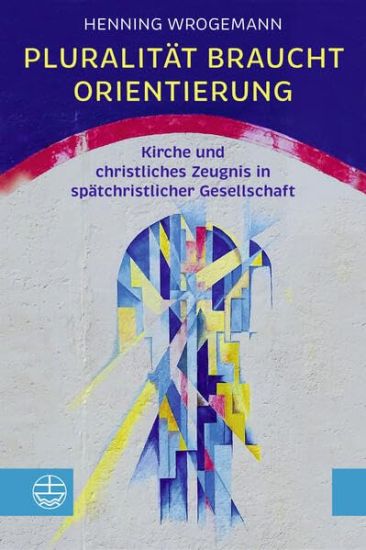
Pluralitat Braucht Orientierung: Kirche Und Christliches Zeugnis in Spatchristlicher Gesellschaft
Die zunehmende Pluralitat der deutschen Gesellschaft bedeutet, dass die Breite des als selbstverstandlich Erachteten abnimmt. Damit wird Menschen eine hohere Orientierungsleistung abverlangt. Dies betrifft religios-weltanschauliche Themen ebenso wie die Frage, wie gesellschaftliche Multikulturalitat gedeutet und bewertet wird und welche Gemeinsamkeiten unverzichtbar sind, damit die Gesellschaft nicht zerfallt. In diesem Band werden in lokaler wie interkultureller Perspektive Themen wie Multikulturalismus, postkoloniale Theorie, Theologie der Religionen, Theorien des Dialogs, interkulturelle Hermeneutik, Fragen von Pluralitat und Wahrheitsanspruchen, christlich-islamische Beziehungen, christliche Sendung und Theologie der Mission behandelt. Es geht insgesamt um christliches Zeugnis und Kirche in einer spatchristlichen Gesellschaft sowie deren Beitrag zu aktuellen zivilgesellschaftlichen Diskursen. English summary: The increasing plurality of German society means that the breadth of what is taken for granted is decreasing. Therefore, people are forced to spend more energy on orientation. This applies to religious and ideological issues as well as the question of how social multiculturalism is interpreted and evaluated and which commonalities are indispensable so that society does not fall apart. This volume deals with topics such as multiculturalism, postcolonial theory, theology of religions, theories of dialogue, intercultural hermeneutics, questions of plurality and truth claims, Christian-Islamic relations, Christian witness and theology of mission from a local and intercultural perspective. Overall, it is about Christian witness and church in a late Christian society and their contribution to current civil society discourses.
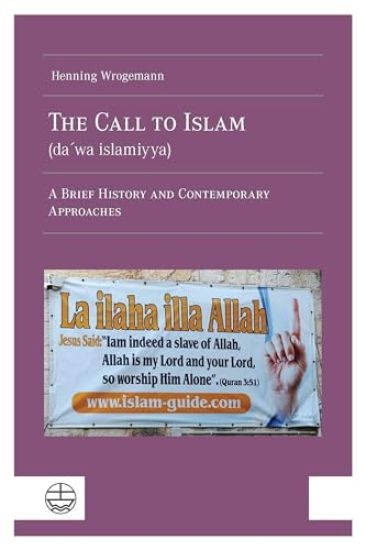
The Call to Islam (Da'wa Islamiyya): A Brief History and Contemporary Approaches
Today Islam is numerically the second largest religion in the world. Its message is aimed generally at all people and has been addressed to Muslims and non-Muslims alike since the beginning of Islam through the Call to Islam (Arabic da'wa islamiyya). But what exactly does Call to Islam mean? After a brief historical sketch of different forms of da'wa, this book provides an overview of various da'wa theologies of the 20th and 21st centuries as well as of some da'wa organizations and different da'wa approaches. Finally, the question is raised about the challenges that da'wa activities of a conservative or an Islamist Islam pose for liberal and democratic societies.
Bibel Und Koran: Christen Und Muslime in Dialog Und Differenz

Bibel Und Koran: Christen Und Muslime in Dialog Und Differenz

Henning Wrogemann

Evangelische Verlagsanstalt
2022
nidottu
German description: Was sind die Grundlagen von Dialog und friedlicher Koexistenz zwischen Christen und Muslimen? Ist es die Behauptung, Christen und Muslime glaubten an denselben Gott? Oder werden damit nicht die grundlegenden Unterschiede und wahren Probleme ausgeblendet? Worin aber bestehen die Differenzen zwischen Bibel und Koran, dem biblischen und dem koranischen Gottesbild? Und was ist unter dem Begriff Dialog genau zu verstehen? In diesem Band werden anhand biblischer und koranischer Referenzen Themen wie Gott und Liebe, Herr-Sein Jesu Christi oder Schriftverstandnis behandelt. Einer Differenzierung des Dialogbegriffs schliessen sich Beobachtungen zum Phanomen Dialog und Macht in raumtheoretischer Perspektive an. Auch Begriffe wie Apologetik, Bekehrung oder der Aufruf zum Islam (arab. dacwa) / Mission werden behandelt. Als Alternative zu Tendenzen christlicher Selbstrelativierung wird der Ansatz einer Theologie Interreligioser Beziehungen vorgeschlagen. English summary: What are the foundations of dialogue and peaceful coexistence between Christians and Muslims? Is it the claim that Christians and Muslims believe in "the same" God? Or does this not conceal the fundamental differences and real problems? What are the differences, though, between the Bible and the Koran, the biblical and the Koranic image of God? And what is meant exactly by the concept dialogue? In this volume, biblical and Koranic references are used to address themes such as God and love, the Lordship of Jesus Christ, and the understanding of Scripture. Following a differentiation of the concept of dialogue, there are observations on the phenomenon of "dialogue" and power in a spatial and theoretical perspective. Also treated are concepts such as apologetics, conversion, and the call to Islam (Arab. dacwa) / mission. As an alternative to tendencies of Christian self-relativization, the volume proposes the approach of a theology of interreligious relations. Henning Wrogemann, Dr. theol., Jahrgang 1964, ist Professor fur Religionswissenschaft und Interkulturelle Theologie an der Kirchlichen Hochschule Wuppertal und Leiter des Instituts fur Interkulturelle Theologie und Interreligiose Studien (www.iitis.de). Seine Arbeitsschwerpunkte sind Interkulturelle Hermeneutik, Mission und Dialog, Interreligiose Beziehungen, Gegenwartsfragen im Islam.
Religionswissenschaft Und Interkulturelle Theologie

Religionswissenschaft Und Interkulturelle Theologie

Henning Wrogemann

Evangelische Verlagsanstalt
2020
sidottu
Religious Studies and Intercultural Theology In the section Religious Studies, the work offers a journey through religious research from the early Enlightenment to the present day. It covers approaches in the fields of religious philology, phenomenology, sociology, ethnology and economics as well as more recent approaches to discourse theory, and postcolonial or cultural perspectives in religious studies. This is followed by basic informations on Judaism, Hinduism, Buddhism and Islam in past and present. The section Intercultural Theology offers overviews on the history of the spread of Christianity, on mission theologies in history and the present, on forms of contextual theology as well as on relevant topics of church practice in different continents. This is followed by reflections on the question of interreligious coexistence and competition, on dialogue and witness, and the concept of a Christian theology of interreligious relations.
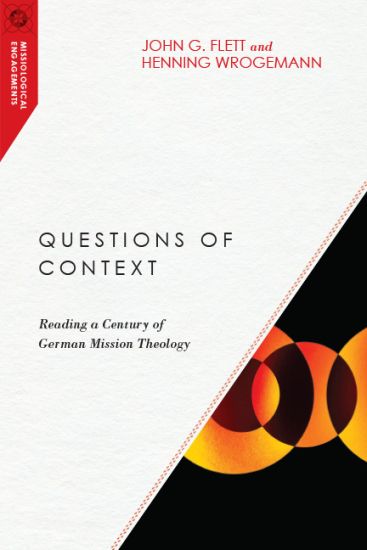
Questions of Context – Reading a Century of German Mission Theology
The gospel is for every tribe, tongue, and nation (Revelation 7:9), but there is no single biblical or theological model for the relationship between the gospel and these diverse cultures. Indeed, every suggested approach carries its own range of philosophical and theological commitments that all too often remain unexamined. Contextualization is fraught with challenges—yet wrestling with questions of context is essential for how we understand mission, theology, and the embodiment of the Christian faith. German missiology has engaged these questions in a variety of ways that can both inform and critique Anglo-American traditions. In this compilation and analysis, John Flett and Henning Wrogemann translate and comment on a core thread of German missiological works, explaining both their historical and current significance. Drawn from journals and books across a century of academic discourse, these classic writings trace developments from Gustav Warneck, the father of contemporary missiology, through key thinkers such as Karl Hartenstein, who coined the term missio Dei, down to twenty-first century discussions of intercultural hermeneutics. Along the way they reveal advances, mistakes, and changing definitions as German missiologists interacted with the cultural and political realities of their time. This longitudinal study, showcasing many texts available in English for the first time, tackles the history and dynamics of contextualization head-on and sheds new light on the state of missiology today. We are reminded, Flett and Wrogemann argue, that we must keep working to honor difference within the worldwide Christian community as necessary to the fullness of our being in Christ. Missiological Engagements charts interdisciplinary and innovative trajectories in the history, theology, and practice of Christian mission, featuring contributions by leading thinkers from both the Euro-American West and the majority world whose missiological scholarship bridges church, academy, and society.
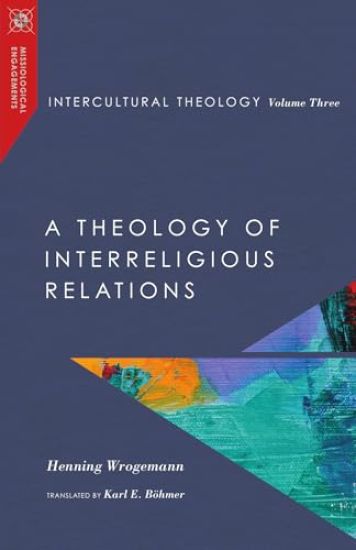
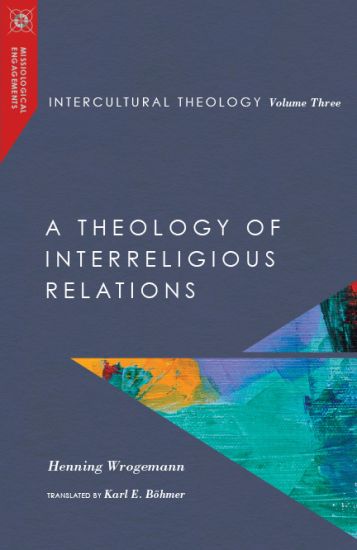
Intercultural Theology, Volume Three – A Theology of Interreligious Relations
Ten Outstanding Books in Mission Studies, World Christianity and Intercultural Theology for 2019 — International Bulletin of Mission Research (IBMR) Christianity is not only a global but also an intercultural phenomenon. In this third volume of his three-volume Intercultural Theology, Henning Wrogemann proposes that we need to go beyond currently trending theologies of mission to formulate both a theory of interreligious relations and a related but methodologically independent theology of interreligious relations. Migratory movements are contributing to an ongoing process of religious pluralization in societies that tended to be more religiously homogenous in the past. Interreligious platforms, movements, and organizations are growing in number. Meanwhile, everyday life continues to be characterized by very different modes of interreligious cooperation. Coming to a better understanding of such modes is a major concern for societies with high levels of religious and cultural plurality. Wrogemann's conviction is that much would be achieved if we posed new and different questions. When it comes to interreligious relations, what is significant, and what is meaningful? What exactly is a dialogue? Which factors are at play when people from different cultural and religious traditions come into contact with each other as physical beings in real-life situations? What about the different images of the self and of the other? Which interests and hidden motives underlie which claims to validity? Exploring these questions and more in masterful scope and detail, Wrogemann's work will richly inform the study of interreligious relations. Missiological Engagements charts interdisciplinary and innovative trajectories in the history, theology, and practice of Christian mission, featuring contributions by leading thinkers from both the Euro-American West and the majority world whose missiological scholarship bridges church, academy, and society.
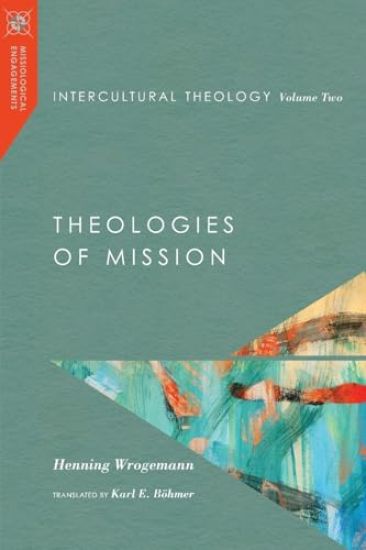
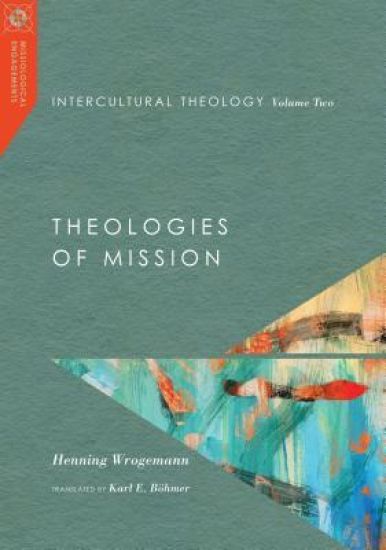
Intercultural Theology, Volume Two – Theologies of Mission
Christianity is not only a global but also an intercultural phenomenon. In this second volume of his three-volume Intercultural Theology, Henning Wrogemann turns to theologies of mission. Mission theologies, he argues, are found in a wide range of implicit as well as explicit forms, from the practice of Christian presence by a Pakistani Christian among a marginalized people to the published deliberations of mission scholars in the West. The task of intercultural theology is to investigate and promote awareness of the variety of culture- and context-specific theologies of mission. From Warneck to Bosch, from Edinburgh to Lausanne to Busan, Wrogemann provides an overview of the theological underpinnings, rationalizations, and visions for mission and its practice. Tracing developments across a range of Christian traditions, movements, themes, and regions of the globe, from Europe and North America to sub-Saharan Africa, Wrogemann presents us with an array of mission theologies across the scope of the modern missionary movement. This rich conspectus is rounded out with the doxological dimension of mission and the varied facets of oikoumenism. Masterful in its scope and detail, this volume will richly inform the study of missiology and global Christianity. And it is essential reading for doing theology in a multicultural key. In a day when the church in the West struggles to understand and appreciate its missionary legacy and calling, Wrogemann's work sparkles with its deeply informed insights and inspiring vision. Missiological Engagements charts interdisciplinary and innovative trajectories in the history, theology, and practice of Christian mission, featuring contributions by leading thinkers from both the Euro-American West and the majority world whose missiological scholarship bridges church, academy, and society.
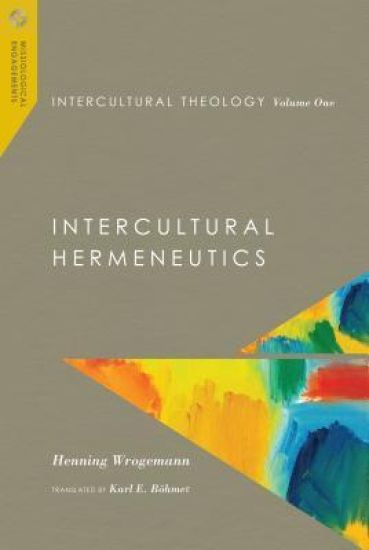
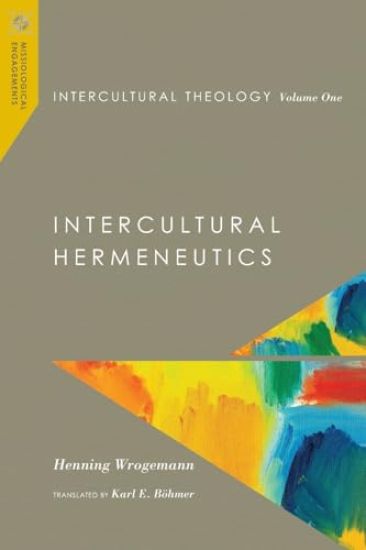
Intercultural Theology, Volume One – Intercultural Hermeneutics

Intercultural Theology, Volume One – Intercultural Hermeneutics

Henning Wrogemann; Karl E. Böhmer

Inter-Varsity Press,US
2016
sidottu
Christianity is not only a global but also an intercultural phenomenon. The diversity of world Christianity is evident not merely outside our borders but even within our own neighborhoods. Over the past half century theologians and missiologists have addressed this reality by developing local and contextual theologies and by exploring issues like contextualization, inculturation, and translation. In recent years these various trajectories have coalesced into a new field called intercultural theology. Bringing together missiology, religious studies, social science research, and Christian theology, the field of intercultural theology is a fresh attempt to rethink the discipline of theology in light of the diversity and pluriformity of Christianity today. Henning Wrogemann, one of the leading missiologists and scholars of religion in Europe, has written the most comprehensive textbook on the subject of Christianity and culture today. In three volumes his Intercultural Theology provides an exhaustive account of the history, theory, and practice of Christian mission. Volume one introduces the concepts of culture and context, volume two surveys theologies of mission both past and present, and volume three explores theologies of religion and interreligious relationships. In this first volume on intercultural hermeneutics, Wrogemann introduces the term "intercultural theology" and investigates what it means to understand another cultural context. In addition to surveying different hermeneutical theories and concepts of culture, he assesses how intercultural understanding has taken place throughout the history of Christian mission. Wrogemann also provides an extensive discussion of contextual theologies with a special focus on African theologies. Intercultural Theology is an indispensable resource for all people—especially students, pastors, and scholars—that explores the defining issues of Christian identity and practice in the context of an increasingly intercultural and interreligious world. Missiological Engagements charts interdisciplinary and innovative trajectories in the history, theology, and practice of Christian mission, featuring contributions by leading thinkers from both the Euro-American West and the majority world whose missiological scholarship bridges church, academy, and society.
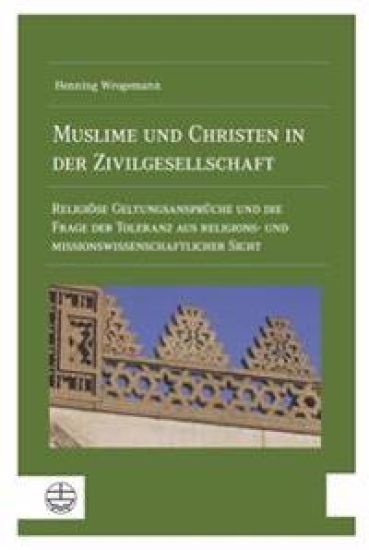
Muslime Und Christen in Der Zivilgesellschaft: Religiose Geltungsanspruche Und Die Frage Der Toleranz Aus Religions- Und Missionswissenschaftlicher Si
What contributions do religions make to civil society? Do they foment conflict, or do they help to keep the peace? These kinds of questions are currently the subject of vigorous debate in the media and in society itself. Public discussions often foster and perpetuate stereotypes, which may serve to reinforce entrenched opinions and exacerbate conflicts in turn. This book seeks to counteract the trend by making a case for critical rationality and a circumspect approach: What exactly is tolerance, and what potential do Muslim traditions offer? Is "Islam as a whole" in need of reformation? What validity claims do Muslims and Christians make as they engage in mission? How do claims of this nature relate to such issues as respect, dialog, or conversion? The collection of articles explores these questions, thereby emphasizing the relevance of research in mission studies and religious studies for church and society.