Kirjojen hintavertailu. Mukana 12 595 353 kirjaa ja 12 kauppaa.

Kirjailija

Henry Friedman

Kirjat ja teokset yhdessä paikassa: 4 kirjaa, julkaisuja vuosilta 2001-2025, suosituimpien joukossa The Dynamics of Industrial Conflict. Vertaile teosten hintoja ja tarkista saatavuus suomalaisista kirjakaupoista.

4 kirjaa

Kirjojen julkaisuhaarukka 2001-2025.

The Dynamics of Industrial Conflict

The Dynamics of Industrial Conflict

Henry Friedman; Sander Meredeen

TAYLOR FRANCIS LTD
2025
nidottu
The Dynamics of Industrial Conflict (1980) focuses on the workings of industrial relations in the British motor industry, presenting the first joint retrospective analysis of industrial relations in a major multinational. The book includes a closely documented account of the Ford Sewing Machinists’ strike for equal pay and tells the inside story of that dispute, analysing its impact on the coming of equal pay and Britain’s new sex discrimination legislation. It assesses the consequences of the dispute for workers, management and unions at Ford, and then traces its repercussions on Britain’s industrial relations in the 1970s, down to the fall of the Labour Government in May 1979. A detailed explanation is given of the concealed ‘learning process’ which goes on below the surface of every system of industrial relations, whether at factory, company, industrial or national level.
The Dynamics of Industrial Conflict

The Dynamics of Industrial Conflict

Henry Friedman; Sander Meredeen

TAYLOR FRANCIS LTD
2024
sidottu
The Dynamics of Industrial Conflict (1980) focuses on the workings of industrial relations in the British motor industry, presenting the first joint retrospective analysis of industrial relations in a major multinational. The book includes a closely documented account of the Ford Sewing Machinists’ strike for equal pay and tells the inside story of that dispute, analysing its impact on the coming of equal pay and Britain’s new sex discrimination legislation. It assesses the consequences of the dispute for workers, management and unions at Ford, and then traces its repercussions on Britain’s industrial relations in the 1970s, down to the fall of the Labour Government in May 1979. A detailed explanation is given of the concealed ‘learning process’ which goes on below the surface of every system of industrial relations, whether at factory, company, industrial or national level.
I'm No Hero

I'm No Hero

Henry Friedman

University of Washington Press
2015
sidottu
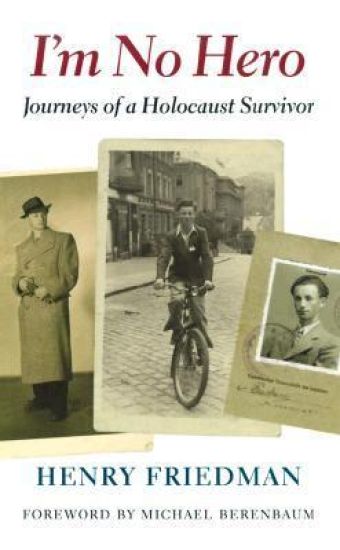
Henry Friedman was robbed of his adolescence by the monstrous evil that annihilated millions of European Jews and changed forever the lives of those who survived. When the Nazis overran their home town near the Polish-Ukrainian border, the Friedman family was saved by Ukrainian Christians who had worked at their farm. Henry, his mother, his younger brother, and a young schoolteacher—who had been hired by his father when Jews were forbidden to attend school—were hidden in a loft over the animal stalls at a neighbor's farm; his father hid in another hayloft half a mile away.When the family was liberated by the Russians after eighteen months in hiding, Henry, at age fifteen, was emaciated and too weak to walk. The Friedmans eventually made their way to a displaced persons camp in Austria where Henry learned quickly to wheel and deal, seducing women of various ages and nationalities and mastering the intricacies of dealing in the black market. In I'm No Hero, he confronts with unblinking honesty the pain, the shame, and the bizarre comedy of his passage to adulthood.The family came to Seattle in 1949, where Henry Friedman has made his home ever since. In 1988 he returned with his wife to Brody and Suchowola, where he succeeded in finding Julia Symchuk, who, as a young girl, had warned his father that the Gestapo was looking for him, and whose family had hidden the Friedmans in their loft. The following year he was able to bring Julia to Seattle for a triumphal visit, where she was honored in many ways, although, as Friedman writes, "in her own country she had never been honored with anything except hard work."Like many other survivors, Henry Friedman has found it difficult to confront his past. Like others, too, he has felt the obligation to bear witness. Now retired, he devotes much of his time to telling his story, which he believes is a message of hope, to thousands of schoolchildren throughout the Pacific Northwest. He has received national recognition for his role in establishing the United States Holocaust Museum in Washington, DC, and as a founder of the Washington State Holocaust Education Resource Center.
I'm No Hero

I'm No Hero

Henry Friedman

University of Washington Press
2001
pokkari
Henry Friedman was robbed of his adolescence by the monstrous evil that annihilated millions of European Jews and changed forever the lives of those who survived. When the Nazis overran their home town near the Polish-Ukrainian border, the Friedman family was saved by Ukrainian Christians who had worked at their farm. Henry, his mother, his younger brother, and a young schoolteacher—who had been hired by his father when Jews were forbidden to attend school—were hidden in a loft over the animal stalls at a neighbor's farm; his father hid in another hayloft half a mile away.When the family was liberated by the Russians after eighteen months in hiding, Henry, at age fifteen, was emaciated and too weak to walk. The Friedmans eventually made their way to a displaced persons camp in Austria where Henry learned quickly to wheel and deal, seducing women of various ages and nationalities and mastering the intricacies of dealing in the black market. In I'm No Hero, he confronts with unblinking honesty the pain, the shame, and the bizarre comedy of his passage to adulthood.The family came to Seattle in 1949, where Henry Friedman has made his home ever since. In 1988 he returned with his wife to Brody and Suchowola, where he succeeded in finding Julia Symchuk, who, as a young girl, had warned his father that the Gestapo was looking for him, and whose family had hidden the Friedmans in their loft. The following year he was able to bring Julia to Seattle for a triumphal visit, where she was honored in many ways, although, as Friedman writes, "in her own country she had never been honored with anything except hard work."Like many other survivors, Henry Friedman has found it difficult to confront his past. Like others, too, he has felt the obligation to bear witness. Now retired, he devotes much of his time to telling his story, which he believes is a message of hope, to thousands of schoolchildren throughout the Pacific Northwest. He has received national recognition for his role in establishing the United States Holocaust Museum in Washington, DC, and as a founder of the Washington State Holocaust Education Resource Center.