Kirjojen hintavertailu. Mukana 12 657 676 kirjaa ja 12 kauppaa.

Kirjailija

Henry Gee

Kirjat ja teokset yhdessä paikassa: 36 kirjaa, julkaisuja vuosilta 2004-2026, suosituimpien joukossa Aufstieg und Fall der Menschheit. Vertaile teosten hintoja ja tarkista saatavuus suomalaisista kirjakaupoista.

36 kirjaa

Kirjojen julkaisuhaarukka 2004-2026.

The Elizabethan Clergy and the Settlement of Religion
The Elizabethan Clergy and the Settlement of Religion - 1558-1564 is an unchanged, high-quality reprint of the original edition of 1898. Hansebooks is editor of the literature on different topic areas such as research and science, travel and expeditions, cooking and nutrition, medicine, and other genres. As a publisher we focus on the preservation of historical literature. Many works of historical writers and scientists are available today as antiques only. Hansebooks newly publishes these books and contributes to the preservation of literature which has become rare and historical knowledge for the future.
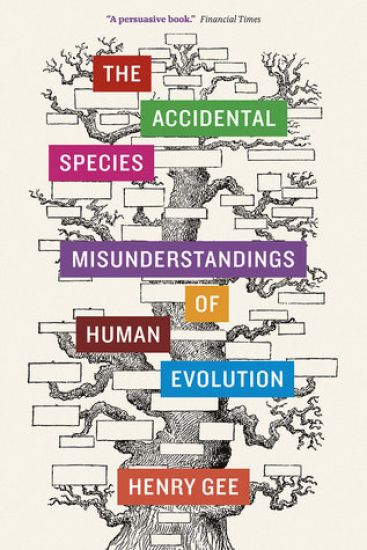
The Accidental Species

The Accidental Species

Henry Gee

University of Chicago Press
2015
nidottu
The idea of a missing link between humanity and our animal ancestors predates evolution and popular science and actually has religious roots in the deist concept of the Great Chain of Being. Yet the metaphor has lodged itself in the contemporary imagination, and new fossil discoveries are often hailed in headlines as revealing the elusive transitional step, the moment when we stopped being "animal" and started being "human." In The Accidental Species, Henry Gee, longtime paleontology editor at Nature, takes aim at this misleading notion, arguing that it reflects a profound misunderstanding of how evolution works and, when applied to the evolution of our own species, supports mistaken ideas about our own place in the universe. Touring the many features of human beings that have recurrently been used to distinguish us from the rest of the animal world, Gee shows that our evolutionary outcome is one possibility among many, one that owes more to chance than to an organized progression to supremacy. The Accidental Species combines Gee's firsthand experience on the editorial side of many incredible paleontological findings with healthy skepticism and humor to create a book that aims to overturn popular thinking on human evolution - the key is not what's missing, but how we're linked.
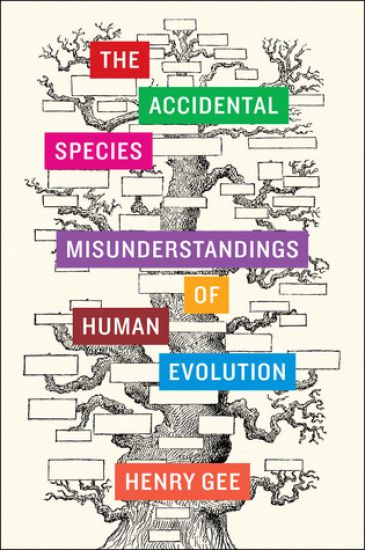
The Accidental Species

The Accidental Species

Henry Gee

University of Chicago Press
2013
sidottu
The idea of a missing link between humanity and our animal ancestors predates evolution and popular science and actually has religious roots in the deist concept of the Great Chain of Being. Yet the metaphor has lodged itself in the contemporary imagination, and new fossil discoveries are often hailed in headlines as revealing the elusive transitional step, the moment when we stopped being "animal" and started being "human." In The Accidental Species, Henry Gee, longtime paleontology editor at Nature, takes aim at this misleading notion, arguing that it reflects a profound misunderstanding of how evolution works and, when applied to the evolution of our own species, supports mistaken ideas about our own place in the universe. Gee presents a robust and stark challenge to our tendency to see ourselves as the acme of creation. Human exceptionalism, Gee argues, is an error that can infect scientific thought. Touring the many features of human beings that have recurrently been used to distinguish us from the rest of the animal world, Gee shows that our evolutionary outcome is one possibility among many, one that owes more to chance than to an organized progression to supremacy. He starts with bipedality, which he shows could have arisen entirely by accident, as a by-product of sexual selection, moves on to technology, large brain size, intelligence, language, and, finally, sentience. He reveals each of these attributes to be alive and well throughout the animal world-they are not, indeed, unique to our species. The Accidental Species combines Gee's firsthand experience on the editorial side of many incredible paleontological findings with healthy skepticism and humor to create a book that aims to overturn popular thinking on human evolution-the key is not what's missing, but how we're linked.
Jacob's Ladder

Jacob's Ladder

Henry Gee

W. W. Norton Company
2004
pokkari
Jacob's Ladder delivers a remarkably lucid explanation of what the sequencing of the human genome really tells us. Decoding the sequence, evolutionary biologist Henry Gee shows, is just the beginning: seeing the letters and words. The next frontier is in understanding snatches of conversation between genes--how they interact to direct the growth of an organism. Gee takes us into the heart of that conversation, illuminating how genes govern a single egg cell's miraculous transformation into a human being, and how they continue to direct that person's day-by-day development throughout a lifetime. Gee tells the story of what we know about the genome today and what we are likely to discover tomorrow. As our knowledge advances, we will be able to direct with increasing authority the conversations between genes: not only performing medical interventions but also creating whole scripts directing birth, ancestry, and diversity in a brave new world.