Kirjojen hintavertailu. Mukana 12 595 353 kirjaa ja 12 kauppaa.

Kirjailija

Henry Jenkins

Kirjat ja teokset yhdessä paikassa: 34 kirjaa, julkaisuja vuosilta 1992-2025, suosituimpien joukossa Evidences Of The Great Age Of Henry Jenkins, With Notices Respecting Longevity. Vertaile teosten hintoja ja tarkista saatavuus suomalaisista kirjakaupoista.

34 kirjaa

Kirjojen julkaisuhaarukka 1992-2025.

Where the Wild Things Were

Where the Wild Things Were

Henry Jenkins

NEW YORK UNIVERSITY PRESS
2025
pokkari
Explores iconic works from The Cat in the Hat to The Twilight Zone to explain cultural trends in parenting and how we conceptualize childhood The 60s produced a Baby Boom generation that catalyzed the dawn of a new era—the space age, the age of television, the global age, and the beginnings of civil rights. At the same time, a new paradigm for parenting was unfolding that put emphasis on permissiveness, defined by what it permitted – the free and unfettered impulses of children. Others worried that the wildness of children, personified by the characters in Maurice Sendak's 1963 classic children's book, Where the Wild Things Are, was destructive, disruptive and disrespectful. Where the Wild Things Were centers on the exploding, contentious national conversation about the nature of childhood and parenting in the postwar US emblematized by Dr. Spock's Baby and Child Care. Renowned scholar Henry Jenkins demonstrates that the language that shaped a growing field of advice literature for parents also informed the period's fictions—in film, television, comics, children's books, and elsewhere—produced for and consumed by children. In particular, Jenkins demonstrates, the era's emblematic child was the boy in the striped shirt: white, male, suburban, middle class, Christian, and above all, American. Weaving together intellectual histories and popular texts, Jenkins shows how boy protagonists became embodiments of permissive child rearing, as well as the social ideals and contradictions that permissiveness entailed. From Peanuts comic strips and TV specials to The Cat in the Hat, Dennis the Menace, and Jonny Quest, the book reveals how childhood and the stories about it became central to Cold War concerns with democracy, citizenship, globalization, the space race, science, race relations, gender, and sexuality. Written by a former boy in a striped shirt, Where the Wild Things Were explores iconic works, from Mary Poppins to Lost in Space, contextualizing them through a critical but respectful engagement with the core animating ideas of the permissive imagination.
Where the Wild Things Were

Where the Wild Things Were

Henry Jenkins

NEW YORK UNIVERSITY PRESS
2025
sidottu
Explores iconic works from The Cat in the Hat to The Twilight Zone to explain cultural trends in parenting and how we conceptualize childhood The 60s produced a Baby Boom generation that catalyzed the dawn of a new era—the space age, the age of television, the global age, and the beginnings of civil rights. At the same time, a new paradigm for parenting was unfolding that put emphasis on permissiveness, defined by what it permitted – the free and unfettered impulses of children. Others worried that the wildness of children, personified by the characters in Maurice Sendak's 1963 classic children's book, Where the Wild Things Are, was destructive, disruptive and disrespectful. Where the Wild Things Were centers on the exploding, contentious national conversation about the nature of childhood and parenting in the postwar US emblematized by Dr. Spock's Baby and Child Care. Renowned scholar Henry Jenkins demonstrates that the language that shaped a growing field of advice literature for parents also informed the period's fictions—in film, television, comics, children's books, and elsewhere—produced for and consumed by children. In particular, Jenkins demonstrates, the era's emblematic child was the boy in the striped shirt: white, male, suburban, middle class, Christian, and above all, American. Weaving together intellectual histories and popular texts, Jenkins shows how boy protagonists became embodiments of permissive child rearing, as well as the social ideals and contradictions that permissiveness entailed. From Peanuts comic strips and TV specials to The Cat in the Hat, Dennis the Menace, and Jonny Quest, the book reveals how childhood and the stories about it became central to Cold War concerns with democracy, citizenship, globalization, the space race, science, race relations, gender, and sexuality. Written by a former boy in a striped shirt, Where the Wild Things Were explores iconic works, from Mary Poppins to Lost in Space, contextualizing them through a critical but respectful engagement with the core animating ideas of the permissive imagination.

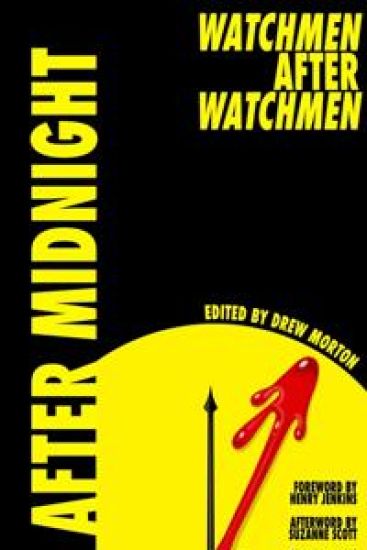
After Midnight

After Midnight

Henry Jenkins; Suzanne Scott

UNIVERSITY PRESS OF MISSISSIPPI
2022
pokkari
Contributions by Apryl Alexander, Alisia Grace Chase, Brian Faucette, Laura E. Felschow, Lindsay Hallam, Rusty Hatchell, Dru Jeffries, Henry Jenkins, Jeffrey SJ Kirchoff, Curtis Marez, James Denis McGlynn, Brandy Monk-Payton, Chamara Moore, Drew Morton, Mark C. E. Peterson, Jayson Quearry, Zachary J. A. Rondinelli, Suzanne Scott, David Stanley, Sarah Pawlak Stanley, Tracy Vozar, and Chris Yogerst Alan Moore’s and Dave Gibbons’s Watchmen fundamentally altered the perception of American comic books and remains one of the medium’s greatest hits. Launched in 1986—"the year that changed comics" for most scholars in comics studies—Watchmen quickly assisted in cementing the legacy that comics were a serious form of literature no longer defined by the Comics Code era of funny animal and innocuous superhero books that appealed mainly to children. After Midnight: "Watchmen" after "Watchmen" looks specifically at the three adaptations of Moore’s and Gibbons’s Watchmen—Zack Snyder’s Watchmen film (2009), Geoff Johns’s comic book sequel Doomsday Clock (2017), and Damon Lindelof’s Watchmen series on HBO (2019). Divided into three parts, the anthology considers how the sequels, especially the limited series, have prompted a reevaluation of the original text and successfully harnessed the politics of the contemporary moment into a potent relevancy. The first part considers the various texts through conceptions of adaptation, remediation, and transmedia storytelling. Part two considers the HBO series through its thematic focus on the relationship between American history and African American trauma by analyzing how the show critiques the alt-right, represents intergenerational trauma, illustrates alternative possibilities for Black representation, and complicates our understanding of how the mechanics of the show’s production can complicate its politics. Finally, the book’s last section considers the themes of nostalgia and trauma, both firmly rooted in the original Moore and Gibbons series, and how the sequel texts reflect and refract upon those often-intertwined phenomena.
After Midnight

After Midnight

Henry Jenkins; Suzanne Scott

UNIVERSITY PRESS OF MISSISSIPPI
2022
sidottu
Contributions by Apryl Alexander, Alisia Grace Chase, Brian Faucette, Laura E. Felschow, Lindsay Hallam, Rusty Hatchell, Dru Jeffries, Henry Jenkins, Jeffrey SJ Kirchoff, Curtis Marez, James Denis McGlynn, Brandy Monk-Payton, Chamara Moore, Drew Morton, Mark C. E. Peterson, Jayson Quearry, Zachary J. A. Rondinelli, Suzanne Scott, David Stanley, Sarah Pawlak Stanley, Tracy Vozar, and Chris Yogerst Alan Moore’s and Dave Gibbons’s Watchmen fundamentally altered the perception of American comic books and remains one of the medium’s greatest hits. Launched in 1986—"the year that changed comics" for most scholars in comics studies—Watchmen quickly assisted in cementing the legacy that comics were a serious form of literature no longer defined by the Comics Code era of funny animal and innocuous superhero books that appealed mainly to children. After Midnight: "Watchmen" after "Watchmen" looks specifically at the three adaptations of Moore’s and Gibbons’s Watchmen—Zack Snyder’s Watchmen film (2009), Geoff Johns’s comic book sequel Doomsday Clock (2017), and Damon Lindelof’s Watchmen series on HBO (2019). Divided into three parts, the anthology considers how the sequels, especially the limited series, have prompted a reevaluation of the original text and successfully harnessed the politics of the contemporary moment into a potent relevancy. The first part considers the various texts through conceptions of adaptation, remediation, and transmedia storytelling. Part two considers the HBO series through its thematic focus on the relationship between American history and African American trauma by analyzing how the show critiques the alt-right, represents intergenerational trauma, illustrates alternative possibilities for Black representation, and complicates our understanding of how the mechanics of the show’s production can complicate its politics. Finally, the book’s last section considers the themes of nostalgia and trauma, both firmly rooted in the original Moore and Gibbons series, and how the sequel texts reflect and refract upon those often-intertwined phenomena.
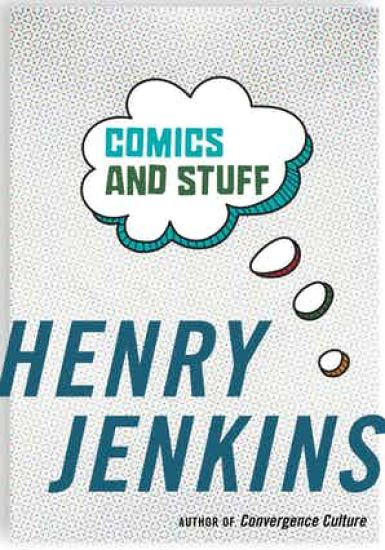
Comics and Stuff

Comics and Stuff

Henry Jenkins

New York University Press
2020
pokkari
Considers how comics display our everyday stuff—junk drawers, bookshelves, attics—as a way into understanding how we represent ourselves now For most of their history, comics were widely understood as disposable—you read them and discarded them, and the pulp paper they were printed on decomposed over time. Today, comic books have been rebranded as graphic novels—clothbound high-gloss volumes that can be purchased in bookstores, checked out of libraries, and displayed proudly on bookshelves. They are reviewed by serious critics and studied in university classrooms. A medium once considered trash has been transformed into a respectable, if not elite, genre. While the American comics of the past were about hyperbolic battles between good and evil, most of today's graphic novels focus on everyday personal experiences. Contemporary culture is awash with stuff. They give vivid expression to a culture preoccupied with the processes of circulation and appraisal, accumulation and possession. By design, comics encourage the reader to scan the landscape, to pay attention to the physical objects that fill our lives and constitute our familiar surroundings. Because comics take place in a completely fabricated world, everything is there intentionally. Comics are stuff; comics tell stories about stuff; and they display stuff. When we use the phrase "and stuff" in everyday speech, we often mean something vague, something like "etcetera." In this book, stuff refers not only to physical objects, but also to the emotions, sentimental attachments, and nostalgic longings that we express—or hold at bay—through our relationships with stuff. In Comics and Stuff, his first solo authored book in over a decade, pioneering media scholar Henry Jenkins moves through anthropology, material culture, literary criticism, and art history to resituate comics in the cultural landscape. Through over one hundred full-color illustrations, using close readings of contemporary graphic novels, Jenkins explores how comics depict stuff and exposes the central role that stuff plays in how we curate our identities, sustain memory, and make meaning. Comics and Stuff presents an innovative new way of thinking about comics and graphic novels that will change how we think about our stuff and ourselves.
Comics and Stuff

Comics and Stuff

Henry Jenkins

New York University Press
2020
sidottu
Considers how comics display our everyday stuff—junk drawers, bookshelves, attics—as a way into understanding how we represent ourselves now For most of their history, comics were widely understood as disposable—you read them and discarded them, and the pulp paper they were printed on decomposed over time. Today, comic books have been rebranded as graphic novels—clothbound high-gloss volumes that can be purchased in bookstores, checked out of libraries, and displayed proudly on bookshelves. They are reviewed by serious critics and studied in university classrooms. A medium once considered trash has been transformed into a respectable, if not elite, genre. While the American comics of the past were about hyperbolic battles between good and evil, most of today's graphic novels focus on everyday personal experiences. Contemporary culture is awash with stuff. They give vivid expression to a culture preoccupied with the processes of circulation and appraisal, accumulation and possession. By design, comics encourage the reader to scan the landscape, to pay attention to the physical objects that fill our lives and constitute our familiar surroundings. Because comics take place in a completely fabricated world, everything is there intentionally. Comics are stuff; comics tell stories about stuff; and they display stuff. When we use the phrase "and stuff" in everyday speech, we often mean something vague, something like "etcetera." In this book, stuff refers not only to physical objects, but also to the emotions, sentimental attachments, and nostalgic longings that we express—or hold at bay—through our relationships with stuff. In Comics and Stuff, his first solo authored book in over a decade, pioneering media scholar Henry Jenkins moves through anthropology, material culture, literary criticism, and art history to resituate comics in the cultural landscape. Through over one hundred full-color illustrations, using close readings of contemporary graphic novels, Jenkins explores how comics depict stuff and exposes the central role that stuff plays in how we curate our identities, sustain memory, and make meaning. Comics and Stuff presents an innovative new way of thinking about comics and graphic novels that will change how we think about our stuff and ourselves.
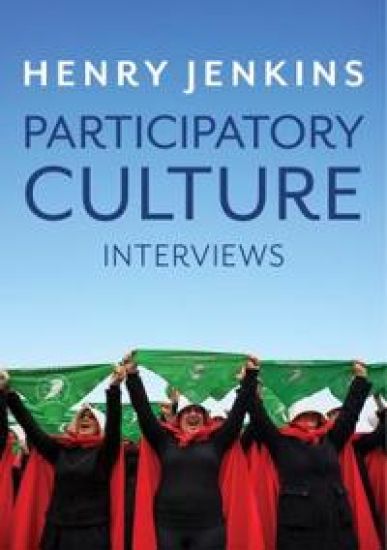
Participatory Culture

Participatory Culture

Henry Jenkins

Polity Press
2019
nidottu
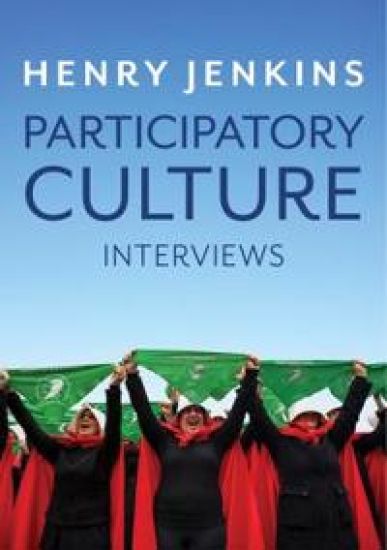
Since 2006, Henry Jenkins's Confessions of an Aca-Fan blog has hosted interviews in which academics, activists, and artists have shared their views on the changing media landscape. For the first time, Jenkins – often called “the Marshall McLuhan for the twenty-first century” – compiles some of these interviews to highlight his recurring interests in popular culture and social change. Structured around three core concepts – culture, learning, politics – and designed as a companion to Participatory Culture in a Networked Era, this book broadens the conversation to incorporate diverse thinkers such as David Gauntlett, Ethan Zuckerman, Sonia Livingstone, S. Craig Watkins, James Paul Gee, Antero Garcia, Stephen Duncombe, Cathy J. Cohen, Lina Srivastava, Jonathan McIntosh, and William Uricchio. With an introduction from Jenkins and reflections from each interviewee, this volume speaks to a sense of crisis as contemporary culture has failed to fully achieve the democratic potentials once anticipated as a consequence of the participatory turn. This book is ideal for students and scholars of digital media, popular culture, education, and politics, as well as general readers with an interest in the topic.
Participatory Culture

Participatory Culture

Henry Jenkins

Polity Press
2019
sidottu
Since 2006, Henry Jenkins's Confessions of an Aca-Fan blog has hosted interviews in which academics, activists, and artists have shared their views on the changing media landscape. For the first time, Jenkins – often called “the Marshall McLuhan for the twenty-first century” – compiles some of these interviews to highlight his recurring interests in popular culture and social change. Structured around three core concepts – culture, learning, politics – and designed as a companion to Participatory Culture in a Networked Era, this book broadens the conversation to incorporate diverse thinkers such as David Gauntlett, Ethan Zuckerman, Sonia Livingstone, S. Craig Watkins, James Paul Gee, Antero Garcia, Stephen Duncombe, Cathy J. Cohen, Lina Srivastava, Jonathan McIntosh, and William Uricchio. With an introduction from Jenkins and reflections from each interviewee, this volume speaks to a sense of crisis as contemporary culture has failed to fully achieve the democratic potentials once anticipated as a consequence of the participatory turn. This book is ideal for students and scholars of digital media, popular culture, education, and politics, as well as general readers with an interest in the topic.
By Any Media Necessary

By Any Media Necessary

Henry Jenkins; Sangita Shresthova; Liana Gamber-Thompson; Neta Kligler-Vilenchik; Arely Zimmerman

New York University Press
2018
pokkari
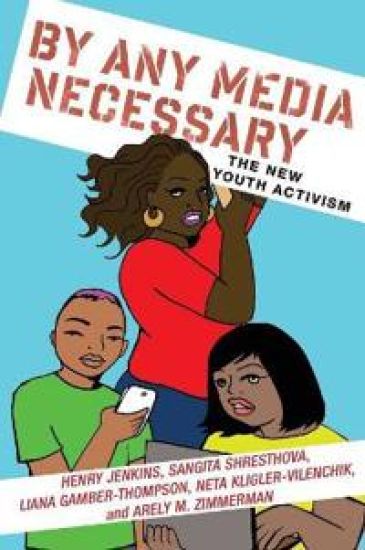
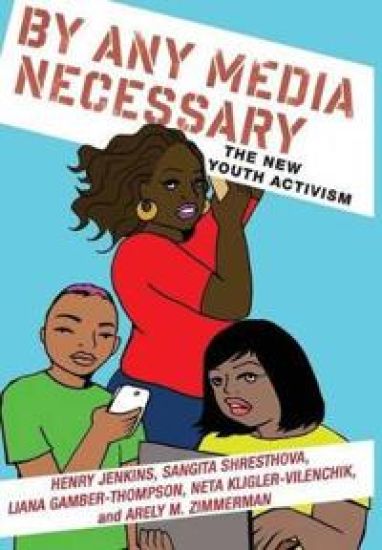
The participatory politics and civic engagement of youth in the digital age There is a widespread perception that the foundations of American democracy are dysfunctional, public trust in core institutions is eroding, and little is likely to emerge from traditional politics that will shift those conditions. Youth are often seen as emblematic of this crisis—frequently represented as uninterested in political life, ill-informed about current-affairs, and unwilling to register and vote. By Any Media Necessary offers a profoundly different picture of contemporary American youth. Young men and women are tapping into the potential of new forms of communication such as social media platforms, spreadable videos and memes, remixing the language of popular culture, and seeking to bring about political change—by any media necessary. In a series of case studies covering a diverse range of organizations, networks, and movements involving young people in the political process—from the Harry Potter Alliance which fights for human rights in the name of the popular fantasy franchise to immigration rights advocates using superheroes to dramatize their struggles—By Any Media Necessary examines the civic imagination at work. Before the world can change, people need the ability to imagine what alternatives might look like and identify paths by which change can be achieved. Exploring new forms of political activities and identities emerging from the practice of participatory culture, By Any Media Necessary reveals how these shifts in communication have unleashed a new political dynamism in American youth. Read Online at connectedyouth.nyupress.org
Spreadable Media

Spreadable Media

Henry Jenkins; Sam Ford; Joshua Green

New York University Press
2018
pokkari
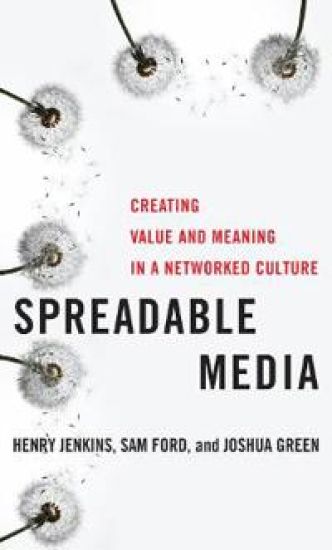
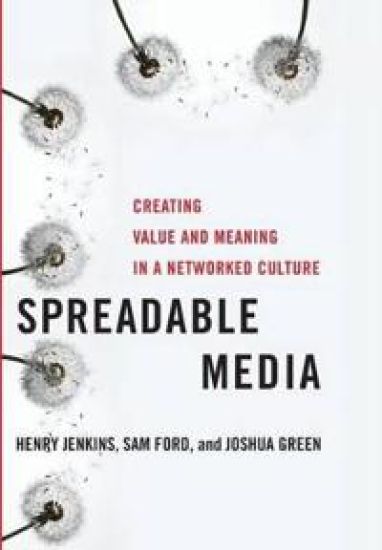
How sharing, linking, and liking have transformed the media and marketing industries Spreadable Media is a rare inside look at today's ever-changing media landscape. The days of corporate control over media content and its distribution have been replaced by the age of what the digital media industries have called "user-generated content." Spreadable Media maps these fundamental changes, and gives readers a comprehensive look into the rise of participatory culture, from internet memes to presidential tweets. The authors challenge our notions of what goes "viral" and how by examining factors such as the nature of audience engagement and the environment of participation, and by contrasting the concepts of "stickiness"—aggregating attention in centralized places—with "spreadability"—dispersing content widely through both formal and informal networks. The former has often been the measure of media success in the online world, but the latter describes the actual ways content travels through social media. The book explores the internal tensions businesses face as they adapt to this new, spreadable, communication reality and argues for the need to shift from "hearing" to "listening" in corporate culture. Now with a new afterword addressing changes in the media industry, audience participation, and political reporting, and drawing on modern examples from online activism campaigns, film, music, television, advertising, and social media—from both the US and around the world—the authors illustrate the contours of our current media environment. For all of us who actively create and share content, Spreadable Media provides a clear understanding of how people are spreading ideas and the implications these activities have for business, politics, and everyday life, both on- and offline.
Disconnected

Disconnected

Carrie James; Henry Jenkins

MIT Press
2016
pokkari
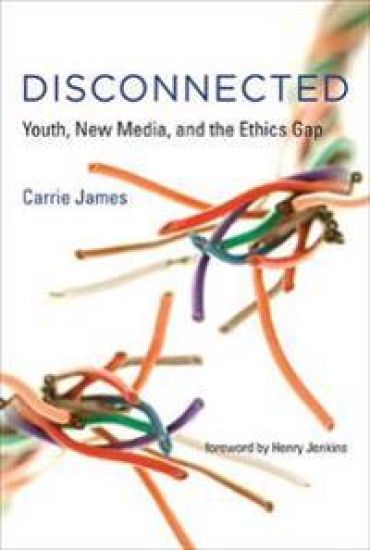
How young people think about the moral and ethical dilemmas they encounter when they share and use online content and participate in online communities.Fresh from a party, a teen posts a photo on Facebook of a friend drinking a beer. A college student repurposes an article from Wikipedia for a paper. A group of players in a multiplayer online game routinely cheat new players by selling them worthless virtual accessories for high prices. In Disconnected, Carrie James examines how young people and the adults in their lives think about these sorts of online dilemmas, describing ethical blind spots and disconnects. Drawing on extensive interviews with young people between the ages of 10 and 25, James describes the nature of their thinking about privacy, property, and participation online. She identifies three ways that young people approach online activities. A teen might practice self-focused thinking, concerned mostly about consequences for herself; moral thinking, concerned about the consequences for people he knows; or ethical thinking, concerned about unknown individuals and larger communities. James finds, among other things, that youth are often blind to moral or ethical concerns about privacy; that attitudes toward property range from "what's theirs is theirs" to "free for all"; that hostile speech can be met with a belief that online content is "just a joke"; and that adults who are consulted about such dilemmas often emphasize personal safety issues over online ethics and citizenship. Considering ways to address the digital ethics gap, James offers a vision of conscientious connectivity, which involves ethical thinking skills but, perhaps more important, is marked by sensitivity to the dilemmas posed by online life, a motivation to wrestle with them, and a sense of moral agency that supports socially positive online actions.
By Any Media Necessary

By Any Media Necessary

Henry Jenkins; Sangita Shresthova; Liana Gamber-Thompson; Neta Kligler-Vilenchik; Arely Zimmerman

New York University Press
2016
sidottu
The participatory politics and civic engagement of youth in the digital age There is a widespread perception that the foundations of American democracy are dysfunctional, public trust in core institutions is eroding, and little is likely to emerge from traditional politics that will shift those conditions. Youth are often seen as emblematic of this crisis—frequently represented as uninterested in political life, ill-informed about current-affairs, and unwilling to register and vote. By Any Media Necessary offers a profoundly different picture of contemporary American youth. Young men and women are tapping into the potential of new forms of communication such as social media platforms, spreadable videos and memes, remixing the language of popular culture, and seeking to bring about political change—by any media necessary. In a series of case studies covering a diverse range of organizations, networks, and movements involving young people in the political process—from the Harry Potter Alliance which fights for human rights in the name of the popular fantasy franchise to immigration rights advocates using superheroes to dramatize their struggles—By Any Media Necessary examines the civic imagination at work. Before the world can change, people need the ability to imagine what alternatives might look like and identify paths by which change can be achieved. Exploring new forms of political activities and identities emerging from the practice of participatory culture, By Any Media Necessary reveals how these shifts in communication have unleashed a new political dynamism in American youth. Read Online at connectedyouth.nyupress.org
Participatory Culture in a Networked Era

Participatory Culture in a Networked Era

Henry Jenkins; Mizuko Ito; danah boyd

Polity Press
2015
sidottu
In the last two decades, both the conception and the practice of participatory culture have been transformed by the new affordances enabled by digital, networked, and mobile technologies. This exciting new book explores that transformation by bringing together three leading figures in conversation. Jenkins, Ito and boyd examine the ways in which our personal and professional lives are shaped by experiences interacting with and around emerging media.Stressing the social and cultural contexts of participation, the authors describe the process of diversification and mainstreaming that has transformed participatory culture. They advocate a move beyond individualized personal expression and argue for an ethos of “doing it together” in addition to “doing it yourself.”Participatory Culture in a Networked Era will interest students and scholars of digital media and their impact on society and will engage readers in a broader dialogue and conversation about their own participatory practices in this digital age.
Participatory Culture in a Networked Era

Participatory Culture in a Networked Era

Henry Jenkins; Mizuko Ito; danah boyd

Polity Press
2015
nidottu
In the last two decades, both the conception and the practice of participatory culture have been transformed by the new affordances enabled by digital, networked, and mobile technologies. This exciting new book explores that transformation by bringing together three leading figures in conversation. Jenkins, Ito and boyd examine the ways in which our personal and professional lives are shaped by experiences interacting with and around emerging media.Stressing the social and cultural contexts of participation, the authors describe the process of diversification and mainstreaming that has transformed participatory culture. They advocate a move beyond individualized personal expression and argue for an ethos of “doing it together” in addition to “doing it yourself.”Participatory Culture in a Networked Era will interest students and scholars of digital media and their impact on society and will engage readers in a broader dialogue and conversation about their own participatory practices in this digital age.
Spridbar media : att skapa värde och mening i en nätverkad kultur

Spridbar media : att skapa värde och mening i en nätverkad kultur

Henry Jenkins; Sam Ford; Joshua Green

Bokförlaget Daidalos
2014
sidottu
De sociala medierna och nätverkskulturen håller på att förändra medielandskapet radikalt. Förändringen ställer olika aktörer ? inklusive vanliga Facebookanvändare och twittrare ? inför en rad besvärliga frågor som har med tolkningsföreträde, kontrollmöjligheter och moraliska gränsdragningar att göra. Därtill kommer att gränsen mellan att vara mediekonsument och medieaktör aldrig har varit så genomsläpplig som idag. Tänk till exempel på bestsellern "Femtio nyanser av honom", som ursprungligen publicerades som ?fan fiction? på nätet, eller "Mad Men"-karaktärernas spontant skapade bloggversioner. Medieforskarna Henry Jenkins, Sam Ford och Joshua Green tar i "Spridbar media" ett brett grepp om den här processen och belyser den ur en rad olika perspektiv. Boken handlar naturligt nog om sådant som medieekonomi, företagskulturer, distributionsformer och rättighetsfrågor. Men den handlar också ? och framför allt ? om vanliga människors möjligheter att påverka mediemiljön genom sin egen aktivitet. Om det vi direkt eller indirekt kan åstadkomma när vi delar någonting till våra Facebookvänner eller i vårt twitterflöde eller engagerar oss i specifika intressegemenskaper på nätet. Bokens författare vill få oss att överge diverse förenklade ? men seglivade ? föreställningar om hur medier fungerar och istället börja reflektera över deras komplexitet och över ?spridbarhetens? roll. Kort sagt stimulera till nytänkande på området. Henry Jenkins är Provost?s Professor of Communication, Journalism, Cinematic Arts, and Education vid University of Southern California. Han har tidigare publicerat bland annat "Konvergenskulturen" (Daidalos 2008). Sam Ford är Director of Digital Strategy vid Peppercomm Strategic Communications och knuten till MIT:s Program in Comparative Media Studies och Western Kentucky University:s Popular Culture Studies Program. Joshua Green är strateg vid Undercurrent, en byrå för ditigala strategier i New York. Han har en doktorsexamen i mediestuder och har tidigare varit involverad i medieforskning vid bland annat University of Southern California och MIT.
Spreadable Media

Spreadable Media

Henry Jenkins; Sam Ford; Joshua Green

New York University Press
2013
sidottu
How sharing, linking, and liking have transformed the media and marketing industries Spreadable Media is a rare inside look at today's ever-changing media landscape. The days of corporate control over media content and its distribution have been replaced by the age of what the digital media industries have called "user-generated content." Spreadable Media maps these fundamental changes, and gives readers a comprehensive look into the rise of participatory culture, from internet memes to presidential tweets. The authors challenge our notions of what goes "viral" and how by examining factors such as the nature of audience engagement and the environment of participation, and by contrasting the concepts of "stickiness"—aggregating attention in centralized places—with "spreadability"—dispersing content widely through both formal and informal networks. The former has often been the measure of media success in the online world, but the latter describes the actual ways content travels through social media. The book explores the internal tensions businesses face as they adapt to this new, spreadable, communication reality and argues for the need to shift from "hearing" to "listening" in corporate culture. Now with a new afterword addressing changes in the media industry, audience participation, and political reporting, and drawing on modern examples from online activism campaigns, film, music, television, advertising, and social media—from both the US and around the world—the authors illustrate the contours of our current media environment. For all of us who actively create and share content, Spreadable Media provides a clear understanding of how people are spreading ideas and the implications these activities have for business, politics, and everyday life, both on- and offline.
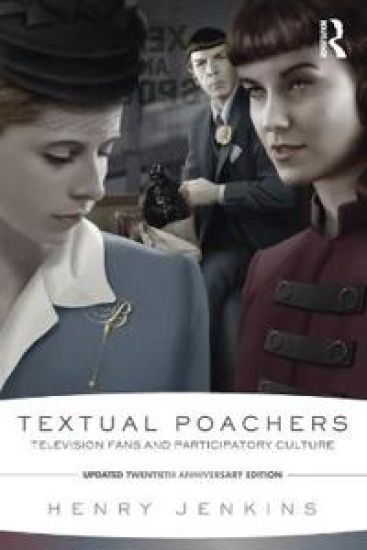
Textual Poachers

Textual Poachers

Henry Jenkins

Routledge
2012
sidottu
The twentieth anniversary edition of Henry Jenkins’s Textual Poachers brings this now-canonical text to a new generation of students interested in the intersections of fandom, participatory culture, popular consumption and media theory. Supplementing the original, classic text is an interview between Henry Jenkins and Suzanne Scott in which Jenkins reflects upon changes in the field since the original release of Textual Poachers. A study guide by Louisa Stein helps provides instructors with suggestions for the way Textual Poachers can be used in the contemporary classroom, and study questions encourage students to consider fan cultures in relation to consumer capitalism, genre, gender, sexuality, and more.
Textual Poachers

Textual Poachers

Henry Jenkins

Routledge
2012
nidottu
The twentieth anniversary edition of Henry Jenkins’s Textual Poachers brings this now-canonical text to a new generation of students interested in the intersections of fandom, participatory culture, popular consumption and media theory. Supplementing the original, classic text is an interview between Henry Jenkins and Suzanne Scott in which Jenkins reflects upon changes in the field since the original release of Textual Poachers. A study guide by Louisa Stein helps provides instructors with suggestions for the way Textual Poachers can be used in the contemporary classroom, and study questions encourage students to consider fan cultures in relation to consumer capitalism, genre, gender, sexuality, and more.