Kirjojen hintavertailu. Mukana 12 595 353 kirjaa ja 12 kauppaa.

Kirjailija

Henry Louis Gates Jr.

Kirjat ja teokset yhdessä paikassa: 12 kirjaa, julkaisuja vuosilta 1995-2025, suosituimpien joukossa Black Cool. Vertaile teosten hintoja ja tarkista saatavuus suomalaisista kirjakaupoista.

Mukana myös kirjoitusasut: Henry Louis Gates Jr

12 kirjaa

Kirjojen julkaisuhaarukka 1995-2025.

Flyboy in the Buttermilk

Flyboy in the Buttermilk

Greg Tate; Henry Louis Gates Jr

Auwa
2025
pokkari
A reissue of Greg Tate's classic, out-of-print collection of essays, with a new introduction by Hanif Abdurraqib and a new foreword by Questlove. From one of the most original, creative, and provocative culture critics comes an eye-opening collection of essays and tales about American music and culture. Under the guise of writing about a single subject, Greg Tate's essays in Flyboy in the Buttermilk branch out from his usual and explore social, pop cultural, political, and economic subjects. Taking on a wide diversity of topics--from the rise of hip-hop; the art of JeanMichel Basquiat; the music of Miles Davis, James Brown, Jimi Hendrix, Bad Brains, and many others; to the crisis of the Black intellectual and the irony of the GOP recruiting Black Americans-- Tate writes in a brave and distinctive voice that is angry, joyous, anxious, and funny. In every piece of this collection, Tate offers informed insight into where America is going and why.
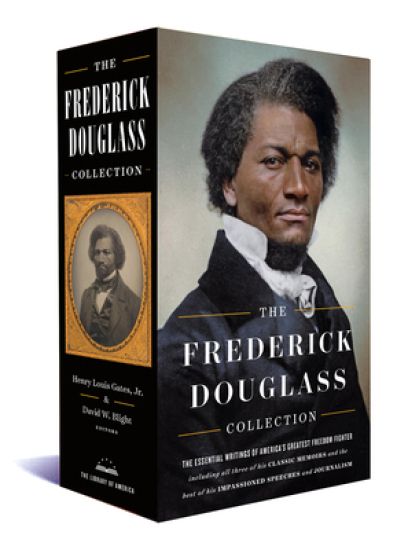
The Frederick Douglass Collection

The Frederick Douglass Collection

Frederick Douglass; Henry Louis Gates Jr.; David W. Blight

THE LIBRARY OF AMERICA
2023
sidottu
For the first time in a deluxe collector's boxed set, the definitive edition of the writings of the great African American freedom fighter, including all 3 of his classic memoirs and the best of his impassioned speeches and journalism For more than five decades, from the antebellum period through the Civil War and Reconstruction and into the Gilded Age, Frederick Douglass used his voice and wielded his pen in support of abolition and emancipation, equal rights, and human dignity, developing a prophetic style suffused with scriptural cadences and a fierce moral urgency. This deluxe boxed set gathers both volumes of the Library of America's definitive edition of his collected writings. Autobiographies, edited by Henry Louis Gates, Jr., presents all 3 of Douglass's landmark memoirs: Narrative of the Life of Frederick Douglass, an American Slave (1845), a powerfully compressed account of the cruelty and oppression of the Maryland plantation culture into which Douglass was born and of his escape to freedomMy Bondage and My Freedom (1855), in which Douglass expands the account of his slave years with astonishing psychological penetration Life and Times of Frederick Douglass, first published in 1881 and revised in 1893, recounting Douglass's efforts to keep alive the struggle for racial equality in the years following the Civil War. Speeches & Writings, edited by Pulitzer Prize-winning biographer David W. Blight, is the largest single-volume edition of Douglass's writings ever published, presenting 34 speeches and 67 pieces of journalism, among them such classic works as: "What to the Slave Is the Fourth of July?," Douglass's incandescent skewering of the slaveholding republic"There Was a Right Side in the Late War," a scathing rebuke of the push to rewrite the history of the Civil WarThe still timely "Lessons of the Hour," about lyncing and the emergence of Jim CrowIt includes as a special feature the 1853 novella "The Heroic Slave," Douglass's lone work of fictionThis collector's boxed set is the ultimate introduction to a figure whose historical significance continues to grow.
Dark Sky Rising: Reconstruction and the Dawn of Jim Crow (Scholastic Focus)

Dark Sky Rising: Reconstruction and the Dawn of Jim Crow (Scholastic Focus)

Henry Louis Gates Jr; Tonya Bolden

Scholastic Focus
2019
sidottu
Henry Louis Gates, Jr. presents a journey through America's past and our nation's attempts at renewal in this look at the Civil War's conclusion, Reconstruction, and the rise of Jim Crow segregation.This is a story about America during and after Reconstruction, one of history's most pivotal and misunderstood chapters. In a stirring account of emancipation, the struggle for citizenship and national reunion, and the advent of racial segregation, the renowned Harvard scholar delivers a book that is illuminating and timely. Real-life accounts drive the narrative, spanning the half century between the Civil War and Birth of a Nation. Here, you will come face-to-face with the people and events of Reconstruction's noble democratic experiment, its tragic undermining, and the drawing of a new "color line" in the long Jim Crow era that followed. In introducing young readers to them, and to the resiliency of the African American people at times of progress and betrayal, Professor Gates shares a history that remains vitally relevant today.
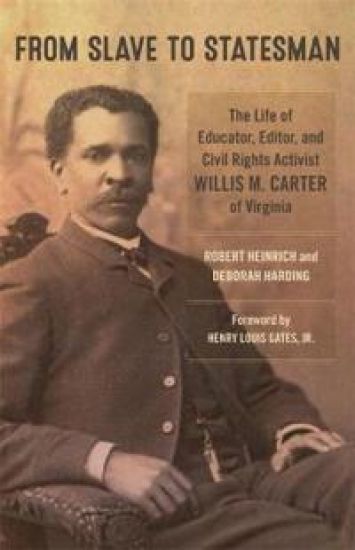
From Slave to Statesman

From Slave to Statesman

Robert Heinrich; Deborah Harding; Henry Louis Gates Jr

Louisiana State University Press
2016
sidottu
In the 1980s, Willis McGlascoe Carter's handwritten memoir turned up unexpectedly in the hands of a midwestern antiques dealer. Its twenty-two pages told a fascinating story of a man born into slavery in Virginia who, at the onset of freedom, gained an education, became a teacher, started a family, and edited a newspaper. Even his life as a slave seemed exceptional: he described how his owners treated him and his family with respect, and he learned to read and write. Tucked into its back pages, the memoir included a handwritten tribute to Carter, written by his fellow teachers upon his death. Robert Heinrich and Deborah Harding's From Slave to Statesman tells the extraordinary story of Willis M. Carter's life. Using Carter's brief memoir--one of the few extant narratives penned by a former slave--as a starting point, Heinrich and Harding fill in the abundant gaps in his life, providing unique insight into many of the most important events and transformations in this period of southern history.Carter was born a slave in 1852. Upon gaining freedom after the Civil War, Carter, like many former slaves, traveled in search of employment and education. He journeyed as far as Rhode Island and then moved to Washington, DC, where he attended night school before entering and graduating from Wayland Seminary. He continued on to Staunton, Virginia, where he became a teacher and principal in the city's African American schools, the editor of the Staunton Tribune, a leader in community and state civil rights organisations, and an activist in the Republican Party. Carter served as an alternate delegate to the 1896 Republican National Convention, and later he helped lead the battle against Virginia's new state constitution, which white supremacists sought to use as a means to disenfranchise blacks. As part of that campaign, Carter traveled to Richmond to address delegates at the constitutional convention, serving as chairman of a committee that advocated voting rights and equal public education for African Americans. Although Carter did not live to see Virginia adopt its new Jim Crow constitution, he died knowing that he had done all in his power to stop it. From Slave to Statesman fittingly resurrects Carter's all-but-forgotten story, adding immeasurably to our understanding of the journey that he and men like him took out of slavery into a world of incredible promise and powerful disappointment.
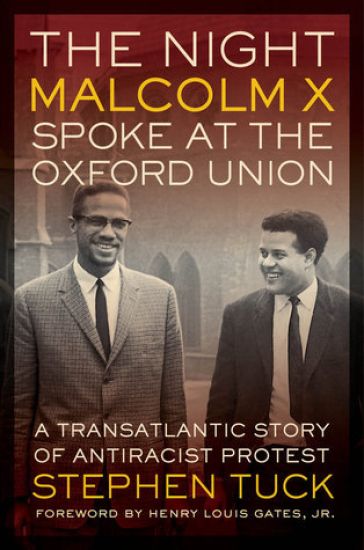
The Night Malcolm X Spoke at the Oxford Union

The Night Malcolm X Spoke at the Oxford Union

Stephen Tuck; Henry Louis Gates Jr.

University of California Press
2014
sidottu
Less than three months before he was assassinated, Malcolm X spoke at the Oxford Union the most prestigious student debating organization in the United Kingdom. The Oxford Union regularly welcomed heads of state and stars of screen and served as the training ground for the politically ambitious offspring of Britain's better classes. Malcolm X, by contrast, was the global icon of race militancy. For many, he personified revolution and danger. Marking the fiftieth anniversary of the debate, this book brings to life the dramatic events surrounding the visit, showing why Oxford invited Malcolm X, why he accepted, and the effect of the visit on Malcolm X and British students. Stephen Tuck tells the human story behind the debate and also uses it as a starting point to discuss larger issues of Black Power, the end of empire, British race relations, immigration, and student rights. Coinciding with a student-led campaign against segregated housing, the visit enabled Malcolm X to make connections with radical students from the Caribbean, Africa, and South Asia, giving him a new perspective on the global struggle for racial equality, and in turn, radicalizing a new generation of British activists. Masterfully tracing the reverberations on both sides of the Atlantic, Tuck chronicles how the personal transformation of the dynamic American leader played out on the international stage.
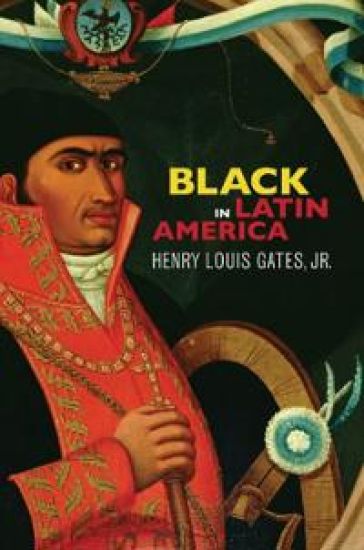
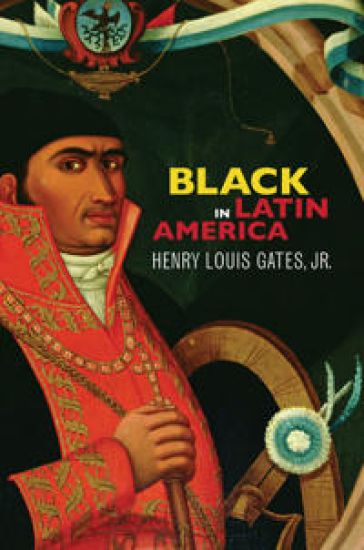
Black in Latin America

Black in Latin America

Henry Louis Gates Jr.

New York University Press
2012
pokkari
Selected as a 2012 Outstanding Title by AAUP University Press Books for Public and Secondary School Libraries The history of how six Latin American countries acknowledge—or deny—their African past 12.5 million Africans were shipped to the New World during the Middle Passage. While just over 11.0 million survived the arduous journey, only about 450,000 of them arrived in the United States. The rest—over ten and a half million—were taken to the Caribbean and Latin America. This astonishing fact changes our entire picture of the history of slavery in the Western hemisphere, and of its lasting cultural impact. These millions of Africans created new and vibrant cultures, magnificently compelling syntheses of various African, English, French, Portuguese, and Spanish influences. Despite their great numbers, the cultural and social worlds that they created remain largely unknown to most Americans, except for certain popular, cross-over musical forms. So Henry Louis Gates, Jr. set out on a quest to discover how Latin Americans of African descent live now, and how the countries acknowledge—or deny—their African past; how the fact of race and African ancestry play themselves out in the multicultural worlds of the Caribbean and Latin America. Starting with the slave experience and extending to the present, Gates unveils the history of the African presence in six Latin American countries—Brazil, Cuba, the Dominican Republic, Haiti, Mexico, and Peru—through art, music, cuisine, dance, politics, and religion, but also the very palpable presence of anti-black racism that has sometimes sought to keep the black cultural presence from view. In Brazil, he delves behind the façade of Carnaval to discover how this 'rainbow nation' is waking up to its legacy as the world's largest slave economy. In Cuba, he finds out how the culture, religion, politics and music of this island is inextricably linked to the huge amount of slave labor imported to produce its enormously profitable 19th century sugar industry, and how race and racism have fared since Fidel Castro's Communist revolution in 1959. In Haiti, he tells the story of the birth of the first-ever black republic, and finds out how the slaves's hard fought liberation over Napoleon Bonaparte's French Empire became a double-edged sword. In Mexico and Peru, he explores the almost unknown history of the significant numbers of black people—far greater than the number brought to the United States—brought to these countries as early as the sixteenth and seventeenth centuries, and the worlds of culture that their descendants have created in Vera Cruz on the Gulf of Mexico, the Costa Chica region on the Pacific, and in and around Lima, Peru. Professor Gates' journey becomes ours as we are introduced to the faces and voices of the descendants of the Africans who created these worlds. He shows both the similarities and distinctions between these cultures, and how the New World manifestations are rooted in, but distinct from, their African antecedents. "Black in Latin America" is the third instalment of Gates's documentary trilogy on the Black Experience in Africa, the United States, and in Latin America. In America Behind the Color Line, Professor Gates examined the fortunes of the black population of modern-day America. In Wonders of the African World, he embarked upon a series of journeys to reveal the history of African culture. Now, he brings that quest full-circle in an effort to discover how Africa and Europe combined to create the vibrant cultures of Latin America, with a rich legacy of thoughtful, articulate subjects whose stories are astonishingly moving and irresistibly compelling.
Black Cool

Black Cool

Rebecca Walker; Henry Louis Gates Jr.

Soft Skull Press
2012
nidottu
Black Cool explores the ineffable state and aesthetic of Black Cool. From the effortless reserve of Miles Davis in khakis on an early album cover, to the shock of resistance in black women's fashion from Angela Davis to Rihanna, to the cadence of poets as diverse as Staceyann Chin and Audre Lorde, Black Cool looks at the roots of Black Cool and attempts to name elements of the phenomena that have emerged to shape the global expectation of cool itself. Buoyed by some of America's most innovative thinkers on the subject--graphic novelist Mat Johnson, Brown University Professor of African Studies Tricia Rose, critical thinking and cultural icon bell hooks, Macarthur winner Kara Walker, and many more--the book is at once a handbook, a map, a journey into the matrix of another cosmology. It's a literal periodic table of cool, wherein each writer names and defines their element of choice. Dream Hampton writes about Audacity. Helena Andrews about Reserve, Margo Jefferson on Eccentricity, Veronica Chambers on Genius, and so on.With a foreword by Henry Louis Gates that bridges historical African elements of cool with the path laid out for the future, Black Cool offers a provocative perspective on this powerful cultural legacy.
Black in Latin America

Black in Latin America

Henry Louis Gates Jr.

New York University Press
2011
sidottu
Selected as a 2012 Outstanding Title by AAUP University Press Books for Public and Secondary School Libraries The history of how six Latin American countries acknowledge—or deny—their African past 12.5 million Africans were shipped to the New World during the Middle Passage. While just over 11.0 million survived the arduous journey, only about 450,000 of them arrived in the United States. The rest—over ten and a half million—were taken to the Caribbean and Latin America. This astonishing fact changes our entire picture of the history of slavery in the Western hemisphere, and of its lasting cultural impact. These millions of Africans created new and vibrant cultures, magnificently compelling syntheses of various African, English, French, Portuguese, and Spanish influences. Despite their great numbers, the cultural and social worlds that they created remain largely unknown to most Americans, except for certain popular, cross-over musical forms. So Henry Louis Gates, Jr. set out on a quest to discover how Latin Americans of African descent live now, and how the countries acknowledge—or deny—their African past; how the fact of race and African ancestry play themselves out in the multicultural worlds of the Caribbean and Latin America. Starting with the slave experience and extending to the present, Gates unveils the history of the African presence in six Latin American countries—Brazil, Cuba, the Dominican Republic, Haiti, Mexico, and Peru—through art, music, cuisine, dance, politics, and religion, but also the very palpable presence of anti-black racism that has sometimes sought to keep the black cultural presence from view. In Brazil, he delves behind the façade of Carnaval to discover how this 'rainbow nation' is waking up to its legacy as the world's largest slave economy. In Cuba, he finds out how the culture, religion, politics and music of this island is inextricably linked to the huge amount of slave labor imported to produce its enormously profitable 19th century sugar industry, and how race and racism have fared since Fidel Castro's Communist revolution in 1959. In Haiti, he tells the story of the birth of the first-ever black republic, and finds out how the slaves's hard fought liberation over Napoleon Bonaparte's French Empire became a double-edged sword. In Mexico and Peru, he explores the almost unknown history of the significant numbers of black people—far greater than the number brought to the United States—brought to these countries as early as the sixteenth and seventeenth centuries, and the worlds of culture that their descendants have created in Vera Cruz on the Gulf of Mexico, the Costa Chica region on the Pacific, and in and around Lima, Peru. Professor Gates' journey becomes ours as we are introduced to the faces and voices of the descendants of the Africans who created these worlds. He shows both the similarities and distinctions between these cultures, and how the New World manifestations are rooted in, but distinct from, their African antecedents. "Black in Latin America" is the third instalment of Gates's documentary trilogy on the Black Experience in Africa, the United States, and in Latin America. In America Behind the Color Line, Professor Gates examined the fortunes of the black population of modern-day America. In Wonders of the African World, he embarked upon a series of journeys to reveal the history of African culture. Now, he brings that quest full-circle in an effort to discover how Africa and Europe combined to create the vibrant cultures of Latin America, with a rich legacy of thoughtful, articulate subjects whose stories are astonishingly moving and irresistibly compelling.
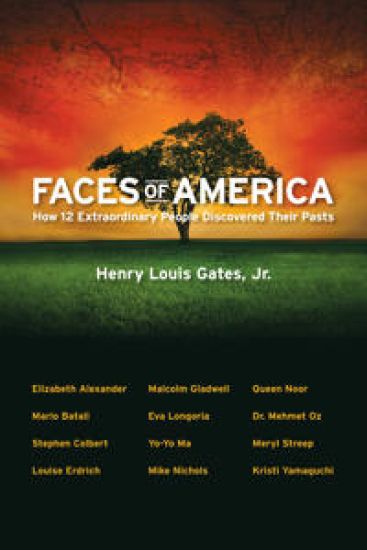
Faces of America

Faces of America

Henry Louis Gates Jr.

New York University Press
2010
sidottu
Explores the family trees and genealogical identity of 12 of America's most extraordinary people As a nation of immigrants, the American experience is vibrantly defined by the diverse racial, ethnic, cultural, and religious heritage of its people. Perhaps because so many of their ancestors migrated to this country relatively recently, Americans are especially concerned with their family trees, carving out personal histories by combing through documents such as wills and estate records, federal and state censuses, and private family papers, and mining the stories and tales handed down to them by their forebears. Since 2007, the Harvard scholar Henry Louis Gates, Jr., has been helping African Americans find long-buried details about their ancestors by researching their family trees and then, when the paper trail ends, by analyzing their DNA and marrying that information to a wealth of historical data. Now, in Faces of America Gates explores the family trees of twelve of America's most recognizable and extraordinary citizens, individuals who learn that they are of Asian, English, French, German, Irish, Italian, Jamaican, Jewish, Latino, Native American, Swiss, and Syrian ancestry: Inaugural poet Elizabeth Alexander, chef Mario Batali, comedian and television personality Stephen Colbert, writer Louise Erdrich, writer Malcolm Gladwell, actress Eva Longoria, cellist Yo Yo Ma, writer and director Mike Nichols, former monarch of Jordan Queen Noor, surgeon and author Dr. Mehmet Oz, actress Meryl Streep, and Olympic gold medalist and figure skater Kristi Yamaguchi. In addition, each of the subjects in Faces of America underwent dense genotyping to trace their genetic ancestry on their father's line, their mother's line, and their percentages of European, Asian, Native American, and African ancestry. Faces of America unfolds as a riveting journey into our country's complex ancestral past. Readers will share in the surprise and delight, the shock and sadness of these twelve individuals themselves as Gates unveils their rich family stories, traced back to their arrival on America's shores, and beyond, deep into the history of their ancestors' countries of origin. America, as Gates shows us, is a nation of many historical threads, interwoven and united in the present moment. In this compelling book, Gates demonstrates that where we come from profoundly and fundamentally informs who we are today.
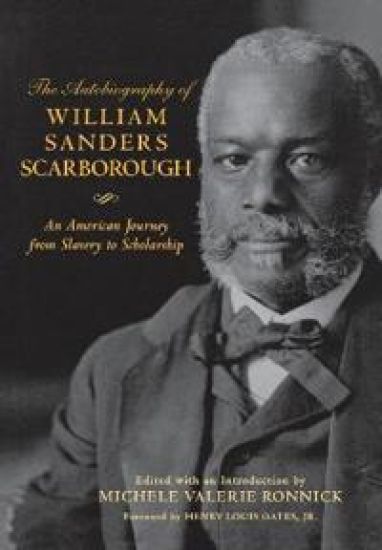
The Autobiography of William Sanders Scarborough

The Autobiography of William Sanders Scarborough

Henry Louis Gates Jr.

Wayne State University Press
2004
sidottu
This illuminating autobiography traces Scarborough's path out of slavery in Macon, Georgia, to a prolific scholarly career that culminated with his presidency of Wilberforce University. Despite the racism he met as he struggled to establish a place in higher education for African Americans, Scarborough was an exemplary scholar, particularly in the field of classical studies. He was the first African American member of the Modern Language Association, a forty-four-year member of the American Philological Association, and a true champion of higher education Scarborough advocated the reading, writing, and teaching of liberal arts at a time when illiteracy was rampant due to slavery's legacy, white supremacists were dismissing the intellectual capability of blacks, and Booker T. Washington was urging African Americans to focus on industrial skills and training. The Autobiography of William Sanders Scarborough is a valuable historical record of the life and work of a pioneer who helped formalize the intellectual tradition of the black scholar, Michele Valerie Ronnick contextualizes Scarborough's narrative through extensive notes and by exploring a wide variety of sources such as census records, church registries, period newspapers, and military and university recards. This book is indispensable to anyone interested in the history of intellectual endeavor in America, Africana studies and classical studies, in particular, as well as those familiar with the associations and institutions that welcomed and valued Scarborough.
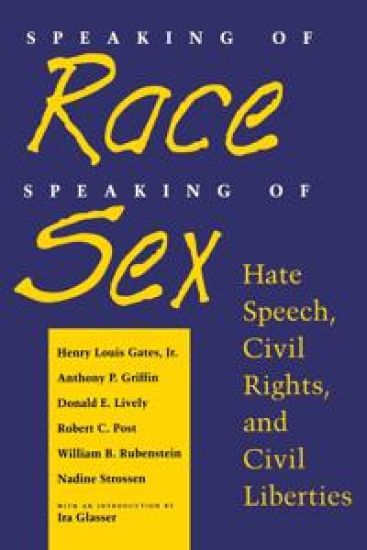
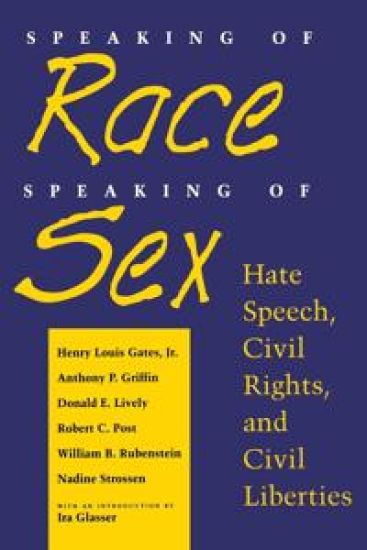
Speaking of Race, Speaking of Sex

Speaking of Race, Speaking of Sex

Henry Louis Gates Jr.; Anthony P. Griffin; Donald E. Lively; Nadine Strossen

New York University Press
1996
pokkari
A provocative anthology on questions of hate speech and speech regulation designed to protect minorities At the University of Pennsylvania, a student is reprimanded for calling a group of African-American students water buffalo. Several prominent American law schools now request that professors abstain from discussing the legal aspects of rape for fear of offending students. As debates over multiculturalism and political correctness crisscross the land, no single issue has been more of a flash point in the ongoing culture wars than hate speech codes, which seek to restrict bigoted or offensive speech and punish those who engage in it. In this provocative anthology, a range of prominent voices argue that hate speech restrictions are not only dangerous, but counterproductive. The lessons of history indicate that speech regulation designed to protect minorities is destined to be used against them. Acknowledging the legitimacy of the concerns that prompt speech codes and combining support for civil liberties with an acute concern for civil tights issues, Speaking of Race, Speaking of Sex demonstrates that it is difficult, if not impossible, to draw the line between unprotected insults and protected ideas. Decrying such speech regulation as overly concerned with the symbols of racism rather than its realities, Speaking of Race, Speaking of Sex offers a balanced and well-reasoned perspective on one of the most controversial issues of our time.
Speaking of Race, Speaking of Sex

Speaking of Race, Speaking of Sex

Henry Louis Gates Jr.; Anthony P. Griffin; Donald E. Lively; Nadine Strossen

New York University Press
1995
sidottu
A provocative anthology on questions of hate speech and speech regulation designed to protect minorities At the University of Pennsylvania, a student is reprimanded for calling a group of African-American students water buffalo. Several prominent American law schools now request that professors abstain from discussing the legal aspects of rape for fear of offending students. As debates over multiculturalism and political correctness crisscross the land, no single issue has been more of a flash point in the ongoing culture wars than hate speech codes, which seek to restrict bigoted or offensive speech and punish those who engage in it. In this provocative anthology, a range of prominent voices argue that hate speech restrictions are not only dangerous, but counterproductive. The lessons of history indicate that speech regulation designed to protect minorities is destined to be used against them. Acknowledging the legitimacy of the concerns that prompt speech codes and combining support for civil liberties with an acute concern for civil tights issues, Speaking of Race, Speaking of Sex demonstrates that it is difficult, if not impossible, to draw the line between unprotected insults and protected ideas. Decrying such speech regulation as overly concerned with the symbols of racism rather than its realities, Speaking of Race, Speaking of Sex offers a balanced and well-reasoned perspective on one of the most controversial issues of our time.