Kirjojen hintavertailu. Mukana 12 657 676 kirjaa ja 12 kauppaa.
Kirjailija
Henry Reynolds
Kirjat ja teokset yhdessä paikassa: 19 kirjaa, julkaisuja vuosilta 1996-2025, suosituimpien joukossa Torquato Tasso's Aminta Englisht [By Henry Reynolds]. to This Is Added Ariadne's Complaint in Imitation of Anguillara; Written by the Translator of Tasso's Aminta.. Vertaile teosten hintoja ja tarkista saatavuus suomalaisista kirjakaupoista.
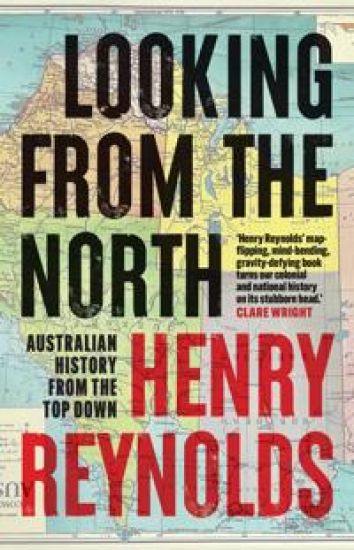
Henry Reynolds’ ground-breaking re-examination of Australian colonisation from the north down.When acclaimed historian Henry Reynolds moved from Hobart to Townsville to teach Australian history in the 1960s, he discovered the books of the period covered very little about northern Australia and First Nations peoples. After recognising the importance of local history and frontier violence, he ended up transforming Australian history in ways he could never have imagined. In Looking from the North Reynolds again turns Australian history on its axis in an exploration of colonisation north of the Tropic of Capricorn. Reynolds explores the stories of the European, Chinese, Japanese and Pacific Islander people who were vital to the settlement of the north. Along with the experience of First Nations peoples, from employment on stations and as native police, to the land rights and homelands movements. Reynolds shows how the colonisation of the north, beginning in 1861, was a very different venture to settlement in the south, and argues that it provides profoundly important lessons for the world we live in today.
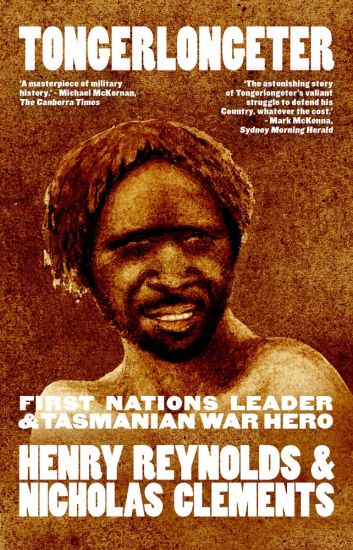
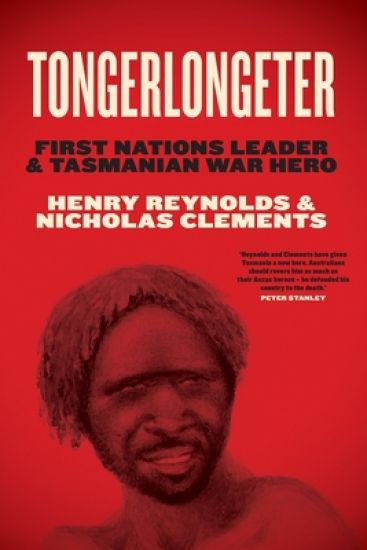
Henry Reynolds and Nicholas Clements uncover the extraordinary story of one of Australia's greatest military leaders.Tongerlongeter is an epic story of resistance, sorrow and survival. Leader of the Oyster Bay nation of south-east Tasmania in the 1820s and '30s, Tongerlongeter and his allies prosecuted the most effective frontier resistance ever mounted on Australian soil, in?icting some 354 casualties. His brilliant campaign inspired terror throughout the colony, forcing Governor George Arthur to counter with a massive military operation in 1830. Tongerlongeter escaped but the cumulative losses had taken their toll. On New Year's Eve 1831, having lost his arm, his country, and all but 25 of his people, the chief agreed to an armistice. In exile on Flinders Island, Tongerlongeter united remnant tribes and became the settlement's 'King' — a beacon of hope in a hopeless situation.
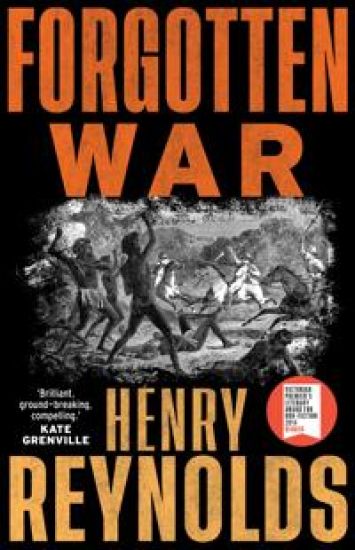
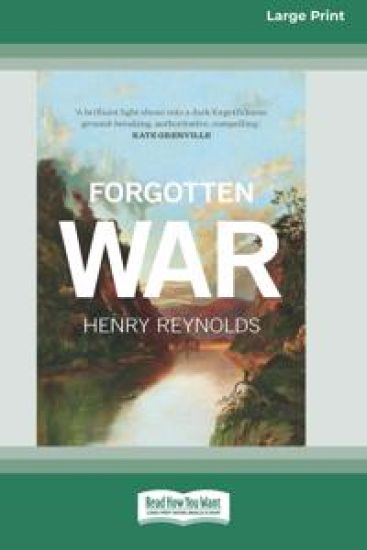
'We are at war with them,' wrote a Tasmanian settler in 1831. 'What we call their crime is what in a white man we should call patriotism.'Australia is dotted with memorials to soldiers who fought in wars overseas. So why are there no official memorials or commemorations of the wars that were fought on Australian soil between Aborigines and white colonists? Why is it more controversial to talk about the frontier wars now than it was one hundred years ago?In Forgotten War, winner of the 2014 Victorian Premier's Award for non-fiction, influential historian Henry Reynolds makes it clear that there can be no reconciliation without acknowledging the wars fought on our own soil. Reynolds argues the resistance by First Nations warriors to the invasion of their homelands, lasting for more than a hundred years, can now be seen as a significant chapter in the global history of anti-colonial rebellion. To be appreciated and understood in a way that has scarcely begun to dawn on our national consciousness, and admired far more widely than our role as adjunct imperialists fighting with Britain and America.
During Tasmania's Black War of 1823-31, Tongerlongeter led the most effective Aboriginal resistance campaign in Australian history. His Oyster Bay Nation of southeast Tasmania and his ally Montpelliatta's Big River Nation of central Tasmania made some 710 attacks, killing 182 colonists and wounding a further 176. Despite this, First Nations casualties were up to three times greater and their population plummeted. Militarily it was a lost cause, yet their determined resistance and dogged commitment to Country, culture and each other provoked desperation at every level of the fledgling colony. Tongerlongeter was the lynch pin that held his people together in the face of apocalyptic invasion, before and after the historic armistice that ended the war on New Year's Eve 1831. But while his achievements rival those of any Victoria Cross recipient, he is buried in an unmarked grave on Flinders Island. In Tongerlongeter, acclaimed historians Henry Reynolds and Nicholas Clements retrieve one of Australia's greatest war heroes from historical obscurity.
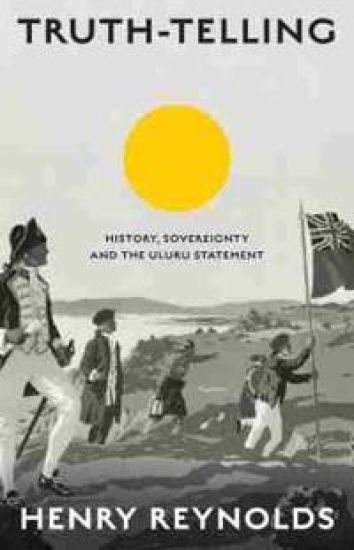
If we are to take seriously the need for telling the truth about our history, we must start at first principles. What if the sovereignty of the First Nations was recognised by European international law in the eighteenth and nineteenth centuries? What if the audacious British annexation of a whole continent was not seen as acceptable at the time and the colonial office in Britain understood that ‘peaceful settlement’ was a fiction? If the 1901 parliament did not have control of the whole continent, particularly the North, by what right could the new nation claim it? The historical record shows that the argument of the Uluru Statement from the Heart is stronger than many people imagine and the centuries long legal position about British claims to the land far less imposing than it appears. In Truth-Telling, influential historian Henry Reynolds pulls the rug from legal and historical assumptions, with his usual sharp eye and rigour, in a book that’s about the present as much as the past. His work shows exactly why our national war memorial must acknowledge the frontier wars, why we must change the date of our national day, and why treaties are important. Most of all, it makes urgently clear that the Uluru Statement is no rhetorical flourish but carries the weight of history and law and gives us a map for the future.
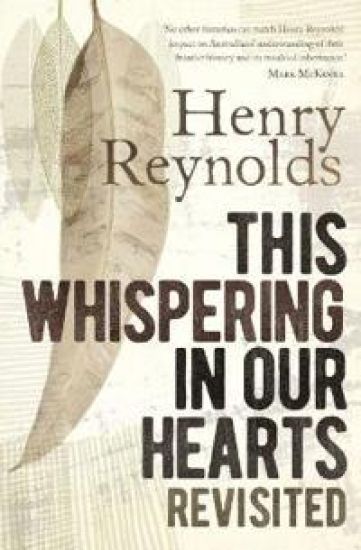
How is it our minds are not satisfied? What means this whispering in the bottom of our hearts' Listening to the whispering in his own heart, Henry Reynolds was led into the lives of remarkable and largely forgotten white humanitarians who followed their consciences and challenged the prevailing attitudes to Indigenous people. His now-classic book The Whispering in Our Hearts constructed an alternative history of Australia through the eyes of those who felt disquiet and disgust at the brutality of dispossession. These men and women fought for justice for Indigenous people even when doing so left them isolated and criticised by their fellow whites. The unease of these humanitarians about the morality of white settlement has not dissipated and their legacy informs current debates about reconciliation between black and white Australia. Revisiting this history, in this new edition Reynolds brings fresh perspectives to issues we grapple with still. Those who argue for justice, reparation, recognition and a treaty will find themselves in solidarity with those who went before. But this powerful book shows how much remains to be done to settle the whispering in our hearts.
‘How is it our minds are not satisfied? What means this whispering in the bottom of our hearts?’ Listening to the whispering in his own heart, Henry Reynolds was led into the lives of remarkable and largely forgotten white humanitarians who followed their consciences and challenged the prevailing attitudes to Indigenous people. His now-classic book This Whispering in Our Hearts constructed an alternative history of Australia through the eyes of those who felt disquiet and disgust at the brutality of dispossession. These men and women fought for justice for Indigenous people even when doing so left them isolated and criticised by their fellow whites. The unease of these humanitarians about the morality of white settlement has not dissipated and their legacy informs current debates about reconciliation between black and white Australia. Revisiting this history, in this new edition Reynolds brings fresh perspectives to issues we grapple with still. Those who argue for justice, reparation, recognition and a treaty will find themselves in solidarity with those who went before. But this powerful book shows how much remains to be done to settle the whispering in our hearts. An updated edition of a classic text, now includes reflections on native title, the apology, international conventions, reparations, recognition and the treaty.
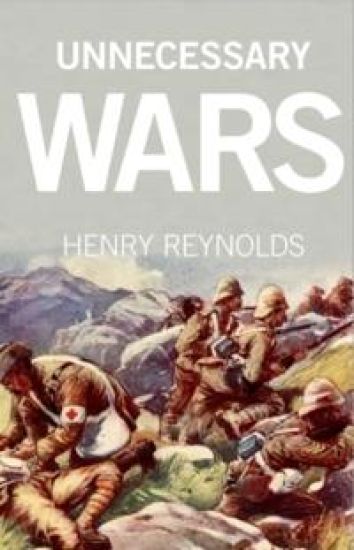
‘Australian governments find it easy to go to war. Their leaders seem to be able to withdraw with a calm conscience, answerable neither to God nor humanity.’ Australia lost 600 men in the Boer War, a threeyear conflict fought in the heart of Africa that had, ostensibly, nothing to do with Australia. Coinciding with Federation, the war kickstarted Australia’s commitment to fighting in Britain’s wars overseas, and forged a national identity around it. By 1902, when the Boer War ended, a mythology about our colonial soldiers had already been crafted, and a dangerous precedent established. This is Henry Reynolds at his searing best, as he shows how the Boer War left a dark and dangerous legacy, demonstrating how those beliefs have propelled us into too many unnecessary wars – without ever counting the cost.
This captivating work charts the history of Tasmania from the arrival of European maritime expeditions in the late eighteenth century, through to the modern day. By presenting the perspectives of both Indigenous Tasmanians and British settlers, author Henry Reynolds provides an original and engaging exploration of these first fraught encounters. Utilising key themes to bind his narrative, Reynolds explores how geography created a unique economic and migratory history for Tasmania, quite separate from the mainland experience. He offers an astute analysis of the island's economic and demographic reality, by noting that this facilitated the survival of a rich heritage of colonial architecture unique in Australia, and allowed the resident population to foster a powerful web of kinship. Reynolds' remarkable capacity to empathise with the characters of his chronicle makes this a powerful, engaging and moving account of Tasmania's unique position within Australian history.
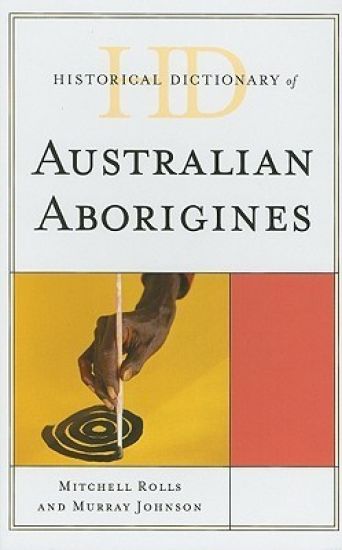
The Australian Aborigines first arrived on the continent at least 60,000 years ago. They almost certainly landed on the northwest coast by sea from the nearby islands of the Indonesian archipelago. That first arrival may have been replicated many times over. The following exploration and settlement of a vast and varied continent was a venture of heroic proportions. The new settlers had reached southern Tasmania, the point farthest from the original landfall at least 30,000 years ago. By the early 17th century, when the first European seafarers arrived in Australian waters, the Aboriginal nations were living in every part of the continent, having colonized the tropical rainforests of the north, the vast arid deserts of the interior, and the cool and damp woodlands of the southeast. The Historical Dictionary of Australian Aborigines relates the history of Australia's indigenous inhabitants from their arrival on the continent 60,000 years ago to the centuries long European colonization process starting in the 1600s to their role in today's Australia. This is done through a chronology, an introductory essay, an extensive bibliography, and over 300 cross-referenced dictionary entries on significant persons, places, events, institutions, and aspects of culture, society, economy, and politics. This book is an excellent access point for students, researchers, and anyone wanting to know more about Australian Aboriginal peoples.
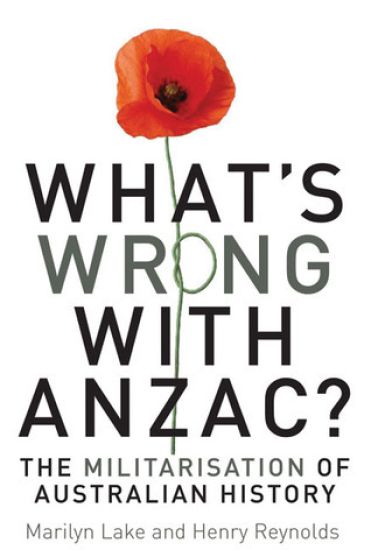
Brave and controversial, this account argues that Australians’ collective obsession with the Australian and New Zealand Army Corps (ANZAC) has distorted their perception of national history. Delving into the history of ANZAC and the mythologies surrounding it, this detailed record explores topics such as the formation of Australia’s national holiday—ANZAC Day—and the way in which the spirit of ANZAC is taught in the nation's classrooms. Ultimately, this informative narrative claims that ANZAC has become a conservative political force in Australia and questions whether ANZAC’S renowned foreign battles were worth all of the bloodshed. Daring, intelligent, and thought-provoking, this is a must-read for those interested in Australian or military history.
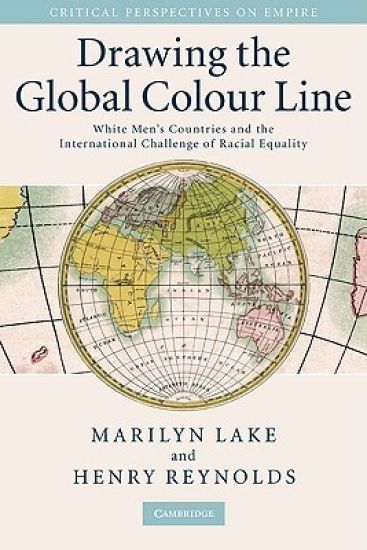
In 1900 W. E. B. DuBois prophesied that the colour line would be the key problem of the twentieth-century and he later identified one of its key dynamics: the new religion of whiteness that was sweeping the world. Whereas most historians have confined their studies of race-relations to a national framework, this book studies the transnational circulation of people and ideas, racial knowledge and technologies that under-pinned the construction of self-styled white men's countries from South Africa, to North America and Australasia. Marilyn Lake and Henry Reynolds show how in the late nineteenth century and early twentieth century these countries worked in solidarity to exclude those they defined as not-white, actions that provoked a long international struggle for racial equality. Their findings make clear the centrality of struggles around mobility and sovereignty to modern formulations of both race and human rights.
In 1900 W. E. B. DuBois prophesied that the colour line would be the key problem of the twentieth-century and he later identified one of its key dynamics: the new religion of whiteness that was sweeping the world. Whereas most historians have confined their studies of race-relations to a national framework, this book studies the transnational circulation of people and ideas, racial knowledge and technologies that under-pinned the construction of self-styled white men's countries from South Africa, to North America and Australasia. Marilyn Lake and Henry Reynolds show how in the late nineteenth century and early twentieth century these countries worked in solidarity to exclude those they defined as not-white, actions that provoked a long international struggle for racial equality. Their findings make clear the centrality of struggles around mobility and sovereignty to modern formulations of both race and human rights.
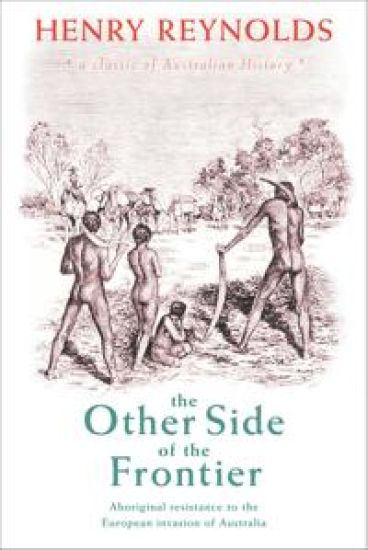
The publication of ""The Other Side of the Frontier"" in 1981 profoundly changed the way in which we understand the history of relations between indigenous Australians and European settlers. It has since become a classic of Australian history. Drawing from documentary and oral evidence, the book describes in meticulous and compelling detail the ways in which Aborigines responded to the arrival of Europeans. Henry Reynolds' argument that the Aborigines resisted fiercely was highly original when it was first published and is no less challenging today.
Aboriginal and immigrant Australians have shared this continent for 200 years. Nineteenth-century writers were aware of the importance of the Aboriginal presence, but when the colonists began to write their own history the Aborigines were erased from the account. Recently, this 'history' has been overturned as we rediscover the role of Aborigines in our past.In this collection of documents our forebears speak for themselves. They present a fascinating picture of how they endeavoured to come to terms - emotionally, morally and intellectually - with the victims of the dispossession.This fascinating collection, compiled by a leading authority on white-Aboriginal relations, challenges the general reader to reinterpret our past. It will prove invaluable to students of history and race relations in schools, colleges and universities.

![Torquato Tasso's Aminta Englisht [By Henry Reynolds]. to This Is Added Ariadne's Complaint in Imitation of Anguillara; Written by the Translator of Tasso's Aminta.](/covers/9781241108632.jpg)