Kirjojen hintavertailu. Mukana 12 390 323 kirjaa ja 12 kauppaa.

Kirjailija

Henry Shue

Kirjat ja teokset yhdessä paikassa: 9 kirjaa, julkaisuja vuosilta 1996-2024, suosituimpien joukossa Climate Justice. Vertaile teosten hintoja ja tarkista saatavuus suomalaisista kirjakaupoista.

9 kirjaa

Kirjojen julkaisuhaarukka 1996-2024.

The Pivotal Generation

The Pivotal Generation

Henry Shue

PRINCETON UNIVERSITY PRESS
2024
pokkari
An eminent philosopher explains why we owe it to future generations to take immediate action on global warmingClimate change is the supreme challenge of our time. Yet despite growing international recognition of the unfolding catastrophe, global carbon emissions continue to rise, hitting an all-time high in 2019. Unless humanity rapidly transitions to renewable energy, it may be too late to stop irreversible ecological damage. In The Pivotal Generation, renowned political philosopher Henry Shue makes an impassioned case for taking immediate, radical action to combat global warming.Shue grounds his argument in a rigorous philosophical analysis of climate change’s moral implications. Unlike previous generations, which didn’t fully understand the danger of burning carbon, we have the knowledge to comprehend and control rising carbon dioxide levels. And unlike future generations, we still have time to mitigate the worst effects of global warming. This generation has the power, and thus the responsibility, to save the planet. Shirking that responsibility only leaves the next generation with an even heavier burden—one they may find impossible to bear.Written in direct, accessible language, The Pivotal Generation approaches the latest scientific research with a singular moral clarity. It’s an urgently needed call to action for anyone concerned about the planet’s future.
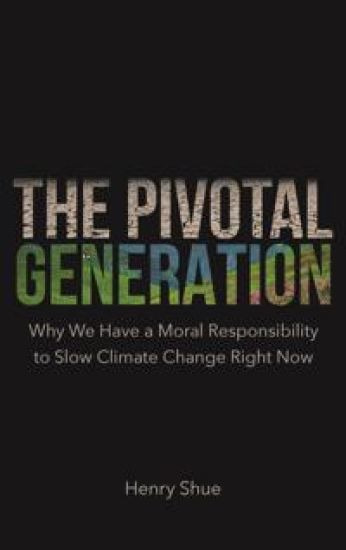
The Pivotal Generation

The Pivotal Generation

Henry Shue

PRINCETON UNIVERSITY PRESS
2022
sidottu
An eminent philosopher explains why we owe it to future generations to take immediate action on global warmingClimate change is the supreme challenge of our time. Yet despite growing international recognition of the unfolding catastrophe, global carbon emissions continue to rise, hitting an all-time high in 2019. Unless humanity rapidly transitions to renewable energy, it may be too late to stop irreversible ecological damage. In The Pivotal Generation, renowned political philosopher Henry Shue makes an impassioned case for taking immediate, radical action to combat global warming.Shue grounds his argument in a rigorous philosophical analysis of climate change’s moral implications. Unlike previous generations, which didn’t fully understand the danger of burning carbon, we have the knowledge to comprehend and control rising carbon dioxide levels. And unlike future generations, we still have time to mitigate the worst effects of global warming. This generation has the power, and thus the responsibility, to save the planet. Shirking that responsibility only leaves the next generation with an even heavier burden—one they may find impossible to bear.Written in direct, accessible language, The Pivotal Generation approaches the latest scientific research with a singular moral clarity. It’s an urgently needed call to action for anyone concerned about the planet’s future.
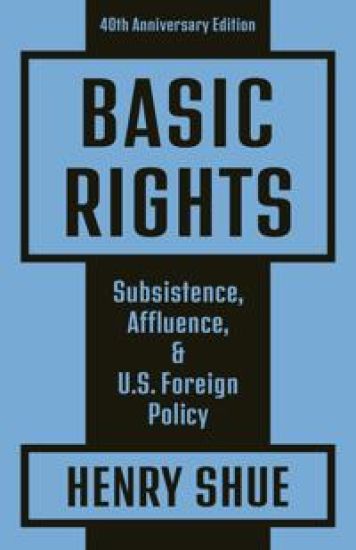
Basic Rights

Basic Rights

Henry Shue

Princeton University Press
2020
pokkari
An expanded and updated edition of a classic work on human rights and global justiceSince its original publication, Basic Rights has proven increasingly influential to those working in political philosophy, human rights, global justice, and the ethics of international relations and foreign policy, particularly in debates regarding foreign policy’s role in alleviating global poverty. Henry Shue asks: Which human rights ought to be the first honored and the last sacrificed? Shue argues that subsistence rights, along with security rights and liberty rights, serve as the ground of all other human rights. This classic work, now available in a thoroughly updated fortieth-anniversary edition, includes a substantial new chapter by the author examining how the accelerating transformation of our climate progressively undermines the bases of subsistence like sufficient water, affordable food, and housing safe from forest-fires and sea-level rise. Climate change threatens basic rights.
Climate Justice

Climate Justice

Henry Shue

Oxford University Press
2016
nidottu
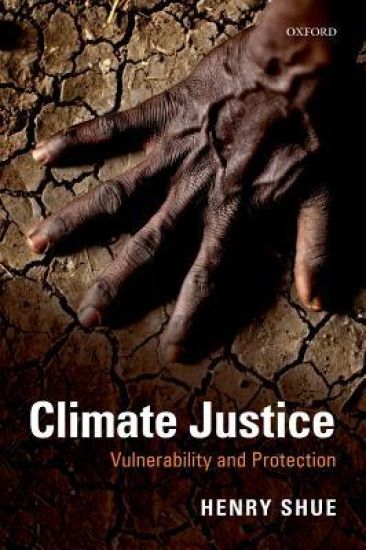
The fruit of twenty years of moral reflection on the emerging greatest challenge to humanity of the 21st century, these far-sighted and influential essays by a pioneering practical philosopher on the tangled questions of justice between nations and justice across generations confronting all attempts at international cooperation in controlling climate change sharply crystallize the central choices and offer constructive directions forward. Arguing that persistent attempts by U.S. negotiators to avoid the fundamental issues of justice at the heart of persistent international disagreement on the terms of a binding multilateral treaty are as morally misguided as they are diplomatically counter-productive, Henry Shue has built a case that efforts to price carbon (through cap-and-trade or carbon taxes) as a mechanism to drive down greenhouse gas emissions by the affluent must, for both ethical and political reasons, be complemented by international transfers that temporarily subsidize the development of non-carbon energy and its dissemination to those trapped in poverty. Our vital escape from climate change rooted in the dominance of the fossil fuel regime ought not, and in fact need not, come at the price of de-railing the escape of the world's poorest from poverty rooted in lack of affordable energy that does not undermine the climate. The momentum of changes in the planetary climate system and the political inertia of energy regimes mean that future generations, like the poorest of the present, are vulnerable to our decisions, and they have rights not to be left helpless by those of us with the power instead to leave them hope.
Fighting Hurt

Fighting Hurt

Henry Shue

Oxford University Press
2016
sidottu
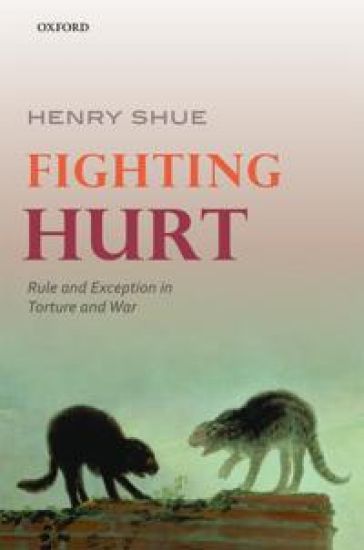
Some of our most fundamental moral rules are violated by the practices of torture and war. If one examines the concrete forms these practices take, can the exceptions to the rules necessary to either torture or war be justified? Fighting Hurt brings together key essays by Henry Shue on the issue of torture, and relatedly, the moral challenges surrounding the initiation and conduct of war, and features a new introduction outlining the argument of the essays, putting them into context, and describing how and in what ways his position has modified over time. The first six chapters marshal arguments that have been refined over 35 years for the conclusion that torture can never be justified in any actual circumstances whatsoever. The practice of torture has nothing significant in common with the ticking bomb scenario often used in its defence, and weak U.S. statutes have loop-holes for psychological torture of the kind now favoured by CIA in the 'war against terrorism'. The other sixteen chapters maintain that for as long as wars are in fact fought, it is morally urgent to limit specific destructive practices that cannot be prohibited. Two possible exceptions to the UN Charter's prohibition on all but defensive wars, humanitarian military intervention and preventive war to eliminate WMD, are evaluated; and one possible exception to the principle of discrimination, Michael Walzer's 'supreme emergency', is sharply criticized. Two other fundamental issues about the rules for the conduct of war receive extensive controversial treatment. The first is the rules to limit the bombing of dual-use infrastructure, with a focus on alternative interpretations of the principle of proportionality that limits 'collateral damage'. The second is the moral status of the laws of war as embodied in International Humanitarian Law. It is argued that the current philosophical critique of IHL by Jeff McMahan focused on individual moral liability to attack is an intellectual dead-end and that the morally best rules are international laws that are the same for all fighters. Examining real cases, including U.S. bombing of Iraq in 1991, the Clinton Administration decision not to intervene in the 1994 Rwandan genocide, NATO bombing of Serbia in 1999, and CIA torture after 9/11 and its alternatives, this book is highly accessible to general readers who are interested in the ethical status of American political life, especially foreign policy.
Climate Justice

Climate Justice

Henry Shue

Oxford University Press
2014
sidottu
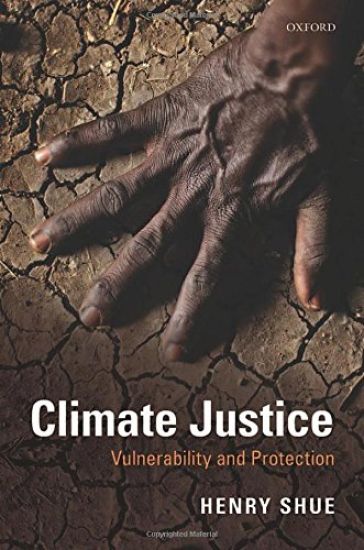
The fruit of twenty years of moral reflection on the emerging greatest challenge to humanity of the 21st century, these far-sighted and influential essays by a pioneering practical philosopher on the tangled questions of justice between nations and justice across generations confronting all attempts at international cooperation in controlling climate change sharply crystallize the central choices and offer constructive directions forward. Arguing that persistent attempts by U.S. negotiators to avoid the fundamental issues of justice at the heart of persistent international disagreement on the terms of a binding multilateral treaty are as morally misguided as they are diplomatically counter-productive, Henry Shue has built a case that efforts to price carbon (through cap-and-trade or carbon taxes) as a mechanism to drive down greenhouse gas emissions by the affluent must, for both ethical and political reasons, be complemented by international transfers that temporarily subsidize the development of non-carbon energy and its dissemination to those trapped in poverty. Our vital escape from climate change rooted in the dominance of the fossil fuel regime ought not, and in fact need not, come at the price of de-railing the escape of the world's poorest from poverty rooted in lack of affordable energy that does not undermine the climate. The momentum of changes in the planetary climate system and the political inertia of energy regimes mean that future generations, like the poorest of the present, are vulnerable to our decisions, and they have rights not to be left helpless by those of us with the power instead to leave them hope.
Climate Ethics

Climate Ethics

Stephen M. Gardiner; Simon Caney; Dale Jamieson; Henry Shue

Oxford University Press Inc
2010
sidottu
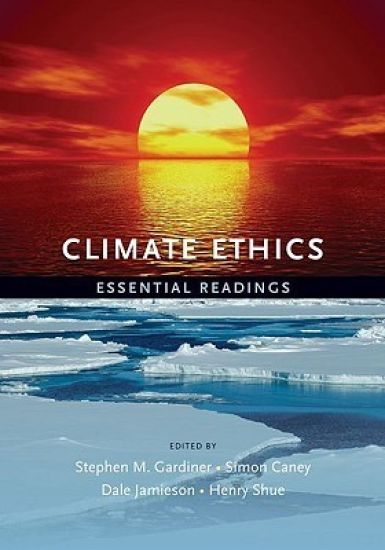
This collection gathers a set of seminal papers from the emerging area of ethics and climate change. Topics covered include human rights, international justice, intergenerational ethics, individual responsibility, climate economics, and the ethics of geoengineering. Climate Ethics is intended to serve as a source book for general reference, and for university courses that include a focus on the human dimensions of climate change. It should be of broad interest to all those concerned with global justice, environmental science and policy, and the future of humanity.
Climate Ethics

Climate Ethics

Stephen M. Gardiner; Simon Caney; Dale Jamieson; Henry Shue

Oxford University Press Inc
2010
nidottu
This collection gathers a set of seminal papers from the emerging area of ethics and climate change. Topics covered include human rights, international justice, intergenerational ethics, individual responsibility, climate economics, and the ethics of geoengineering. Climate Ethics is intended to serve as a source book for general reference, and for university courses that include a focus on the human dimensions of climate change. It should be of broad interest to all those concerned with global justice, environmental science and policy, and the future of humanity.
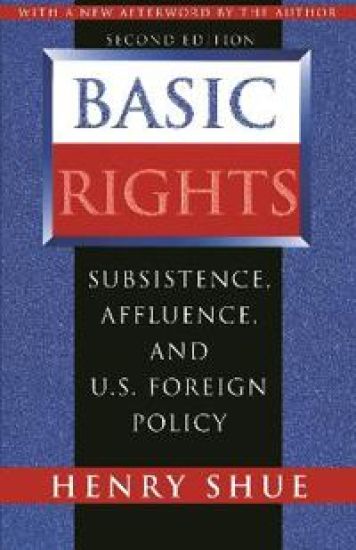
Basic Rights

Basic Rights

Henry Shue

Princeton University Press
1996
nidottu
Which human rights ought to be the first honored and the last sacrificed? In the first systematic attempt by an American philosopher to address the issue of human rights as it relates to U.S. foreign policy, Henry Shue proposes an original conception of basic rights that illuminates both the nature of moral rights generally and the determination of which specific rights are the basic ones.