Kirjojen hintavertailu. Mukana 12 152 606 kirjaa ja 12 kauppaa.

Kirjailija

Henry Stobart

Kirjat ja teokset yhdessä paikassa: 4 kirjaa, julkaisuja vuosilta 2006-2025, suosituimpien joukossa Daily Services For Christian Households (1867). Vertaile teosten hintoja ja tarkista saatavuus suomalaisista kirjakaupoista.

4 kirjaa

Kirjojen julkaisuhaarukka 2006-2025.

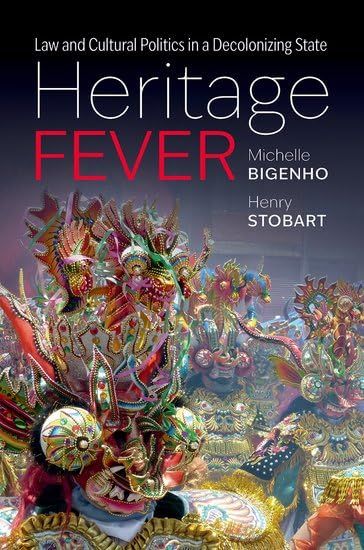
Heritage Fever

Heritage Fever

Michelle Bigenho; Henry Stobart

OXFORD UNIVERSITY PRESS INC
2025
nidottu
The early twenty-first century ushered in a period of change in Bolivia. The country welcomed its first Indigenous president, a new constitution, and a profusion of laws that recognized individual music and dance expressions as intangible cultural heritage. Using cultural heritage lawmaking as a window through which to view the de-centered workings of the Indigenous-focused Plurinational Bolivian State, Heritage Fever unpacks the myriad motivations for heritage making in this this politically transformative moment. Heritage Fever reorients UNESCO-driven heritage debates towards a different set of questions--a pivot the authors call “heritage otherwise.” These inquiries focus on how citizens use law to frame expressive culture and engage their new state. Through grounded case studies, Bigenho and Stobart reveal how competing claims over cultural expressions stimulate aficionado research and produce an abundance of cultural activities. Managing these productive conflicts often involves strategic uses of scale within the country's new political autonomies, even as old-style nationalisms lurk beneath a plurinational sheen. One case study highlights imagined Indigenous autonomy as bolstered by decolonizing historiography that predates the Plurinational State by several decades. Privileging the stories told by those who championed or who were bureaucratically involved in the respective heritage-making campaigns, Heritage Fever's research draws from the authors' combined fieldwork in Bolivia over the last 30 years, recent multi-sited fieldwork conducted as a team, and ethnographic interviews conducted with Bolivians involved in heritage-making projects. Contributing to legal anthropology, critical heritage studies, ethnomusicology, and anthropology of the state, Heritage Fever looks beyond intellectual property frames, opens new perspectives on archival thinking, reflects on decolonizing practices in expertise and knowledge production, and uncovers the agency of mid-level citizens in a decolonizing state.
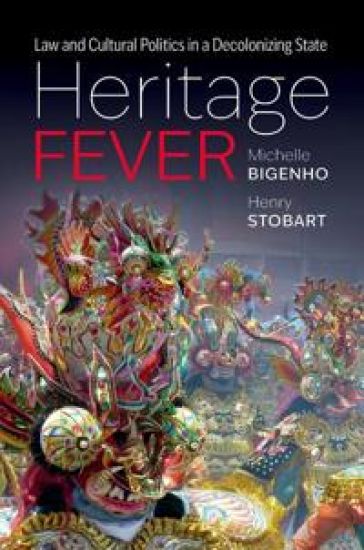
Heritage Fever

Heritage Fever

Michelle Bigenho; Henry Stobart

OXFORD UNIVERSITY PRESS INC
2025
sidottu
The early twenty-first century ushered in a period of change in Bolivia. The country welcomed its first Indigenous president, a new constitution, and a profusion of laws that recognized individual music and dance expressions as intangible cultural heritage. Using cultural heritage lawmaking as a window through which to view the de-centered workings of the Indigenous-focused Plurinational Bolivian State, Heritage Fever unpacks the myriad motivations for heritage making in this this politically transformative moment. Heritage Fever reorients UNESCO-driven heritage debates towards a different set of questions--a pivot the authors call “heritage otherwise.” These inquiries focus on how citizens use law to frame expressive culture and engage their new state. Through grounded case studies, Bigenho and Stobart reveal how competing claims over cultural expressions stimulate aficionado research and produce an abundance of cultural activities. Managing these productive conflicts often involves strategic uses of scale within the country's new political autonomies, even as old-style nationalisms lurk beneath a plurinational sheen. One case study highlights imagined Indigenous autonomy as bolstered by decolonizing historiography that predates the Plurinational State by several decades. Privileging the stories told by those who championed or who were bureaucratically involved in the respective heritage-making campaigns, Heritage Fever's research draws from the authors' combined fieldwork in Bolivia over the last 30 years, recent multi-sited fieldwork conducted as a team, and ethnographic interviews conducted with Bolivians involved in heritage-making projects. Contributing to legal anthropology, critical heritage studies, ethnomusicology, and anthropology of the state, Heritage Fever looks beyond intellectual property frames, opens new perspectives on archival thinking, reflects on decolonizing practices in expertise and knowledge production, and uncovers the agency of mid-level citizens in a decolonizing state.
Music and the Poetics of Production in the Bolivian Andes

Music and the Poetics of Production in the Bolivian Andes

Henry Stobart

Ashgate Publishing Limited
2006
sidottu
Music and the Poetics of Production in the Bolivian Andes is a musical ethnography of a Quechua-speaking community of northern Potosí, in the Bolivian Andes. Based on extensive fieldwork, it explores how music permeates the lives of this group of herders and agriculturalists, and how it is deeply interwoven with agricultural and social (re)production. In this harsh highland environment, persuading the earth to bear fruit is a perpetual challenge, and music emerges as an especially critical and dynamic medium; one that provides rich insights into broader social processes and values. Music and dance orchestrate the seasonal transformation of the landscape, coordinate processes of life and death, and articulate relations with outside social groups and the spirit realm. Through rich and evocative ethnography, the book delves into the powerful meanings ascribed to sound; charts unfamiliar aesthetic territories; suggests how modernity can contribute to indigeneity; and reveals remarkable musical perspectives on llama husbandry and potato cultivation. As we follow the lives, shifting fortunes and musical year of this, in many ways, fragile community, a seasonally shifting array of musical instruments, genres, dances and tunings is introduced. The book is accompanied by downloadable resources, photographs, musical transcriptions and explanatory diagrams.