Kirjojen hintavertailu. Mukana 12 595 353 kirjaa ja 12 kauppaa.
Kirjailija
Herbert George Wells
Kirjat ja teokset yhdessä paikassa: 311 kirjaa, julkaisuja vuosilta 1896-2026, suosituimpien joukossa H.G. Wells: The Complete Short Story Collection. Vertaile teosten hintoja ja tarkista saatavuus suomalaisista kirjakaupoista.
Kipps: The Story of a Simple Soul is a novel by H. G. Wells, first published in 1905. Humorous yet sympathetic, this perceptive social novel is generally regarded as a masterpiece, and was the author's own favourite work. Kipps is a rags-to-riches study in class differences, and the novel's chief dramatic interest is how the protagonist negotiates the intellectual, moral, and emotional difficulties that come with wealth and a change of social station. Kipps is the only character in the novel who is fully developed, and all events are narrated from his point of view. A restrained Wellsian narrator's voice offers occasional comment, but only toward the end of the novel does this voice speak out in a page-long denunciation of "the ruling power of this land, Stupidity," which is "a monster, a lumpish monster, like some great clumsy griffin thing, like the Crystal Palacelabyrinthodon, like Coote, like the leaden Goddess of the Dunciad, like some fat, proud flunkey, like pride, like indolence, like all that is darkening and heavy and obstructive in life.

"L'isola del dottor Moreau" ("The Island of Dr. Moreau") un romanzo di fantascienza di H.G. Wells, scritto nel 1895 e pubblicato l'anno successivo. stato pubblicato in italiano per la prima volta nel 1900 dalla "Societ Editrice Nazionale" col titolo "L'isola delle Bestie" ed edito in seguito anche come "L'isola del terrore" e "L'isola del Dr. Moreau".
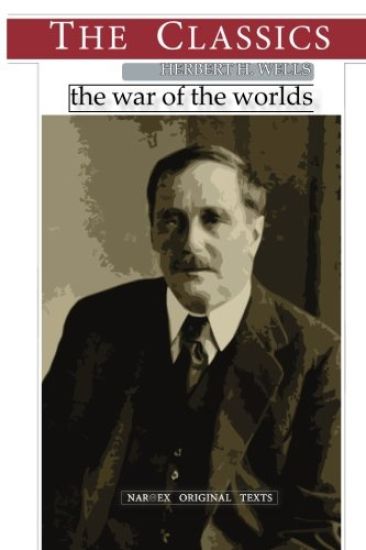
In The War of the Worlds, Martians invade England. These Martians are worm-like creatures who intend to use Earth as a feeding ground, and the Earthlings are powerless to stop this. Martians arrive in London, quickly taking control of the city. These Martians are hideous, worm-like monsters with sixteen tentacles protruding from their mouths. They intend to feed on humans. Despite their best efforts, the humans are unable to fend off the Martians and their deadly assault. The aliens soon overrun the planet. The Martians aren't prepared for Earth's bacteria, however, and don't have the antibodies to fight off viruses. Their nervous systems are destroyed, and they die not from a human assault, but from illness.
New Worlds for Old identifies two "Main Generalizations of Socialism" "The ideas of the private individual rights of the parent and of his isolated responsibility for his children are harmfully exaggerated in the contemporary world. "The idea of the private ownership of things and the rights of owners is enormously and mischievously exaggerated in the contemporary world." Wells advocates the replacement of a "social system, based on Private Ownership" with one based on the "spirit of service," arguing that this will be more productive as well as more just. He devotes several chapters to addressing objections to socialism, then analyzes the history of socialism.
La primera novela que aborda los viajes en el tiempo es una de las m s emblem ticas de H.G. Wells, un autor que nunca rehuy en sus f bulas el debate social y pol tico. Carlos Gim nez pone al d a justamente esta lectura, adaptando y reinterpretando el cl sico. A finales del siglo XIX, un cient fico pretende haber descubierto las claves de la cuarta dimensi n, con un veh culo que puede desplazarse en el tiempo. Uno de sus amigos, al principio incr dulo, da fe de los descubrimientos realizados. En un futuro muy lejano, la humanidad se ha organizado en una sociedad ut pica, dividida en dos especies interdependientes: los angelicales Elois y los despreciables Morlocks. Los primeros viven en la superficie y parecen haber logrado un alto estadio civilizatorio, una suerte de regreso a la inocencia primigenia. Los segundos viven en el subsuelo y desempe an las labores m s meniales. Lentamente, sin embargo, el viajero del tiempo descubrir que tal organizaci n social no es tan sencilla como parece.
The War of the Worlds is an unchanged, high-quality reprint of the original edition of 1898. Hansebooks is editor of the literature on different topic areas such as research and science, travel and expeditions, cooking and nutrition, medicine, and other genres. As a publisher we focus on the preservation of historical literature. Many works of historical writers and scientists are available today as antiques only. Hansebooks newly publishes these books and contributes to the preservation of literature which has become rare and historical knowledge for the future.
The Soul of a Bishop The Soul of a Bishop tells the story of a spiritual crisis that leads Edward Scrope, Lord Bishop of Princhester, to give up his diocese in England's industrial heartland and leave the Anglican Church. Troubled during World War I by doctrinal doubts and a sense of the irrelevance of his Anglicism as well as nervousness and insomnia, a crisis is precipitated by a visit to a wealthy parishioner's home where he meets an extremely wealthy American widow, Lady Sunderbund. To her he speaks for the first time of his religious discontent. Shortly thereafter he takes a drug that, instead of mitigating his symptoms, gives him "a new and more vivid apprehension of things." The bishop experiences a mystical vision of "the Angel of God" and then God in the North Library of the Athenaeum Club, London. He emerges from the experience convinced that he must leave the Church, but is persuaded by an old mentor, Bishop Likeman, to wait three months before doing anything, during which time he continues in his episcopal duties. Bishop Scrope keeps these developments from his wife, Lady Ella, and his four daughters until Lady Sunderbund arrives unannounced in Princhester, vowing to become his spiritual pupil. The strain of this new situation leads him to take Dr. Dale's drug a second time, and under its influence he has a second vision, this time of the terrestrial globe in a state of spiritual ferment to which the world's clergy is not ministering. Under the influence of this revelation he delivers a heretical confirmation address in the cathedral and resolves thereafter to leave the Church. Lady Sunderbund wishes to devote her riches to helping him found a new church, but in the process of developing plans for it Scrope realizes, in a third vision that this time is not mediated by any drug, that in the new religion he must serve "there must be no idea of any pulpit, of any sustained mission." In a final epiphany, he realizes that his refusal to "trust his family to God" has been holding him back, and that "this distrust has been the flaw in the faith of all religious systems hitherto." Five years after it began, Scrope's spiritual crisis is resolved.
A collection of short stories: "The Crystal Egg", "The Star", "A Story of the Stone Age", "A Story of the Days to Come" & "The Man who could Work Miracles"