Kirjojen hintavertailu. Mukana 12 573 891 kirjaa ja 12 kauppaa.

Kirjailija

Herman Hattaway

Kirjat ja teokset yhdessä paikassa: 10 kirjaa, julkaisuja vuosilta 1988-2007, suosituimpien joukossa General Stephen D. Lee. Vertaile teosten hintoja ja tarkista saatavuus suomalaisista kirjakaupoista.

10 kirjaa

Kirjojen julkaisuhaarukka 1988-2007.

General Stephen D. Lee

General Stephen D. Lee

Herman Hattaway

University Press of Mississippi
1988
nidottu
This biographical portrait by a well known Civil War historian brings much deserved attention to an exceptional Confederate military figure who became one of the New South's most progressive leaders.Herman Hattaway's clear, swift narrative depicts Lee in brilliant performance at Second Manassas, Chickasaw Bayou, Nashville, and after the war as a leader who used his military skills and discipline to work in bringing prosperity and education into the defeated South.After the war Lee established a home in Mississippi and found fulfillment in his calling to be the first president of Mississippi A & M College (today Mississippi State University), where he preached the message of applying brain power to farming. His admirers bestowed upon him the title ""Father of Industrial Education in the South.""Though the significance of Stephen D. Lee was long overlooked in historical perspectives of the Civil War and the development of the New South, Hattaway's appreciative study has remedied a case of unintended neglect by previous historians.
Berry Benson's Civil War Book

Berry Benson's Civil War Book

Berry Benson; Herman Hattaway

University of Georgia Press
2007
pokkari
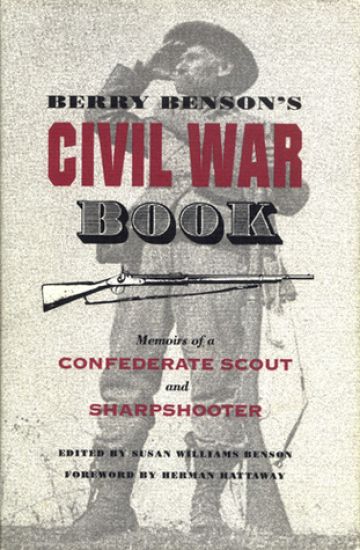
Confederate scout and sharpshooter Berry Greenwood Benson witnessed the first shot fired on Fort Sumter, retreated with Lee's Army to its surrender at Appomattox Courthouse, and missed little of the action in between. This classic account of his wartime service tells of his reconnaissance exploits, battlefield experiences, capture by Union forces, and famous escape from Elmira Prison. A new biographical introduction by historian Edward J. Cashin adds further depth and detail to Benson's own vivid memories. The introduction also offers a fascinating account of both Benson's early years and his postwar activities, including his strong advocacy for impoverished mill strikers and the wrongly accused Leo Frank.
Reflections of a Civil War Historian

Reflections of a Civil War Historian

Herman Hattaway; Frank E. Vandiver

University of Missouri Press
2003
sidottu
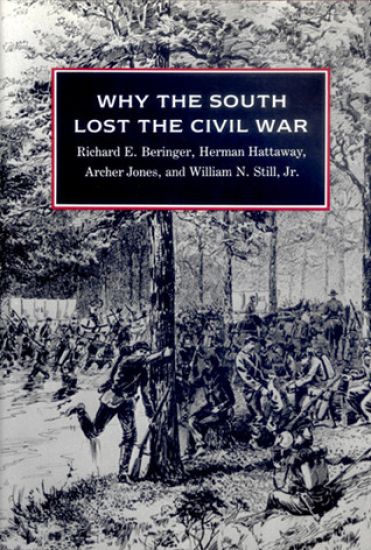
Born in New Orleans, Herman Hattaway grew up in the Deep South. While it might not seem such a stretch for him to have become one of the foremost authorities on the Civil War and Southern history, Hattaway was actually at a loss for a career choice when he stumbled into the class of Professor T. Harry Williams at Louisiana State University. Williams's lectures and writings were so inspiring to Hattaway that he became a regular in his classes, receiving his B.A., M.A., and Ph.D. all under the professor's tutelage. This collection of essays is a compendium of Hattaway's writings from throughout his more-than-forty-year career. He is the author or coauthor of five books that were selections of the History Book Club - Jefferson Davis: Confederate President; Shades of Blue and Gray: An Introductory Military History of the Civil War; Why the South Lost the Civil War; How the North Won: A Military History of the Civil War; and General Stephen D. Lee. He is also the author of the text for Gettysburg to Vicksburg: The Five Original Civil War Battlefield Parks. Hattaway is a captivating historian who always seeks to engage others in the study of history. He has made many important scholarly contributions to our understanding of the Civil War, including new information on the military use of balloons, the relevance of religion in warfare, and the nature of good (and bad) military leadership. This book will appeal to the many historians and others who have been influenced by Hattaway over the years. It demonstrates how he has evolved as a historian and brings to light many essays that were never before published or published only in obscure journals.
Jefferson Davis, Confederate President

Jefferson Davis, Confederate President

Herman Hattaway; Richard E. Beringer

University Press of Kansas
2002
nidottu
He was one of the most embattled heads of state in American history. Charged with building a new nation while waging a war for its very independence, he accepted his responsibilities reluctantly but carried them out with a fierce dedication to his ideals. Those efforts ultimately foundered on the shoals of Confederate defeat, leaving Davis stranded in public memory as both valiant leader and desolate loser.Now two renowned Civil War historians, Herman Hattaway and Richard Beringer, take a new and closer look at Davis's presidency. In the process, they provide a clearer image of his leadership and ability to handle domestic, diplomatic, and military matters under the most trying circumstances-without the considerable industrial and population resources of the North and without the formal recognition of other nations.Hattaway and Beringer examine Davis's strengths and weaknesses as president in light of both traditional evidence and current theories of presidential leadership. They show us a man so respected that northern colleagues regretted his departure from the U.S. Senate, but so bent on Southern independence he was willing to impose unthinkable burdens on his citizens-an apologist for slavery who was committed to state rights, even while growing nationalism in his new country called for a stronger central government.In assessing Davis's actual administration of the Confederate state, the authors analyze the Confederate government's constitution, institutions, infrastructure, and cabinet-level administrators. They also integrate events of Davis's presidency with the ongoing war as it encroached upon the South, offering a panoramic view of military strategy as seen from the president's office. They tell how Davis reacted to the outcomes of key battles and campaigns in order to assess his leadership abilities, his relations with civilian and military authorities, and—his own personal competency notwithstanding—his poor judgment in selecting generals.Rich in detail and exhilaratingly told with generous selections from Davis's own letters and speeches, Hattaway and Beringer provide the most insightful account available of the first and only Confederate presidency-suggesting that perhaps it was the Confederate government, rather than Davis himself, that failed. More than that, it shows us Jefferson Davis as an American leader and offers a new appreciation of his place in our country's history.
Jefferson Davis, Confederate President

Jefferson Davis, Confederate President

Herman Hattaway; Richard E. Beringer

University Press of Kansas
2002
sidottu
He was one of the most embattled heads of state in American history. Charged with building a new nation while waging a war for its very independence, he accepted his responsibilities reluctantly but carried them out with a fierce dedication to his ideals. Those efforts ultimately foundered on the shoals of Confederate defeat, leaving Davis stranded in public memory as both valiant leader and desolate loser. Now two renowned Civil War historians take a new and closer look at Davis's presidency. In the process, they provide a clearer image of his leadership and ability to handle domestic, diplomatic, and military matters under the most trying circumstances - without the considerable industrial and population resources of the North and without the formal recognition of other nations. Hattaway and Beringer show us a man so respected that northern colleagues regretted his departure from the U.S. Senate, but so bent on Southern independence he was willing to impose unthinkable burdens on his citizens - an apologist for slavery who was committed to state rights, even while growing nationalism in his new country called for a stronger central government. In assessing Davis's actual administration of the Confederate state, the authors analyze the Confederate government's constitution, institutions, infrastructure, and cabinet-level administrators. They also integrate events of Davis's presidency with the ongoing war as it encroached upon the South, offering a panoramic view of military strategy as seen from the president's office. They tell how Davis reacted to the outcomes of key battles and campaigns in order to assess his leadership abilities, his relations with civilian and military authorities, and - his own personal competency notwithstanding - his poor judgment in selecting generals. Rich in detail and exhilaratingly told with generous selections from Davis's own letters and speeches, Hattaway and Beringer provide the most insightful account available of the Confederate presidency - suggesting that perhaps it was the Confederate government, rather than Davis himself, that failed. More than that, it shows us Davis as an American leader and offers a new appreciation of his place in our country's history.
Gettysburg to Vicksburg

Gettysburg to Vicksburg

A.J. Meek; Herman Hattaway; A.J. Meek

University of Missouri Press
2001
sidottu
Splendidly written and dramatically illustrated, Gettysburg to Vicksburg is a stunning pictorial history of the first five Civil War battlefield parks: Gettysburg, Shiloh, Antietam, Vicksburg, and Chickamauga. Renowned photographer A. J. Meek brings the battlefield parks into vivid focus with more than one hundred memorable photographs, while noted Civil War historian Herman Hattaway provides a brief history of these major battles and of the formation of parks on the battlefield grounds. Through his striking photographs, Meek provides inspired glimpses of personal vision and historical significance, guiding the reader through the settings for the battle narratives. He also shows how the battlefield grounds are different today, as trees and grass cover hills and former breastworks. Hattaway provides critical insight into the personalities and achievements of military leaders on both sides. He also offers extensive descriptions of the events that took place before, during, and after each battle, explaining the significance of each encounter within the larger conflict between the Union and Confederate armies. In addition, he describes what happened to the battlefield areas long after the fighting ended, as the government, veterans, and private organizations wrestled over how the actual grounds - and in some sense, the memory of the soldiers - should be preserved. Much more than a handbook, Gettysburg to Vicksburg is one of the most comprehensive resources available to battlefield park visitors. With Meek and Hattaway's help, visitors will, at long last, be able to understand fully just exactly what they are seeing. This important new work will make a significant addition to Civil War scholarship and will be welcomed by scholars, students, and Civil War enthusiasts alike.
How the North Won

How the North Won

HERMAN HATTAWAY; Archer Jones

University of Illinois Press
1991
nidottu
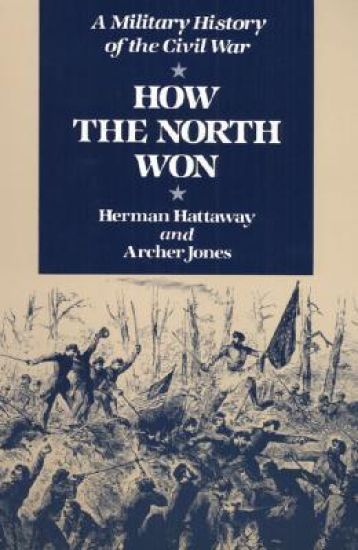
From the introduction: “To those unacquainted with military history, [this book] provides an elementary, instructive, and readable military account of the American Civil War. The basic concepts of war, its conduct, management, and support, are thoroughly explained and explicitly applied throughout in order to make clear what many authors often incorrectly take for granted that readers already know. . . . We have tried to tell the military history of the war from the viewpoint of the higher commanders on both sides. We therefore emphasize strategy and logistics rather than tactics. . . .Strategy, management, and execution weigh more than superior numbers and resources in dictating the outcomes of wars, and the Civil War is no exception. The weaker side can win; the South almost did.”
The Elements of Confederate Defeat

The Elements of Confederate Defeat

Richard E. Beringer; Herman Hattaway; Archer Jones; William N. Still

University of Georgia Press
1988
pokkari
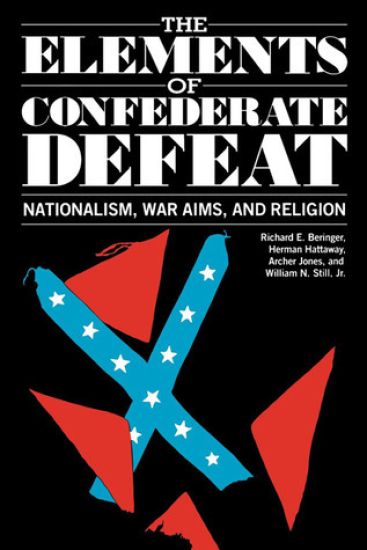
In Why the South Lost the Civil War, four historians considered the dominant explanations of southern defeat. At end, the authors found that states' rights disputes, the Union blockade, and inadequate southern forces did not fully account for the surrender. Rather, they concluded, the South lacked the will to win. Its strength sapped by a faltering Confederate nationalism and weakened by a peculiar brand of evangelical Protestantism, the South withdrew from a war not yet lost on the field of battle.Roughly one-half the size of its parent study, The Elements of Confederate Defeat retains all the essential arguments of the earlier edition, forming for the student a book that at once follows the events of the war and presents the major interpretations of its outcome in the South.