Kirjojen hintavertailu. Mukana 12 390 323 kirjaa ja 12 kauppaa.

Kirjailija

Herman Koren

Kirjat ja teokset yhdessä paikassa: 16 kirjaa, julkaisuja vuosilta 2002-2021, suosituimpien joukossa Management and Supervisory Practices for Environmental Professionals. Vertaile teosten hintoja ja tarkista saatavuus suomalaisista kirjakaupoista.

16 kirjaa

Kirjojen julkaisuhaarukka 2002-2021.

Management and Supervisory Practices for Environmental Professionals
Based on the lifelong experiences of two authors as supervisors and teachers, the Fourth Edition of this bestseller provides up-to-date information for newly promoted or management-aspiring professionals and engineers in the fields of environmental health, occupational health and safety, water and wastewater treatment, public health, and many others.This second volume explains the advanced principles that supervisors need to understand the art of communications, resolving communications problems, and the supervisor/manager’s role in teaching, counseling, and managing employee performance and employee health and safety.In addition to those already practicing professionals in their fields, this book is an excellent resource for students interested in learning management skills prior to entering the workforce.Features of the Fourth Edition Helps to understand and utilize organizational structure to facilitate problem solving Offers a practical set of methods, tools, and techniques, all illustrated and easy to understand, for achieving leadership qualities Provides concise but essential discussion material for each topic, using the practical art of communications Includes thorough updates and many new case problems with answers provided Introduces self-testing questions for different situations and practical exercises utilizing an individual’s own work experience for answers
Management and Supervisory Practices for Environmental Professionals
Based on the lifelong experiences of two authors as supervisors and teachers, the Fourth Edition of this bestseller provides up-to-date information for newly promoted or management-aspiring professionals and engineers in the fields of environmental health, occupational health and safety, water and wastewater treatment, public health, and many others.The first volume explains, through nine sets of tools, the basic principles supervisors need to understand the structure of their organization, what leadership is, how to effectively plan and budget, how to manage other people, and best practices for achieving success in a management position.The second volume explains the advanced principles that supervisors need to understand the art of communications, resolving communications problems, and the supervisor/manager’s role in teaching, counseling, and managing employee performance and employee health and safety.In addition to those already practicing professionals in their fields, this book is an excellent resource for students interested in learning management skills prior to entering the workforce.Features of the Fourth Edition Helps to understand and utilize organizational structure to facilitate problem solving Offers a practical set of methods, tools, and techniques, all illustrated and easy to understand, for achieving leadership qualities Provides concise but essential discussion material for each topic, using the practical art of communications Includes thorough updates and many new case problems with answers provided Introduces self-testing questions for different situations and practical exercises utilizing an individual’s own work experience for answers
Management and Supervisory Practices for Environmental Professionals
Based on the lifelong experiences of two authors as supervisors and teachers, the Fourth Edition of this bestseller provides up-to-date information for newly promoted or management-aspiring professionals and engineers in the fields of environmental health, occupational health and safety, water and wastewater treatment, public health, and many others.This first volume explains, through nine sets of tools, the basic principles supervisors need to understand the structure of their organization, what leadership is, how to effectively plan and budget, how to manage other people, and best practices for achieving success in a management position.In addition to those already practicing professionals in their fields, this book is an excellent resource for students interested in learning management skills prior to entering the workforce.Features of the Fourth Edition Helps to understand and utilize organizational structure to facilitate problem solving Offers a practical set of methods, tools, and techniques, all illustrated and easy to understand, for achieving leadership qualities Provides concise but essential discussion material for each topic, using the practical art of communications Includes thorough updates and many new case problems with answers provided Introduces self-testing questions for different situations and practical exercises utilizing an individual’s own work experience for answers
Management and Supervisory Practices for Environmental Professionals
Based on the lifelong experiences of two authors as supervisors and teachers, the Fourth Edition of this bestseller provides up-to-date information for newly promoted or management-aspiring professionals and engineers in the fields of environmental health, occupational health and safety, water and wastewater treatment, public health, and many others.This second volume explains the advanced principles that supervisors need to understand the art of communications, resolving communications problems, and the supervisor/manager’s role in teaching, counseling, and managing employee performance and employee health and safety.In addition to those already practicing professionals in their fields, this book is an excellent resource for students interested in learning management skills prior to entering the workforce.Features of the Fourth Edition Helps to understand and utilize organizational structure to facilitate problem solving Offers a practical set of methods, tools, and techniques, all illustrated and easy to understand, for achieving leadership qualities Provides concise but essential discussion material for each topic, using the practical art of communications Includes thorough updates and many new case problems with answers provided Introduces self-testing questions for different situations and practical exercises utilizing an individual’s own work experience for answers
Management and Supervisory Practices for Environmental Professionals
Based on the lifelong experiences of two authors as supervisors and teachers, the Fourth Edition of this bestseller provides up-to-date information for newly promoted or management-aspiring professionals and engineers in the fields of environmental health, occupational health and safety, water and wastewater treatment, public health, and many others.The first volume explains, through nine sets of tools, the basic principles supervisors need to understand the structure of their organization, what leadership is, how to effectively plan and budget, how to manage other people, and best practices for achieving success in a management position.The second volume explains the advanced principles that supervisors need to understand the art of communications, resolving communications problems, and the supervisor/manager’s role in teaching, counseling, and managing employee performance and employee health and safety.In addition to those already practicing professionals in their fields, this book is an excellent resource for students interested in learning management skills prior to entering the workforce.Features of the Fourth Edition Helps to understand and utilize organizational structure to facilitate problem solving Offers a practical set of methods, tools, and techniques, all illustrated and easy to understand, for achieving leadership qualities Provides concise but essential discussion material for each topic, using the practical art of communications Includes thorough updates and many new case problems with answers provided Introduces self-testing questions for different situations and practical exercises utilizing an individual’s own work experience for answers
Management and Supervisory Practices for Environmental Professionals
Based on the lifelong experiences of two authors as supervisors and teachers, the Fourth Edition of this bestseller provides up-to-date information for newly promoted or management-aspiring professionals and engineers in the fields of environmental health, occupational health and safety, water and wastewater treatment, public health, and many others.This first volume explains, through nine sets of tools, the basic principles supervisors need to understand the structure of their organization, what leadership is, how to effectively plan and budget, how to manage other people, and best practices for achieving success in a management position.In addition to those already practicing professionals in their fields, this book is an excellent resource for students interested in learning management skills prior to entering the workforce.Features of the Fourth Edition Helps to understand and utilize organizational structure to facilitate problem solving Offers a practical set of methods, tools, and techniques, all illustrated and easy to understand, for achieving leadership qualities Provides concise but essential discussion material for each topic, using the practical art of communications Includes thorough updates and many new case problems with answers provided Introduces self-testing questions for different situations and practical exercises utilizing an individual’s own work experience for answers
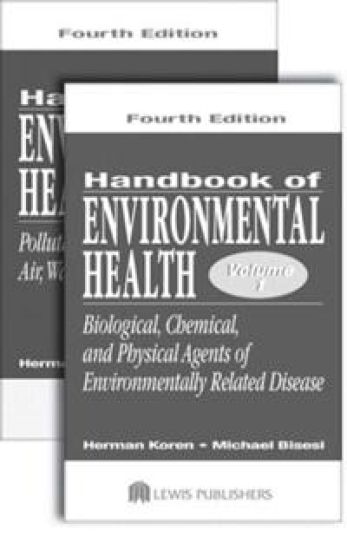
Handbook of Environmental Health, Two Volume Set

Handbook of Environmental Health, Two Volume Set

Herman Koren; Michael S. Bisesi

CRC Press Inc
2018
muu
The two-volume Handbook of Environmental Health, Fourth Edition provides a comprehensive but concise discussion of important environmental health areas, including energy, ecology and people, environmental epidemiology, risk assessment and risk management, environmental law, air quality management, food protection, insect control, rodent control, pesticides, chemical environment, environmental economics, human disease and injury, occupational health and safety, noise, radiation, recreational environment, indoor environments, medical care institutions, schools and universities, prisons, solid and hazardous waste management, water supply, plumbing, swimming areas, sewage disposal, soils, water pollution control, environmental health emergencies, and nuisance complaints.The handbook presents background material that gives students and professionals an understanding of the areas under discussion and describes common problems and potential solutions. Each volume includes illustrative graphs, graphs, computerized drawings, inspection sheets, and flowcharts that consolidate or clarify textual material. These books are neither engineering texts nor comprehensive texts in each area of study. Their purpose is to provide a solid working knowledge of each environmental health area with sufficient detail for practitioners and students. The text can be used in basic courses in environmental health, environmental pollution, and ecology. For general areas of study, the instructor can omit specific details, such as resources, standards, practices and techniques, and modes of surveillance and evaluation. Practitioners in a variety of environmental health and occupational health and safety fields will find these volumes handy references for resolving current problems and for obtaining a better understanding of unfamiliar areas. Practitioners and administrators in other areas, such as food processing, water-quality control, occupational health and safety, and solid and hazardous waste management, will also find these reference books useful. High school teachers often must introduce environmental health topics in their classes and yet have no specific background in this area. They can be used as a text in graduate education courses for high school teachers as well as a reference, the material divides easily into two separate courses. In Volume I readers are introduced to the underlying problems, basic concerns, and basic philosophy of environmental health. The ecological, economic, and energy bases provided help individuals understand their relationship to the ecosystem and to the real world of economic and energy concerns. It also provides an understanding of the role of government and the environmental health practitioner in helping to resolve environmental and ecological dilemmas created by humans. Chapter 2 on human health helps the reader understand the relationship between biological, physical, and chemical agents, and disease and injury causation.Volume II discusses the many varied facets of terrorism and environmental emergencies, nuisances, and special problems. Students may refer to other chapters of the text to obtain a complete idea of each of the problems and the potential solutions.
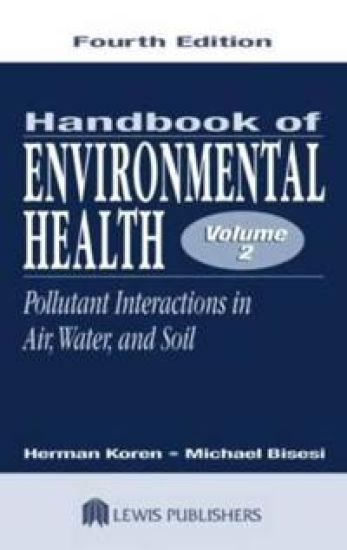
Handbook of Environmental Health, Volume II

Handbook of Environmental Health, Volume II

Herman Koren; Michael S. Bisesi

CRC Press Inc
2017
nidottu
The two-volume Handbook of Environmental Health has been a standard reference for over 23 years. The fourth edition continues to provide a basis for understanding the interactions between humans and the environment and how such interactions affect the health and welfare of individuals. Focusing on factors that are generally associated with the outdoor environment, Volume II discusses a variety of environmental issues, such as toxic air pollutants and air quality control, risk assessment, solid and hazardous waste problems and controls, safe drinking water problems and standards, on-site and public sewage problems and control, and much more.
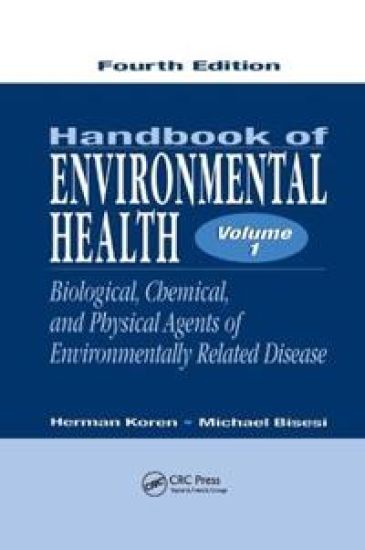
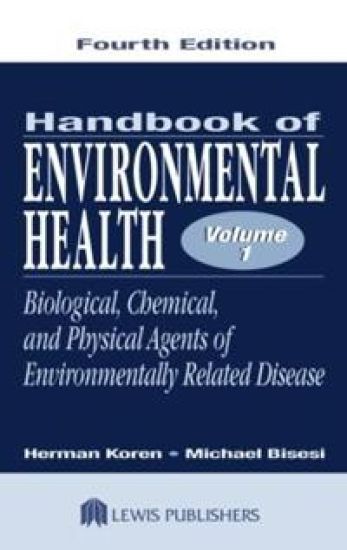
Handbook of Environmental Health, Volume I

Handbook of Environmental Health, Volume I

Herman Koren; Michael S. Bisesi

CRC Press Inc
2017
nidottu
The two-volume Handbook of Environmental Health has been a standard reference for over 23 years. The fourth edition continues to provide a basis for understanding the interactions between humans and the environment and how such interactions affect the health and welfare of individuals. Focusing on factors generally associated with the internal environment, Volume I provides a significant understanding of basic new environmental issues, energy, practical microbiology and chemistry, risk assessment, emerging infectious diseases, recent laws, emerging microorganisms, toxicology, epidemiology, human physiology, and the effects of the environment on humans.
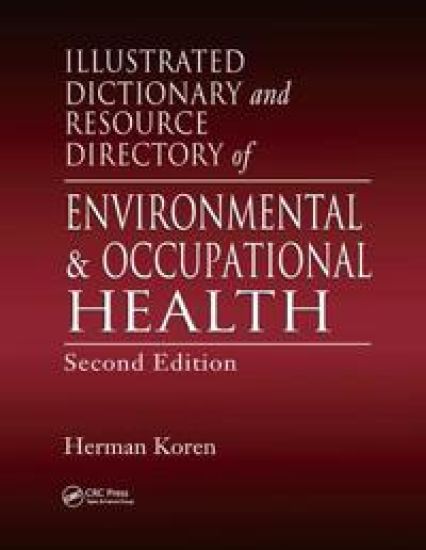
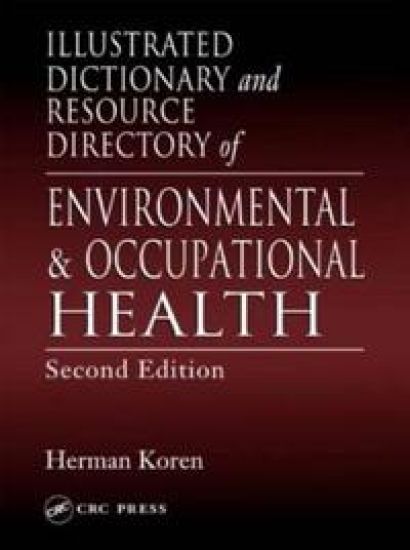
Illustrated Dictionary and Resource Directory of Environmental and Occupational Health, Second Edition
The Illustrated Dictionary and Resource Directory of Environmental and Occupational Health, Second Edition is a one-of-a-kind, comprehensive reference source for the vast and diverse collection of interrelated terms and topics that encompass the fields of environmental science, occupational health and safety, and preventive medicine. These topics include: epidemiology, energy; biological, chemical, and physical hazards; hazard analysis; microbiology; weather; geology and geography; food protection, food borne disease, and food technology; emerging diseases; pesticides; indoor air pollution; air quality; solid and hazardous waste; water quality; water pollution; sewage; bioterrorism; instrumentation; toxicology; risk assessment, statistics; computer science; GIS, mapping, and instrumentation; regulating agencies; and environmental law. This second edition of 16,000 terms reflects the steady evolution of the multi-disciplinary field including over 8500 new terms, related to equipment and environmental control, new and emerging diseases, hazardous chemicals, bioterrorism and emergency response, and environmental resources. This is an indispensable resource for individuals throughout the environmental, occupational, and public health industries, from students and environmental practitioners, to engineers, doctors, policymakers, and civic and professional organization members.
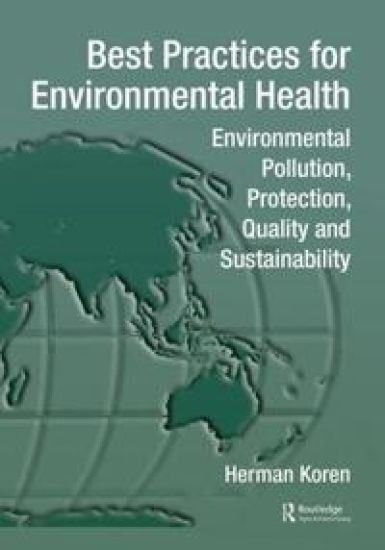
Best Practices for Environmental Health
In a present where there are countless opportunities for the spread of exotic diseases, the expansion and creation of far more illness in our global population through globalization and rapid transportation, and the contamination of water, air and land, we find ourselves accountable. In this day and age we are confronted by global warming, Ebola, the Zika virus, lead in our water supply, enormous problems of infrastructure including aging sewer lines, water lines, electrical grids, roads and bridges, and the list goes on and on. Best Practices for Environmental Health: Environmental Pollution, Protection, Quality and Sustainability is a one source major response to all of the environmental issues that affect global health and the worldwide protection and preservation of the natural environment. It compiles broad-based and comprehensive coverage of environmental topics, broken down by specialized fields. Topics range from children’s environmental health to food protection and technology, water and waste systems, infection control, bioterrorism and pandemic health emergencies, and HAZMAT. Plus, it includes an overview of the current state of the profession and sections on programmatic techniques. This book helps solve the problems of disease and injury by presenting expert, evidence-based best practices.This first of the kind handbook is essential reading for all environmental and public health undergraduate students, as well as a fantastic overview for professionals in all environmental health, pollution and protection areas.
Best Practices for Environmental Health

Best Practices for Environmental Health

Herman Koren

Productivity Press
2017
sidottu
In a present where there are countless opportunities for the spread of exotic diseases, the expansion and creation of far more illness in our global population through globalization and rapid transportation, and the contamination of water, air and land, we find ourselves accountable. In this day and age we are confronted by global warming, Ebola, the Zika virus, lead in our water supply, enormous problems of infrastructure including aging sewer lines, water lines, electrical grids, roads and bridges, and the list goes on and on. Best Practices for Environmental Health: Environmental Pollution, Protection, Quality and Sustainability is a one source major response to all of the environmental issues that affect global health and the worldwide protection and preservation of the natural environment. It compiles broad-based and comprehensive coverage of environmental topics, broken down by specialized fields. Topics range from children’s environmental health to food protection and technology, water and waste systems, infection control, bioterrorism and pandemic health emergencies, and HAZMAT. Plus, it includes an overview of the current state of the profession and sections on programmatic techniques. This book helps solve the problems of disease and injury by presenting expert, evidence-based best practices.This first of the kind handbook is essential reading for all environmental and public health undergraduate students, as well as a fantastic overview for professionals in all environmental health, pollution and protection areas.
Illustrated Dictionary and Resource Directory of Environmental and Occupational Health, Second Edition
The Illustrated Dictionary and Resource Directory of Environmental and Occupational Health, Second Edition is a one-of-a-kind, comprehensive reference source for the vast and diverse collection of interrelated terms and topics that encompass the fields of environmental science, occupational health and safety, and preventive medicine. These topics include: epidemiology, energy; biological, chemical, and physical hazards; hazard analysis; microbiology; weather; geology and geography; food protection, food borne disease, and food technology; emerging diseases; pesticides; indoor air pollution; air quality; solid and hazardous waste; water quality; water pollution; sewage; bioterrorism; instrumentation; toxicology; risk assessment, statistics; computer science; GIS, mapping, and instrumentation; regulating agencies; and environmental law. This second edition of 16,000 terms reflects the steady evolution of the multi-disciplinary field including over 8500 new terms, related to equipment and environmental control, new and emerging diseases, hazardous chemicals, bioterrorism and emergency response, and environmental resources. This is an indispensable resource for individuals throughout the environmental, occupational, and public health industries, from students and environmental practitioners, to engineers, doctors, policymakers, and civic and professional organization members.
Handbook of Environmental Health, Volume II

Handbook of Environmental Health, Volume II

Herman Koren; Michael S. Bisesi

CRC Press Inc
2002
sidottu
The two-volume Handbook of Environmental Health has been a standard reference for over 23 years. The fourth edition continues to provide a basis for understanding the interactions between humans and the environment and how such interactions affect the health and welfare of individuals. Focusing on factors that are generally associated with the outdoor environment, Volume II discusses a variety of environmental issues, such as toxic air pollutants and air quality control, risk assessment, solid and hazardous waste problems and controls, safe drinking water problems and standards, on-site and public sewage problems and control, and much more.
Handbook of Environmental Health, Two Volume Set

Handbook of Environmental Health, Two Volume Set

Herman Koren; Michael S. Bisesi

CRC Press Inc
2002
muu
The two-volume Handbook of Environmental Health, Fourth Edition provides a comprehensive but concise discussion of important environmental health areas, including energy, ecology and people, environmental epidemiology, risk assessment and risk management, environmental law, air quality management, food protection, insect control, rodent control, pesticides, chemical environment, environmental economics, human disease and injury, occupational health and safety, noise, radiation, recreational environment, indoor environments, medical care institutions, schools and universities, prisons, solid and hazardous waste management, water supply, plumbing, swimming areas, sewage disposal, soils, water pollution control, environmental health emergencies, and nuisance complaints.The handbook presents background material that gives students and professionals an understanding of the areas under discussion and describes common problems and potential solutions. Each volume includes illustrative graphs, graphs, computerized drawings, inspection sheets, and flowcharts that consolidate or clarify textual material. These books are neither engineering texts nor comprehensive texts in each area of study. Their purpose is to provide a solid working knowledge of each environmental health area with sufficient detail for practitioners and students. The text can be used in basic courses in environmental health, environmental pollution, and ecology. For general areas of study, the instructor can omit specific details, such as resources, standards, practices and techniques, and modes of surveillance and evaluation. Practitioners in a variety of environmental health and occupational health and safety fields will find these volumes handy references for resolving current problems and for obtaining a better understanding of unfamiliar areas. Practitioners and administrators in other areas, such as food processing, water-quality control, occupational health and safety, and solid and hazardous waste management, will also find these reference books useful. High school teachers often must introduce environmental health topics in their classes and yet have no specific background in this area. They can be used as a text in graduate education courses for high school teachers as well as a reference, the material divides easily into two separate courses. In Volume I readers are introduced to the underlying problems, basic concerns, and basic philosophy of environmental health. The ecological, economic, and energy bases provided help individuals understand their relationship to the ecosystem and to the real world of economic and energy concerns. It also provides an understanding of the role of government and the environmental health practitioner in helping to resolve environmental and ecological dilemmas created by humans. Chapter 2 on human health helps the reader understand the relationship between biological, physical, and chemical agents, and disease and injury causation.Volume II discusses the many varied facets of terrorism and environmental emergencies, nuisances, and special problems. Students may refer to other chapters of the text to obtain a complete idea of each of the problems and the potential solutions.
Handbook of Environmental Health, Volume I

Handbook of Environmental Health, Volume I

Herman Koren; Michael S. Bisesi

CRC Press Inc
2002
sidottu
The two-volume Handbook of Environmental Health has been a standard reference for over 23 years. The fourth edition continues to provide a basis for understanding the interactions between humans and the environment and how such interactions affect the health and welfare of individuals. Focusing on factors generally associated with the internal environment, Volume I provides a significant understanding of basic new environmental issues, energy, practical microbiology and chemistry, risk assessment, emerging infectious diseases, recent laws, emerging microorganisms, toxicology, epidemiology, human physiology, and the effects of the environment on humans.