Kirjailija
Hermann Hesse
Kirjat ja teokset yhdessä paikassa: 562 kirjaa, julkaisuja vuosilta 1922-2026, suosituimpien joukossa Hermann Hesse Unterwegs.. Vertaile teosten hintoja ja tarkista saatavuus suomalaisista kirjakaupoista.
562 kirjaa
Kirjojen julkaisuhaarukka 1922-2026.

Na protjazhenii vsego tvorcheskogo puti Gesse zanimali razdumja o sudbakh mira, iskusstva i tsivilizatsii. Nad svoim glavnym romanom "Igra v biser" pisatel nachal rabotat za paru let do prikhoda k vlasti fashistov, opublikoval ego v 1943-m - perelomnom godu Vtoroj mirovoj vojny, a v 1946-m poluchil za nego Nobelevskuju premiju. V etoj, po opredeleniju Tomasa Manna, "radostno-tainstvennoj knige", napisannoj v atmosfere vseobschej militarizatsii i varvarstva, Gesse zadaetsja glavnym voprosom: kak spasti lichnost i dukhovnoe nachalo v period krushenija kultury i obschego spada nravstvennosti? Iz-za slozhnosti postroenija, spletenija mnozhestva zhanrovykh form, bogatstva simvoliki, terminov i ponjatij iz samykh raznykh oblastej kultury roman ne vsemi byl ponjat i prinjat, no srazu porodil ostrye diskussii i stal dukhovnym orientirom dlja tselykh pokolenij vo vsem mire."Stepnoj volk" - odin iz samykh glavnykh romanov XX veka, vpervye opublikovannyj v 1927 godu. Eto i filosofskaja pritcha, i vmeste s tem glubokoe issledovanie psikhologii cheloveka, tschetno pytajuschegosja najti i obresti sobstvennoe "Ja", postojanno balansirujuschego na styke zhivotnogo i chelovecheskogo nachala.Eto istorija ljubvi, kotoraja vedet k neozhidannoj tragicheskoj razvjazke, eto i politicheskij, sotsialnyj roman, v kotorom geroj vystupaet kak jarostnyj kritik suschestvujuschego meschanstva.V izdanie takzhe vkljuchena allegoricheskaja povest "Puteshestvie k zemle Vostoka".

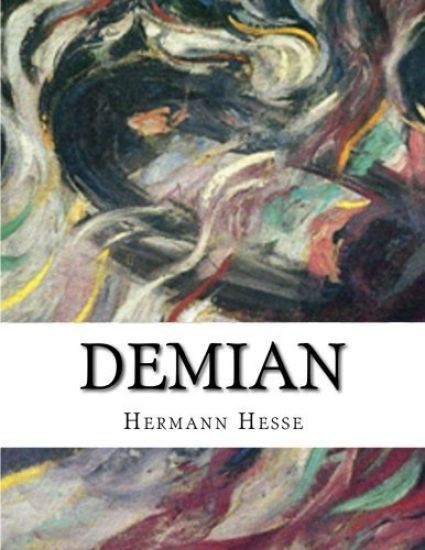
"Demian" by Hermann Hesse is a captivating novel that explores the journey of self-discovery and spiritual awakening of its protagonist, Emil Sinclair. Published in 1919, the novel is set in Germany during the early 20th century and is renowned for its exploration of existential and philosophical themes.The story begins with Emil Sinclair's childhood and his encounter with a mysterious and charismatic boy named Max Demian, who introduces him to a world beyond conventional norms and encourages him to embrace his inner desires and conflicts. As Emil navigates adolescence and young adulthood, he grapples with questions of identity, morality, and the search for meaning in life.Throughout the narrative, Hesse weaves a tapestry of contrasting themes-light and darkness, good and evil, innocence and experience-that mirror Emil's inner turmoil and growth. The novel delves into the complexities of human nature, the duality of existence, and the transformative power of self-awareness and acceptance."Demian" is not only a coming-of-age story but also a profound exploration of the individual's quest for authenticity and spiritual fulfillment. Hesse's lyrical prose and introspective narrative style have earned "Demian" a place as one of his most influential works, inspiring readers to reflect on their own journeys of self-discovery and the universal struggle to reconcile opposing forces within oneself.

First published in 1919, it is a brilliant journey of the psyche written by one of Germany's most influential writers and thinkers-Herman Hesse. A young man awakens to selfhood and to a world of possibilities beyond the conventions of his upbringing. Emil Sinclair is a quiet boy drawn into a forbidden yet seductive realm of petty crime and defiance. His guide is his precocious, mysterious classmate Max Demian, who provokes in Emil a search for self-discovery and spiritual fulfilment.


Originally published in 1919 under the pseudonym of the narrator of the story, Herman Hesse's "Demian" is the coming of age story of its principal character "Emil Sinclair." The struggle of Emil is one of self-awareness. A principal theme that courses throughout the novel is that of the inherent duality of existence. In the case of Emil this duality presents itself in the form of the opposing demands of the external world and his one internal quest for spiritual fulfillment. Emil's quest to resolve this conflict forces him to seek out the guidance and validation from the various members of his world including his mother, Eva; Pistorius, an organist at a local church; and ultimately Max Demian, a childhood friend who leads Emil to his eventual self-realization. Influenced by the growing interest in psychoanalysis at the start of the 20th century, including Hesse's own experience with psychotherapy, "Demian" in its exploration of the interesting psychological underpinnings of growing up is a popular choice for young readers. This edition is printed on premium acid-free paper and follows the translation of N. H. Piday.
Demian Die Geschichte von Emil Sinclairs Jugend von Hermann Hesse--1921

Romanen Gertrud av Hermann Hesse i nyöversättning och med efterord av Hans Blomqvist och Erik Ågren. Hesse tilldelades Nobelpriset i litteratur 1946. Han är främst känd för romanerna Stäppvargen och Siddhartha. Bakhåll har tidigare gett ut två av Hesses böcker, Demian och Knulp. Här kommer nu ett annat av nobelpristagarens många mästerverk – romanen Gertrud – i nyöversättning. Huvudperson är den blygsamme kompositören Kuhn som börjar få framgångar med sina tonsättningar på operascenerna runt om i landet. Kuhn var med om en olycka som ung. De åkte kälke nerför en brant, han och en flicka som han var förtjust i, de var upprymda och obetänksamma och kastade sig handlöst ut i det okända. Tyvärr var turen inte på deras sida, kälken for fel och de störtade. Flickvännen klarade sig någorlunda oskadd men för Kuhn gick det sämre. Efter en lång sjukdomstid fick han ett besvärligt bestående men, han blev halt för livet. Denna – kan tyckas – ganska odramatiska kroppsliga defekt får en avgörande inverkan på Kuhns självkänsla och självförtroende. Han blir en lysande kompositör som skördar lovord och beröm i sitt yrke, men självförtroendet återhämtar sig aldrig när det handlar om kärlek. Vilken kvinna skulle vilja ha mig, menar han, jag som är en tragisk krympling som mödosamt haltar fram när andra springer och dansar. Ändå förälskar han sig i den firade operasångerskan Gertrud, i hennes röst, hennes person, i hela hennes väsen, hon är hans stora kärlek ? det är henne han skriver för. De heta känslorna är dock inte besvarade. Gertrud accepterar Kuhn som vän, till och med som en god och nära vän, men Kuhn vill ju så mycket ännu mer. Vilken plåga det är att bara få vara "vän" till den man älskar! Bokens tredje huvudperson är operasångaren Muoth. Han är Kuhns motsats. Muoth är stark, självsäker, skrytsam, en person som frodas i rampljuset som firad tenor, men som i det privata är olycklig, självdestruktiv, alkoholberoende och ofta uppför sig okänsligt och hänsynslöst mot dem som korsar hans väg. Det vill sig inte bättre än att Gertrud blir kär i Muoth, trots att Kuhn varnar henne och berättar för henne vad Muoth har gjort mot andra kvinnor. Romanen om Gertrud och Kuhn och Muoth och relationen mellan dessa tre är både finstämd och sorglig. Samtidigt är den förankrad i den klassiska musiken och operakonsten som hela tiden ligger i tematiskt samspel med berättelsen. En sann romanpärla, ett mästerverk.

Una novela que cuenta la historia desde la ni ez hasta la madurez de Emil Sinclair un complicado personaje creado por el escritor alem n Hermann Hesse. Emil es un ni o que viv a su vida en lo que Hess denomina el Scheinwelt (mundo de ensue o o mundo de la luz), pero una mentira lo obliga a ampliar sus visiones del mundo y a conocer un personaje enigm tico de nombre Max Demian que lo llevar por los senderos del auto-razonamiento destruyendo paradigmas materialistas que antes le rodeaban. La novela refiere y uti-liza conceptos del Gnosticismo, particularmente el demiurgo (entidad que, sin ser creadora, es impulsora del universo imprimi ndole movimiento) Abraxas, mientras muestra la influencia del sistema de psicoan lisis de Carl Jung. Esta obra se public por primera vez el a o 1919.
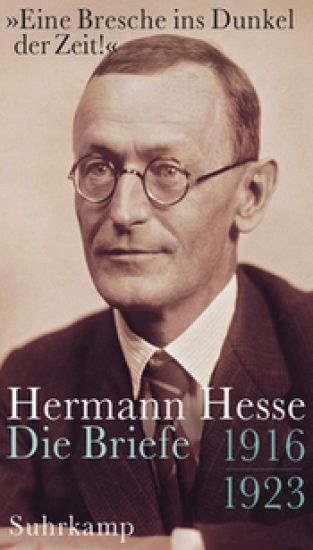
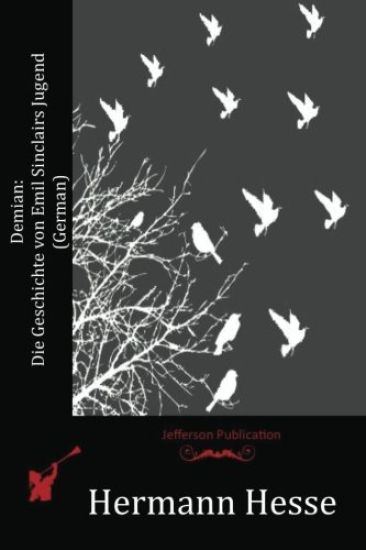
Demian: Die Geschichte von Emil Sinclairs Jugend (German)
Hermann Hesse
Createspace Independent Publishing Platform
2015
nidottu
Um meine Geschichte zu erz hlen, mu ich weit vorn anfangen. Ich m te, w re es mir m glich, noch viel weiter zur ck gehen, bis in die allerersten Jahre meiner Kindheit und noch ber sie hinaus in die Ferne meiner Herkunft zur ck.
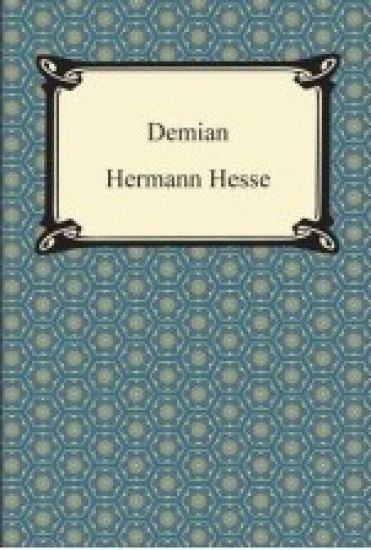

2011 Reprint of 1948 Edition. Full facsimile of the original edition, not reproduced with Optical Recognition Software. The main character of this classic novel, Emil Sinclair, is a young boy raised in a bourgeois home, amidst what is described as a Scheinwelt, a play on words that means "world of light" as well as "world of illusion." Emil's entire existence can be summarized as a struggle between two worlds: the show world of illusion (related to the Hindu concept of maya) and the real world, the world of spiritual truth. In the course of the novel, accompanied and prompted by his mysterious classmate 'Max Demian', he detaches from and revolts against the superficial ideals of the world of appearances and eventually awakens into a realization of self. The novel refers to the idea of Gnosticism, particularly the god Abraxas, showing the influence of Carl Jung's psychology. According to Hesse, the novel is a story of Jungian individuation, the process of opening up to one's unconsciousness.
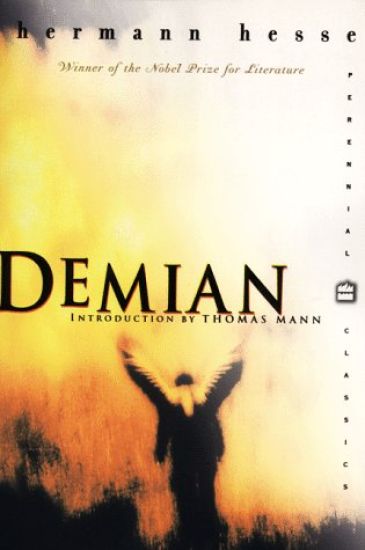
"Hesse is a writer whose peculiar vision is worth inspecting. His world is shadowy and close to areas of the heart that will probably never see light. But his vision is a rare one, as commendable for its humane solicitude as for its strangeness and unearthly color." -- National ReviewAn acclaimed, influential, and visionary novel from Hermann Hesse, one of the greatest writers of the twentieth century and winner of the Nobel Prize in Literature. Demian tells the dramatic story of Emil Sinclair. Docile and unquestioning, Emil follows a precious schoolmate--the charismatic Max Demian--on a shocking decent into a secret and dangerous world of petty crime and revolt against convention. And it is there in the shadows that a formerly complacent and uncomplicated young man achieves a miraculous awakening to adulthood.The novel includes an introduction by Thomas Mann.
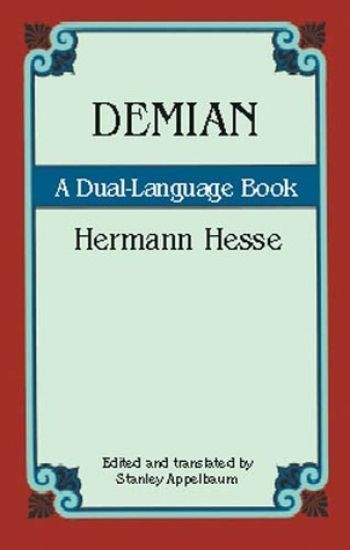
This first major novel by Nobel Prize-winning author Hermann Hesse incorporates a theme he returned to again and again in most of his works: the fundamental duality of existence. The youthful protagonist, Emil Sinclair, recognizes that life consists of opposing forces; however, his older friend, Max Demian, manages to both clarify and complicate Sinclair's confusion about life's conflicting values. Recounted in engaging prose, rich in sympathy and imagination, this brilliant psychological portrait of a troubled young man's exploration of the polarities of human nature has retained its remarkable power as a poignant statement of the terrors and torments of adolescence.