

Kirjailija
Hermann Hesse
Kirjat ja teokset yhdessä paikassa: 557 kirjaa, julkaisuja vuosilta 1922-2026, suosituimpien joukossa Hermann Hesse Unterwegs.. Vertaile teosten hintoja ja tarkista saatavuus suomalaisista kirjakaupoista.
557 kirjaa
Kirjojen julkaisuhaarukka 1922-2026.

Blends elements of psychoanalysis and Asian religions to probe an Indian aristocrat's efforts to renounce sensual and material pleasures and discover ultimate spiritual truths.






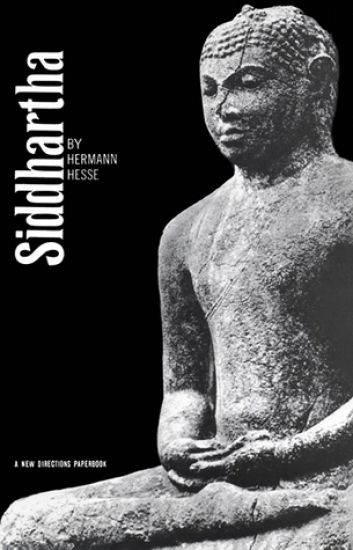
Here the spirituality of the East and the West have met in a novel that enfigures deep human wisdom with a rich and colorful imagination. Written in a prose of almost biblical simplicity and beauty, it is the story of a soul's long quest in search of he ultimate answer to the enigma of man's role on this earth. As a youth, the young Indian Siddhartha meets the Buddha but cannot be content with a disciple's role: he must work out his own destiny and solve his own doubt--a tortuous road that carries him through the sensuality of a love affair with the beautiful courtesan Kamala, the temptation of success and riches, the heartache of struggle with his own son, to final renunciation and self-knowledge. The name "Siddhartha" is one often given to the Buddha himself--perhaps a clue to Hesse's aims in contrasting the traditional legendary figure with his own conception, as a European (Hesse was Swiss), of a spiritual explorer.

Siddhartha is a novel by Hermann Hesse that deals with the spiritual journey of self-discovery of a man named Siddhartha during the time of the Gautama Buddha. The book, Hesse's ninth novel, was written in German, in a simple, lyrical style. It was published in the U.S. in 1951 and became influential during the 1960s. Hesse dedicated the first part of it to Romain Rolland and the second part to Wilhelm Gundert, his cousin.The word Siddhartha is made up of two words in Sanskrit language, siddha (achieved) + artha (what was searched for), which together means "he who has found meaning (of existence)" or "he who has attained his goals". In fact, the Buddha's own name, before his renunciation, was Siddhartha Gautama, Prince of Kapilavastu. In this book, the Buddha is referred to as "Gotama". The story takes place in the Nepalese district of Kapilavastu. Siddhartha decides to leave behind his home in the hope of gaining spiritual illumination by becoming an ascetic wandering beggar of the Shramanas. Joined by his best friend, Govinda, Siddhartha fasts, becomes homeless, renounces all personal possessions, and intensely meditates, eventually seeking and personally speaking with Gautama, the famous Buddha, or Enlightened One. Afterward, both Siddhartha and Govinda acknowledge the elegance of the Buddha's teachings. Although Govinda hastily joins the Buddha's order, Siddhartha does not follow, claiming that the Buddha's philosophy, though supremely wise, does not account for the necessarily distinct experiences of each person. He argues that the individual seeks an absolutely unique, personal meaning that cannot be presented to him by a teacher. He thus resolves to carry on his quest alone. Siddhartha crosses a river and the generous ferryman, whom Siddhartha is unable to pay, merrily predicts that Siddhartha will return to the river later to compensate him in some way. Venturing onward toward city life, Siddhartha discovers Kamala, the most beautiful woman he has yet seen. Kamala, a courtesan, notes Siddhartha's handsome appearance and fast wit, telling him that he must become wealthy to win her affections so that she may teach him the art of love. Although Siddhartha despised materialistic pursuits as a Shramana, he agrees now to Kamala's suggestions. She directs him to the employ of Kamaswami, a local businessman, and insists that he have Kamaswami treat him as an equal rather than an underling