Kirjojen hintavertailu. Mukana 12 657 676 kirjaa ja 12 kauppaa.

Kirjailija

Hilary Perraton

Kirjat ja teokset yhdessä paikassa: 7 kirjaa, julkaisuja vuosilta 2006-2021, suosituimpien joukossa Learning Abroad. Vertaile teosten hintoja ja tarkista saatavuus suomalaisista kirjakaupoista.

7 kirjaa

Kirjojen julkaisuhaarukka 2006-2021.

International Students 1860–2010

International Students 1860–2010

Hilary Perraton

Springer Nature Switzerland AG
2021
nidottu
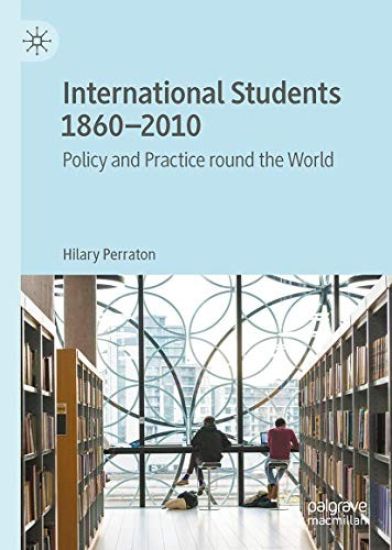
This book describes how the number of international students has grown in 150 years, from 60,000 to nearly 4 million. It examines the policies adopted towards them by institutions and governments round the world, exploring who travelled, why, and who paid for them. In 1860 most international students travelled within Europe; by 2010 the largest numbers were from Asia. Foreign students have shaped the universities where they studied, been shaped by them, and gone on to change their own lives and societies. Policies for student mobility developed as a function of student demand and of institutional or national interest. At different times they were influenced by the needs of empire, by the cold war, by governments' search for soft power, by labour markets, and by the contribution students made to university finance. Along with university students, others travelled abroad to study: trainee nurses, military officers, the most deprived and the most privileged schoolchildren. All their stories are a vital part of the world's history of education and of its broader social and political history.
International Students 1860–2010

International Students 1860–2010

Hilary Perraton

Springer Nature Switzerland AG
2020
sidottu
This book describes how the number of international students has grown in 150 years, from 60,000 to nearly 4 million. It examines the policies adopted towards them by institutions and governments round the world, exploring who travelled, why, and who paid for them. In 1860 most international students travelled within Europe; by 2010 the largest numbers were from Asia. Foreign students have shaped the universities where they studied, been shaped by them, and gone on to change their own lives and societies. Policies for student mobility developed as a function of student demand and of institutional or national interest. At different times they were influenced by the needs of empire, by the cold war, by governments' search for soft power, by labour markets, and by the contribution students made to university finance. Along with university students, others travelled abroad to study: trainee nurses, military officers, the most deprived and the most privileged schoolchildren. All their stories are a vital part of the world's history of education and of its broader social and political history.
Distance Teaching for the Third World

Distance Teaching for the Third World

Michael Young; Hilary Perraton; Janet Jenkins; Tony Dodds

Routledge
2014
nidottu
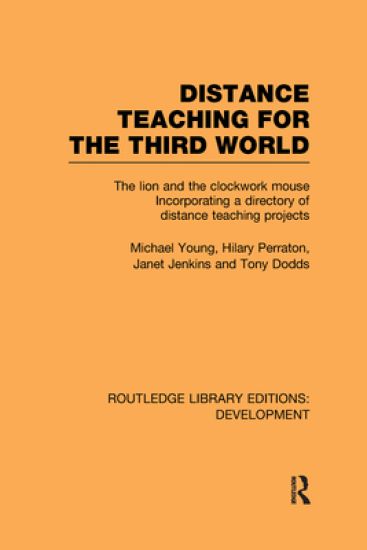
This reissue, first published in 1980, is based on the experiences of the International Extension College in developing distance teaching. The volume begins by reviewing the world problems of educational quality and quantity, and then examines the ways in which print, broadcasts and group study have been used to train teachers, to improve classroom education, to teach by correspondence out of school, and to support rural development. It then considers how that experience can be used, perhaps by creating a network of radio colleges, to supplement and extend existing schools and colleges. Finally, the book includes a descriptive and annotated bibliography of over 100 distance teaching projects in 65 third world countries.
Distance Teaching for the Third World

Distance Teaching for the Third World

Michael Young; Hilary Perraton; Janet Jenkins; Tony Dodds

Routledge
2010
sidottu
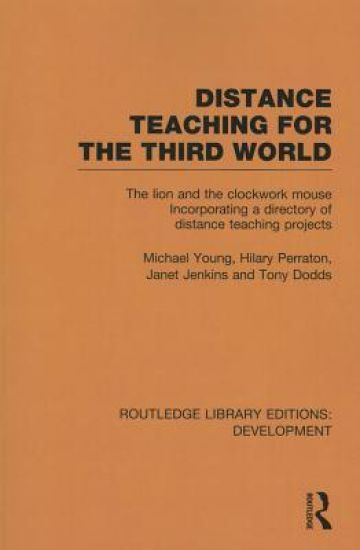
This reissue, first published in 1980, is based on the experiences of the International Extension College in developing distance teaching. The volume begins by reviewing the world problems of educational quality and quantity, and then examines the ways in which print, broadcasts and group study have been used to train teachers, to improve classroom education, to teach by correspondence out of school, and to support rural development. It then considers how that experience can be used, perhaps by creating a network of radio colleges, to supplement and extend existing schools and colleges. Finally, the book includes a descriptive and annotated bibliography of over 100 distance teaching projects in 65 third world countries.
Learning Abroad

Learning Abroad

Hilary Perraton; Hilary Perraton; Hilary Perraton

Cambridge Scholars Publishing
2009
sidottu
Commonwealth scholarships began in 1959. They have since moved 25,000 people across borders, launching them into influence as politicians, poets, painters, professors—and the rest. Their stories illuminate the sociology and politics of higher education, of the Commonwealth, and of its member countries: they include the last scholar before apartheid took South Africa out of the Commonwealth, who became a high court judge, and the first after it came back, now a vice-chancellor. Half a century of British society shows up in the record of the Scholarship Commission that made Britain's awards. Its first chairman, the son of a general, was the Lord Chamberlain, taking time off from censoring plays. His successor in 2008 took time off from a day-job as professor in a new university. Her father had left school early to look after the pigs.This book sets out the narrative of the scholarship plan from its unlikely conception in a Commonwealth trade conference. By asking who was selected for scholarships, how, and why, it examines the policies of countries offering scholarships and those receiving them, looks at their role within the universities of Africa, Asia and the Caribbean, discusses the experience of scholars as they studied abroad, and assesses the long-term impact of that experience. Three themes stand out. First, scholarship policy, increasingly now part of aid policy, has been shaped by the interplay of national politics and education. Second, crossborder university enrolments are themselves now big business and the stuff of international politics. Changes in the politics of the Commonwealth, as they have influenced international educational policy, provide a microcosm. Third, the experience and achievements of former scholars answer the evaluative policy question: was investing in scholarships a good way of spending public money?
Open and Distance Learning in the Developing World
This revised and updated edition of Open and Distance Learning in the Developing World sets the expansion of distance education in the context of general educational change and explores its use for basic and non-formal education, schooling, teacher training and higher education.Engaging with a range of topics, this comprehensive overview includes new material on: non-formal education: mass-communication approaches to education about HIV/AIDS and recent literacy work in India, South Africa, and Zambia schooling: new research projects in open schooling in Asia and subsaharan Africa, and interactive radio instruction in South Africa the impact of new technology and globalisation: learning delivered through the internet and mobile learning the political economy: international agencies, the role of private sector, and funding. With its critical appraisal of the facts and examination of data about effectiveness, this book provides answers to problems and poses key questions for the consideration of policy makers, educational practitioners and all professionals involved in implementing and delivering sustainable open and distance learning.
Open and Distance Learning in the Developing World
This revised and updated edition of Open and Distance Learning in the Developing World sets the expansion of distance education in the context of general educational change and explores its use for basic and non-formal education, schooling, teacher training and higher education.Engaging with a range of topics, this comprehensive overview includes new material on: non-formal education: mass-communication approaches to education about HIV/AIDS and recent literacy work in India, South Africa, and Zambia schooling: new research projects in open schooling in Asia and subsaharan Africa, and interactive radio instruction in South Africa the impact of new technology and globalisation: learning delivered through the internet and mobile learning the political economy: international agencies, the role of private sector, and funding. With its critical appraisal of the facts and examination of data about effectiveness, this book provides answers to problems and poses key questions for the consideration of policy makers, educational practitioners and all professionals involved in implementing and delivering sustainable open and distance learning.