Kirjojen hintavertailu. Mukana 12 533 751 kirjaa ja 12 kauppaa.

Kirjailija

Hilary Radner

Kirjat ja teokset yhdessä paikassa: 8 kirjaa, julkaisuja vuosilta 1994-2018, suosituimpien joukossa The New Woman's Film. Vertaile teosten hintoja ja tarkista saatavuus suomalaisista kirjakaupoista.

8 kirjaa

Kirjojen julkaisuhaarukka 1994-2018.

Raymond Bellour

Raymond Bellour

Hilary Radner; Alistair Fox

Edinburgh University Press
2018
sidottu
A comprehensive study of Raymond Bellour, one of the most important foundational theorists of Film StudiesOne of the most influential figures in French film philosophy, Raymond Bellour's interests range across cinema, art, literature and philosophy, and his work sits at the critical juncture between the cinematic experience in the period of classical cinema to the new forms of spectatorship ushered in by digital media in the 21st century. With a succinct account of Bellour's oeuvre, this book provides a generous introduction to his ideas on cinema, an annotated bibliography of his work, and a six-chapter translation of a substantial and wide-ranging interview previously unavailable in English. Providing a clear, systematic account of the evolution of Bellour's thought on the nature of cinematic representation, the impact of digital technology and the response of the spectator, this is an essential guide to the work of a major contemporary thinker.Key featuresProvides a clear, systematic exposition of the evolution of Bellour's thought over 60 yearsMakes available in an English translation a hitherto unpublished interview with Bellour from 2015Includes an annotated bibliography, with brief abstracts of all of his books and most important articles
Raymond Bellour

Raymond Bellour

Hilary Radner; Alistair Fox

Edinburgh University Press
2018
nidottu
A comprehensive study of Raymond Bellour, one of the most important foundational theorists of Film StudiesOne of the most influential figures in French film philosophy, Raymond Bellour's interests range across cinema, art, literature and philosophy, and his work sits at the critical juncture between the cinematic experience in the period of classical cinema to the new forms of spectatorship ushered in by digital media in the 21st century. With a succinct account of Bellour's oeuvre, this book provides a generous introduction to his ideas on cinema, an annotated bibliography of his work, and a six-chapter translation of a substantial and wide-ranging interview previously unavailable in English. Providing a clear, systematic account of the evolution of Bellour's thought on the nature of cinematic representation, the impact of digital technology and the response of the spectator, this is an essential guide to the work of a major contemporary thinker.Key featuresProvides a clear, systematic exposition of the evolution of Bellour's thought over 60 yearsMakes available in an English translation a hitherto unpublished interview with Bellour from 2015Includes an annotated bibliography, with brief abstracts of all of his books and most important articles
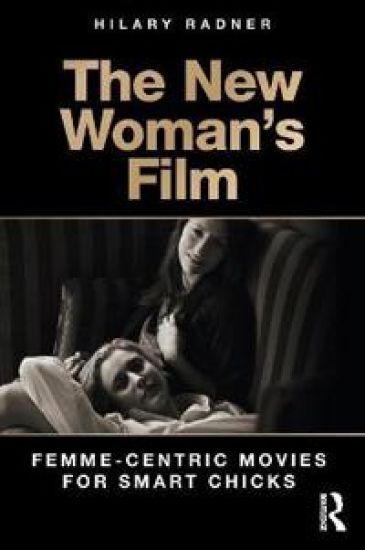
The New Woman's Film

The New Woman's Film

Hilary Radner

Routledge
2017
nidottu
With the chick flick arguably in decline, film scholars may well ask: what has become of the woman’s film? Little attention has been paid to the proliferation of films, often from the independent sector, that do not sit comfortably in either the category of popular culture or that of high art––films that are perhaps the corollary of the middle-brow novel, or "smart-chick flicks". This book seeks to fill this void by focusing on the steady stream of films about and for women that emerge out of independent American and European cinema, and that are designed to address an international female audience. The new woman's film as a genre includes narratives with strong ties to the woman’s film of classical Hollywood while constituting a new distinctive cycle of female-centered films that in many ways continue the project of second-wave feminism, albeit in a modified form.Topics addressed include: The Bridges of Madison County (Clint Eastwood, 1995); the feature-length films of Nicole Holofcener, 1996-2013; the film roles of Tilda Swinton; Rachel Getting Married (Jonathan Demme, 2008); Blue Jasmine (Woody Allen, 2013); Frances Ha (Noah Baumbach, 2012), Belle (Amma Asante, 2013), Fifty Shades of Grey (Sam Taylor-Johnson, 2015) and Jane Campion’s Top of the Lake (Sundance Channel, 2013-).
The New Woman's Film

The New Woman's Film

Hilary Radner

Routledge
2017
sidottu
With the chick flick arguably in decline, film scholars may well ask: what has become of the woman’s film? Little attention has been paid to the proliferation of films, often from the independent sector, that do not sit comfortably in either the category of popular culture or that of high art––films that are perhaps the corollary of the middle-brow novel, or "smart-chick flicks". This book seeks to fill this void by focusing on the steady stream of films about and for women that emerge out of independent American and European cinema, and that are designed to address an international female audience. The new woman's film as a genre includes narratives with strong ties to the woman’s film of classical Hollywood while constituting a new distinctive cycle of female-centered films that in many ways continue the project of second-wave feminism, albeit in a modified form.Topics addressed include: The Bridges of Madison County (Clint Eastwood, 1995); the feature-length films of Nicole Holofcener, 1996-2013; the film roles of Tilda Swinton; Rachel Getting Married (Jonathan Demme, 2008); Blue Jasmine (Woody Allen, 2013); Frances Ha (Noah Baumbach, 2012), Belle (Amma Asante, 2013), Fifty Shades of Grey (Sam Taylor-Johnson, 2015) and Jane Campion’s Top of the Lake (Sundance Channel, 2013-).
Neo-Feminist Cinema

Neo-Feminist Cinema

Hilary Radner

Routledge
2010
sidottu
What lies behind current feminist discontent with contemporary cinema? Through a combination of cultural and industry analysis, Hilary Radner’s Neo-Feminist Cinema: Girly Films, Chick Flicks and Consumer Culture shows how the needs of conglomerate Hollywood have encouraged an emphasis on consumer culture within films made for women. By exploring a number of representative "girly films," including Pretty Woman, Legally Blonde, Maid in Manhattan, The Devil Wears Prada, and Sex and the City: The Movie, Radner proposes that rather than being "post-feminist," as is usually assumed, such films are better described as "neo-feminist." Examining their narrative format, as it revolves around the story of an ambitious unmarried woman who defines herself through consumer culture as much as through work or romance, Radner argues that these films exemplify neo-liberalist values rather than those of feminism.As such, Neo-Feminist Cinema offers a new explanation as to why feminist-oriented scholars and audiences who are seeking more than "labels and love" from their film experience have viewed recent "girly films" as a betrayal of second-wave feminism, and why, on the other hand, such films have proven to be so successful at the box office.
Neo-Feminist Cinema

Neo-Feminist Cinema

Hilary Radner

Routledge
2010
nidottu
What lies behind current feminist discontent with contemporary cinema? Through a combination of cultural and industry analysis, Hilary Radner’s Neo-Feminist Cinema: Girly Films, Chick Flicks and Consumer Culture shows how the needs of conglomerate Hollywood have encouraged an emphasis on consumer culture within films made for women. By exploring a number of representative "girly films," including Pretty Woman, Legally Blonde, Maid in Manhattan, The Devil Wears Prada, and Sex and the City: The Movie, Radner proposes that rather than being "post-feminist," as is usually assumed, such films are better described as "neo-feminist." Examining their narrative format, as it revolves around the story of an ambitious unmarried woman who defines herself through consumer culture as much as through work or romance, Radner argues that these films exemplify neo-liberalist values rather than those of feminism.As such, Neo-Feminist Cinema offers a new explanation as to why feminist-oriented scholars and audiences who are seeking more than "labels and love" from their film experience have viewed recent "girly films" as a betrayal of second-wave feminism, and why, on the other hand, such films have proven to be so successful at the box office.
Swinging Single

Swinging Single

Hilary Radner

University of Minnesota Press
1999
nidottu
The essays in Swinging Single attribute the new sexual mores of the era not to its political upheavals but to a confluence of social, cultural, and economic factors that encouraged personal gratification and altered traditionally defined gender roles.'
Shopping Around

Shopping Around

Hilary Radner

Routledge
1994
nidottu
Shopping Around investigates the issues of contemporary popular narrative, feminine pleasure, and consumer culture, viewing the permutations of the feminine subject as a textual construction evolved through everyday life. A wide spectrum of texts are examined, exposing the fact that women "read" within a complex and conflicted cultural arena characterized by a significant intertextuality that multiply defines "femininity." Shopping Around raises these issues in the context of everyday cultural practices such as applying make-up, reading magazines, watching television, and working-out, providing a unique introduction to postmodern feminist and cultural theory.