Kirjojen hintavertailu. Mukana 12 276 026 kirjaa ja 12 kauppaa.

Kirjailija

Ho-fung Hung

Kirjat ja teokset yhdessä paikassa: 11 kirjaa, julkaisuja vuosilta 2011-2026, suosituimpien joukossa Greenback Empire. Vertaile teosten hintoja ja tarkista saatavuus suomalaisista kirjakaupoista.

11 kirjaa

Kirjojen julkaisuhaarukka 2011-2026.

The Great Separation

The Great Separation

Xiaohong Xu; Ho-fung Hung

THE UNIVERSITY OF MICHIGAN PRESS
2026
sidottu
With a keen attention to how culture and elite conflict shape politics, The Great Separation upends deterministic understandings of the Chinese Cultural Revolution and the market reforms that followed. This ambitious posthumous volume by sociologist Xiaohong Xu turns the existing scholarship on China’s “neoliberalism” on its head by demonstrating that the effort to separate mass politics from economic policy had its origins well before the Reform and Opening-up era. Over the course of the Cultural Revolution, unfolding factional dynamics and interpretive struggles enabled Chairman Mao and his radical colleagues to mobilize workers to advance their own political goals while neutralizing the masses’ economic demands, symbolically separating the political from the economic. This set the stage for a more thoroughgoing depoliticization of the economy after 1989, when China faced challenges from students and workers whose economic grievances had rapidly morphed into political demands for democracy. The result was what Xu calls ordoeconomism: an ideology that valorizes economic development, rejects mass politics, and views the state as the apolitical guardian of the economy. As Xu demonstrates, while ordoeconomism may share some affinities with neoliberalism, it is a distinctively Chinese approach that must be understood on its own terms.
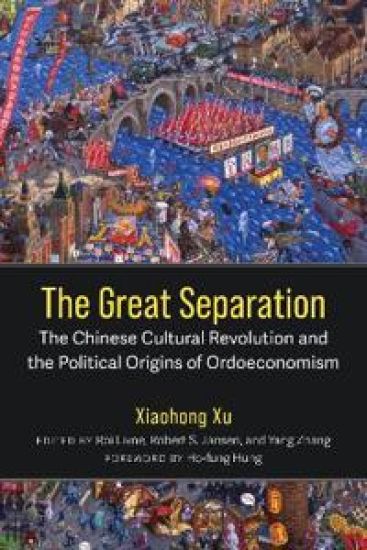
The Great Separation

The Great Separation

Xiaohong Xu; Ho-fung Hung

THE UNIVERSITY OF MICHIGAN PRESS
2026
nidottu
With a keen attention to how culture and elite conflict shape politics, The Great Separation upends deterministic understandings of the Chinese Cultural Revolution and the market reforms that followed. This ambitious posthumous volume by sociologist Xiaohong Xu turns the existing scholarship on China’s “neoliberalism” on its head by demonstrating that the effort to separate mass politics from economic policy had its origins well before the Reform and Opening-up era. Over the course of the Cultural Revolution, unfolding factional dynamics and interpretive struggles enabled Chairman Mao and his radical colleagues to mobilize workers to advance their own political goals while neutralizing the masses’ economic demands, symbolically separating the political from the economic. This set the stage for a more thoroughgoing depoliticization of the economy after 1989, when China faced challenges from students and workers whose economic grievances had rapidly morphed into political demands for democracy. The result was what Xu calls ordoeconomism: an ideology that valorizes economic development, rejects mass politics, and views the state as the apolitical guardian of the economy. As Xu demonstrates, while ordoeconomism may share some affinities with neoliberalism, it is a distinctively Chinese approach that must be understood on its own terms.

Greenback Empire

Greenback Empire

Ho-fung Hung

THE UNIVERSITY OF CHICAGO PRESS
2026
nidottu
A critical history of the US dollar’s dominance in the world economy—and what has kept China’s currency from overtaking it. The dollar is the primary currency of the world economy. With China now rivaling the United States on the world stage, a critical question hangs in the balance: will the Chinese renminbi challenge the status of the dollar and, in doing so, deprive America of its “exorbitant privilege”? In GreenbackEmpire, Ho-fung Hung offers a powerful account of why, even as American shares of global production, ownership, and trade continue to decline, its currency has retained the support of governments and investors around the world. For six decades, Hung shows, the dominance of the dollar has rested on the security umbrella that the US offers to the world’s wealthiest countries—including oil producers. To these countries, support for the value of the dollar is tantamount to maintaining US protection. While China has become a serious geopolitical and economic rival to the US, the Chinese state’s airtight control of its financial system has delayed the free trading of the renminbi, limiting the currency’s internationalization. In short, the same strategy that engineered growth in China’s economy is restraining its currency's rise in opposition to the dollar. Hung’s Greenback Empire is an essential history of the dollar’s prowess, indispensable for understanding the future of the global monetary system.
Greenback Empire

Greenback Empire

Ho-fung Hung

THE UNIVERSITY OF CHICAGO PRESS
2026
sidottu
A critical history of the US dollar’s dominance in the world economy—and what has kept China’s currency from overtaking it. The dollar is the primary currency of the world economy. With China now rivaling the United States on the world stage, a critical question hangs in the balance: will the Chinese renminbi challenge the status of the dollar and, in doing so, deprive America of its “exorbitant privilege”? In GreenbackEmpire, Ho-fung Hung offers a powerful account of why, even as American shares of global production, ownership, and trade continue to decline, its currency has retained the support of governments and investors around the world. For six decades, Hung shows, the dominance of the dollar has rested on the security umbrella that the US offers to the world’s wealthiest countries—including oil producers. To these countries, support for the value of the dollar is tantamount to maintaining US protection. While China has become a serious geopolitical and economic rival to the US, the Chinese state’s airtight control of its financial system has delayed the free trading of the renminbi, limiting the currency’s internationalization. In short, the same strategy that engineered growth in China’s economy is restraining its currency's rise in opposition to the dollar. Hung’s Greenback Empire is an essential history of the dollar’s prowess, indispensable for understanding the future of the global monetary system.
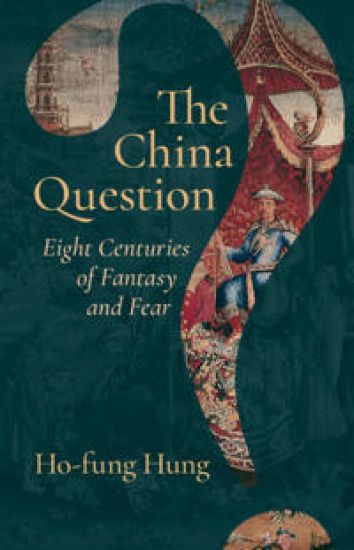
The China Question

The China Question

Ho-fung Hung

Cambridge University Press
2025
sidottu
For centuries, Western scholars portrayed China either as a land of superior morality, economy, and governance or as a formidable country of pagans posing a global threat to Western values. Idealized images of China were used to shame rulers for incompetence, while China was demonized as an external threat to cover domestic political failures. In the twentieth century, the geopolitics of global capitalism have facilitated more nuanced perspectives, but the diversifying of knowledge about China is far from complete. In this thought-provoking study, Ho-fung Hung finds that both Western elites and China's authoritarian regime today continue to promote many orientalist stereotypes to advance their economic interests and political projects. He shows how big-picture historical, social and economic changes are inextricably linked to fluctuations in the realm of ideas. Only open debate can overcome the extremes of fantasy and fear.
City on the Edge

City on the Edge

Ho-fung Hung

Cambridge University Press
2022
sidottu
For decades, Hong Kong has maintained precarious freedom at the edge of competing world powers. In City on the Edge, Ho-fung Hung offers a timely and engaging account of Hong Kong's development from precolonial times to the present, with particular focus on the post 1997 handover period. Through careful analysis of vast economic data, a myriad of political events, and intricate networks of actors and ideas, Hung offers readers insight into the fraught economic, political, and social forces that led to the 2019 uprising, while situating the protests in the context of global finance and the geopolitics of the US-China rivalry. A provocative contribution to the discussion on Hong Kong's position in today's world, City on the Edge demonstrates that the resistance and repression of 2019-2020 does not spell the end of Hong Kong but the beginning of a long conflict with global repercussions.
Clash of Empires

Clash of Empires

Ho-fung Hung

Cambridge University Press
2022
pokkari
Many believe the recent deterioration in US–China relations represents a 'New Cold War' rooted in ideological differences. However, such differences did not prevent the two countries from pursuing economic integration and geopolitical cooperation in the 1990s and 2000s. Ho-fung Hung argues that what underlies the change in US–China relations is the changing relationship between US–China corporations. Following China's slowdown after 2010, state-backed Chinese corporations turned increasingly aggressive when they expanded in both domestic and global markets. This was at the expense of US corporations, who then halted their previously intense lobbying for China in Washington. Simultaneously, China's export of industrial overcapacity has provoked geopolitical competition with the United States. The resulting dynamic, Hung argues, resembles interimperial rivalry among the great powers at the turn of the twentieth century.
The China Boom

The China Boom

Ho-fung Hung

Columbia University Press
2017
pokkari
Many thought China's rise would fundamentally remake the global order. Yet, much like other developing nations, the Chinese state now finds itself in a status quo characterized by free trade and American domination. Through a cutting-edge historical, sociological, and political analysis, Ho-fung Hung details the competing interests and economic realities that temper the dream of Chinese supremacy-forces that are stymieing growth throughout the global South. Hung focuses on four common misconceptions: that China could undermine orthodoxy by offering an alternative model of growth; that China is radically altering power relations between the East and the West; that China is capable of diminishing the global power of the United States; and that the Chinese economy would restore the world's wealth after the 2008 financial crisis. His work reveals how much China depends on the existing order and how the interests of the Chinese elites maintain these ties. Through its perpetuation of the dollar standard and its addiction to U.S. Treasury bonds, China remains bound to the terms of its own prosperity, and its economic practices of exploiting debt bubbles are destined to fail. Hung ultimately warns of a postmiracle China that will grow increasingly assertive in attitude while remaining constrained in capability.
The China Boom

The China Boom

Ho-fung Hung

Columbia University Press
2015
sidottu
Many thought China's rise would fundamentally remake the global order. Yet, much like other developing nations, the Chinese state now finds itself in a status quo characterized by free trade and American domination. Through a cutting-edge historical, sociological, and political analysis, Ho-fung Hung details the competing interests and economic realities that temper the dream of Chinese supremacy-forces that are stymieing growth throughout the global South. Hung focuses on four common misconceptions: that China could undermine orthodoxy by offering an alternative model of growth; that China is radically altering power relations between the East and the West; that China is capable of diminishing the global power of the United States; and that the Chinese economy would restore the world's wealth after the 2008 financial crisis. His work reveals how much China depends on the existing order and how the interests of the Chinese elites maintain these ties. Through its perpetuation of the dollar standard and its addiction to U.S. Treasury bonds, China remains bound to the terms of its own prosperity, and its economic practices of exploiting debt bubbles are destined to fail. Hung ultimately warns of a postmiracle China that will grow increasingly assertive in attitude while remaining constrained in capability.
Protest with Chinese Characteristics

Protest with Chinese Characteristics

Ho-fung Hung

Columbia University Press
2013
pokkari
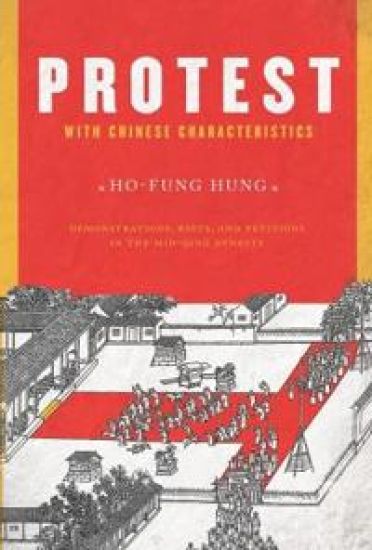
The origin of political modernity has long been tied to the Western history of protest and revolution, the currents of which many believe sparked popular dissent worldwide. Reviewing nearly one thousand instances of protest in China from the eighteenth to the early-nineteenth centuries, Ho-fung Hung charts an evolution of Chinese dissent that stands apart from Western trends. Hung samples from mid-Qing petitions and humble plaints to the emperor. He revisits rallies, riots, market strikes, and other forms of contention rarely considered in previous studies. Drawing on new world history, which accommodates parallels and divergences between political-economic and cultural developments East and West, Hung shows how the centralization of political power and an expanding market, coupled with a persistent Confucianist orthodoxy, shaped protesters' strategies and appeals in Qing China. This unique form of mid-Qing protest combined a quest for justice and autonomy with a filial-loyal respect for the imperial center, and Hung's careful research ties this distinct characteristic to popular protest in China today. As Hung makes clear, the nature of these protests prove late imperial China was anything but a stagnant and tranquil empire before the West cracked it open. In fact, the origins of modern popular politics in China predate the 1911 Revolution. Hung's work ultimately establishes a framework others can use to compare popular protest among different cultural fabrics. His book fundamentally recasts the evolution of such acts worldwide.
Protest with Chinese Characteristics

Protest with Chinese Characteristics

Ho-fung Hung

Columbia University Press
2011
sidottu
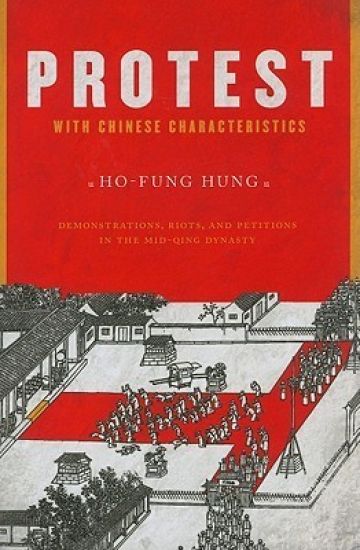
The origin of political modernity has long been tied to the Western history of protest and revolution, the currents of which many believe sparked popular dissent worldwide. Reviewing nearly one thousand instances of protest in China from the eighteenth to the early-nineteenth centuries, Ho-fung Hung charts an evolution of Chinese dissent that stands apart from Western trends. Hung samples from mid-Qing petitions and humble plaints to the emperor. He revisits rallies, riots, market strikes, and other forms of contention rarely considered in previous studies. Drawing on new world history, which accommodates parallels and divergences between political-economic and cultural developments East and West, Hung shows how the centralization of political power and an expanding market, coupled with a persistent Confucianist orthodoxy, shaped protesters' strategies and appeals in Qing China. This unique form of mid-Qing protest combined a quest for justice and autonomy with a filial-loyal respect for the imperial center, and Hung's careful research ties this distinct characteristic to popular protest in China today. As Hung makes clear, the nature of these protests prove late imperial China was anything but a stagnant and tranquil empire before the West cracked it open. In fact, the origins of modern popular politics in China predate the 1911 Revolution. Hung's work ultimately establishes a framework others can use to compare popular protest among different cultural fabrics. His book fundamentally recasts the evolution of such acts worldwide.