Kirjailija
Hojjat Adeli
Kirjat ja teokset yhdessä paikassa: 16 kirjaa, julkaisuja vuosilta 1998-2026, suosituimpien joukossa Nature-Inspired Computing. Vertaile teosten hintoja ja tarkista saatavuus suomalaisista kirjakaupoista.
16 kirjaa
Kirjojen julkaisuhaarukka 1998-2026.

This book provides a comprehensive introduction to nature-inspired computing, with an emphasis on applications to real-life engineering problems. It focuses on bio-inspired algorithms, and includes an introduction to particle swarm optimisation.
There is information processing in nature performed in a distributed, self-organized and optimal manner without any central or external control. Scientists have been observing these phenomena in nature for many years and trying to understand, explain, adapt and replicate in artificial systems. This book provides a comprehensive introduction to nature-inspired computing with an emphasis on applications to real-life engineering problems. It focuses on swarm-intelligence along with key algorithms such as ant algorithms, bat algorithms and firefly algorithms.
Nature-Inspired Computing: Physics and Chemistry-Based Algorithms provides a comprehensive introduction to the methodologies and algorithms in nature-inspired computing, with an emphasis on applications to real-life engineering problems. The research interest for Nature-inspired Computing has grown considerably exploring different phenomena observed in nature and basic principles of physics, chemistry, and biology. The discipline has reached a mature stage and the field has been well-established. This endeavour is another attempt at investigation into various computational schemes inspired from nature, which are presented in this book with the development of a suitable framework and industrial applications. Designed for senior undergraduates, postgraduates, research students, and professionals, the book is written at a comprehensible level for students who have some basic knowledge of calculus and differential equations, and some exposure to optimization theory. Due to the focus on search and optimization, the book is also appropriate for electrical, control, civil, industrial and manufacturing engineering, business, and economics students, as well as those in computer and information sciences. With the mathematical and programming references and applications in each chapter, the book is self-contained, and can also serve as a reference for researchers and scientists in the fields of system science, natural computing, and optimization.
Computational Intelligence: Synergies of Fuzzy Logic, Neural Networks and Evolutionary Computing presents an introduction to some of the cutting edge technological paradigms under the umbrella of computational intelligence. Computational intelligence schemes are investigated with the development of a suitable framework for fuzzy logic, neural networks and evolutionary computing, neuro-fuzzy systems, evolutionary-fuzzy systems and evolutionary neural systems. Applications to linear and non-linear systems are discussed with examples. Key features: Covers all the aspects of fuzzy, neural and evolutionary approaches with worked out examples, MATLAB® exercises and applications in each chapterPresents the synergies of technologies of computational intelligence such as evolutionary fuzzy neural fuzzy and evolutionary neural systemsConsiders real world problems in the domain of systems modelling, control and optimizationContains a foreword written by Lotfi Zadeh Computational Intelligence: Synergies of Fuzzy Logic, Neural Networks and Evolutionary Computing is an ideal text for final year undergraduate, postgraduate and research students in electrical, control, computer, industrial and manufacturing engineering.
Nature-Inspired Computing: Physics and Chemistry-Based Algorithms provides a comprehensive introduction to the methodologies and algorithms in nature-inspired computing, with an emphasis on applications to real-life engineering problems. The research interest for Nature-inspired Computing has grown considerably exploring different phenomena observed in nature and basic principles of physics, chemistry, and biology. The discipline has reached a mature stage and the field has been well-established. This endeavour is another attempt at investigation into various computational schemes inspired from nature, which are presented in this book with the development of a suitable framework and industrial applications. Designed for senior undergraduates, postgraduates, research students, and professionals, the book is written at a comprehensible level for students who have some basic knowledge of calculus and differential equations, and some exposure to optimization theory. Due to the focus on search and optimization, the book is also appropriate for electrical, control, civil, industrial and manufacturing engineering, business, and economics students, as well as those in computer and information sciences. With the mathematical and programming references and applications in each chapter, the book is self-contained, and can also serve as a reference for researchers and scientists in the fields of system science, natural computing, and optimization.
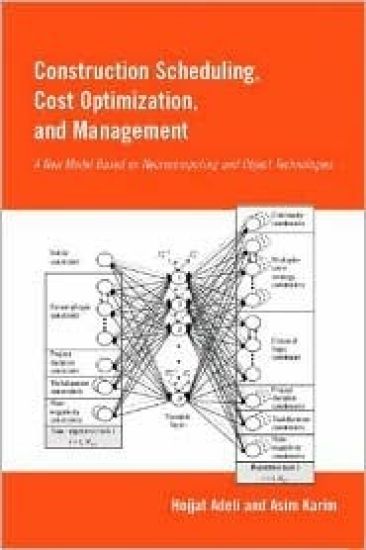
Construction Scheduling, Cost Optimization and Management
Hojjat Adeli; Asim Karim
CRC Press
2019
nidottu
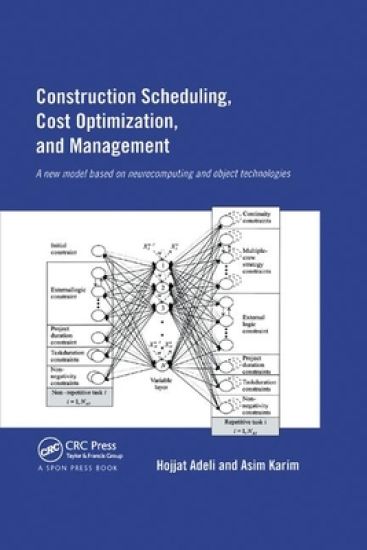
Construction Scheduling, Cost Optimization and Management presents a general mathematical formula for the scheduling of construction projects. Using this formula, repetitive and non-repetitive tasks, work continuity considerations, multiple-crew strategies, and the effects of varying job conditions on the performance of a crew can be modelled. This book presents an entirely new approach to the construction scheduling problem. It provides a practical methodology which will be of great benefit to all those involved in construction scheduling and cost optimization, including construction engineers, highway engineers, transportation engineers, contractors and architects. It will also be useful for researchers, and graduates on courses in construction scheduling and planning.
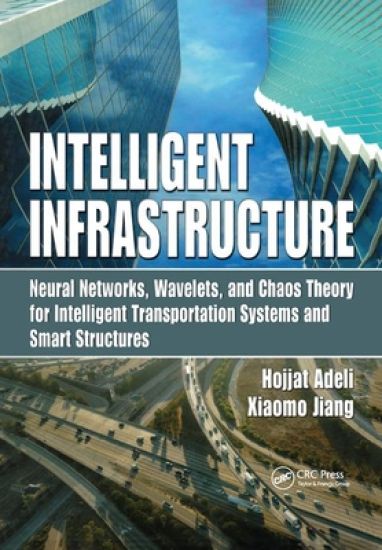
Recent estimates hypothesize that the US will need $1.6 trillion dollars for the rehabilitation, replacement, and maintenance of existing infrastructure systems within the next 20 years. Presenting a new vision and way of designing and managing the civil infrastructure of the nation, Intelligent Infrastructure: Neural Networks, Wavelets, and Chaos Theory for Intelligent Transportation Systems and Smart Structures presents the foundations of intelligent infrastructure. It presents novel technologies, methods, and detailed computational algorithms for creation of smart structures and intelligent freeways.This book crosses the two disciplines of structural engineering and transportation engineering and provides a unique treatise for attacking and solving some of the most complex and intractable problems encountered in the emerging fields of smart structures and intelligent transportation systems. It demonstrates how some of these problems can be solved effectively through ingenious integration of several different computing paradigms including chaos theory (based on nonlinear dynamics theory), wavelets (a signal processing method), and three complementary soft computing methods: fuzzy logic, neural networks, and genetic algorithms.Adeli and Jiang discuss multidisciplinary methodologies for health and monitoring and nonlinear active control of tall building structure subject to dynamic loading such as those due to winds or earthquake. Delineating an approach to infrastructure system engineering and management that is both modern and futuristic, the authors explore the advanced computing technologies that will play an important role in the creation of an effective smart structure technology.
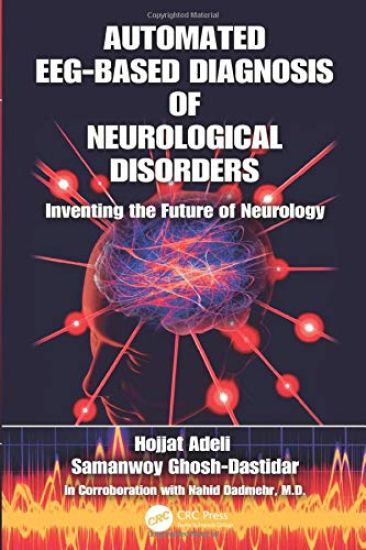
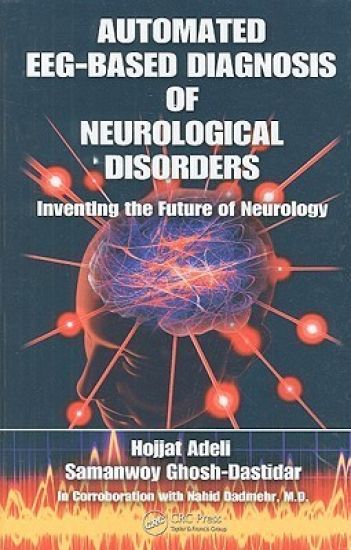
Automated EEG-Based Diagnosis of Neurological Disorders
Hojjat Adeli; Samanwoy Ghosh-Dastidar
CRC Press
2017
nidottu
Based on the authors’ groundbreaking research, Automated EEG-Based Diagnosis of Neurological Disorders: Inventing the Future of Neurology presents a research ideology, a novel multi-paradigm methodology, and advanced computational models for the automated EEG-based diagnosis of neurological disorders. It is based on the ingenious integration of three different computing technologies and problem-solving paradigms: neural networks, wavelets, and chaos theory. The book also includes three introductory chapters that familiarize readers with these three distinct paradigms. After extensive research and the discovery of relevant mathematical markers, the authors present a methodology for epilepsy diagnosis and seizure detection that offers an exceptional accuracy rate of 96 percent. They examine technology that has the potential to impact and transform neurology practice in a significant way. They also include some preliminary results towards EEG-based diagnosis of Alzheimer’s disease. The methodology presented in the book is especially versatile and can be adapted and applied for the diagnosis of other brain disorders. The senior author is currently extending the new technology to diagnosis of ADHD and autism. A second contribution made by the book is its presentation and advancement of Spiking Neural Networks as the seminal foundation of a more realistic and plausible third generation neural network.
Automated EEG-Based Diagnosis of Neurological Disorders
Hojjat Adeli; Samanwoy Ghosh-Dastidar
CRC Press Inc
2010
sidottu
Based on the authors’ groundbreaking research, Automated EEG-Based Diagnosis of Neurological Disorders: Inventing the Future of Neurology presents a research ideology, a novel multi-paradigm methodology, and advanced computational models for the automated EEG-based diagnosis of neurological disorders. It is based on the ingenious integration of three different computing technologies and problem-solving paradigms: neural networks, wavelets, and chaos theory. The book also includes three introductory chapters that familiarize readers with these three distinct paradigms. After extensive research and the discovery of relevant mathematical markers, the authors present a methodology for epilepsy diagnosis and seizure detection that offers an exceptional accuracy rate of 96 percent. They examine technology that has the potential to impact and transform neurology practice in a significant way. They also include some preliminary results towards EEG-based diagnosis of Alzheimer’s disease. The methodology presented in the book is especially versatile and can be adapted and applied for the diagnosis of other brain disorders. The senior author is currently extending the new technology to diagnosis of ADHD and autism. A second contribution made by the book is its presentation and advancement of Spiking Neural Networks as the seminal foundation of a more realistic and plausible third generation neural network.
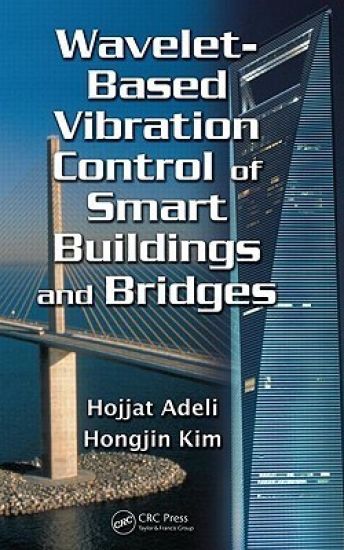
Wavelet-Based Vibration Control of Smart Buildings and Bridges
Hojjat Adeli; Hongjin Kim
CRC Press Inc
2009
sidottu
Earthquakes, bridge collapses, and other natural disasters have dominated news coverage in the last few years. Aging infrastructure needs to be rehabilitated and new infrastructure needs to be designed differently. Presenting a highly innovative, modern approach verging on the futuristic, Wavelet-Based Vibration Control of Smart Buildings and Bridges discusses a new generation of building and bridge structures that not only withstands [generation is singular] the destructive effects of nature but is also impact and explosion resistant.Based on the groundbreaking work of Hojit Adeli, the book introduces the new mathematical concept of wavelets into the field of structural vibration control. It presents a new control algorithm for robust control of smart civil structures subjected to destructive environmental forces, such as earthquakes and wind. It then discusses a new hybrid control system, the hybrid tuned liquid column damper (TLCD) system. The new hybrid control system, which combines passive and semi-active control systems, is intended to achieve increased reliability and maximum operability of the control system during power failure and to eliminate the need for a larger power requirement.The great majority of papers published in this area of active structural vibration control deal with small or academic problems. The models in this book have been tested and their effectiveness evaluated extensively on small problems for the sake of comparison with other methods and results reported in the literature. The authors go one step further and apply them to realistic and large building and bridge structures to demonstrate the applicability of the new smart technology to large real-world civil structures. Balancing coverage between theory and application, the book demonstrates the benefits of the new smart technology in the design of structures that are safer and more sustainable.
Recent estimates hypothesize that the US will need $1.6 trillion dollars for the rehabilitation, replacement, and maintenance of existing infrastructure systems within the next 20 years. Presenting a new vision and way of designing and managing the civil infrastructure of the nation, Intelligent Infrastructure: Neural Networks, Wavelets, and Chaos Theory for Intelligent Transportation Systems and Smart Structures presents the foundations of intelligent infrastructure. It presents novel technologies, methods, and detailed computational algorithms for creation of smart structures and intelligent freeways.This book crosses the two disciplines of structural engineering and transportation engineering and provides a unique treatise for attacking and solving some of the most complex and intractable problems encountered in the emerging fields of smart structures and intelligent transportation systems. It demonstrates how some of these problems can be solved effectively through ingenious integration of several different computing paradigms including chaos theory (based on nonlinear dynamics theory), wavelets (a signal processing method), and three complementary soft computing methods: fuzzy logic, neural networks, and genetic algorithms.Adeli and Jiang discuss multidisciplinary methodologies for health and monitoring and nonlinear active control of tall building structure subject to dynamic loading such as those due to winds or earthquake. Delineating an approach to infrastructure system engineering and management that is both modern and futuristic, the authors explore the advanced computing technologies that will play an important role in the creation of an effective smart structure technology.
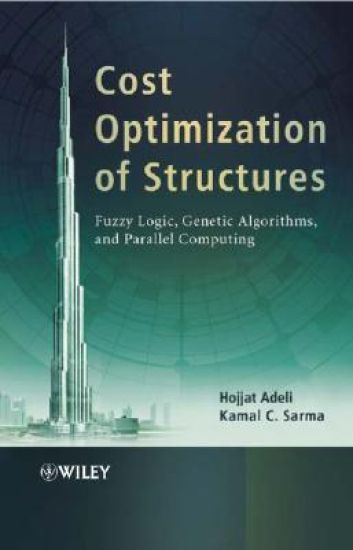
While the weight of a structure constitutes a significant part of the cost, a minimum weight design is not necessarily the minimum cost design. Little attention in structural optimization has been paid to the cost optimization problem, particularly of realistic three-dimensional structures. Cost optimization is becoming a priority in all civil engineering projects, and the concept of Life-Cycle Costing is penetrating design, manufacturing and construction organizations. In this groundbreaking book the authors present novel computational models for cost optimization of large scale, realistic structures, subjected to the actual constraints of commonly used design codes. As the first book on the subject this book: Contains detailed step-by-step algorithmsFocuses on novel computing techniques such as genetic algorithms, fuzzy logic, and parallel computingCovers both Allowable Stress Design (ASD) and Load and Resistance Factor Design (LRFD) codesIncludes realistic design examples covering large-scale, high-rise building structuresPresents computational models that enable substantial cost savings in the design of structures Fully automated structural design and cost optimization is where large-scale design technology is heading, thus Cost Optimization of Structures: Fuzzy Logic, Genetic Algorithms, and Parallel Computing will be of great interest to civil and structural engineers, mechanical engineers, structural design software developers, and architectural engineers involved in the design of structures and life-cycle cost optimisation. It is also a pioneering text for graduate students and researchers working in building design and structural optimization.
Wavelets in Intelligent Transportation Systems
Hojjat Adeli; Asim Karim
John Wiley Sons Inc
2005
muu
This book shows how wavelets can be used to enhance computational intelligence for chaotic and complex pattern recognition problems. By integrating wavelets with other soft computing techniques such as neurocomputing and fuzzy logic, complicated and noisy pattern recognition problems can be solved effectively. The book focuses on applications in intelligent transportation systems (ITS) where a number of very complicated pattern recognition problems have eluded researchers over the past few decades. Advancing the frontiers of computational intelligence, this book describes ingenious computational models based on novel problem solving and computing techniques such as case-based reasoning, neurocomputing, and wavelets, and presents examples to illustrate their importance and use. It presents a multi-paradigm intelligent systems approach to the freeway traffic incident detection and construction work zone management problems. And it advocates application and integration of wavelets, neural networks and fuzzy logic for modeling the complex traffic flow behaviors leading to effective and efficient control and management solutions. It also presents efficient, reliable, and robust algorithms for automatic detection of incidents on freeways. "Wavelets in Intelligent Transportation Systems" is an invaluable resource for computational intelligence researchers and transportation engineers involved in the application of advanced computational techniques for ITS.
Construction Scheduling, Cost Optimization and Management
Hojjat Adeli; Asim Karim
CRC Press
2001
sidottu
Construction Scheduling, Cost Optimization and Management presents a general mathematical formula for the scheduling of construction projects. Using this formula, repetitive and non-repetitive tasks, work continuity considerations, multiple-crew strategies, and the effects of varying job conditions on the performance of a crew can be modelled. This book presents an entirely new approach to the construction scheduling problem. It provides a practical methodology which will be of great benefit to all those involved in construction scheduling and cost optimization, including construction engineers, highway engineers, transportation engineers, contractors and architects. It will also be useful for researchers, and graduates on courses in construction scheduling and planning.
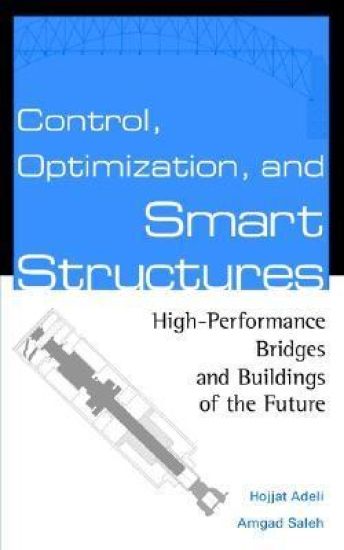
Control, Optimization, and Smart Structures
Hojjat Adeli; Amgad Saleh
John Wiley Sons Inc
1999
sidottu
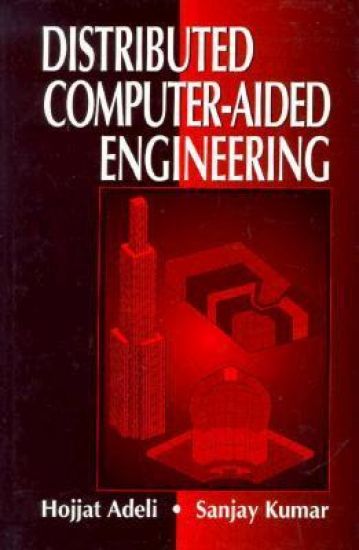
Networking of personal computers and workstations is becoming commonplace in academic and industrial environments. A cluster of workstations provides engineers with a familiar, cost-effective environment for high performance computing. However, workstations often have no dedicated link and communicate slowly on a local area network (LAN), such as the Ethernet. Thus, to effectively harness the parallel processing or distributed computing capabilities of workstations, new algorithms need to be developed with a higher computation-to-communication ratio. Distributed Computer-Aided Engineering presents distributed algorithms for three fundamental areas: finite element analysis, design optimization, and visualization - providing a new direction in high performance structural engineering computing.