Kirjojen hintavertailu. Mukana 12 105 283 kirjaa ja 12 kauppaa.

Kirjailija

Homer

Kirjat ja teokset yhdessä paikassa: 561 kirjaa, julkaisuja vuosilta 1919-2026, suosituimpien joukossa The Iliad; Translated by Edward Smith-Stanley. Vertaile teosten hintoja ja tarkista saatavuus suomalaisista kirjakaupoista.

Mukana myös kirjoitusasut: Homer ., - Homer

561 kirjaa

Kirjojen julkaisuhaarukka 1919-2026.

The Odyssey of Homer
The Odyssey is one of two major ancient Greek epic poems attributed to Homer. It is, in part, a sequel to the Iliad, the other Homeric epic. The Odyssey is fundamental to the modern Western canon; it is the second-oldest extant work of Western literature, while the Iliad is the oldest. Scholars believe the Odyssey was composed near the end of the 8th century BC, somewhere in Ionia, the Greek coastal region of Anatolia. The poem mainly focuses on the Greek hero Odysseus (known as Ulysses in Roman myths), king of Ithaca, and his journey home after the fall of Troy. It takes Odysseus ten years to reach Ithaca after the ten-year Trojan War. 3] In his absence, it is assumed Odysseus has died, and his wife Penelope and son Telemachus must deal with a group of unruly suitors, the Mnesteres (Greek: Μνηστῆρες) or Proci, who compete for Penelope's hand in marriage. The Odyssey continues to be read in the Homeric Greek and translated into modern languages around the world. Many scholars believe the original poem was composed in an oral tradition by an aoidos (epic poet/singer), perhaps a rhapsode (professional performer), and was more likely intended to be heard than read. The details of the ancient oral performance and the story's conversion to a written work inspire continual debate among scholars. The Odyssey was written in a poetic dialect of Greek-a literary amalgam of Aeolic Greek, Ionic Greek, and other Ancient Greek dialects-and comprises 12,110 lines of dactylic hexameter. Among the most noteworthy elements of the text are its non-linear plot, and the influence on events of choices made by women and slaves, besides the actions of fighting men. In the English language as well as many others, the word odyssey has come to refer to an epic voyage.
The Iliad of Homer
The Iliad ( sometimes referred to as the Song of Ilion or Song of Ilium) is an ancient Greek epic poem in dactylic hexameter, traditionally attributed to Homer. Set during the Trojan War, the ten-year siege of the city of Troy (Ilium) by a coalition of Greek states, it tells of the battles and events during the weeks of a quarrel between King Agamemnon and the warrior Achilles. Although the story covers only a few weeks in the final year of the war, the Iliad mentions or alludes to many of the Greek legends about the siege; the earlier events, such as the gathering of warriors for the siege, the cause of the war, and related concerns tend to appear near the beginning. Then the epic narrative takes up events prophesied for the future, such as Achilles' imminent death and the fall of Troy, although the narrative ends before these events take place. However, as these events are prefigured and alluded to more and more vividly, when it reaches an end the poem has told a more or less complete tale of the Trojan War. The Iliad is paired with something of a sequel, the Odyssey, also attributed to Homer. Along with the Odyssey, the Iliad is among the oldest extant works of Western literature, and its written version is usually dated to around the 8th century BC. 2] In the modern vulgate (the standard accepted version), the Iliad contains 15,693 lines; it is written in Homeric Greek, a literary amalgam of Ionic Greek and other dialects. According to Michael N. Nagler, the Iliad is a more complicated epic poem than the Odyssey.
Hesiod, The Homeric Hymns, And Homerica

Hesiod, The Homeric Hymns, And Homerica

Hesiod; Homer

Createspace Independent Publishing Platform
2018
nidottu
Hesiod, Homeric Hymns, and Homerica By H. G. Evelyn-White Greek oral poet, often identified as the first economist. The Homeric Hymns are a collection of thirty-three ancient Greek hymns celebrating individual gods. The hymns are "Homeric" in the sense that they employ the same epic meter-dactylic hexameter-as the Iliad and Odyssey, use many similar formulas and are couched in the same dialect.
Hesiod, Homeric Hymns and Homerica: Homer

Hesiod, Homeric Hymns and Homerica: Homer

Hesiod; Homer

Createspace Independent Publishing Platform
2017
nidottu
Hesiod, Homeric Hymns and Homerica, Homer, Hesiod, Translated by H. G. Evelyn-White. The Homeric Hymns are a collection of thirty-three anonymous ancient Greek hymns celebrating individual gods. The hymns are "Homeric" in the sense that they employ the same epic meter
Homer: Odyssey Books XIII and XIV

Homer: Odyssey Books XIII and XIV

Homer

Cambridge University Press
2014
sidottu
The second part of the Odyssey takes epic in new directions, giving significant roles to people of 'lower status' and their way of life: epic notions of the primacy of the aristocrat and the achievements of the Trojan War are submitted to scrutiny. Books XIII and XIV contain some of the subtlest human exchanges in the poem, as Athena and Odysseus spar with each other and Odysseus tests the quiet patience of his swineherd Eumaeus. The principal themes and narrative structures, especially of disguise and recognition, which the second part uses with remarkable economy, are established here. The Introduction also includes a detailed historical account of the Homeric dialect, as well as sections on metre and the text itself. The Commentary on the Greek text pays particular attention to the exposition of unfamiliar linguistic forms and constructions. The literary parts of the Introduction and the Commentary are accessible to all.
Homer: Odyssey Books XIII and XIV

Homer: Odyssey Books XIII and XIV

Homer

Cambridge University Press
2014
pokkari
The second part of the Odyssey takes epic in new directions, giving significant roles to people of 'lower status' and their way of life: epic notions of the primacy of the aristocrat and the achievements of the Trojan War are submitted to scrutiny. Books XIII and XIV contain some of the subtlest human exchanges in the poem, as Athena and Odysseus spar with each other and Odysseus tests the quiet patience of his swineherd Eumaeus. The principal themes and narrative structures, especially of disguise and recognition, which the second part uses with remarkable economy, are established here. The Introduction also includes a detailed historical account of the Homeric dialect, as well as sections on metre and the text itself. The Commentary on the Greek text pays particular attention to the exposition of unfamiliar linguistic forms and constructions. The literary parts of the Introduction and the Commentary are accessible to all.
Homer: Iliad Book 22

Homer: Iliad Book 22

Homer

Cambridge University Press
2012
pokkari
Book XXII recounts the climax of the Iliad: the fatal encounter between the main defender of Troy and the greatest warrior of the Greeks, which results in the death of Hector and Achilles' revenge for the death of his friend Patroclus. At the same time it adumbrates Achilles' own death and the fall of Troy. This edition will help students and scholars better appreciate this key part of the epic poem. The introduction summarises central debates in Homeric scholarship, such as the circumstances of composition and the literary interpretation of an oral poem, and offers synoptic discussions of the structure of the Iliad, the role of the narrator, similes and epithets. There is a separate section on language, which provides a compact list of the most frequent Homeric characteristics. The commentary offers up-to-date linguistic guidance, and elucidates narrative techniques, typical elements and central themes.
Homer: Odyssey Books XVII-XVIII

Homer: Odyssey Books XVII-XVIII

Homer

Cambridge University Press
2010
pokkari
Books XVII and XVIII of the Odyssey feature, among other episodes, the disguised Odysseus' penetration of his home after an absence of twenty years and his first encounter with his wife. The commentary provides linguistic and syntactical guidance suitable for upper-level students along with detailed consideration of Homer's compositional and narrative techniques, his literary artistry and the poem's central themes. An extensive introduction considers questions of formulaic composition, the nature of the poem's audience and the context of its performance, and isolates the concerns most prominent in the poem's second half and in Books XVII and XVIII in particular. Here too are considered the roles of Penelope and Telemachus, questions of disguise and recognition, and the institution of hospitality flaunted by the suitors in Odysseus' halls. Brief sections also discuss Homeric metre and the transmission of the text.
Homer: Odyssey Books XVII-XVIII

Homer: Odyssey Books XVII-XVIII

Homer

Cambridge University Press
2010
sidottu
Books XVII and XVIII of the Odyssey feature, among other episodes, the disguised Odysseus' penetration of his home after an absence of twenty years and his first encounter with his wife. The commentary provides linguistic and syntactical guidance suitable for upper-level students along with detailed consideration of Homer's compositional and narrative techniques, his literary artistry and the poem's central themes. An extensive introduction considers questions of formulaic composition, the nature of the poem's audience and the context of its performance, and isolates the concerns most prominent in the poem's second half and in Books XVII and XVIII in particular. Here too are considered the roles of Penelope and Telemachus, questions of disguise and recognition, and the institution of hospitality flaunted by the suitors in Odysseus' halls. Brief sections also discuss Homeric metre and the transmission of the text.
The Homeric Hymns

The Homeric Hymns

Homer

Penguin Classics
2003
pokkari
Composed for recitation at festivals, these 33 songs were written in honour of the gods and goddesses of the ancient Greek pantheon. They recount the key episodes in the lives of the gods, and dramatise the moments when they first appear before mortals. Together they offer the most vivid picture we have of the Greek view of the relationship between the divine and human worlds.
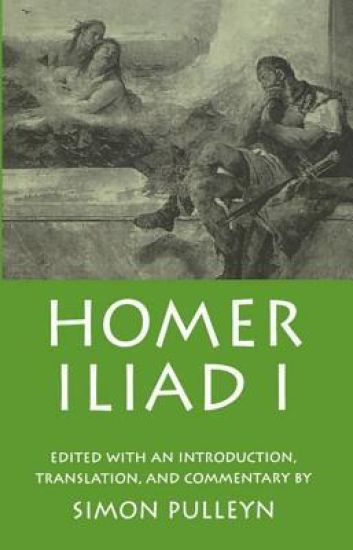
Homer: Iliad I

Homer: Iliad I

Homer

Oxford University Press
2000
nidottu
A commentary and study aid to accompany the text of Homer's "Iliad". The introduction highlights the important features of the text, the Homeric question, dating, influences, style, and transmission of the text, and the Greek text of "Iliad I" with a facing English translation is also included.
Homer: Odyssey Books VI-VIII

Homer: Odyssey Books VI-VIII

Homer

Cambridge University Press
1994
pokkari
This is the first self-contained edition of Odyssey Books VI–VIII which together form a popular introduction to Homer for students of Greek, containing as they do the account of Odysseus' visit to the Phaeacians and including such famous episodes as Odysseus' meeting with Nausicaa, and the singing of the minstrel Demodocus. While not neglecting matters of language and formulaic composition, the Commentary aims especially to provide guidance on questions of literary and narrative technique and poetic artistry. The Introduction deals with the problem of Homeric composition in general, and with the place of the Phaeacian books in the poem as a whole. There are brief section on Homeric metre and the text. The edition is intended for students beginning their study of Homer as well as for more advanced scholars.
Homer: Odyssey Books XIX and XX

Homer: Odyssey Books XIX and XX

Homer

Cambridge University Press
1992
pokkari
The Odyssey, besides being one of the world’s first and best adventure stories, is a poem of great subtlety, rich in irony and sophisticated characterisation. The poet’s art is amply illustrated by books XIX and XX, in which Odysseus, disguised as a beggar, spends the night in his own palace and lays plans for his awesome revenge. Particularly memorable is the episode in which Penelope converses with her husband without suspecting his identity. In this edition, Richard Rutherford provides not only detailed comment on the action, characterisation and style of the books in question, but also, in an extensive introduction, a general survey of the Odyssey as a whole, laying special emphasis on the qualities of the second half of the poem. He also attempts to contribute to the literary criticism of the poem on a verbal level, by considering the poet’s use of formulae, rhetorical technique and similes. This volume is intended for readers of the Odyssey at all stages. The commentary gives extensive linguistic guidance for beginners; and the introduction, in which all Greek is translated, is intended to be accessible to any readers interested in Homer as a poet.
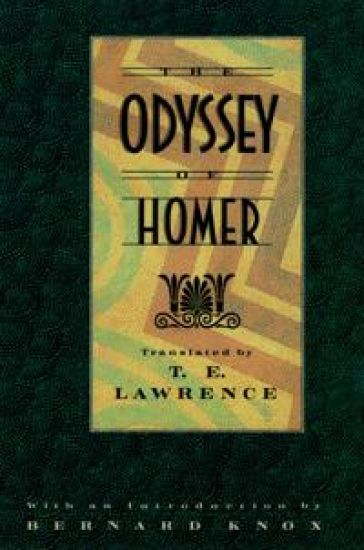
The Odyssey of Homer

The Odyssey of Homer

Homer

Oxford University Press Inc
1991
sidottu
The fruit of four years' work, Lawrence published his translation of Homer's epic under the pseudonym of T. E. Shaw, after George Bernard Shaw. Reading like a novel, it was described in the New York Herald Tribune as `perhaps the most interesting translation of one of the world's most interesting books', while the Book of the Month Club News called it `one of the notable books of our time'.
Homer: Iliad Book XXIV

Homer: Iliad Book XXIV

Homer

Cambridge University Press
1982
pokkari
The twenty-fourth book of the Iliad - the account of Priam’s ransoming of Hector’s body from Achilles - is one of the masterpieces of world literature, a work of interest to a far wider audience than scholars of ancient Greek. In this edition Colin Macleod tries to reach both scholars and Greekless readers alike. In his commentary he gives help to readers unfamiliar with the language of Homer and discusses problems of content and expression, never treating this book in isolation but drawing attention to Homer’s artistry and thought in the context of the whole of the Iliad. In his introduction Mr Macleod examines Homer’s notion of poetry, his style and language and the architecture and meaning of his work. He tries to show why Book XXIV is a proper conclusion to the Iliad. This is an edition for classical scholars, undergraduates and students in the upper forms of schools. The introduction and substantial parts of the commentary require no knowledge of Greek and should find readers among all who are interested in European literature.
The Odyssey: (Penguin Classics Deluxe Edition)
The Odyssey is literature's grandest evocation of every man's journey through life. In the myths and legends that are retold here, renowned translator Robert Fagles has captured the energy and poetry of Homer's original in a bold, contemporary idiom and given us an edition of The Odyssey to read aloud, to savor, and to treasure for its sheer lyrical mastery. This is an edition to delight both the classicist and the general reader, and to captivate a new generation of Homer's students.
The Odyssey: The Fitzgerald Translation (Deluxe Edition)
The classic translation of The Odyssey, now in a deluxe paperback edition with a new introduction by Laura Slatkin and a new afterword by A. E. Stallings. Robert Fitzgerald's translation of Homer's Odyssey is the best and best-loved modern translation of the greatest of all epic poems. Since 1961, this Odyssey has sold more than two million copies, and has long been the standard translation for generations of students and poets. Picador is delighted to publish a new edition of this classic work with a new cover, an attractive, collectible package, and a new scholarly introduction and afterword that will connect Fitzgerald's Homer to ever more students and general readers. Fitzgerald's supple verse is ideally suited to the story of Odysseus's long journey back to his wife and home after the Trojan War. Homer's tale of love, adventure, food and drink, sensual pleasure, and mortal danger reaches the English-language reader in all its glory. Of the many translations published since World War II, only Fitzgerald's has won admiration as a great poem in English. The noted classicist Laura Slatkin explains the depth of his engagement with the complex and timeless themes of Homer, while the award-winning poet A. E. Stallings expounds on the gift of his lyrical, ageless poetry that has brought Homer and Odysseus to life for millions of readers of every age. Winner of the Bollingen Prize This edition also features a map, a Glossary of Names and Places, and Fitzgerald's Postscript. Line drawings precede each book of the poem.
The Illustrated Odyssey

The Illustrated Odyssey

Homer

Union Square Co.
2026
sidottu
A lushly illustrated edition of Homer's epic tale recounting Odysseus' fraught voyage home after the Trojan War, now distinctively packaged as a deluxe edition from Union Square & Co. Tell me, O muse, of that ingenious hero who traveled far and wide after he had sacked the famous town of Troy... So starts Homer's The Odyssey, the classic account of the Greek hero Odysseus and his ten-year journey home following the glories and horrors of the Trojan War as recounted in The Illiad. In this prose retelling of Homer's epic poem, we follow Odysseus and his shipmates as they weather one danger after another, from the sorceress Circe to the one-eyed Cyclops to the six-headed monster Scylla. Replete with classic drawings and colorful illustrations, a foil-stamped cover, gilded edges, and a silk ribbon, this beautiful new edition of The Odyssey is just as gripping to read now as when it was first told to rapt Greek audiences 2,500 years ago.