Kirjojen hintavertailu. Mukana 12 390 323 kirjaa ja 12 kauppaa.

Kirjailija

Homero Aridjis

Kirjat ja teokset yhdessä paikassa: 12 kirjaa, julkaisuja vuosilta 1994-2025, suosituimpien joukossa Eyes To See Otherwise: Selected Poems. Vertaile teosten hintoja ja tarkista saatavuus suomalaisista kirjakaupoista.

12 kirjaa

Kirjojen julkaisuhaarukka 1994-2025.

Carne de Dios

Carne de Dios

Homero Aridjis

University of Arizona Press
2025
nidottu
In the remote mountains of Oaxaca, the Beatniks have arrived. María Sabina, the renowned Mazatec healer, spends her days in the small town of Huautla de Jimé nez selling produce at the market and foraging under the new moon for the sacred mushrooms that grow near her home - her holy children, Carne de Dios, or Flesh of the Gods. But her life changes forever when an amateur mycologist from New York, with a cameraman in tow, visits her to experience for himself the mushroom ceremony, or velada, he knows only from whispers in anthropological records. When he publishes an unauthorized article about his experience in LIFE Magazine 1957, the stage is set for an explosive encounter between the burgeoning international counterculture and the woman who became an unwilling icon of the psychedelic revolution. Homero Aridjis's novel, vividly translated by Chloe Garcia Roberts, tells the story of the motley crew of bohemians, researchers, and holy fools, both real and imagined, who descend on the town of Huautla de Jiménez searching for inspiration, distraction, and salvation in the sacred mushrooms. These seekers melt in and out of a narrative infiltrated by the slipstream logic of dreams. As John Lennon plays jazz on the patio of the Hotel Grande, Juan Rulfo contemplates horror movies, and Allen Ginsberg recites mantras at Philip Lamantia's wedding, Marí a Sabina's life is increasingly thrown into turmoil. Carne de Dios is a masterful and often humorous blend of history, myth, and poetic imagination, captured in a translation that mirrors the hallucinatory beauty of Aridjis's original Spanish. Aridjis's intimate portrayal of Marí a Sabina, informed by his personal connection to her, serves as both a tribute to her enduring legacy and a critical reflection on the wave of global interest in mushroom culture still gaining momentum today. This English translation includes an introduction by the translator and an afterword by the author.
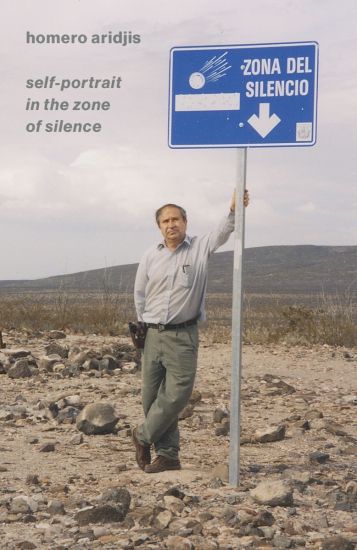
Self-Portrait in the Zone of Silence

Self-Portrait in the Zone of Silence

Homero Aridjis

NEW DIRECTIONS PUBLISHING CORPORATION
2023
nidottu
WINNER OF THE 2024 GRIFFIN POETRY PRIZE Self-Portrait in the Zone of Silence, by the renowned Mexican writer Homero Aridjis, is a brilliant collection of poems written in and for the new century. Aridjis seeks spiritual transformation through encounters with mythical animals, family ghosts, migrant workers, Mexico’s oppressed, female saints, other writers (such as Jorge Luis Borges and Philip Lamantia), and naked angels in the metro. We find tributes to Goya and Heraclitus, denunciations of drug traffickers and political figureheads, and unforgettable imaginary landscapes. As Aridjis himself writes: “a poem is like a door / we’ve never passed through...” And now past eighty, Aridjis reflects on the past and ponders the future. “Surrounded by light and the warbling of birds,” he writes, “I live in a state of poetry, because for me, being and making poetry are the same.”
Smyrna in Flames, A Novel

Smyrna in Flames, A Novel

Homero Aridjis

Mandel Vilar Press
2021
pokkari
This powerful and moving historical novel is inspired by the written recollections and the memories that haunted the author’s father, Nicias Aridjis,—a captain in the Greek army, who returned from the fields of battle to Smyrna, 50 miles northwest of his hometown of Tire, in 1922 just as Turkish forces captured this cosmopolitan port city. Smyrna in Flames , by the internationally acclaimed Mexican writer and poet Homero Aridjis, lays bare the unimaginable events and horrors that took place for nine days between September 13 and 22—known as the Smyrna Catastrophe. After capturing Smyrna, Turkish forces went on a rampage, torturing and massacring tens of thousands of Greeks and Armenians and devastating the city—in particular, the Greek and Armenian quarters—by deliberately setting disastrous fires. After years of fighting in World War I and the Greco-Turkish War, Nicias enters a Smyrna under siege. He desperately moves through the city in search of Eurydice, the love of his life whom he left behind. Wandering the streets, the sounds of hopelessness commingle in his mind with echoes of the ancient Greek poets who sang of the city’s past glories. Images and voices, suggestive of Homeric ghosts adrift in a catastrophic scenario, conjure up a mythological, historical, geographical quest that, in the manner of classical epic, hovers between the heroic and the horrible, illustrating the depths and depravity of the human soul. Making his way from district to district, evading capture, Nicias observes the last vestiges of normal life and witnesses unspeakable horrors committed by roaming Turkish forces and irregulars who are randomly abusing and raping Greek and Armenian women and torturing and murdering their men. What he experiences is literally a living hell unfolding before his eyes. As Nicias passes familiar buildings, cafes, and churches, his mind and soul fill with nostalgia for his earlier life and the promise of love. Fortunately for the reader, the brutal and bloodthirsty scenes of the Smyrna Catastrophe are leavened by the voice of this “visionary poet of lyrical bliss, crystalline concentrations and infinite spaces,” as Kenneth Rexroth has described Aridjis. His portrayal of a genocide-in-progress floods our senses, turning these chaotic scenes into a poignant drama. At the very end, aboard one of the last ships to take refugees out of Smyrna before its final fall, Nicias scours the throng of thousands of desperate Greeks and Armenians pressing forward to escape on already overcrowded ships. Suddenly Turkish forces move in to shoot and stab, and, overwhelmed by the all-pervasive tragedy, Nicias abandons Smyrna and Asia Minor forever.
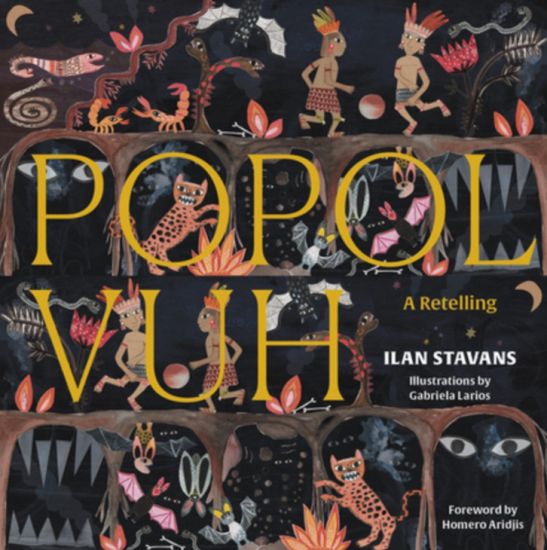
Popol Vuh

Popol Vuh

Ilan Stavans; Homero Aridjis

Restless Books
2020
sidottu
An inspired and urgent prose retelling of the Maya myth of creation by acclaimed Latin American author and scholar Ilan Stavans, gorgeously illustrated by Salvadoran folk artist Gabriela Larios and introduced by renowned author, diplomat, and environmental activist Homero Aridjis.The archetypal creation story of Latin America, the Popol Vuh began as a Maya oral tradition millennia ago. In the mid-sixteenth century, as indigenous cultures across the continent were being threatened with destruction by European conquest and Christianity, it was written down in verse by members of the K’iche’ nobility in what is today Guatemala. In 1701, that text was translated into Spanish by a Dominican friar and ethnographer before vanishing mysteriously.Cosmic in scope and yet intimately human, the Popol Vuh offers invaluable insight into the Maya way of life before being decimated by colonization—their code of ethics, their views on death and the afterlife, and their devotion to passion, courage, and the natural world. It tells the story of how the world was created in a series of rehearsals that included wooden dummies, demi-gods, and eventually humans. It describes the underworld, Xibalba—a place as harrowing as Dante’s hell—and relates the legend of the ultimate king, who, in the face of tragedy, became a spirit that accompanies his people in their struggle for survival.Popol Vuh: A Retelling is a one-of-a-kind prose rendition of this sacred text that is as seminal as the Bible and the Qur'an, the Ramayana and the Odyssey. Award-winning scholar of Latin American literature Ilan Stavans brings a fresh creative energy to the Popol Vuh, giving a new generation of readers the opportunity to connect with this timeless story and with the plight of the indigenous people of the Americas.
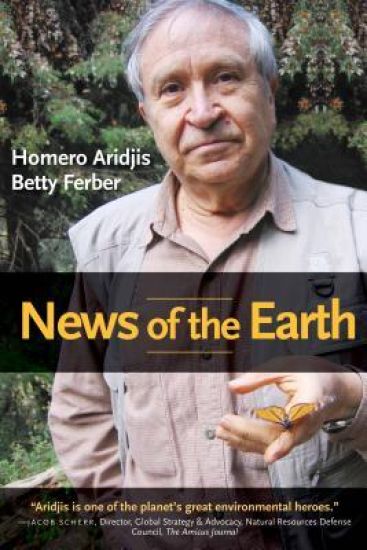
News of the Earth

News of the Earth

Homero Aridjis; Betty Ferber

Mandel Vilar Press
2018
pokkari
“Homero is one of the planet’s great environmental heroes.”—Jacob Scherr, Director of Global Strategy & Advocacy, Natural Resources Defense Council, Washington, DC News of the Earth chronicles Homero Aridjis’s relationship with the natural world through his writings and his activism as president of the Grupo de los Cien [Group of 100], Mexico’s influential environmental group composed of one hundred prominent personalities in the arts, culture, and science, which Aridjis founded in 1985. Under his leadership, the group’s efforts led to a ban on the capture and commercialization of sea turtles, legislation reducing the amount of lead in gasoline, daily monitoring of air quality in Mexico City, and official designation of sanctuaries for the monarch butterfly. Aridjis waged a lifelong battle against threats to endangered ecosystems and wildlife in his country, many with global implications, including campaigns to save the gray whale, bottle-nosed dolphin, bee population, giant saguaro cactus, endangered coral reefs, and rainforests of Mexico. This book highlights these crucial battles, with detailed documentation of critical environmental victories. Homero Aridjis, one of Latin America’s foremost literary figures, is the author of forty-eight books of poetry and prose. He served as Mexico’s Ambassador to Switzerland, The Netherlands, and UNESCO, and as president of PEN International. He received awards from the United Nations (Global 500 Award), the Orion Society, Mikhail Gorbachev, Global Green USA, and the Natural Resources Defense Council. Betty Ferber Aridjis was born in New York and graduated from Bryn Mawr College. She served as the International Coordinator of the Grupo de los Cien (Group of 100) since its founding in 1985. Her lifelong commitment to the environment was also honored by Mikhail Gorbachev and by Global Green USA with the Green Cross Millennium Award for International Environmental Leadership. She is the translator of several books by Homero Aridjis into English.
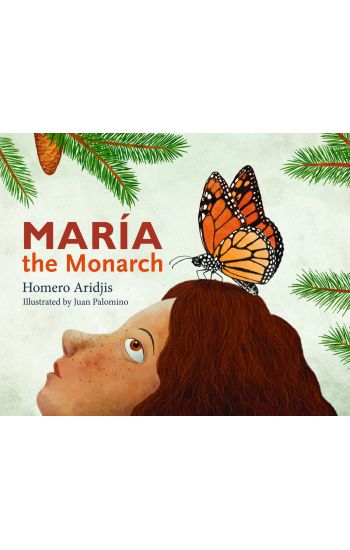
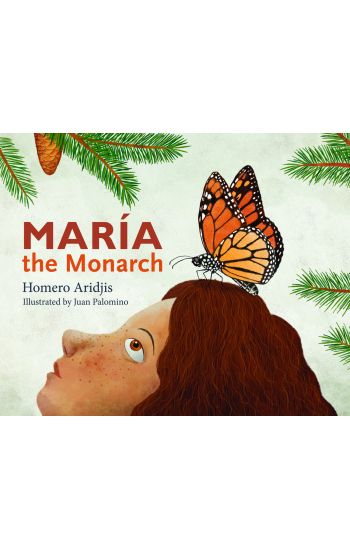
Maria The Monarch

Maria The Monarch

Homero Aridjis

Mandel Vilar Press
2017
pokkari
“I highly recommend this extraordinary trip to the kingdom of the monarch.”—Dr. Lincoln Brower, Sweet Briar College, the world’s leading expert on the Monarch butterfly Each year, in the Mexican town of Contepec, migrating Monarch butterflies spend the winter in the temperate forests of Mexico. This children’s book is an adventure story about two courageous cousins Eréndira and Corina. With the help of their community as well as Maria the Monarch butterfly, who speaks to them in their dreams, they save the lives of millions of Monarch butterflies threatened by illegal logging and traffickers of wild animals. Together they help preserve the natural and cultural wealth of their homeland. In an afterword “The Monarch: A Tireless Traveler” Betty Ferber describes the life and evolution of the Monarch butterfly, its migration from North to South America, and the establishment of the sanctuaries in Mexico and the laws that protect them. Homero Aridjis, one of Latin America’s greatest living writers and environmental activists, is the author forty-eight books of poetry and prose including Eyes to See Otherwise (New Directions), Solar Poems (City Lights), and 1492: The Life and Times of Juan Cabezon of Castile (University of New Mexico Press). Juan Carlos Palomino won first place in the IV Catalog Iberoamerican Illustration in 2013 for his illustrations for Samir and Yonatan, published by Ediciones Castillo. Eva Aridjis is a filmmaker whose prize-winning films include Taxidermy: The Art of Imitating Life and Billy Twist, which played at the Sundance Film Festival. In 2003, she filmed Niños de la Calle (Children of the Street), bringing attention to Mexico City’s poverty epidemic. Betty Ferber is the International Coordinator of the environmentalist collective Grupo de los Cien (Group of 100) and translator of Homero Aridjis’s books.
Maria The Monarch

Maria The Monarch

Homero Aridjis

Mandel Vilar Press
2017
sidottu
Each year, in the Mexican town of Contepec, migrating Monarch butterflies spend the winter in the temperate forests of Mexico. This children’s book (ages 8-12) is an adventure story about two courageous cousins Eréndira and Corina. With the help of their community as well as Maria the Monarch butterfly, who speaks to them in their dreams, they save the lives of millions of Monarch butterflies threatened by illegal logging and traffickers of wild animals. Together they help preserve the natural and cultural wealth of their homeland.In an afterword ?The Monarch: A Tireless Traveler” Betty Ferber describes the life and evolution of the Monarch butterfly, its migration from North to South America, and the establishment of the sanctuaries in Mexico and the laws that protect them.
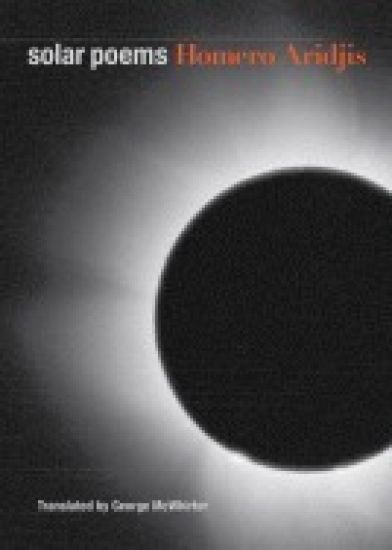
Solar Poems

Solar Poems

Homero Aridjis

City Lights Books
2010
pokkari
A book of cosmological surrealism in the tradition of Octavio Paz, Solar Poems is the first English translation of a single volume of poems by Mexico's famed poet-diplomat Homero Aridjis, exploring political consciousness as well as visionary psychological themes. President emeritus of International PEN, the prolific poet is Mexico's ambassador to UNESCO. Poemas solares (Solar Poems) was published in 2005. Translator George McWhirter won the Commonwealth Poetry Prize for Catalan Poems, the F.R. Scott Prize for Selected Poems of Jose Emilio Pacheco, and the Ethel Wilson Fiction Prize for his novel Cage. He is Vancouver's first Poet Laureate. "Homero Aridjis is a profoundly ecological poet who has put his fame and time where his principles are, fighting to save the monarch butterflies that winter by the billions in the mountains of his native Michoacan, the sea turtle that lays her eggs on Caribbean beaches, and the gray whale that calves in the lagoons of Baja California. Aridjis writes to the point, with an open eye and a sense of humor ..." --John Oliver Simon, Poetry Flash
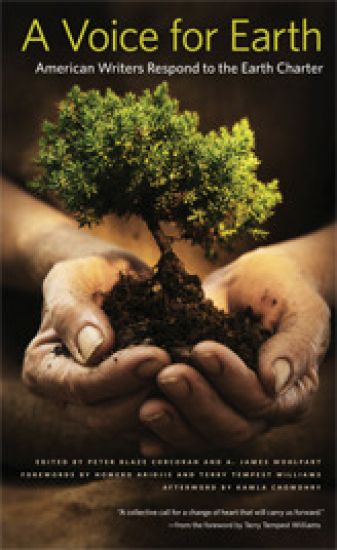
A Voice for Earth

A Voice for Earth

Homero Aridjis; Terry Tempest Williams

University of Georgia Press
2008
pokkari
A Voice for Earth is a collection of poems, essays, and stories that together give a voice to the ethical principles outlined in the Earth Charter. The Earth Charter was adopted in the year 2000 with the mission of addressing the economic, social, political, spiritual, and environmental problems confronting the world in the twenty-first century.Part 1 of the book, "Imagination into Principle," comprises Steven C. Rockefeller's behind-the-scenes summary of how the language for the Earth Charter was drafted. In part 2, "Principle into Imagination," ten writers breathe life into its concepts with their own original work. Contributors include Rick Bass, Alison Hawthorne Deming, John Lane, Robert Michael Pyle, Janisse Ray, Scott Russell Sanders, Lauret Savoy, and Mary Evelyn Tucker. In part 3, "Imagination and Principle into a New Ethic," Leonardo Boff offers a new paradigm created through reflecting on the concept of care in the Earth Charter.
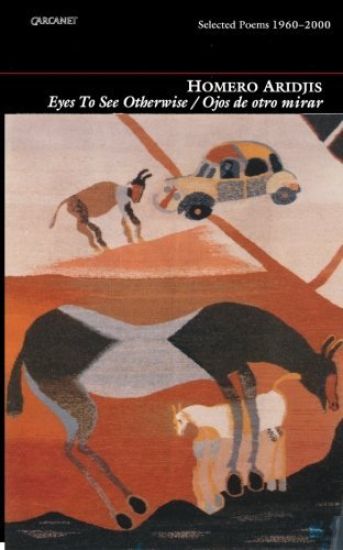
Eyes To See Otherwise: Selected Poems

Eyes To See Otherwise: Selected Poems

Homero Aridjis

Carcanet Press Ltd
2001
nidottu
Eyes To See Otherwise is the first extensive selection of poems by leading Mexican poet Homero Aridjis to appear in English. The range and quality of the translations, by some of America's finest poets, marks the centrality of his work on the map of modern poetry.
Exaltation Of Light

Exaltation Of Light

Homero Aridjis

BOA Editions, Limited
1994
pokkari
A native of New York City, Elliot Weinberger is a poet, translator, and editor of the distinguished international journal of poetry and translation, Montemora. His other books of translations include Eagle or Sun and A Draft of Shadows, both by Octavio Paz. Homero Aridjis was born in Contepec, Michoacan, Mexico, in 1940. He was the founder of the review Correspondencias and chief editor of Diagolos; his first book of poems in translation, Blue Spaces, was published in the United States in 1974. The recipient of Guggenheim Fellowships in 1966-67 and 1979-80, he has been visiting professor at the University of Indiana and New York University as well as Poet in Residence at Columbia University's Translation Center. Homero Aridjis also has served as Mexico's Ambassador to Switzerland and to the Netherlands. These translations have received an award from the Translation Center at Columbia University, made possible by a grant from the National Endowment for the Arts.