Kirjojen hintavertailu. Mukana 12 595 353 kirjaa ja 12 kauppaa.

Kirjailija

Houston A. Baker

Kirjat ja teokset yhdessä paikassa: 15 kirjaa, julkaisuja vuosilta 1984-2010, suosituimpien joukossa Long Black Song. Vertaile teosten hintoja ja tarkista saatavuus suomalaisista kirjakaupoista.

15 kirjaa

Kirjojen julkaisuhaarukka 1984-2010.

Betrayal

Betrayal

Houston A. Baker

Columbia University Press
2010
pokkari
Houston A. Baker Jr. condemns those black intellectuals who, he believes, have turned their backs on the tradition of racial activism in America. These individuals choose personal gain over the interests of the black majority, whether they are espousing neoconservative positions that distort the contours of contemporary social and political dynamics or abandoning race as an important issue in the study of American literature and culture. Most important, they do a disservice to the legacy of W. E. B. Du Bois, Martin Luther King Jr., and others who have fought for black rights. In the literature, speeches, and academic and public behavior of some black intellectuals in the past quarter century, Baker identifies a "hungry generation" eager for power, respect, and money. Baker critiques his own impoverished childhood in the "Little Africa" section of Louisville, Kentucky, to understand the shaping of this new public figure. He also revisits classical sites of African American literary and historical criticism and critique. Baker devotes chapters to the writing and thought of such black academic superstars as Cornel West, Michael Eric Dyson, and Henry Louis Gates Jr.; Hoover Institution senior fellow Shelby Steele; Yale law professor Stephen Carter; and Manhattan Institute fellow John McWhorter. His provocative investigation into their disingenuous posturing exposes what Baker deems a tragic betrayal of King's legacy. Baker concludes with a discussion of American myth and the role of the U.S. prison-industrial complex in the "disappearing" of blacks. Baker claims King would have criticized these black intellectuals for not persistently raising their voices against a private prison system that incarcerates so many men and women of color. To remedy this situation, Baker urges black intellectuals to forge both sacred and secular connections with local communities and rededicate themselves to social responsibility. As he sees it, the mission of the black intellectual today is not to do great things but to do specific, racially based work that is in the interest of the black majority.
Betrayal

Betrayal

Houston A. Baker

Columbia University Press
2008
sidottu
Houston A. Baker Jr. condemns those black intellectuals who, he believes, have turned their backs on the tradition of racial activism in America. These individuals choose personal gain over the interests of the black majority, whether they are espousing neoconservative positions that distort the contours of contemporary social and political dynamics or abandoning race as an important issue in the study of American literature and culture. Most important, they do a disservice to the legacy of W. E. B. Du Bois, Martin Luther King Jr., and others who have fought for black rights. In the literature, speeches, and academic and public behavior of some black intellectuals in the past quarter century, Baker identifies a "hungry generation" eager for power, respect, and money. Baker critiques his own impoverished childhood in the "Little Africa" section of Louisville, Kentucky, to understand the shaping of this new public figure. He also revisits classical sites of African American literary and historical criticism and critique. Baker devotes chapters to the writing and thought of such black academic superstars as Cornel West, Michael Eric Dyson, and Henry Louis Gates Jr.; Hoover Institution senior fellow Shelby Steele; Yale law professor Stephen Carter; and Manhattan Institute fellow John McWhorter. His provocative investigation into their disingenuous posturing exposes what Baker deems a tragic betrayal of King's legacy. Baker concludes with a discussion of American myth and the role of the U.S. prison-industrial complex in the "disappearing" of blacks. Baker claims King would have criticized these black intellectuals for not persistently raising their voices against a private prison system that incarcerates so many men and women of color. To remedy this situation, Baker urges black intellectuals to forge both sacred and secular connections with local communities and rededicate themselves to social responsibility. As he sees it, the mission of the black intellectual today is not to do great things but to do specific, racially based work that is in the interest of the black majority.

I Don't Hate the South

I Don't Hate the South

Houston A. Baker

Oxford University Press Inc
2007
sidottu
I Don't Hate The South takes its title from the famous declaration by Faulkner's character Quentin Compson in the novel Absalom, Absalom!. The book traces Baker's own ambivalent relationship to the South and its various protocols of family and black expressive cultural independence through a memoiristic recounting of the author's various academic posts, family dramas, travels, and engagements with that most famous of southern authors, William Faulkner as well as the black expressive "experimentalists" Percival Everett and Ralph Ellison. I Don't Hate The South's central claim is that the South is a laboratory, metaphor, and proving ground for American polity as a whole. W. E. B. Du Bois noted: "As the South goes, so goes the nation!" Houston Baker sets out to show the present-day wisdom of Du Bois's observation in a post-Hurricane Katrina moment of national family crisis. With incisive wit, scrupulous literary and cultural analysis, and vivid portraits of members of his own family, the author provides captivating reading and an object lesson on the United States' regional and national interdependence.
I Don't Hate the South

I Don't Hate the South

Houston A. Baker

Oxford University Press Inc
2007
nidottu
I Don't Hate The South takes its title from the famous declaration by Faulkner's character Quentin Compson in the novel Absalom, Absalom!. The book traces Baker's own ambivalent relationship to the South and its various protocols of family and black expressive cultural independence through a memoiristic recounting of the author's various academic posts, family dramas, travels, and engagements with that most famous of southern authors, William Faulkner as well as the black expressive "experimentalists" Percival Everett and Ralph Ellison. I Don't Hate The South's central claim is that the South is a laboratory, metaphor, and proving ground for American polity as a whole. W. E. B. Du Bois noted: "As the South goes, so goes the nation!" Houston Baker sets out to show the present-day wisdom of Du Bois's observation in a post-Hurricane Katrina moment of national family crisis. With incisive wit, scrupulous literary and cultural analysis, and vivid portraits of members of his own family, the author provides captivating reading and an object lesson on the United States' regional and national interdependence.
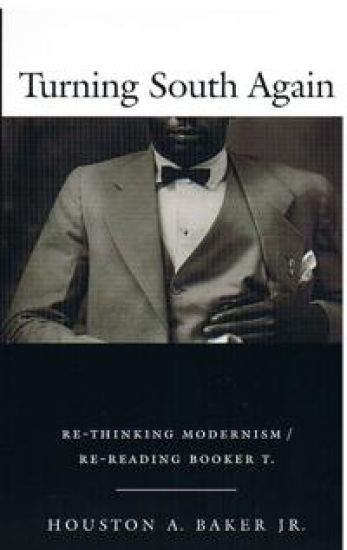
Turning South Again

Turning South Again

Houston A. Baker

Duke University Press
2001
sidottu
In Turning South Again the distinguished and award-winning essayist, poet, and scholar of African American literature Houston A. Baker, Jr. offers a revisionist account of the struggle for black modernism in the United States. With a take on the work of Booker T. Washington and the Tuskegee Institute surprisingly different from that in his earlier book Modernism and the Harlem Renaissance, Baker combines historical considerations with psychoanalysis, personal memoir, and whiteness studies to argue that the American South and its regulating institutions-particularly that of incarceration-have always been at the center of the African American experience. From the holds of slave ships to the peonage of Reconstruction to the contemporary prison system, incarceration has largely defined black life in the United States. Even Washington’s school at Tuskegee, Baker explains, housed and regulated black bodies no longer directly controlled by slave owners. He further implicates Washington by claiming that in enacting his ideas about racial “uplift,” Washington engaged in “mulatto modernism,” a compromised attempt at full citizenship. Combining autobiographical prose, literary criticism, psychoanalytic writing, and, occasionally, blues lyrics and poetry, Baker meditates on the consequences of mulatto modernism for the project of black modernism, which he defines as the achievement of mobile, life-enhancing participation in the public sphere and economic solvency for the majority of African Americans. By including a section about growing up in the South, as well as his recent return to assume a professorship at Duke, Baker contributes further to one of the book’s central concerns: a call to centralize the South in American cultural studies.
Turning South Again

Turning South Again

Houston A. Baker

Duke University Press
2001
pokkari
In Turning South Again the distinguished and award-winning essayist, poet, and scholar of African American literature Houston A. Baker, Jr. offers a revisionist account of the struggle for black modernism in the United States. With a take on the work of Booker T. Washington and the Tuskegee Institute surprisingly different from that in his earlier book Modernism and the Harlem Renaissance, Baker combines historical considerations with psychoanalysis, personal memoir, and whiteness studies to argue that the American South and its regulating institutions-particularly that of incarceration-have always been at the center of the African American experience. From the holds of slave ships to the peonage of Reconstruction to the contemporary prison system, incarceration has largely defined black life in the United States. Even Washington’s school at Tuskegee, Baker explains, housed and regulated black bodies no longer directly controlled by slave owners. He further implicates Washington by claiming that in enacting his ideas about racial “uplift,” Washington engaged in “mulatto modernism,” a compromised attempt at full citizenship. Combining autobiographical prose, literary criticism, psychoanalytic writing, and, occasionally, blues lyrics and poetry, Baker meditates on the consequences of mulatto modernism for the project of black modernism, which he defines as the achievement of mobile, life-enhancing participation in the public sphere and economic solvency for the majority of African Americans. By including a section about growing up in the South, as well as his recent return to assume a professorship at Duke, Baker contributes further to one of the book’s central concerns: a call to centralize the South in American cultural studies.
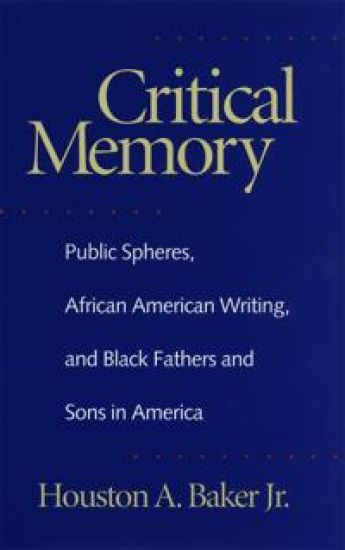
Critical Memory

Critical Memory

Houston A. Baker

University of Georgia Press
2001
sidottu
From the lone outcry of Richard Wright's Black Boy to the chorusing voices of Louis Farrakhan's Million Man March, Critical Memory looks across the past half century to assess the current challenges to African American cultural and intellectual life. As Houston A. Baker recalls his own youth in Louisville, Kentucky, and Washington, D.C., he situates such figures as Ralph Ellison, James Baldwin, Shelby Steele, O. J. Simpson, Chris Rock, and Jesse Jackson within such issues as the embattled state of African American manhood and the "financing and promotion of black intellectuals."The "memory" of the book's title is doubly "critical." It is imperative, Baker says, that we keep alive the "embarrassing, macabre, and always bizarre" memory of race in America. In another respect, the remembering must be pointed and keen enough to discern truth from its often highly politicized, commercialized trappings. Throughout the book, Baker returns again and again to the triad of race, "likability" (the compromises by which one gains credibility in white America), and "clearance" (the separation of blacks from the "rights, spaces, and privileges of American citizenship"). These concepts, Baker argues, gird the meritocracy, still in force, that claimed progress in granting black men like his father the freedom to work themselves to death behind a desk instead of a mule.In Critical Memory reason and cool rage converge to expose the draining tasks of reconciling white America's perception of its righteousness with its lack of relish for the truth it claims to welcome from black intellectuals and artists.
Unsettling Blackness

Unsettling Blackness

Houston A. Baker

Duke University Press
2000
pokkari
This special issue of American Literature transcends the old debates surrounding black expressive culture and reexamines major African American texts through the lenses of modernism, progressivism, architecture, avant-gardism, hybridity, and Continental theory. With this arsenal of critical and theoretical tools, the scholars here declare that the concept of "blackness" is agile and dynamic, both unsettled and unsettling. Articles in this issue address topics as rich and varied as the friendship between Richard Wright and Ralph Ellison; hybridity, montage, and the avant-garde in the works of Jean Toomer; and the interplay of eugenics and racial uplift in W. E. B. DuBois’s Crisis. One piece explores Langston Hughes’s use of bebop in Montage, and another considers the ways in which James Weldon Johnson’s Autobiography of an Ex-Coloured Man challenges assumptions about black music and its relationship to the "classics." The collection moves into a discussion of physical space when Arlene Keizer assesses Carolivia Herron’s Thereafter Johnnie, a novel in which the geography and architecture of Washington, D.C. construct as well as express the slave-owning, patriarchal culture. Unsettling Blackness would be a valuable addition to the syllabus of any course grappling with the galaxy of issues surrounding African American literature and culture.
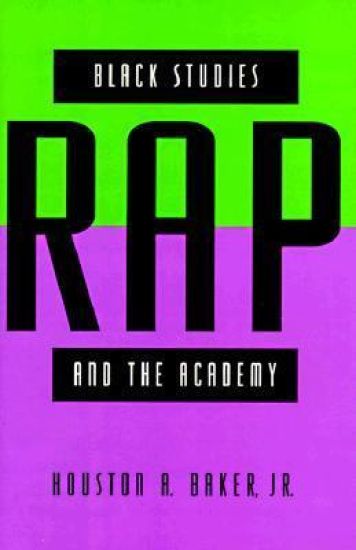
Black Studies, Rap, and the Academy

Black Studies, Rap, and the Academy

Houston A. Baker

University of Chicago Press
1995
nidottu
In this explosive book, Houston Baker takes stock of the current state of Black Studies in the university and outlines its responsibilities to the newest form of black urban expression—rap. A frank, polemical essay, Black Studies, Rap, and the Academy is an uninhibited defense of Black Studies and an extended commentary on the importance of rap. Written in the midst of the political correctness wars and in the aftermath of the Los Angeles riots, Baker's meditation on the academy and black urban expression has generated much controversy and comment from both ends of the political spectrum.
Black Studies, Rap, and the Academy

Black Studies, Rap, and the Academy

Houston A. Baker

University of Chicago Press
1993
sidottu
In this explosive book, Houston Baker takes stock of the current state of Black Studies in the university and outlines its responsibilities to the newest form of black urban expression--rap. A frank, polemical essay, Black Studies, Rap, and the Academy is an uninhibited defense of Black Studies and an extended commentary on the importance of rap. Written in the midst of the political correctness wars and in the aftermath of the Los Angeles riots, Baker's meditation on the academy and black urban expression has generated much controversy and comment from both ends of the political spectrum.
Workings of the Spirit

Workings of the Spirit

Houston A. Baker

University of Chicago Press
1993
nidottu
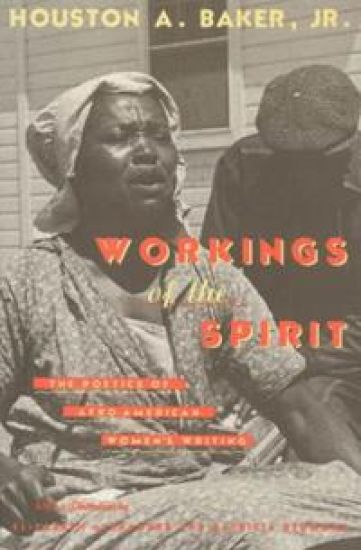
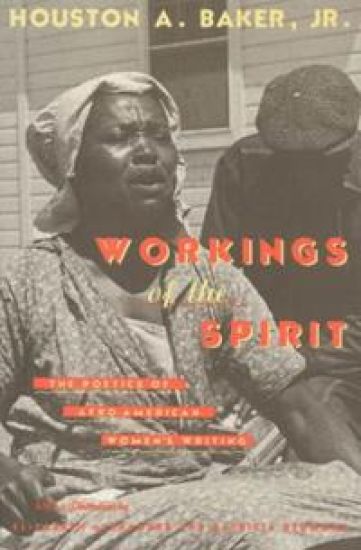
Turning on inspired interpretations of Zora Neale Hurston, Toni Morrison, and Ntozake Shange, Workings of the Spirit weighs current critical approaches to black women's writing against Baker's own explanation of the founding, theoretical state of Afro-American intellectual history."Brilliant, and tenderly riveted to gratitude as an indispensable facet of analysis, Houston Baker arrives, yet again, bearing the loveliest flowers of his devotion and delight: thank God he's here!"—June Jordan
Workings of the Spirit

Workings of the Spirit

Houston A. Baker

University of Chicago Press
1991
sidottu
Turning on inspired interpretations of Zora Neale Hurston, Toni Morrison, and Ntozake Shange, Workings of the Spirit weighs current critical approaches to black women's writing against Baker's own explanation of the founding, theoretical state of Afro-American intellectual history. "Brilliant, and tenderly riveted to gratitude as an indispensable facet of analysis, Houston Baker arrives, yet again, bearing the loveliest flowers of his devotion and delight: thank God he's here!"--June Jordan
Long Black Song

Long Black Song

Houston A. Baker

University of Virginia Press
1990
nidottu
Houston Baker maintains that black American culture, grounded in a unique historical experience, is distinct from any other, and that it has produced a body of literature that is equally and demonstrably unique in its sources, values, and modes of expression. He argues that black American literature is rooted in black folklore- animal tales, trickster slave tales, religious tales, folk songs, spirituals, and ballads- and that a knowledge of this tradition is essential to the understanding of any individual black author or work. To deomonstrate the continuity of this tradition, Baker examines themes that appear in folklore and persist throughout contemporary black literature. "Freedom and Apocalypse," for example, traces the idea that black Americans are a chosen people who will, by some violent means, overthrow the white man's tyranny.The essays culminate in an examination of the life and work of Richard Wright. Baker's treatment of Wright as a black American artist who recorded the black man's shift from an agrarian to an urban setting places Wright and the tradition of black literature and culture in a fresh perspective.
Blues, Ideology, and Afro-American Literature

Blues, Ideology, and Afro-American Literature

Houston A. Baker

University of Chicago Press
1987
nidottu
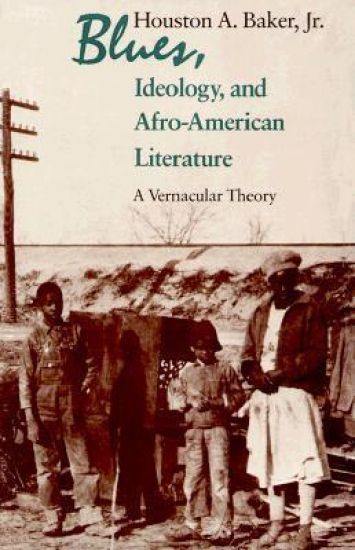
Relating the blues to American social and literary history and to Afro-American expressive culture, Houston A. Baker, Jr., offers the basis for a broader study of American culture at its "vernacular" level. He shows how the "blues voice" and its economic undertones are both central to the American narrative and characteristic of the Afro-American way of telling it.
The Journey Back

The Journey Back

Houston A. Baker

University of Chicago Press
1984
nidottu
"Professor Baker offers the richest analysis we have of black literature in its full cultural context. A superb literary critic, a sophisticated student of culture and society, Baker is himself a very talented writer, deeply engaged in the literary-cultural 'journey' he describes. The result is a major work of interdisciplinary scholarship and humanistic criticism which will remain for years to come an authoritative treatment of the subject. The Journey Back is a landmark not only in the study of black literature but in American studies in general. No one interested in our culture can afford to ignore it."—Sacvan Bercovitch, Columbia University