Kirjailija
Howard Gardner
Kirjat ja teokset yhdessä paikassa: 45 kirjaa, julkaisuja vuosilta 1982-2026, suosituimpien joukossa Leading Minds. Vertaile teosten hintoja ja tarkista saatavuus suomalaisista kirjakaupoista.
45 kirjaa
Kirjojen julkaisuhaarukka 1982-2026.
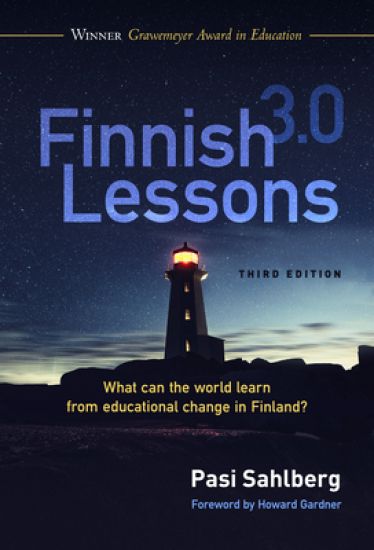
The first two editions of Finnish Lessons described how a small Nordic nation built a school system that provided access to a world-class education for all of its young people. Now available in 30 languages, this Grawemeyer Award–winning book continues to influence education policies and school practices around the globe. In this Third Edition, Pasi Sahlberg updates the story of how Finland sustains its exemplary educational performance, including how it responds to turbulent changes at home and throughout the world. Finnish Lessons 3.0 includes important new material about: teachers and teacher education teaching children with special needs the role of play in high-quality education Finland's responses to growing inequality, slipping international test scores, and the global pandemicIn the midst of national education reforms and global changes driven by public health crises and economic turbulence, Finnish Lessons 3.0 encourages teachers, students, and policymakers to think big and bold when they look for new solutions to improving their schools and entire education systems. This edition provides an even deeper dive into the present world of education in Finland in light of the most recent education statistics and international data, including PISA 2018, TIMSS 2016, and TALIS 2018.
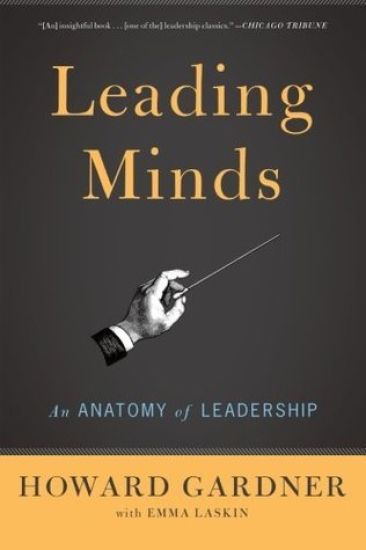
In Leading Minds , Gardner and his research associate at Harvard Project Zero, Emma Laskin, apply a cognitive lens to leadership, drawing on Gardner's ground-breaking work on intelligence and creativity to offer fascinating revelations about the minds of leaders and those who follow them. This reissue includes a new introduction by the author.
The author demonstrates that there exist many human "intelligences", common to all cultures - each with its own patterns of development and brain activity, and each different in kind from the others.
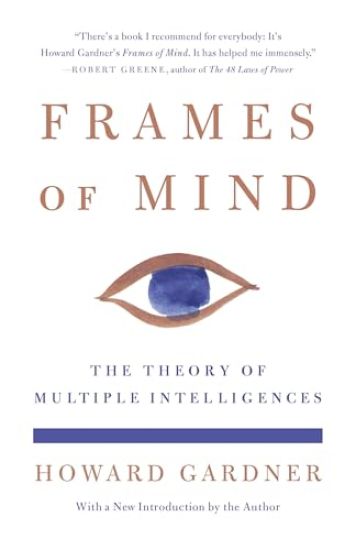
In this "brilliant" (New York Review of Books) and groundbreaking classic, a leading psychologist argues that there are many human intelligences When we call someone "intelligent," we are often referring to traits like their high SAT score, their performance on an IQ test, or their ability to perform in today's schools-which prioritize linguistic and mathematical abilities. Traits like these underlie most popular and psychological understanding of intelligence-but they tell a very incomplete story. In this revolutionary classic, now updated with a new introduction, psychologist and educator Howard Gardner offers a dramatically different account: that by limiting our understanding of intelligence to "school smarts," we miss the impressive range of talents and aptitudes that characterize the human species. Gardner instead posits the revolutionary theory of multiple intelligences, which encompasses musical ability to physical dexterity to deep knowledge of other persons-and of oneself-each of which merits the label "intelligence." In a penetrating update, Gardner's Frames of Mind celebrates all forms of intellect-the varieties found in various animal species, plants, and ever-more powerful instruments of artificial intelligence.
"A pioneering member of the Windrush generation of Caribbean migrants who marked the symbolic beginning of a multicultural Britain." - The GuardianRAF Veteran and Prince's Trust Awardee, Alford Dalrymple Gardner was one of the last living passengers to have travelled on the Empire Windrush. Now published in paperback, Finding Home is his stirring life story.On 22nd June 1948, the Empire Windrush sailed from Kingston, Jamaica, to harbour at Tilbury Docks. It carried 1,027 passengers and two stowaways, and more than two thirds of them were West Indies nationals. Alford Dalrymple Gardner was among them.Alford's story traverses both the uplifting highs and intolerant lows that West Indian migrants of his generation encountered upon travelling to Britain to forge out a life. From joining the British military during World War II to being forcibly deported back to Jamaica once it was won-only to come back to the UK when the government decided it needed him again-Alford witnessed milestone events of the 20th century that shaped the country he still lives in today.In the context of a supposedly 'post-Imperial' Britain where the lives of West Indian migrants hang precariously on the whims of the Home Office, Alford's heartening testimony is a celebration of those who endured hardships so that generations to come could call this place home.Today, Alford's portrait is a part of the Royal Collection Trust as commissioned by King Charles III in 2023, and he is a regular face and voice on the likes of The BBC, Channel 4, Sky News and more as his story continues to embody for all, the spirit of joyous resilience.
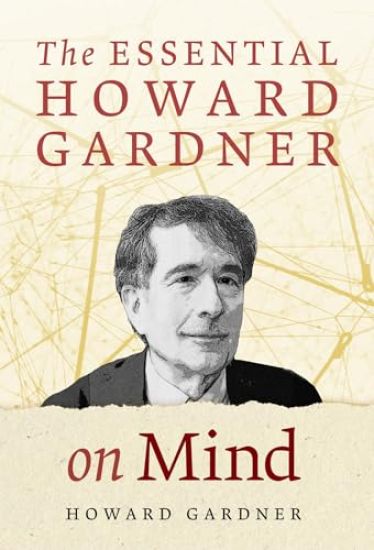
For over half a century, Howard Gardner has studied the mind in its various shapes, forms, and operations, culminating in his best-known work, the theory of multiple intelligences. This volume compiles his most compelling essays on the conduct, contours, and complexity of the human mind. After introducing the thinkers who had the greatest influence on him, Gardner traces the multiple aspects of mind that he has illuminated: the development of cognition, notably in the arts; the breakdown of cognition under condition of brain damage; a probing examination of human cognition at its highest levels, including creativity, leadership, artistry, and "good work" (work that is excellent, engaging, and ethical) in the professions; and, most recently, our extraordinary synthesizing capacities as human beings. This fascinating book captures in one place the long and compelling arc of a major scholar's contribution to understanding intelligence, thinking, and the development of the range of cognitive strengths.Book Features:Presents Howard Gardner's essential essays on mind over the course of his long and distinguished career.Traces the influences on Gardner's own thinking, among them psychologists Jean Piaget and Jerome Bruner, philosophers Susanne Langer and Nelson Goodman, neurologist Norman Geschwind, and anthropologist Claude Lévi-Strauss.Shows how an understanding of human cognitive capacities and processes manifests itself in several domains, such as artistry, leadership, creativity, and excellence in the professions.
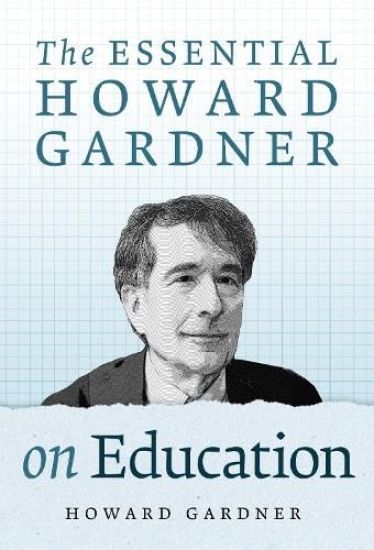
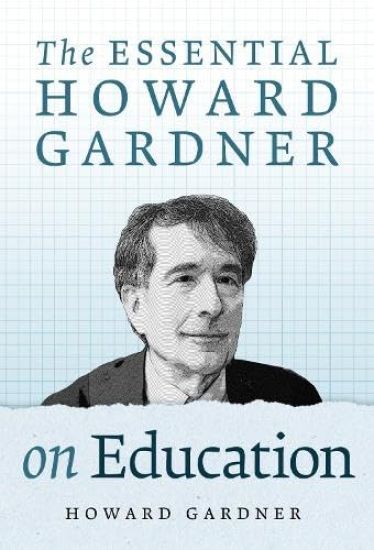
During his long and distinguished career as scholar and teacher, Howard Gardner has made vast contributions to our understanding of learning and how to create environments that support growth in all learners across their lifespans. In this compelling collection of his writings, Gardner lays out his principal ideas about education. While known primarily for his theory of multiple intelligences, Gardner's work in education includes substantial contributions in the areas of early childhood, K-12, and postsecondary education. In this volume, Gardner provides readers with a lifetime's worth of insight into creating purposeful curriculum, pedagogy, and assessment, ideas developed at Harvard Project Zero (where he has been a leader and principal investigator for over half a century), as well as in collaborations with educators from around the world, ranging from preschools in Reggio Emilia (Italy) to art classes in China. Gardner includes a timely focus on education in a global era, influenced by continuing technological innovations, yet still grounded in the pursuit of fundamental human values. This is the single-most comprehensive survey of Howard Gardner's writing and thinking about education.Book Features:Offers an unparalleled survey of the principal concerns of a major educational thinker in our times.Draws on decades of experience as a teacher, researcher, and public intellectual to present a vision of how quality education can best be achieved for all students. Reviews the principal strands of the world-renowned theory of multiple human intelligences, including timely explanations and updates.Makes the case for an education that foregrounds and cultivates an appreciation of truth, beauty, and goodness. Situates concepts and recommendations within the broader progressive tradition.Addresses authentic assessment, the importance of interdisciplinary thinking, the fostering of creativity, the capacity to synthesize powerfully and convincingly, the centrality of deep understanding, and--crucial for our times--the cultivation of an ethical mind.
On 24 May 1948, the Empire Windrush sailed from Kingston, Jamaica, to harbour at Tilbury Docks. It carried 1,027 passengers and some stowaways, and more than two thirds of them were West Indies nationals. On 22 June 1948 they disembarked onto the docks, Alford Dalrymple Gardner was among them. Alford's story traverses both the uplifting highs and intolerant lows that West Indian migrants of his generation encountered upon travelling to Britain to forge out a life. From joining the British military during World War II to returning to Jamaica once it was won-only to come back to the UK when the government decided it needed him again-Alford witnessed milestone events of the 20th century that shaped the country he still lives in today. In the context of a supposedly 'post-Imperial' Britain where the lives of West Indian migrants hang precariously on the whims of the Home Office, Alford's heartening testimony is a celebration of those who endured hardships so that generations to come could call this place home.
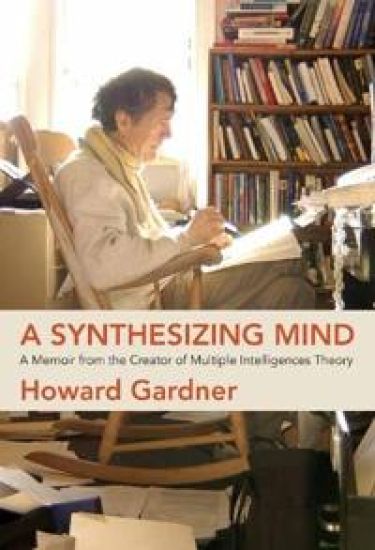
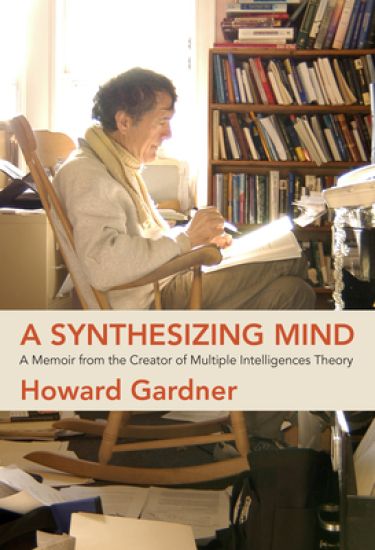
An authority on the human mind reflects on his intellectual development, his groundbreaking work, and different types of intelligences--including his own. Howard Gardner's Frames of Mind was that rare publishing phenomenon--a mind-changer. Widely read by the general public as well as by educators, this influential book laid out Gardner's theory of multiple intelligences. It debunked the primacy of the IQ test and inspired new approaches to education; entire curricula, schools, museums, and parents' guides were dedicated to the nurturing of the several intelligences. In his new book, A Synthesizing Mind, Gardner reflects on his intellectual development and his groundbreaking work, tracing his evolution from bookish child to eager college student to disengaged graduate student to Harvard professor.
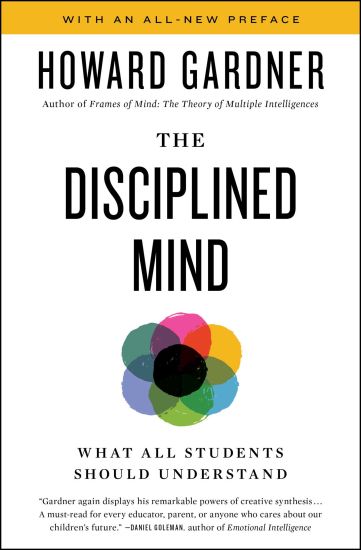
This brilliant and revolutionary theory of multiple intelligences reexamines the goals of education to support a more educated society for future generations. Howard Gardner's concept of multiple intelligences has been hailed as perhaps the most profound insight into education since the work of Jerome Bruner, Jean Piaget, and even John Dewey. Here, in The Disciplined Mind, Garner pulls together the threads of his previous works and looks beyond such issues as charters, vouchers, unions, and affirmative action in order to explore the larger questions of what constitutes an educated person and how this can be achieved for all students. Gardner eloquently argues that the purpose of K-12 education should be to enhance students' deep understanding of the truth (and falsity), beauty (and ugliness), and goodness (and evil) as defined by their various cultures. By exploring the theory of evolution, the music of Mozart, and the lessons of the Holocaust as a set of examples that illuminates the nature of truth, beauty, and morality, The Disciplined Mind envisions how younger generations will rise to the challenges of the future--while preserving the traditional goals of a "humane" education. Gardner's ultimate goal is the creation of an educated generation that understands the physical, biological, and societal world in their own personal context as well as in a broader world view. But even as Gardner persuasively argues the merits of his approach, he recognizes the difficulty of developing one universal, ideal form of education. In an effort to reconcile conflicting educational viewpoints, he proposes the creation of six different educational pathways that, when taken together, can satisfy people's concern for student learning and their widely divergent views about knowledge and understanding overall.
Howard Gardner's Frames of Mind was that rare publishing phenomenon--a mind-changer. Widely read by the general public as well as by educators, this influential book laid out Gardner's theory of multiple intelligences. It debunked the primacy of the IQ test and inspired new approaches to education; entire curricula, schools, museums, and parents' guides were dedicated to the nurturing of the several intelligences. In his new book, A Synthesizing Mind, Gardner reflects on his intellectual development and his groundbreaking work, tracing his evolution from bookish child to eager college student to disengaged graduate student to Harvard professor.
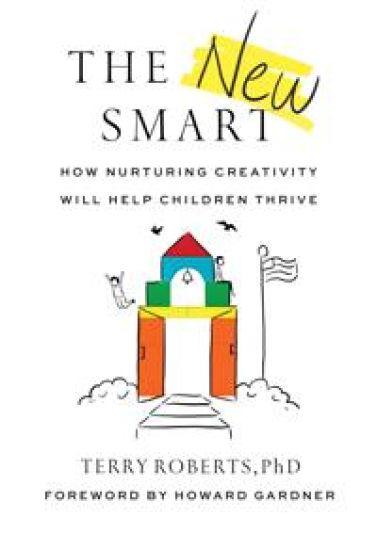
Who will thrive in the year 2050? The New Smart is a riveting study of the kinds of minds that will succeed in the 21st century. As it turns out, the key ingredient for all aspects of life is not traditional IQ but creativity. In Dr. Terry Roberts’ newest book he presents readers with a 21st century exploration into intelligence and creativity. The New Smart argues that the old notion of intelligence as a static quotient has ceased to mean much of value. Being smart, especially as it’s related to test scores and school grades, has less and less to do with success in contemporary life. Both these words and the ideas they represent are worn out. Our new age demands something much more fluid, much more resilient—much more creative. In this book, we ask who will thrive in the future? And by reframing the question, we arrive at the following profile of successful creators: • They will blend multiple intelligences in a way that might be described as synthetic or even symphonic • They will be ambitious and focused without being self-obsessed • They will value asynchrony and even seek it out • They will use their own marginality to generate novel perspective and new work • They will exhibit a steadfast resilience in all phases of life • They will be measured by what they produce over the course of their lives, not by any static notion of capacity or quotient The New Smart asks how we re-train ourselves and educate our children for a life that demands such creativity. It provides a clear roadmap away from standardized schools producing standardized minds and describes in detail why creative is The New Smart.
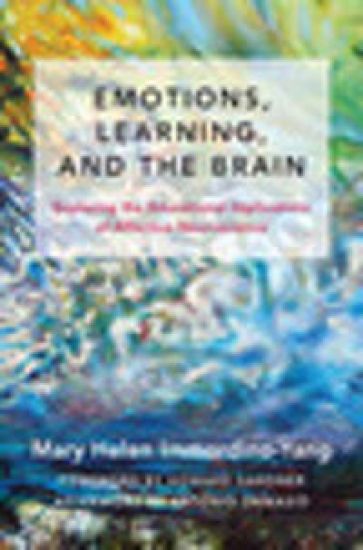
Emotions, Learning, and the Brain
Mary Helen Immordino-Yang; Antonio Damasio; Howard Gardner
WW Norton Co
2015
sidottu
A neuroscience revolution is making its way into classrooms around the country, changing the way we understand how emotions influence thinking and learning. This book makes available the most pertinent scientific information in a way classroom teachers can understand and apply.
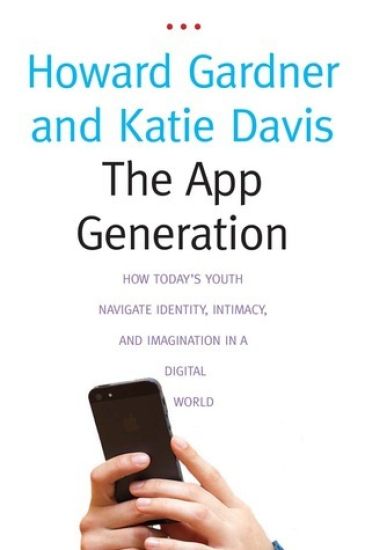
From the famed Harvard psychologist and an expert on the impact of digital media technologies, a riveting exploration of the power of apps to shape our young people—for better or for worse No one has failed to notice that the current generation of youth is deeply—some would say totally—involved with digital media. Professors Howard Gardner and Katie Davis name today’s young people The App Generation, and in this spellbinding book they explore what it means to be “app-dependent” versus “app-enabled” and how life for this generation differs from life before the digital era. Gardner and Davis are concerned with three vital areas of adolescent life: identity, intimacy, and imagination. Through innovative research, including interviews of young people, focus groups of those who work with them, and a unique comparison of youthful artistic productions before and after the digital revolution, the authors uncover the drawbacks of apps: they may foreclose a sense of identity, encourage superficial relations with others, and stunt creative imagination. On the other hand, the benefits of apps are equally striking: they can promote a strong sense of identity, allow deep relationships, and stimulate creativity. The challenge is to venture beyond the ways that apps are designed to be used, Gardner and Davis conclude, and they suggest how the power of apps can be a springboard to greater creativity and higher aspirations.