Kirjojen hintavertailu. Mukana 12 595 353 kirjaa ja 12 kauppaa.

Kirjailija

Howard Tumber

Kirjat ja teokset yhdessä paikassa: 6 kirjaa, julkaisuja vuosilta 2004-2015, suosituimpien joukossa Media at War. Vertaile teosten hintoja ja tarkista saatavuus suomalaisista kirjakaupoista.

6 kirjaa

Kirjojen julkaisuhaarukka 2004-2015.

Journalism and the End of Objectivity

Journalism and the End of Objectivity

Howard Tumber; Marina Prentoulis

Bloomsbury Academic
2015
nidottu
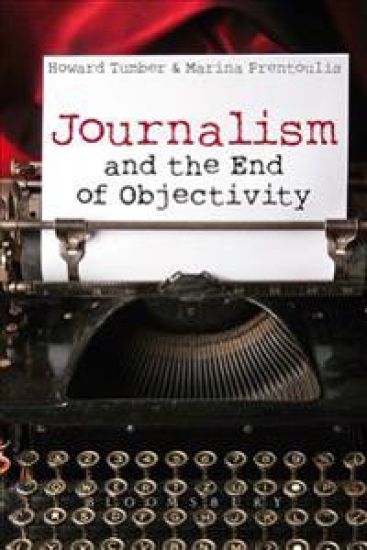
News objectivity has been debated for many decades. Yet the new communications environment, marked by technological, social and political innovations, invites us to re-examine objectivity. To what extent can news reporting be objective? What is objectivity? How is it affected by the rise of new forms of journalism, such as citizen and participatory journalism? Tumber and Prentoulis set out to re-work and define the concept and how it correlates to today's 'crisis' in journalism. Each of the key types of journalism are analysed, including literary journalism, public journalism, peace journalism, online journalism and journalism of attachment. The book opens up new insights and new understanding of the changing world of journalism. It will be important for all students and researchers interested in the sociology of journalism, news reporting and communication.
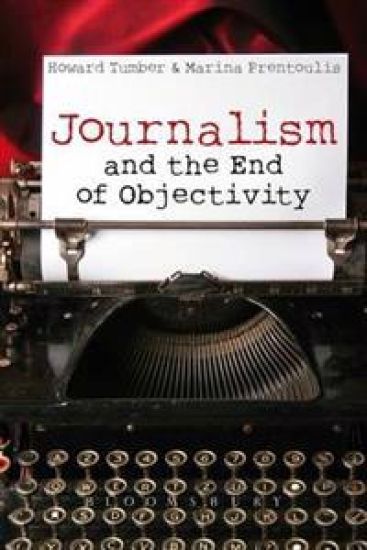
Journalism and the End of Objectivity

Journalism and the End of Objectivity

Howard Tumber; Marina Prentoulis

Bloomsbury Academic
2015
sidottu
News objectivity has been debated for many decades. Yet the new communications environment, marked by technological, social and political innovations, invites us to re-examine objectivity. To what extent can news reporting be objective? What is objectivity? How is it affected by the rise of new forms of journalism, such as citizen and participatory journalism? Tumber and Prentoulis set out to re-work and define the concept and how it correlates to today's 'crisis' in journalism. Each of the key types of journalism are analysed, including literary journalism, public journalism, peace journalism, online journalism and journalism of attachment. The book opens up new insights and new understanding of the changing world of journalism. It will be important for all students and researchers interested in the sociology of journalism, news reporting and communication.
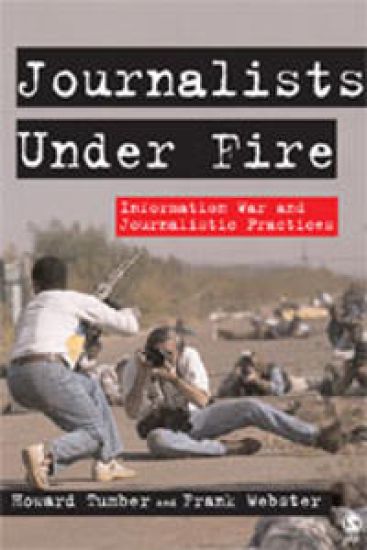
Journalists Under Fire

Journalists Under Fire

Howard Tumber; Frank Webster

SAGE Publications Inc
2006
sidottu
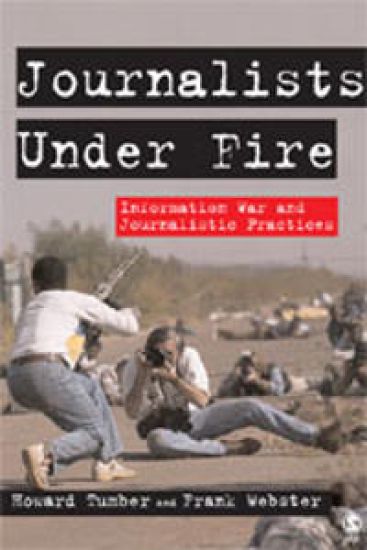
'...it will appeal not only to students of journalism and media but also to anyone interested in the world around them' - Marie Kinsey, Times Higher Education Supplement 'Professor Tumber weaves together traditional and topical themes to produce a comprehensive overview of the media's role at times of conflict' - Stewart Purvis, City University London 'Presents a vivid picture of what it’s like to be working as a journalist on the front line during a ‘modern’ war. Through the eyes of leading correspondents in the field the authors examine their experience and its impact on the audience, their profession and their own lives' - The Information Centre about Asylum and Refugees in the UK (ICAR) Journalists Under Fire is the first book to combine a conceptually audacious analysis of the changing nature of war with an empirically rich critical analysis of journalists who cover conflict. In Journalists Under Fire, authors Howard Tumber and Frank Webster explore questions about the information war and journalistic practices. Frontline correspondents play a key role in information war, but their position is considerably more ambiguous and ambivalent than in the epoch of industrial war. They play a central role in the presentation of what is often spectacle to audiences around the world whose actual experience of war is far removed from combat. In the era of multi-national journalism, of the internet and satellite videophone, the book highlights central features of media reporting in contemporary conflict. Drawing on over fifty lengthy interviews with frontline correspondents, the authors shed light on the motivations, fears and practices of those who work under conditions of journalism under fire. Journalists Under Fire is designed for undergraduate and postgraduate students and for scholars, academics and researchers in the fields of journalism, media and communication, Media Studies, sociology, international relations and war studies.
Journalists Under Fire

Journalists Under Fire

Howard Tumber; Frank Webster

SAGE Publications Inc
2006
nidottu
Combines a conceptual analysis of the changing nature of war with a critical analysis of journalists who cover conflict. This book explores questions about information war and journalistic practices. It highlights central features of media reporting in contemporary conflict.
Media at War

Media at War

Howard Tumber; Jerry Palmer

SAGE Publications Inc
2004
nidottu
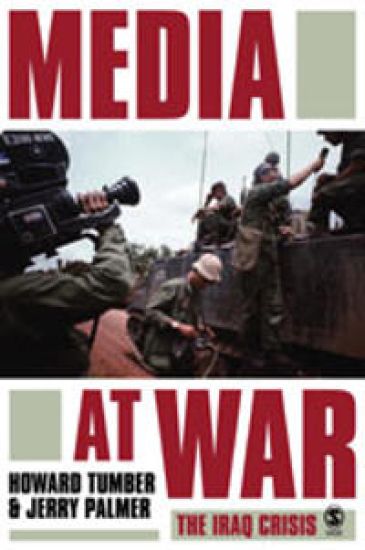
'Tumber and Palmer have provided an invaluable review of how journalists covered and reported the Iraq war and its aftermath. Their exhaustive research has resulted in an impressive analysis that makes this book essential reading' - John Owen, Executive Producer of News Xchange and Visiting Professor of Journalism, City University 'This is a meticulously researched book that lays bare the way the war was reported. Decide for yourself whether the media 'embeds' - of whom I was one - were the world's eyes and ears inside the military, or merely the puppets of the Pentagon and the Ministry of Defence in London' - Ben Brown, BBC 'Media at War offers insights into the ways in which media at war inevitably become participants in both the military and the political wars' - Professor Michael Gurevitch, University of Maryland International media coverage of the war in Iraq provoked public scrutiny as well debate amongst journalists themselves. Media at War offers a critical overview of the coverage in the context of other preceding wars, including the first Gulf War, and opens up the debate on the key questions that emerged during the crisis. For example, - What did we actually gain from 'live, on the spot' reporting? - Were journalists adequately trained and protected? - How compromised were the so-called 'embedded' journalists? Tumber and Palmer's analysis covers both the pre-war and post war phase, as well as public reaction to these events, and as such provides an invaluable framework for understanding how the media and news organisations operated during the Iraq Crisis.
Media at War

Media at War

Howard Tumber; Jerry Palmer

SAGE Publications Inc
2004
sidottu
'Tumber and Palmer have provided an invaluable review of how journalists covered and reported the Iraq war and its aftermath. Their exhaustive research has resulted in an impressive analysis that makes this book essential reading' - John Owen, Executive Producer of News Xchange and Visiting Professor of Journalism, City University 'This is a meticulously researched book that lays bare the way the war was reported. Decide for yourself whether the media 'embeds' - of whom I was one - were the world's eyes and ears inside the military, or merely the puppets of the Pentagon and the Ministry of Defence in London' - Ben Brown, BBC 'Media at War offers insights into the ways in which media at war inevitably become participants in both the military and the political wars' - Professor Michael Gurevitch, University of Maryland International media coverage of the war in Iraq provoked public scrutiny as well debate amongst journalists themselves. Media at War offers a critical overview of the coverage in the context of other preceding wars, including the first Gulf War, and opens up the debate on the key questions that emerged during the crisis. For example, - What did we actually gain from 'live, on the spot' reporting? - Were journalists adequately trained and protected? - How compromised were the so-called 'embedded' journalists? Tumber and Palmer's analysis covers both the pre-war and post war phase, as well as public reaction to these events, and as such provides an invaluable framework for understanding how the media and news organisations operated during the Iraq Crisis.