

Kirjailija
Howard White
Kirjat ja teokset yhdessä paikassa: 21 kirjaa, julkaisuja vuosilta 1991-2024, suosituimpien joukossa The Accidental Airline. Vertaile teosten hintoja ja tarkista saatavuus suomalaisista kirjakaupoista.
21 kirjaa
Kirjojen julkaisuhaarukka 1991-2024.

Howard White says, "Some poets try to capture rare butterflies in their writing. The things I go after are more like houseflies." The comparison does him no favours but it is true inasmuch as his writing is notably unpretentious and concerned with common and everyday realities. That is, if your everyday realities include such things as sinking docks, driving bulldozers, arguing about sand, baseball, pouring without a funnel, dancing in the street, thought guns, coition, brainfarts, not sending sympathy cards, not shooting your father, and sea otters. In this book he also writes quite a bit about writing, not so much the kind of personal writing he does in this book so much as that he has done as an "accidental chronicler" for "a galaxy of voices" he acted as a "conduit" for in his work as a memoirist and publisher.

Real Dads Real Leaders: Over 40 Stories to Help Men Be Better Dads.
Howard White
Independently Published
2018
nidottu
Real Dads Real Leaders is a compilation of over 40 stories by fathers and daughters about lessons learned that they still utilize today. Real Dad Real Leaders is designed to help men be better dads. It is through the lessons learned in these short stories and the implementations of the growth thoughts at the end of each story men will grow to be better dads. There are stories of triumph, neglect, good times, bad times, love and lack. Just remember that in all of our stories there are lessons to be learned. Real Dads Real Leaders is must for any DAD in your life.

Impact Evaluation of Development Interventions
Howard White; David A. Raitzer;
Asian Development Bank
2017
nidottu
This book offers guidance on the principles, methods, and practice of impact evaluation. It contains material for a range of audiences, from those who may use or manage impact evaluations to applied researchers.Impact evaluation is an empirical approach to estimating the causal effects of interventions, in terms of both magnitude and statistical significance. Expanded use of impact evaluation techniques is critical to rigorously derive knowledge from development operations and for development investments and policies to become more evidence-based and effective. To help backstop more use of impact evaluation approaches, this book introduces core concepts, methods, and considerations for planning, designing, managing, and implementing impact evaluation, supplemented by examples. The topics covered range from impact evaluation purposes to basic principles, specific methodologies, and guidance on field implementation. It has materials for a range of audiences, from those who are interested in understanding evidence on “what works” in development, to those who will contribute to expanding the evidence base as applied researchers.

"Raincoast Chronicles," "Spilsbury's Coast," "The Accidental Airline," "A Hard Man to Beat," "The Men There Were Then." . . and now another one to top off the list. "Writing in the Rain" features the same fascination with British Columbia and the same ability to bring its stories to life that have brought Howard White numerous awards and accolades, including the Canadian Media Club Award for best feature and the Canadian Historical Association Award for Regional History.Here, among others, are stories about the magic of the tides; about Minstrel Island, one-time logging hub turned ghost village; the perils of roaring down the Sunshine Coast Highway in a decrepit Volvo, and of navigating the same highway in a dumptruck full of fish guts, all told with Howard White's wit, intelligence and insight.

British Columbia's Sunshine Coast is a sublimely scenic 160-kilometre stretch of waterfront between Howe Sound and Desolation Sound, reached by a 40-minute ferry ride from West Vancouver. Join Howard White, award-winning humorist and lifelong coast denizen, on a guided tour from Gibsons, where the long-running TV series The Beachcombers was filmed, to Powell River, the largest community in the region. Along the way, sojourn in Roberts Creek, whose patron saint, the irrepressible Harry Roberts, invented the name "Sunshine Coast." Stop over in Sechelt, named for the Shi'sha'lh or Sechelt Nation who once occupied the bulk of the Sunshine Coast territory. Follow the seriously twisty highway to visit Pender Harbour, where some local fishing folk still do their Saturday shopping in kicker boats. Drop anchor in Princess Louisa Inlet, and discover why the likes of John Barrymore and Andrew Carnegie once came to marvel at its canyon-like splendour. With paintings by local artists, poems by local poets, tall tales by local characters, miracles by Sechelt medicine men, tips on predicting the weather, a fair share of risqu gossip about historical figures, a good mix of bold opinions and hard facts and over 150 beautiful colour photographs, The Sunshine Coast is a book to be treasured, not just by residents and visitors, but by anyone with an eye for fascinating places. First published in 1996, this fully revised edition contains updated text and all new photographs of coast life from the area's most talented photographers including Dean van't Schip and Keith Thirkell.
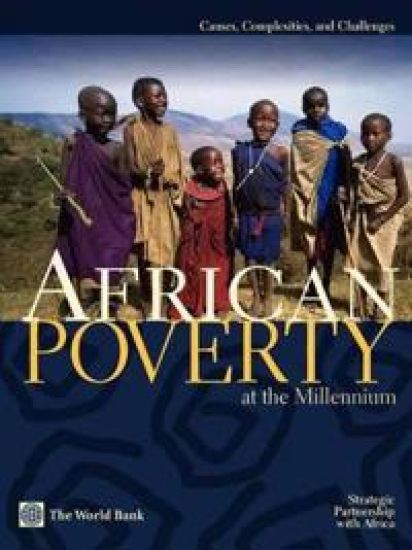
Poverty is a large and growing problem in Africa resulting in an immense amount of avoidable suffering, foreshortened lives, frustrated potentials, and joyless existences. The poverty trap is more than just an economic phenomenon but a social phenomenon as well. African Poverty at the Millennium: Causes, Complexities, and Challenges is confined to the sub-Saharan region of Africa. The analysis found in Part I of this book, emphasizes the many-sided nature of poverty and the importance of going beyond generalizations about the poor. Part II looks at the various causes of poverty in Africa, stressing the powerful ill-effects of a combination of sluggish past economic growth and large, possibly widening, inequalities. It also draws attention to the strength of the social and political factors contributing to poverty. Part III outlines an anti-poverty strategy, highlighting the necessity for an inclusive and far-reaching approach, on the basis of joint action by concerned governments and donors. The poor in Africa are triply disadvantaged. Firstly, there is a widening international gap as African social indicators lag behind the rest of the world, partly as a result of poor growth. Secondly, by Africa's poor performance in turning income to social welfare. Thirdly, by national disparities in health and education between the poor and non-poor.
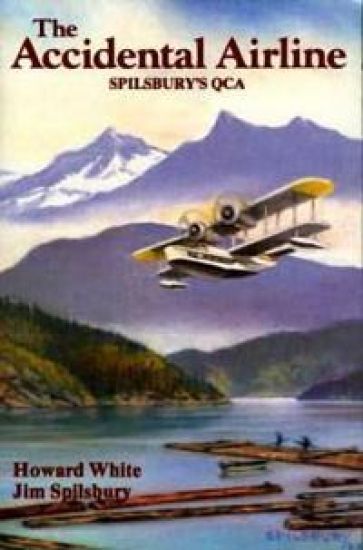
His books with Howard White made a bestselling author out of Jim Spilsbury - the BC coast's legendary pioneer, painter, photographer, aviator, inventor and raconteur. Now all three volumes of the Spilsbury saga are available in trade paperback Jim Spilsbury bought an airplane in 1943, when wartime restrictions prevented the use of his boat to visit the upcoast camps and settlements where he repaired radios. From this innocent beginning grew Queen Charlotte Airlines, and when he sold the business to Pacific Western Airlines twelve years later, it was the third largest airline in Canada.This is the history of the accidental airline and those incredible years of flying, growing, and scrambling. There's the trip from Vancouver to the Queen Charlottes and back that took eleven days and three airplanes; the Waco covered with lamp-black, inside and out; the fatally jinxed Stranraer; and the twelve-gallon ice cream sundae in the muskeg. There are tales of mercy flights, tragic crashes, and miraculous rescues and escapes, and many entertaining details of the luck, business skill, and hard work needed to keep an airline aloft.Affectionately known as "Queer Collection of Aircraft" by the loggers, pregnant homesteaders and touring 1950's movie stars who rode its ungainly "Flying Boxcars" through rain and fog, QCA beat out the competition to reign for one glorious decade as the queen of the booming post-war coast. There's never been an airline quite like the QCA and there's never been a flying story quite like The Accidental Airline.
This collection of poems is steeped in the west coast tradition of storytelling and mythmaking, a tradition Howard White has nurtured for two decades. The poems are as real, down-to-earth and funny as White's award-winning prose.He admits to having a messy yard, describes city street crazies and the late-night "undermind," teaches his boys how to hammer, and sits down to dinner with fancy people. He takes the trouble to figure out that if Canada's unemployed people were laid head to toe, they'd stretch from Vancouver to Winnipeg. His poems are rich with west coast denizens-loggers, fishermen, executives and industrialists, slugs, ravens, loons, and even Old Scabby Mackay, who got his nickname for breaking one strike in 1937 and who says, "We Canadians, we gotta be the stupidest damn race of people that ever walked.""His work is as refreshing, as spirited and melodious as a vibrant April shower. White's style is always crisp, fresh and ebullient."-Virginia Aulin, Vancouver Sun"Howard White is a pure delight to read."-George Melnyk, Calgary Herald"White's is a major coastal voice. . . the best of his work is about seeing."-Charles Lillard, Victoria Times-Colonist
For Information Specialists
Howard White; Marcia Bates; Patrick Wilson
Praeger Publishers Inc
1992
nidottu
For Information Specialists
Howard White; Marcia Bates; Patrick Wilson
Praeger Publishers Inc
1992
sidottu

Beautifully illustrated by BC folk hero Bus Griffiths who wrote and illustrated the popular comic book Now You're Logging, Patrick and the Backhoe is a classic story of decency and guts triumphing over arrogance and greed.Patrick lives in a little town on the side of a high mountain. Patrick's mother and father own the town bookstore, and his brother Simon is a bookworm. Patrick can't concentrate on books. The only book he likes is Mike Mulligan and his Steam Shovel.Although no great scholar, Patrick does have a talent with levers and knobs and switches. He likes to take things apart and climb up on things. "Once when he was quite small he learned how to make the door of the car work when Dad was driving, and he fell out on his noggin."Patrick has a special friendship with his Grampa who operates an old backhoe which Patrick loves "because it has more levers and knobs and buttons on it than anything in the world." Occasionally, Patrick is allowed to ride on the backhoe with Grampa.One day it begins to rain and doesn't stop. "The creek rose higher and surged under the bridge. Then a big boulder came loose and rolled down the hill, plugging the hole under the bridge. The raging waters of Cypress Creek backed up and began to wash away the land on which the town was built." The only thing that can move that boulder is Grampa's backhoe and when Grampa gets stuck under the bridge it's up to Patrick to save the town.

Econometrics and Data Analysis for Developing Countries 2nd edition
Chandan Mukherjee; Howard White; Marc Wuyts; Christopher Adam
Routledge
2024
nidottu

Econometrics and Data Analysis for Developing Countries
Chand Mukherjee; Howard White; Marc Wuyts
Routledge
2014
sidottu

Bill White (1905-2001) was an itinerant ranch hand and trapper, a member of the RCMP and an Arctic traveller, but he was best known for his work as the head of the Vancouver Labour Council and president of the Marine Workers and Boilermakers Union, the largest local union in Canada in his time. It was a position he held for eleven straight years during WWII, the heyday of the West Coast shipbuilding industry. Known as "Bareknuckle Bill," White was fierce and unrelenting in his condemnation of the companies and governments that refused to treat their workers like human beings. He personally fought one of the first big right-to-work cases in BC history, all the way to the Privy Council of England. From the scaffolds and docks of the shipyards to the battleground of the bargaining table, White's stories about the struggle for labour and human rights in Vancouver in the '40s and '50s make for harrowing and fascinating reading. A Hard Man to Beat not only covers all the major labour events of the period, but brings to life the personality of the man, Bill White, in his own colourful--and sometimes expletive-filled--language. Author Howard White spent years of intensive research and worked closely with Bill to create this oral history, which sold out its first printing in two days when it was first published in 1983. A Hard Man to Beat is one of ten Vancouver 125 Legacy books, an initiative created by the City of Vancouver, the Office of Vancouver's Poet Laureate Brad Cran and the Association of Book Publishers of BC to bring back into print a collection of books to celebrate Vancouver's 125th anniversary.
The Millennium Development Goals accepted by the UN in 2000 are, along with the targets set by the OECD in 1996 the subject of this expertly written book. It asks and answers questions such as:Is development achievable in the time frames given? How useful were the goals in the first place? How far have we come in solving the aching problems of the developing world? This impressive collection featuring an array of respected contributors and a preface from Mark Malloch Brown of the UNDP, will be required reading among development economists and those interested in development studies more generally. Perhaps more importantly, the lessons learned from this book shall need to be understood and acted upon by policy makers at both national and international levels.
The Millennium Development Goals accepted by the UN in 2000 are, along with the targets set by the OECD in 1996 the subject of this expertly written book. Is development achievable in the time frames given? How useful were the goals in the first place? How far have we come in solving the aching problems of the developing world? These questions and more and asked and answered.This impressive collection featuring an array of respected contributors and a preface from Mark Malloch Brown of the UNDP, will be required reading among development economists and those interested in development studies more generally. Perhaps more importantly, the lessons learned from this book shall need to be understood and acted upon by policy makers at both national and international levels.
This important contribution to the literature on development economics analyses the effectiveness of programme aid - i.e. aid that is not given in the form of projects. Using real world examples from countries such as Nicaragua, Tanzania, and Vietnam this book deals with one of the core issues in development economics today.
Econometrics and Data Analysis for Developing Countries
Chandan Mukherjee; Howard White; Marc Wuyts
Routledge
1997
sidottu
Getting accurate data on less developed countries has created great problems for studying these areas. Yet until recently students of development economics have relied on standard econometrics texts, which assume a Western context. Econometrics and Data Analysis for Developing Countries solves this problem. It will be essential reading for all advanced students of development economics.
Econometrics and Data Analysis for Developing Countries
Chandan Mukherjee; Howard White; Marc Wuyts
Routledge
1997
nidottu
Getting accurate data on less developed countries has created great problems for studying these areas. Yet until recently students of development economics have relied on standard econometrics texts, which assume a Western context. Econometrics and Data Analysis for Developing Countries solves this problem. It will be essential reading for all advanced students of development economics.