Kirjojen hintavertailu. Mukana 12 595 353 kirjaa ja 12 kauppaa.

Kirjailija

Huajin Tang

Kirjat ja teokset yhdessä paikassa: 4 kirjaa, julkaisuja vuosilta 2007-2018, suosituimpien joukossa Neural Networks: Computational Models and Applications. Vertaile teosten hintoja ja tarkista saatavuus suomalaisista kirjakaupoista.

4 kirjaa

Kirjojen julkaisuhaarukka 2007-2018.

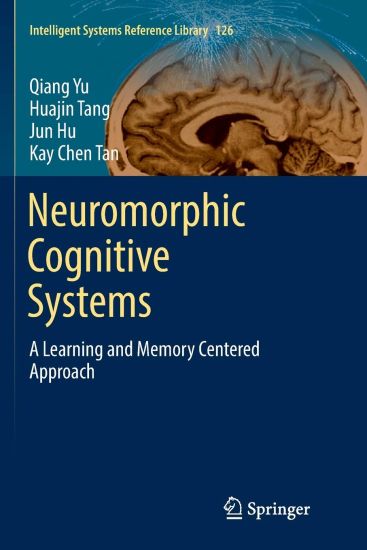
Neuromorphic Cognitive Systems

Neuromorphic Cognitive Systems

Qiang Yu; Huajin Tang; Jun Hu; Kay Tan Chen

Springer International Publishing AG
2018
nidottu
This book presents neuromorphic cognitive systems from a learning and memory-centered perspective. It illustrates how to build a system network of neurons to perform spike-based information processing, computing, and high-level cognitive tasks. It is beneficial to a wide spectrum of readers, including undergraduate and postgraduate students and researchers who are interested in neuromorphic computing and neuromorphic engineering, as well as engineers and professionals in industry who are involved in the design and applications of neuromorphic cognitive systems, neuromorphic sensors and processors, and cognitive robotics. The book formulates a systematic framework, from the basic mathematical and computational methods in spike-based neural encoding, learning in both single and multi-layered networks, to a near cognitive level composed of memory and cognition. Since the mechanisms for integrating spiking neurons integrate to formulate cognitive functions as in the brain are little understood, studies of neuromorphic cognitive systems are urgently needed. The topics covered in this book range from the neuronal level to the system level. In the neuronal level, synaptic adaptation plays an important role in learning patterns. In order to perform higher-level cognitive functions such as recognition and memory, spiking neurons with learning abilities are consistently integrated, building a system with encoding, learning and memory functionalities. The book describes these aspects in detail.
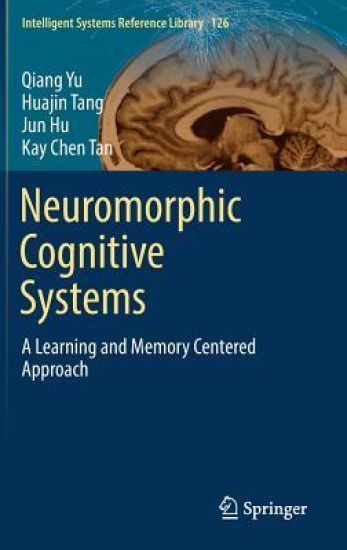
Neuromorphic Cognitive Systems

Neuromorphic Cognitive Systems

Qiang Yu; Huajin Tang; Jun Hu; Kay Tan Chen

Springer International Publishing AG
2017
sidottu
This book presents neuromorphic cognitive systems from a learning and memory-centered perspective. It illustrates how to build a system network of neurons to perform spike-based information processing, computing, and high-level cognitive tasks. It is beneficial to a wide spectrum of readers, including undergraduate and postgraduate students and researchers who are interested in neuromorphic computing and neuromorphic engineering, as well as engineers and professionals in industry who are involved in the design and applications of neuromorphic cognitive systems, neuromorphic sensors and processors, and cognitive robotics. The book formulates a systematic framework, from the basic mathematical and computational methods in spike-based neural encoding, learning in both single and multi-layered networks, to a near cognitive level composed of memory and cognition. Since the mechanisms for integrating spiking neurons integrate to formulate cognitive functions as in the brain are little understood, studies of neuromorphic cognitive systems are urgently needed. The topics covered in this book range from the neuronal level to the system level. In the neuronal level, synaptic adaptation plays an important role in learning patterns. In order to perform higher-level cognitive functions such as recognition and memory, spiking neurons with learning abilities are consistently integrated, building a system with encoding, learning and memory functionalities. The book describes these aspects in detail.
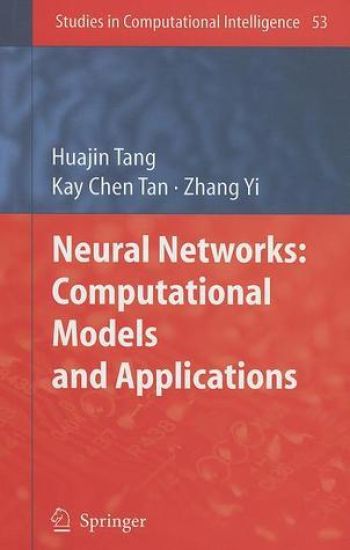
Neural Networks: Computational Models and Applications

Neural Networks: Computational Models and Applications

Huajin Tang; Kay Chen Tan; Zhang Yi

Springer-Verlag Berlin and Heidelberg GmbH Co. K
2010
nidottu
Neural Networks: Computational Models and Applications covers a wealth of important theoretical and practical issues in neural networks, including the learning algorithms of feed-forward neural networks, various dynamical properties of recurrent neural networks, winner-take-all networks and their applications in broad manifolds of computational intelligence: pattern recognition, uniform approximation, constrained optimization, NP-hard problems, and image segmentation. By presenting various computational models, this book is developed to provide readers with a quick but insightful understanding of the broad and rapidly growing areas in the neural networks domain. Besides laying down fundamentals on artificial neural networks, this book also studies biologically inspired neural networks. Some typical computational models are discussed, and subsequently applied to objection recognition, scene analysis and associative memory. The studies of bio-inspired models have important implications in computer vision and robotic navigation, as well as new efficient algorithms for image analysis. Another significant feature of the book is that it begins with fundamental dynamical problems in presenting the mathematical techniques extensively used in analyzing neurodynamics, thus allowing non-mathematicians to develop and apply these analytical techniques easily. Written for a wide readership, engineers, computer scientists and mathematicians interested in machine learning, data mining and neural networks modeling will find this book of value. This book will also act as a helpful reference for graduate students studying neural networks and complex dynamical systems.
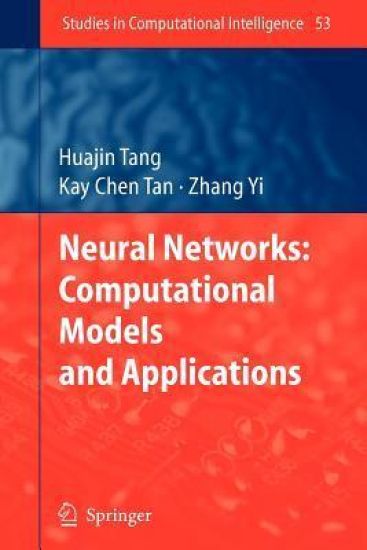
Neural Networks: Computational Models and Applications

Neural Networks: Computational Models and Applications

Huajin Tang; Kay Chen Tan; Zhang Yi

Springer-Verlag Berlin and Heidelberg GmbH Co. K
2007
sidottu
Neural Networks: Computational Models and Applications covers a wealth of important theoretical and practical issues in neural networks, including the learning algorithms of feed-forward neural networks, various dynamical properties of recurrent neural networks, winner-take-all networks and their applications in broad manifolds of computational intelligence: pattern recognition, uniform approximation, constrained optimization, NP-hard problems, and image segmentation. By presenting various computational models, this book is developed to provide readers with a quick but insightful understanding of the broad and rapidly growing areas in the neural networks domain. Besides laying down fundamentals on artificial neural networks, this book also studies biologically inspired neural networks. Some typical computational models are discussed, and subsequently applied to objection recognition, scene analysis and associative memory. The studies of bio-inspired models have important implications in computer vision and robotic navigation, as well as new efficient algorithms for image analysis. Another significant feature of the book is that it begins with fundamental dynamical problems in presenting the mathematical techniques extensively used in analyzing neurodynamics, thus allowing non-mathematicians to develop and apply these analytical techniques easily. Written for a wide readership, engineers, computer scientists and mathematicians interested in machine learning, data mining and neural networks modeling will find this book of value. This book will also act as a helpful reference for graduate students studying neural networks and complex dynamical systems.