Kirjojen hintavertailu. Mukana 12 595 353 kirjaa ja 12 kauppaa.

Kirjailija

Hugh Gusterson

Kirjat ja teokset yhdessä paikassa: 3 kirjaa, julkaisuja vuosilta 1998-2017, suosituimpien joukossa Nuclear Rites. Vertaile teosten hintoja ja tarkista saatavuus suomalaisista kirjakaupoista.

3 kirjaa

Kirjojen julkaisuhaarukka 1998-2017.

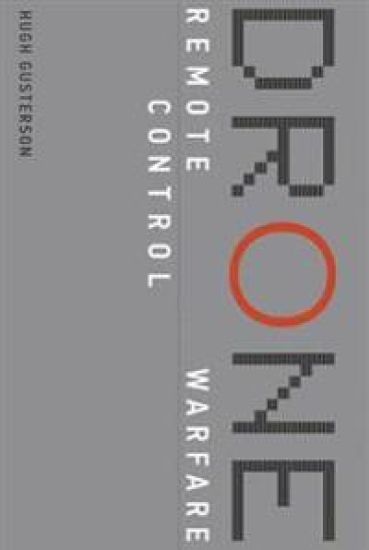
Drone

Drone

Hugh Gusterson

MIT Press
2017
pokkari
Drone warfare described from the perspectives of drone operators, victims of drone attacks, anti-drone activists, international law, military thinkers, and others."[A] thoughtful examination of the dilemmas this new weapon poses."-Foreign AffairsDrones are changing the conduct of war. Deployed at presidential discretion, they can be used in regular war zones or to kill people in such countries as Yemen and Somalia, where the United States is not officially at war. Advocates say that drones are more precise than conventional bombers, allowing warfare with minimal civilian deaths while keeping American pilots out of harm's way. Critics say that drones are cowardly and that they often kill innocent civilians while terrorizing entire villages on the ground. In this book, Hugh Gusterson explores the significance of drone warfare from multiple perspectives, drawing on accounts by drone operators, victims of drone attacks, anti-drone activists, human rights activists, international lawyers, journalists, military thinkers, and academic experts.Gusterson examines the way drone warfare has created commuter warriors and redefined the space of the battlefield. He looks at the paradoxical mix of closeness and distance involved in remote killing: is it easier than killing someone on the physical battlefield if you have to watch onscreen? He suggests a new way of understanding the debate over civilian casualties of drone attacks. He maps "ethical slippage" over time in the Obama administration's targeting practices. And he contrasts Obama administration officials' legal justification of drone attacks with arguments by international lawyers and NGOs.
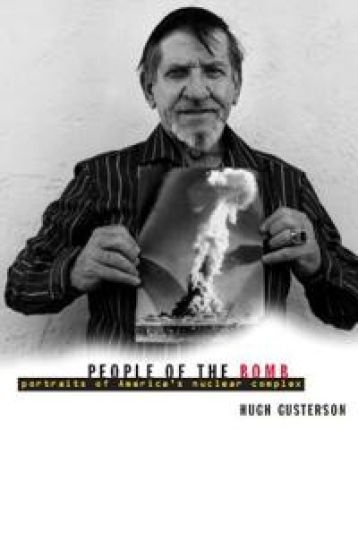
People of the Bomb

People of the Bomb

Hugh Gusterson

University of Minnesota Press
2004
nidottu
How the American military-industrial complex has invaded our consciousness to create consent for its programs“We have had the bomb on our minds since 1945. It was first our weaponry and then our diplomacy, and now it’s our economy. How can we suppose that something so monstrously powerful would not, after forty years, compose our identity?” -E. L. DoctorowThis book tells the story of how-like it or not, know it or not-we have become “the people of the bomb.” Integrating fifteen years of field research at weapons laboratories across the United States with discussion of popular movies, political speeches, media coverage of war, and the arcane literature of defense intellectuals, Hugh Gusterson shows how the military-industrial complex has built consent for its programs and, in the process, taken the public “nuclear.”People of the Bomb mixes empathic and vivid portraits of individual weapons scientists with hard-hitting scrutiny of defense intellectuals’s inability to foresee the end of the Cold War, government rhetoric on missile defense, official double standards about nuclear proliferation, and pork barrel politics in the nuclear weapons complex. Overall, the book assembles a disturbing picture of the ways in which the military-industrial complex has transformed our public culture and personal psychology in the half century since we entered the nuclear age.
Nuclear Rites

Nuclear Rites

Hugh Gusterson

University of California Press
1998
pokkari
Based on fieldwork at the Lawrence Livermore National Laboratory - the facility that designed the neutron bomb and the warhead for the MX missile - "Nuclear Rites" takes the reader deep inside the top-secret culture of a nuclear weapons lab. Exploring the scientists' world of dark humor, ritualized secrecy, and disciplined emotions, anthropologist Hugh Gusterson uncovers the beliefs and values that animate their work. He discovers that many of the scientists are Christians, deeply convinced of the morality of their work, and a number are liberals who opposed the Vietnam War and the Reagan-Bush agenda. Gusterson also examines the anti-nuclear movement, concluding that the scientists and protesters are alike in surprising ways, with both cultures reflecting the hopes and anxieties of an increasingly threatened middle class. In a lively, wide-ranging account, Gusterson analyzes the ethics and politics of laboratory employees, the effects of security regulations on the scientists' private lives, and the role of nuclear tests - beyond the obvious scientific one - as rituals of initiation and transcendence.He shows how the scientists learn to identify in an almost romantic way with the power of the machines they design - machines they do not fear. In the 1980s the 'world behind the fence' was thrown into crisis by massive anti-nuclear protests at the gates of the lab and by the end of the Cold War. Gusterson links the emergence of the anti-nuclear movement to shifting gender roles and the development of postindustrial capitalism.