Kirjojen hintavertailu. Mukana 12 459 402 kirjaa ja 12 kauppaa.
Kirjailija
Hugh Harkins
Kirjat ja teokset yhdessä paikassa: 61 kirjaa, julkaisuja vuosilta 2012-2021, suosituimpien joukossa Ilya Muromets & The Russian Knight. Vertaile teosten hintoja ja tarkista saatavuus suomalaisista kirjakaupoista.
Detailed history of the Battle of Kilsyth fought between the Scottish Covenanter and Scottish Royalist armies in Scotland during the war of the three kingdoms
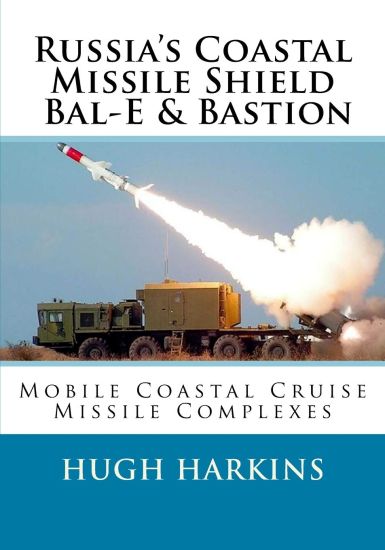
The Bal-E and Bastion mobile coastal missile complexes, introduced to service with the Russian Federation in the second decade of the twenty first century, are new generation weapon systems designed to deny access to a potential enemy - in particular the NATO (North Atlantic Treaty Organisation) alliance, which is perceived as the main threat to the Russian Federation - to Russia's vast coastlines, sea lines of communications, ports and naval bases. Bal-E and Bastion capabilities are complementary to each other and form two of the three surface based medium range and inner elements of Russia's overall defence in depth policy to counter NATO land attack cruise missile armed warships, aircraft carrier battle groups and amphibious assault groups threatening Russia's territorial integrity.This volume sets out to detail the Bal-E and Bastion complexes in domestic Russian service and extends to the stationary Bastion complex that has been developed and tested, but, as of 2018, remains un-fielded. All technical data relating to the respective weapon systems and their components have been provided by the respective design bureaus and manufacturers, as has much of the imagery and graphics, with additional impute from the MODRF (Ministry of Defense of the Russian Federation). Whilst the use of an 'E' at the end of a specific Russian Federation weapon system designation often denotes an export standard, the use of the Bal-E designation is employed by the MODRF in reference to the domestic standard.This revised volume replaces the volume published in 2018. It is generally identical except in respect to the calculation of Bastion complex missile flight time. The value for the entire flight duration is included, whereas the 2018 volume carried only the value for the terminal flight phase.
Soviet Mixed Power Experimental Fighter Aircraft Piston-Liquid Propellant Rocket Engine/Piston-Ramjet/Piston-Pulsejet & Piston-Compressor Jet Engine Designs of the 1940's The intent of this research paper is to provide an overview of the Soviet experimental fighter aircraft programs employing mixed power plants - piston-liquid propellant rocket engine, piston-ramjet, piston-pulsejet and piston-compressor jet engine accelerator technology, in the World War II and early post war period of the 1940's. A number of piston fighter aircraft types were converted for experimental roles from the Design Bureaus of Lavochkin and Yakovlev to test liquid propellant rocket engines and ramjet accelerators to increase maximum speed of in-service fighter aircraft, Sukhoi also developing the purpose designed Su-7 as a piston-liquid propellant rocket engine powered aircraft. Lavochkin also tested pulsejet accelerators on the La-7 and La-9 piston engine fighter families whilst Mikoyan, Sukhoi and Yakovlev tested piston-compressor jet engine accelerators. The latter employed a conversion from a serial piston engine fighter whist Mikoyan and Sukhoi developed new designs for their respective piston-compressor jet engine accelerator test programs. As no design provided the necessary combination of speed performance and reliability, the respective piston-liquid propellant rocket engine, piston-ramjet, piston-pulsejet and piston-compressor jet engine development programs, all of which were unreliable and over complex in their operation, would fall by the wayside due to the promise of better performance from the first generation exclusively jet powered fighter aircraft designs.
Ka-52/K Alligator/Katran The intent of this volume is to detail the Kamov (Russian Helicopters) Ka-52 Alligator and its naval analogue, the Ka-52K Katran (Multi-purpose Strike and Reconnaissance Helicopter) from a systems, sensors, defensive aids and armament viewpoint. It is not intended as a historical monograph of the Ka-50 program that led to the Ka-52, although a short historical background will be furnished in the opening chapter. Subsequent chapters will focus on the technical systems, sensors, defensive aids and armament of the land based and maritime variants. A brief resume of the service entry and operational history of the land based and maritime variants will be furnished, including brief details of operations in the Syrian Arab Republic in 2016-2017.
T-4 Sotka The intent of this volume is to detail the Soviet Union's Mach 3+ capable Sukhoi T-4 Sotka hypersonic missile carrier/Airborne Reconnaissance System designed and developed in the late 1960's and early 1970's as a conventional and nuclear counter to enemy aircraft carrier battle groups threatening Soviet territory. Prior to the programs cancellation in 1975, a single T-4 aircraft entered flight testing. The volume covers the genesis, design, development of the T-4 and the X-45 hypersonic missile armament and an overview of the flight tests of the former, which were conducted in the period August 1972 through mid-January 1974 when the program was suspended. Discussions of the various unofficial infighting within Sukhoi and disagreements between the heads of the various design bureaus of Sukhoi, Tupolev and Myasishchev are avoided - these are mere tangents that are not conducive to the aim of the volume and divert from the detail of the T-4 Sotka aircraft program as designed, built and flown, and the X-45 armament intended for the Sotka.
This research paper details the German air raid on British warships in the Firth of Forth on 16 October 1939 - the first German air raid on the United Kingdom during World War II. While this air raid has been documented over almost eight decades, in many areas fact gives way to non-fact. The paper utilises primary source documentation and, secondary source materials to separate that fact from non-fact. The paper details, in turn, the context surrounding the German air operation, the Operation itself and British operation to counter the air raid and details the material damage inflicted on the warships themselves. The paper also puts forward answers to a number of disputed questions, including the location of one of the ships that was bombed - the air raid actually targeting two separate points some 30 miles apart rather than a single raid on the anchorage off Rosyth as has ubiquitously gone down in history. The paper concludes with an assessment of the strategic aftermath of the raid, which was part of a concerted German campaign that had a profound effect on British defensive policy.
In 2017, the sea based element of the Russian Federation nuclear deterrent triad was well advanced in its modernisation with the introduction of Project 955 Borey Strategic Missile Carrier submarines armed with the RMS-56 Bulava submarine launched ballistic missile. The Project 955/Bulava was introduced as a replacement for the Project 677BDR Strategic Missile Carrier submarines armed with R-29RKU-1/2 ballistic missiles and the Project 667BDRM Strategic Missile Carrier submarines armed with R-29RMU1/2/2.1 ballistic missiles. The Project 677BDR was on the verge of retirement whilst the Project 667BDRM was set to serve, in reducing numbers, well into the third decade of the twenty first century and possibly beyond, with an upper out of service date of 2030. The sole operational Project 941U Akula Heavy Ballistic Missile (Submarine) Cruiser remained in service in an operational/trials role with no out of service date announced by the Ministry of Defence of the Russian Federation. The Russian Federation was the major successor state from the dissolution of the Soviet Union in December 1991. This latter state introduced the world's first submarine launched ballistic missile and submarine based ballistic missile platform to service in 1959, sowing the seeds for four plus generations of missile submarines in Soviet and latter Russian Federation service. It was not, however, until the introduction of the Project 667A, armed, from 1968, with R-27 ballistic missile, that such submarine platforms began to be referred to as Strategic Missile Carriers. The Project 667A was the template for four more Strategic Missile Carrier designs - the Project 667B/BD/BDR/BDRM armed with increasingly capable intercontinental range ballistic missiles of the R-29/R/RK/RM series. These systems were, from 1983, augmented by the Project 941/U Heavy Ballistic Missile (Submarine) Cruisers armed with the R-39/U - the largest and most powerful ballistic missile ever fielded on a submarine launch platform. This volume sets out to document the four generations of Soviet and later Russian Federation submarine launched ballistic missiles carried on the four generations of conventional and nuclear powered ballistic missiles submarines that have served the Soviet and Russian Federation Northern and Pacific fleets since 1959. All technical and historical information has been furnished by the respective design bureaus, manufacturers and the Ministry of Defence of the Russian Federation with additional input from western intelligence agencies.
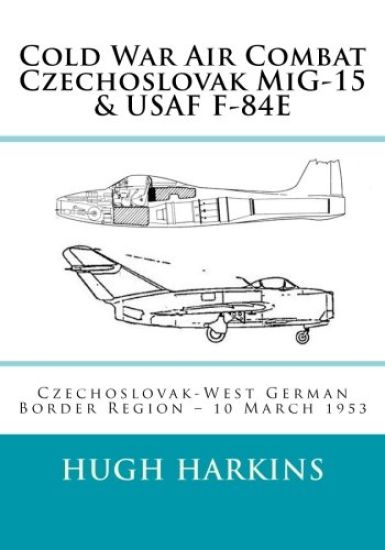
Cold War Air Combat: Czechoslovak MiG-15 & USAF Europe F-84E - Czechoslovak West German Border Region, 10 March 1953ABSTRACT This research paper details the only documented air combat between North Atlantic Treaty Organisation and European Eastern Bloc jet fighter aircraft during the Cold War. This incident took place near the West German- Czechoslovak border on 10 March 1953 when United States Air Force F-84E fighter aircraft were engaged by Czechoslovak MiG-15 fighter aircraft. This engagement resulted in one of the F-84E's being shot down, climaxing several years of claims and counter claims of airspace violations. The paper attempts to separate fact from non-fact and puts forward answers to the disputed questions of aircraft numbers involved, where the combat was initiated and the reason for the resort to force.
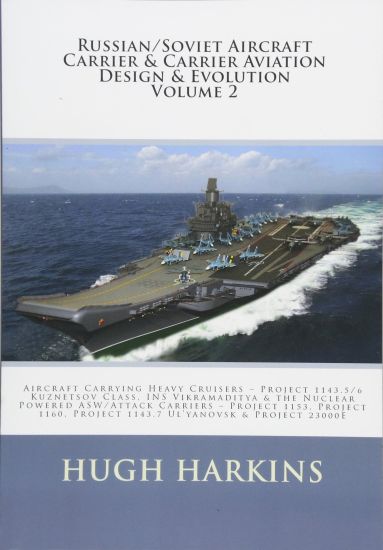
Russian/Soviet Aircraft Carrier & Carrier Aviation Design & Evolution Vol.2 The following is added ahead of volume description in response to the unfortunate situation that the volume has been subjected to a misinformation campaign that is beyond the control of the publisher/author. Volume has been produced using material from a wide-range of sources including, but not restricted to, JPSC Nevskoe Design Bureau; Krylov State Research Centre; United Shipbuilding Corporation; Russian Helicopters; S.P. Korolev Rocket and Space Corporation Energia; NPO Almaz; JSC Scientific Production Association Alloy; NPO Mars; NPO Mashinostroyenia; SPU Salut, Strela PA; Concern-Agat; JSC Concern Radio-Electronic Technologies (KRET); Rostec Corporation; JSC Klimov; Ministry of Defence of the Russian Federation; US DoD; UK MoD, MNIIRE Altair. Sources are listed throughout at appropriate points for respective bureau/services. For example, Krylov Research Centre & JPSC Nevskoe Design Bureau for areas of ship design - the latter cited on 18 pages. Six specification tables for ship designs are cited to the respective bureau. Radar design and performance capabilities are provided clearly through English language translations of appropriately cited Russian Design Bureau documents. Five design bureau characteristic and performance specification tables for weapon complex are provided, all appropriately cited. Eight specification sheets are provided for airborne platforms, appropriately cited to the respective design bureau. This includes English language translations of Russian language infographics furnished by the Russian Defence Ministry. In 2017, there were five Russian/Soviet designed and built aircraft carriers in existence, three of which were in operational service - the Project 1143.5 Aircraft Carrying Heavy Cruiser Admiral of the Fleet of the Soviet Union, Kuznetsov in Russian Federation naval service, the INS Vikramaditya (formerly the Project 1143.4 Heavy Aircraft Carrying Cruiser Baku/Admiral of the Fleet of the Soviet Union, Gorshkov) in Indian naval service and the incomplete former Soviet Project 1143.6 Aircraft Carrying Heavy Cruiser Varyag in service with the Peoples Liberation Army Navy of China as the Liaoning. The other two aircraft carriers, the Project 1143/.2 Kiev and Minsk Heavy Aircraft Carrying Cruisers had been decommissioned and formed museum exhibits in China. This two volume series sets out to detail the stable of Russian/Soviet designed and built significant aircraft carrying vessels and their respective shipborne aviation assets. Volume 1 focused on the design genesis of the major aircraft carrying vessels of the Imperial Russian and Soviet periods, which included Seaplane Carriers, the Project 1123 Moskva Class Anti-Submarine Warfare Helicopter Carrying Cruisers and the Project 1143-1143.4 Kiev and Improved Kiev Class Heavy Aircraft Carrying Cruisers, as well as a number of early and mid-20th century aviation carrying projects. This second volume focusses on the stable of conventional take-off and landing aircraft carriers of the late 20th century and early 21st century periods - the Project 1143.5, the Project 1143.6 Varyag, the nuclear powered Project 1143.7 Ul'yanovsk, as well as the unrealised concepts - the Project 1153 and Project 1160 nuclear powered conventional take-off and landing aircraft carriers and the projected 21st century Project 23000E nuclear powered anti-submarine warfare/attack carrier. Separate chapters deal with the various rotary wing and fixed wing aviation assets that would make up the air groups of the Project 1143.5 and the modified Project 1143.4 INS Vikramaditya. All technical information regarding the warships, systems and weapons has been provided by the respective design bureau and services, as has graphic material. The volume is supported by textual and graphic material from governmental intelligence/historical archives of United States and United Kingdom.
Pantsir MissileThe Pantsir-S1 (Carapcace-C1) is a new generation short-range low/medium altitude missile/gun air defence complex that entered service with the Air Defence Forces of the Russian Federation in 2010 and has been exported to a number of nations over the past several years.This volume sets out to detail the Pantsir-S1 complex in service with the Russian Federation and provides details of those systems delivered to export customers. In regards to the combat vehicle element of the Pantsir-S1 complex, the volume focuses primarily on the 72B6-E wheeled chassis fielded by the Russian Federation. However, other combat vehicle platforms, wheeled and tracked chassis, known, in 2017, to be integrated with the Pantsir-S1 complex, are also detailed as is the Arctic optimised Pantsir-SA and the Pantsir-ME warship-borne complex.All technical data relating to the respective weapon systems and their components have been provided by the respective design bureaus and manufacturers, as has much of the imagery and graphics with additional impute from the Ministry of Defense of the Russian Federation.
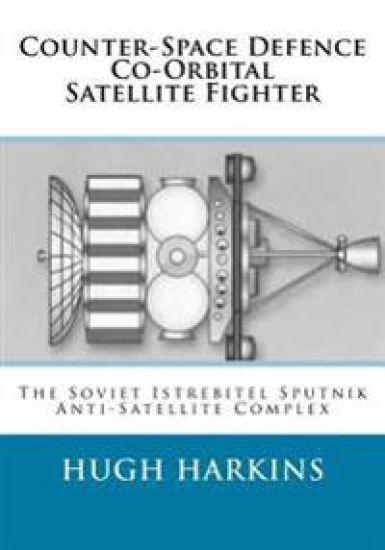
Counter-Space Defence Satellite Fighter - ASAT (Anti-Satellite) complexThe Soviet Counter-Space Defence Satellite Fighter complex was the only dedicated anti-satellite system to be operationally deployed during the Cold War. This system, which was allocated to alert duties in 1972 and attained full operational capability in 1978, served beyond the break-up of the Soviet Union in December 1991, being decommissioned by the Russian Federation in 1993.This volume sets out to detail, from the historical and technological perspectives, the Counter-Space Defence Satellite Fighter complex. The road, factual and propaganda, that led to the development of the ASAT complex is detailed, as well as the Counter-Space Defence Satellite Fighter complex itself, along with the flight test and development program leading to actual deployment of the system.At varying times throughout the text the various weapon systems discussed will be referred to under their Soviet service and or manufacturer names and designations as well as, at appropriate times, under their NATO shadow designations, the latter of course being accepted by the Soviet Union for use in arms limitations and other treaties.All technical data concerning the respective weapon systems and their components have been provided by the respective design bureau/offices, as has much of the imagery and graphics with additional impute from United States intelligence agencies and defense department, the space agencies of the Ukraine and the Russian Federation, United States National Aeronautics and Space Administration and the Ministry of Defense of the Russian Federation.
Russian/Soviet Aircraft Carrier & Carrier Aviation Design & Evolution Volume 1 The following is added ahead of the description as the volume has been subjected to a misinformation campaign beyond the control of the publisher or author. Volume 1 has utilised material from a wide-range of sources, including, but not restricted to, JPSC Nevskoe Design Bureau; Krylov State Research Centre; United Shipbuilding Corporation (USC); Admiralty Shipyards; Russian Helicopters; S.P. Korolev Rocket and Space Corporation Energia; NPO Almaz; JSC Scientific Production Association Alloy; NPO Mashinostroyenia; Strela PA; Concern-Agat; JSC Concern Radio-Electronic Technologies (KRET); Rostec Corporation; JSC Klimov; Yakovlev OKB; NPO Saturn; Ministry of Defence of the Russian Federation (MODRF); USN; US DoD; UK MoD; Naval History & Heritage Centre; US National Archives as detailed on page iii. Sources listed throughout at appropriate points for respective bureau/services. For example, Nevskoe Design Bureau for areas of ship design is cited on 16 pages. Five ship characteristic sheets, detailing differences between the relative Projects 1143-1143.4, ten tables and infographics detailing armament and airborne platform characteristics and performance are appropriately cited to respective bureau. Details are provided for why these vessels were acquired, commencing at the close of chapter 1 and the operational doctrine for their use is detailed in chapter 2 and 3 - anti-submarine warfare defence for the protection of the soviet ballistic missile submarines. In 2016, there were five Russian/Soviet designed and built aircraft carriers in existence, three of which were in operational service; the Project 1143.5 Admiral of the Fleet of the Soviet Union, Kuznetsov in Russian Federation naval service, the INS Vikramaditya (formerly the Project 1143.4) in Indian naval service and the incomplete former Soviet Project 1143.6 in service with the Peoples Liberation Army Navy of China as the Liaoning. The other two carriers, the Project 1143 Kiev and Minsk had been decommissioned and formed museum exhibits. This two volume series sets out to detail the stable of Russian/Soviet designed and built significant aircraft carrying vessels and their integral shipborne aviation assets. Volume 2 will focus on the stable of conventional take-off carriers in service and projected future vessels. Volume 1 focusses predominantly on the operational design genesis of the major aircraft carrying vessels of the Soviet era, the Project 1123 Anti-Submarine Warfare helicopter carrying Cruisers and the Project 1143-1143.4 Heavy Aircraft Carrying Cruisers. Early aviation carrying projects, commencing with the Seaplane Carriers of World War 1 extending to the aircraft carrier concepts of the 1930's and 1940's and the German Graf Zeppelin aircraft carrier that fell into Soviet hands at the end of World War II in Europe, are briefly detailed. An overview of other helicopter carrying vessels of the Soviet and Russian Federation eras is provided, including the Project 1174 amphibious assault ships and the unbuilt Project 11780 helicopter carrying design of the early 1980's. The development of the Project 1123 and 1143-1143.4 was intrinsically linked with the development of ballistic and cruise missile submarines. These ships were, in effect, the first and second generation of Soviet aircraft varying vessels. The introduction of the Project 1143.4 extended to the third generation. All technical information regarding the warships, systems and weapons has been provided by the respective design bureau and services, as has much of the graphic material used throughout the volume, which is also supported by graphic material from other sources such as the Defence and intelligence service Departments and archives of various NATO nations.
The RAC MiG-35/D multirole combat aircraft emerged in 2007 as a land based variant of the Unified Fighter Family based on the MiG-29K/KUB naval optimised multirole combat aircraft contracted by the Indian Navy. The MiG-35/D builds on the capabilities of the MiG-29K/KUB and its land based analogue, the MiG-29M/M2, by introducing a number of fifth generation targeting and navigation systems. The introduction of Omni-directional nozzles for the engines will allow the aircraft, like its rivals from Sukhoi, the Su-30MKI series and the Su-35S, to truly enter the realm of 'super-manoeuvrable' flight.This volume briefly outlines the aircraft design lineage - the first generation MiG-29, and briefly covers the evolution of the Unified Fighter Family of MiG-29K/KUB/MiG-29M2 before moving over to the MiG-35/D which is described in detail. The weapons cleared for the MiG-35/D are described while appendices include specifications on the MiG-35/D and its forebears.All technical information used in this volume regarding the aircraft, systems and weapons has been furnished by the respective design houses, as has the majority of the photographs and diagrams supporting the text.
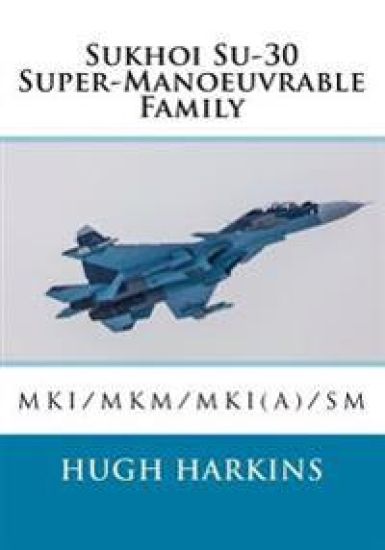
The Su-30MKI family of super-manoeuvrable multi-role combat aircraft share the same numerical designation as the Su-30MKK/MK2 family of combat aircraft although both design groups, despite being directly descendant from the first generation Su-27, took different evolutionary paths. Numerical designation and some first glance looks aside, the Su-30MKI family are fundamentally different designs from the Su-30MKK/MK2 family in terms of primary design role, internal systems and structure; certainly in regards to the latter the Su-30MKK/MK2 having more in common with the Su-27M (first generation Su-35) than the Su-30M from which the Su-30MKI is clearly derived; this design clearly having evolved from the Su-30M which was developed from the Su-27UB two-seat operational conversion trainer variant of the Su-27S single-seat air superiority fighter. This volume covers the evolution of the Su-30 design from the Su-27, which was born out of the T-10 development program of the 1970's. The evolution of the Su-30M interceptor into the multi-role Su-30MK and ergo the Su-30MKI 'super-manoeuvrable' series is detailed. The various design models, the Su-30MKI for India, Su-30MKM for Malaysia, Su-30MKI(A) for Algeria and the domesticated Su-30SM (Russian CM) for Russia and Kazakhstan are described in detail, as are the weapons that can be employed by the respective variants. All technical information regarding the aircraft, systems and weapons have been provided by the respective manufacturers, as have many of the photographs and graphics. Certain elements of text, when pertinent, are taken from the volumes 'Sukhoi Su-35S 'Flanker' E, Russia's 4++ Generation Super-Manoeuvrability Fighter' and 'Sukhoi T-50/PAK FA, Russia's 5th Generation 'Stealth' Fighter'.