Kirjojen hintavertailu. Mukana 12 595 353 kirjaa ja 12 kauppaa.

Kirjailija

Hugh Small

Kirjat ja teokset yhdessä paikassa: 5 kirjaa, julkaisuja vuosilta 2009-2019, suosituimpien joukossa The Future of Anarchism. Vertaile teosten hintoja ja tarkista saatavuus suomalaisista kirjakaupoista.

5 kirjaa

Kirjojen julkaisuhaarukka 2009-2019.

The Future of Anarchism

The Future of Anarchism

Hugh Small

Knowledge Leak
2019
pokkari
Anarchism is the philosophy of government without coercive authority. Over the centuries, government has evolved from autocratic authoritarian rule to hierarchical electoral democracy. The author explains why the transition to anarchist cooperation will be an automatic continuation of this evolution.Recent discoveries in science, history, and technology are enabling the transition to anarchist society. Scientists have discovered that natural selection made humans super-cooperative. Historians have established that coercive government only came into existence when early climate change made conquest and subjugation possible. Technologists have developed communication systems that will allow people to elect their representatives cooperatively, using algorithms that prevent the hierarchical accumulation of power. All of these discoveries are subversive of the existing order and came about because of the gradual removal of restrictions on freedom of speech and thought.Today's electoral democracy is now so ineffective that it makes the world's despots look better by comparison. It's time to show the world what real democracy will do.The author, a technologist and historian, has written and broadcast about the early steps to democracy in Britain.
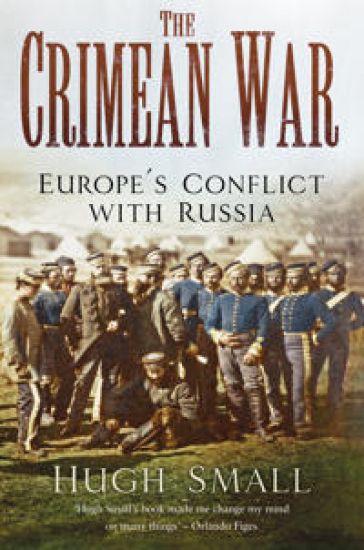
The Crimean War

The Crimean War

Hugh Small

The History Press Ltd
2018
nidottu
The Crimean War was the most destructive conflict of Queen Victoria’s reign, the outcome of which was indecisive; most historians regard it as an irrelevant and unnecessary conflict despite its fame for Florence Nightingale and the Charge of the Light Brigade. Here Hugh Small shows how the history of the Crimean War has been manipulated to conceal Britain’s – and Europe’s – failure. The war governments and early historians combined to withhold the truth from an already disappointed nation in a deception that lasted over a century. Accounts of battles, still widely believed, gave fictitious leadership roles to senior officers. Careful analysis of the fighting shows that most of Britain’s military successes in the war were achieved by the common soldiers, who understood tactics far better than the officer class and who acted usually without orders and often in contravention of them. Hugh Small’s mixture of politics and battlefield narrative identifies a turning point in history, and raises disturbing questions about the utility of war.
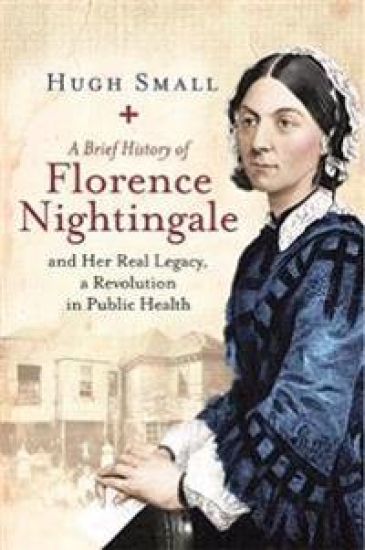
A Brief History of Florence Nightingale
Praise for Small's earlier work on Nightingale: 'Hugh Small, in a masterly piece of historical detective work, convincingly demonstrates what all previous historians and biographers have missed . . . This is a compelling psychological portrait of a very eminent (and complex) Victorian.' James Le Fanu, Daily TelegraphFlorence Nightingale (1820-1910) is best known as a reformer of hospital nursing during and after the Crimean War, but many feel that her nursing reputation has been overstated. A Brief History of Florence Nightingale tells the story of the sanitary disaster in her wartime hospital and why the government covered it up against her wishes. After the war she worked to put the lessons of the tragedy to good use to reduce the very high mortality from epidemic disease in the civilian population at home. She did this by persuading Parliament in 1872 to pass laws which required landlords to improve sanitation in working-class homes, and to give local authorities rather than central government the power to enforce the laws. Life expectancy increased dramatically as a result, and it was this peacetime civilian public health reform rather than her wartime hospital nursing record that established Nightingale's reputation in her lifetime. After her death the wartime image became popular again as a means of recruiting hospital nurses and her other achievements were almost forgotten. Today, with nursing's new emphasis on 'primary' care and prevention outside hospitals, Nightingale's focus on public health achievements makes her an increasingly relevant figure.