Kirjojen hintavertailu. Mukana 12 657 676 kirjaa ja 12 kauppaa.
Kirjailija
Hugh Taylor
Kirjat ja teokset yhdessä paikassa: 22 kirjaa, julkaisuja vuosilta 2009-2026, suosituimpien joukossa Digital Downfall: Technology, Cyberattacks and the End of the American Republic. Vertaile teosten hintoja ja tarkista saatavuus suomalaisista kirjakaupoista.
5G and related digital revolutions will require tens of thousands of edge data centers. This book tells you how they work and how to get them built.We are in the middle of the edge computing revolution. Responding to demand for lower latency, telcos and others are moving servers and storage closer to end users—away from the "core" to "the edge." This requires the deployment of many thousands of tiny edge data centers.The edge is a big, growing business. Driven by 5G, connected vehicles, and industrial automation, the "edge economy" is projected to reach $4.1 trillion by 2030, with investment in edge data centers set to exceed $140 billion by 2028.What exactly is an edge data center? This book explains what they are and how they work. It's early in the edge computing life cycle, so there's time to get prepared for what's coming.If you work in an industry that's transforming through mobility, or any field that will leverage the edge for competitive advantage, this book will help you understand how the edge data center advances your strategic agenda.
Originally published in 1915, Government by Natural Selection looks at the historical advancement of government through the lens of the Darwinian theory of natural selection. The book examines the history of government and its formation, right up until the early 20th century, when the book was first published. The book suggests that there is a link between Darwinian theory and the development of humans in societies, and that this in turn affected the formation of government over the course of history. The book uses not only Darwinian theory to examine history and the formation of government, but philosophers from both antiquity and the 19th century. This book provides a fascinating examination of politics and history through the application of science, and will be of interest to anthropologists, historians and academics of politics alike.
"With the assertion that 'America is in danger of falling apart, ' Hugh Taylor warns us in Digital Downfall that the vulnerabilities of our digital lives could allow foreign cyber mischief to exacerbate current political tensions - with disastrous results. Each chapter reads as a separate essay, explaining the basics of cyber insecurity, why Russia and China are such a threat and how our society should adapt to the digital revolution. This comprehensive and incisive book should be read by anyone who wants to ensure America survives the existential threats posed by cyber vulnerabilities." - Glenn Gerstell, General Counsel of the United States National Security Agency from 2015 to 2020Is America on the brink of civil war?Could foreign cyber plots turn Americans against one another and cause a disastrous domestic conflict? What would happen if the lights went out and the technology we rely upon to run American life is no longer available?The present dangers are real. The US is more vulnerable to destructive foreign interference today than it has been in over a century. As Russia and China realize they can't win shooting wars against the US, they have devised new and cunning ways to destabilize American politics and cripple the US economy.Cyber meddling in elections, disinformation campaigns, abuse of social media to widen racial and political divides, and the theft of military data are just some of the malicious acts threatening the Republic. Digital Downfall examines the potential effects of such attacks, with a look at: -The vulnerability of the US to cyber attack-American technological weaknesses that could be exploited by our enemies-How the US military could be affected by cyberwar-The possibility that the American Republic we know could be destroyed-America's relationship with racism-What the future may hold-And more...The dangers posed by external sources can only be real when the internal politics of the United States is in a fragile state. The past four years bear testimony to this political decline as does every passing day of the Trump presidency.The perfect storm of external interference, a rampant and deadly pandemic, and a culture of racism that will no longer be tolerated is upon us.Who knows where it will lead to, or what will be left at the end...About the Author: Hugh Taylor is Executive Editor of The Journal of Cyber Policy, a cybersecurity industry blog. He has been working in the enterprise technology and cybersecurity fields for over 20 years, earning the Certified Information Security Manager (CISM) credential in the process. His previous books include The Joy of SOX (Wiley) about IT and the Sarbanes Oxley Act, and Event Driven Architecture (Prentice-Hall). After serving in executive roles at venture-backed startups and global tech giants like IBM and Microsoft, he now works as a freelance tech writer. His professional writing spans technology and cybersecurity for a clientele that includes HPE, IBM, Google, Microsoft and SAP. Prior to working in technology, Taylor served in script development roles in primetime television-an experience that gives him insights into the relationship between technology, society and the media.
Originally published in 1915, Government by Natural Selection looks at the historical advancement of government through the lens of the Darwinian theory of natural selection. The book examines the history of government and its formation, right up until the early 20th century, when the book was first published. The book suggests that there is a link between Darwinian theory and the development of humans in societies, and that this in turn affected the formation of government over the course of history. The book uses not only Darwinian theory to examine history and the formation of government, but philosophers from both antiquity and the 19th century. This book provides a fascinating examination of politics and history through the application of science, and will be of interest to anthropologists, historians and academics of politics alike.
Examining why the study of history as a science was not as advanced as other disciplines, the author of this book, originally published in 1933, examines the arguments in the controversy of what the object of history should be. He then discusses the impact of the study of history on government, war and revolution .
Examining why the study of history as a science was not as advanced as other disciplines, the author of this book, originally published in 1933, examines the arguments in the controversy of what the object of history should be. He then discusses the impact of the study of history on government, war and revolution .
Acting on cryptic orders, Special Agent Liam Ward of the Interstellar Navy Investigations Agency (INIA) joins the crew of the Unified Earth Government Ship Dauntless, a modified fast-attack craft, as rumors of an alien invasion mount. Humanity recently discovered that though it was not alone in the universe, it was unique-all other surviving species are synthetic in nature. Many of these alien species are outright hostile toward human civilization, with its mix of biological and artificial citizenry. Ward and his new crewmates chase down leads involving the suspicious orders behind his last mission, which took place aboard the battlecruiser Lincoln. The investigation takes them to unexpected places full of surprises, but one possibility is the most shocking: Someone aboard the Dauntless may be working against them.Ward will have to decide who he can trust as the small, multi-agency crew attempts to expose an alien conspiracy in the Interstellar Navy, and potentially the Government itself, before fears of an invasion become realized.
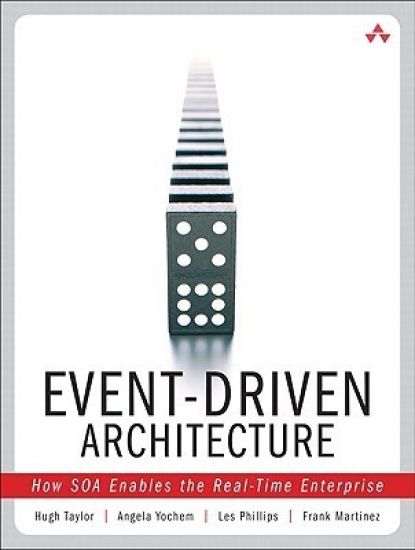
Improving Business Agility with EDA Going beyond SOA, enterprises can gain even greater agility by implementing event-driven architectures (EDAs) that automatically detect and react to significant business events. However, EDA planning and deployment is complex, and even experienced SOA architects and developers need expert guidance. In Event-Driven Architecture, four leading IT innovators present both the theory of EDA and practical, step-by-step guidance to implementing it successfully. The authors first establish a thorough and workable definition of EDA and explore how EDA can help solve many of today’s most difficult business and IT challenges. You’ll learn how EDAs work, what they can do today, and what they might be able to do as they mature. You’ll learn how to determine whether an EDA approach makes sense in your environment and how to overcome the difficult interoperability and integration issues associated with successful deployment. Finally, the authors present chapter-length case studies demonstrating how both full and partial EDA implementations can deliver exceptional business value. Coverage includes How SOA and Web services can power event-driven architectures The role of SOA infrastructure, governance, and security in EDA environments EDA core components: event consumers and producers, message backbones, Web service transport, and more EDA patterns, including simple event processing, event stream processing, and complex event processing Designing flexible stateless events that can respond to unpredictable customers, suppliers, and business partners Addressing technical and business challenges such as project management and communication EDA at work: real-world applications across multiple verticals Hugh Taylor is a social software evangelist for IBM Lotus Software. He coauthored Understanding Enterprise SOA and has written extensively on Web services and SOA. He holds an MBA from Harvard Business School. Angela Yochem is an executive in a multinational technology company and is a recognized thought leader in architecture and large-scale technology management. Les Phillips, VP, enterprise architecture, at SunTrust Banks Inc., is responsible for defining the strategic and business IT foundation for many areas of the enterprise. Frank Martinez, EVP, product strategy, at SOA Software, is a recognized expert on distributed, enterprise application, and infrastructure platforms. He has served as senior operating executive for several venture-backed firms and helped build Intershop Communications into a multibillion-dollar public company. Foreword xi Preface xii Introduction 1 Event-Driven Architecture: A Working Definition 1 The “New” Era of Interoperability Dawns 6 The ETA for Your EDA 9 Endnotes 9 PART I THE THEORY OF EDA Chapter 1 EDA: Opportunities and Obstacles 13 The Vortex 13 EDA: A Working Systemic Definition 14 The (Not So Smooth) Path to EDA 24 Defining Interoperability 26 Drivers of Interoperability 28 Application Integration: A Means to Interoperate 29 Interoperation and Business Process Management 31 Is There a Diet for All This Spaghetti? 35 How Architecture Promotes Integration 37 Management and Governance 39 Chapter Summary 43 Endnote 45 Chapter 2 SOA: The Building Blocks of EDA 47 Making You an Offer You Can’t Understand 47 SOA: The Big Picture 48 Defining Service 49 Service-Based Integration 50 Web Services 51 What Is SOA? 59 Loose Coupling in the SOA 60 Chapter Summary 61 Chapter 3 Characteristics of EDA 63 Firing Up the Corporate Neurons 63 Revisiting the Enterprise Nervous System 63 The Ideal EDA 78 BAM--A Related Concept 86 Chapter Summary 87 Endnotes 89 Chapter 4 The Potential of EDA 91 Introduction 91 EDA’s Potential in Enterprise Computing 91 EDA and Enterprise Agility 100 EDA and Society’s Computing Needs 102 EDA and Compliance 107 Chapter Summary 108 Chapter 5 The SOA-EDA Connection 111 Getting Real 111 Event Services 112 The Service Network 114 Implementing the SOA and Service Network 116 How to Design an SOA 122 The Real “Bottom Line” 134 Chapter Summary 137 PART II EDA IN PRACTICE Chapter 6 Thinking EDA 141 A Novel Mind-Set 141 Reducing Central Control 142 Thinking about EDA Implementation 148 When EDA Is Not the Answer 151 An EDA Product Examined 153 Chapter Summary 157 Endnotes 158 Chapter 7 Case Study: Airline Flight Control 159 Learning Objectives 160 Business Context: Airline Crunch Time 160 The Ideal Airline Flight Control EDA 167 What FEDA Might Look Like in Real Life 176 Program Success 197 Chapter Summary 206 Endnotes 207 Chapter 8 Case Study: Anti-Money Laundering 209 Learning Objectives 210 Cracking a Trillion Dollar, Global Crime Wave 210 IT Aspects of Anti-Money Laundering 216 EDA as a Weapon in the War on Money Laundering 221 Chapter Summary 259 Endnotes 260 Chapter 9 Case Study: Event-Driven Productivity Infrastructure 261 Learning Objectives 262 The Often Inadequate Human Link in the EDA 262 Overview of Productivity Infrastructure 264 The Potential Benefits of EDA-PI Integration 267 ProdCo, an EDA-PI Integration Scenario 273 Chapter Summary 293 Endnotes 294
For more than 50 years, Speroff's Clinical Gynecologic Endocrinology and Infertility has been one of the world's most widely read and respected gynecology texts, with its authoritative coverage of physiology, clinical endocrinology, contraception, and infertility. The fully revised 10th Edition, edited by Drs. Hugh Taylor, Lubna Pal, and Emre Seli, continues the tradition of excellence, offering a complete explanation of the female endocrine system and practical guidance for evaluation and treatment of common disorders. This classic text remains indispensable for students, residents, and clinicians working in reproductive endocrinology and infertility, bringing readers up to date with recent advances that have occurred in this fast-changing field. Includes updates from cover to cover, with significantly revised content on transgender medicine and fertility preservation and an all-new chapter on Environment and Fertility Retains Dr. Speroff's original clear, reader-friendly writing style while ensuring content is up to date with today's clinical practices Incorporates the latest breakthroughs in infertility care and assisted reproductive technology, reflecting significant advancements in the field Features numerous full-color illustrations, algorithms, and tables throughout
Comprehensive exploration of humanity's potential for criminal activities in outer space Space Piracy: Preparing for a Criminal Crisis in Orbit is a forward-thinking resource that considers, analyzes, and provides solutions to the influence of the ignoble side of humanity in the realm of outer space, where potential for crime, corruption, piracy, and war increases as the exploitation of space as a commercial resource continues to develop. This book blends the authors' knowledge with that of subject matter experts to deliver a holistic understanding of criminality in space and help readers broaden their horizons beyond their own area of specialization. Some of the topics explored in this insightful book include: Space hacking, from software, data, network, and hardware risks to existing cybersecurity standards and practices in spaceCriminal organizations that might pursue criminal activities in space, including cartels, kidnappers and devicenappers, and governmentsLaws and treaties relevant to space crime, such as the Communications Satellite Act and the Outer Space Treaty of 1967 Filled with practical, thought-provoking knowledge and guidance, Space Piracy: Preparing for a Criminal Crisis in Orbit earns a well-deserved spot on the bookshelves of professionals working in the best of humanity's institutions, including law and intelligence services, finance, insurance and risk management, corporations, and the sciences, who seek to combat what the worst of us may be dreaming up.