Kirjojen hintavertailu. Mukana 12 595 353 kirjaa ja 12 kauppaa.

Kirjailija

Hugh Thomas

Kirjat ja teokset yhdessä paikassa: 25 kirjaa, julkaisuja vuosilta 1995-2025, suosituimpien joukossa Eduardo Barreiros and the Recovery of Spain. Vertaile teosten hintoja ja tarkista saatavuus suomalaisista kirjakaupoista.

25 kirjaa

Kirjojen julkaisuhaarukka 1995-2025.

Eduardo Barreiros and the Recovery of Spain

Eduardo Barreiros and the Recovery of Spain

Hugh Thomas

Yale University Press
2009
sidottu
A dramatic biography of the extraordinary Spanish industrialist and entrepreneur Eduardo Barreiros Born in an impoverished region of Galicia, possessed of little education and less money, Eduardo Barreiros (1919–1992) rose to become an immensely successful entrepreneur and one of Spain’s most prominent industrialists. In this engaging biography, the first on a Spanish entrepreneur in English, Hugh Thomas recounts Barreiros’s origins as an auto mechanic, his success in the motor industry, his tragic alliance with the Chrysler Corporation, and his little-known role as a motor industry founder in 1980s Cuba. Drawing on an unrivaled knowledge of Spanish history, Lord Thomas also brings to light Barreiros’s critical role in the modernization of the Spanish economy in the post–Civil War years.The book offers a detailed portrait of Don Eduardo’s personality, character, and numerous entrepreneurial endeavors, as well as a full account of the difficulties the Franco-era government threw in the path of his capitalist activities. The relationship between Barreiros and the Chrysler Corporation is also described, along with the failed Dodge Dart project that ultimately cost Barreiros his business. Finally, the book recounts Don Eduardo’s late-in-life efforts to help establish a motor industry in Castro’s Cuba—a paradoxical conclusion for a great capitalist.
La Conquista de México: Moctezuma, Cortés Y La Caída de Un Imperio / The Conquest of Mexico
Edici n especial conmemorando el V centenario de la conquista de M xico, episodio que marc el devenir de un imperio y todo un continente. En 1519, la armada de Hern n Cort s, con quinientos infantes y once buques, zarp de Cuba desoyendo rdenes directas con la intenci n manifiesta de llegar al coraz n del mayor imperio del Nuevo Mundo. Cuando finalmente se adentraron en Tenochtitl n, fueron recibidos con honores por Moctezuma y su pueblo, quienes les reverenciaron como si de dioses se trataran. No obstante, el posterior secuestro y destituci n de Moctezuma, as como la destrucci n de la capital, convierten la conquista de M xico en uno de los episodios m s cautivadores y tr gicos de la historia del mundo. Una obra suprema y hasta ahora insuperada de conocimiento hist rico. Un libro para todas las pocas. --Del pr logo de Enrique Krauze ENGLISH DESCRIPTION Special edition commemorating the 500th anniversary of the conquest of Mexico--an event that reshaped the fate of an empire and an entire continent. In 1519, Hern n Cort s set sail from Cuba with five hundred soldiers and eleven ships, defying direct orders with the clear intent of reaching the heart of the greatest empire in the New World. Upon entering Tenochtitl n, he and his men were welcomed with honors by Moctezuma and his people, who revered them as gods. However, the subsequent abduction and removal of Moctezuma, followed by the destruction of the capital, turned the conquest of Mexico into one of the most gripping and tragic episodes in world history. "A supreme and, to this day, unmatched work of historical insight. A book for all times." --From the foreword by Enrique Krauze
Cataland

Cataland

Christian Stump; Hugh Thomas; Nathan Williams

AMERICAN MATHEMATICAL SOCIETY
2025
nidottu
The Memoirs of the AMS is devoted to the publication of new research in all areas of pure and applied mathematics. The Memoirs is designed particularly to publish long papers of groups of cognate papers in book form, and is under the supervision of the Editorial Committee of the AMS journal Transactions of the American Mathematical Society. All papers are peer-reviewed.
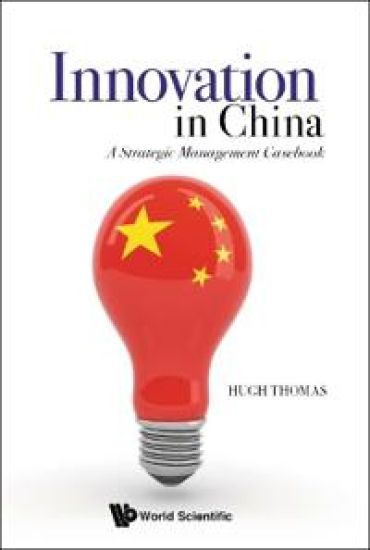
Innovation In China: A Strategic Management Casebook

Innovation In China: A Strategic Management Casebook

Hugh Thomas

WORLD SCIENTIFIC PUBLISHING CO PTE LTD
2022
sidottu
Innovation has shaped society since civilization began. Imperial China was the most innovative society on earth, but it failed to join the 19th century industrial revolution. In the 20th century, the Communist Party of China addressed that failure. Today China boasts an internationally compliant, rapidly developing IP system. State planning continues to be critical as the case of the largest, single, technology acquisition and infrastructure project in world history, high speed rail, demonstrates. But most of the innovation in China comes from the private sector: government incubators are among the government stimuli of private initiative, both local and global. And as the case on Cisco shows, foreign MNCs management of innovation in China is attractive but must involve co-ordination with government policy.This book presents cases where managers determine policy in China's increasingly innovative society. Readers take the roles of decision-makers to make strategy decisions. The cases in this volume showcase China's traditional three teachings, socialist market institutions, and modern management using studies on current Chinese companies and their leaders, among them big names such as Haier and Huawei. Each case stands alone as teaching material for instructors. Taken together, the book presents evolving models of innovation. Their subtle differences from western constructs critically impact the development of our global society.
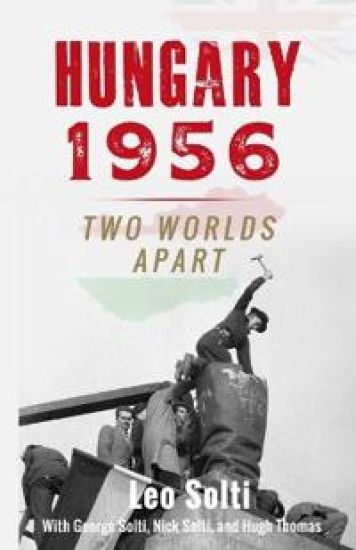
Hungary 1956

Hungary 1956

George Solti; Nick Solti; Hugh Thomas

Elite Publishing Academy
2022
pokkari
My Dad had an extraordinary life. Born in Hungary in 1933, his early childhood was idyllic in many ways, Hungary being an independent nation at that point. He then experienced the Nazi occupation during WW2 which was immediately followed by another even more brutal regime under the Russians. In 1956 he became involved in the Hungarian uprising as a freedom fighter against the might of Russia and became an unintentional hero when he assisted many people to escape Hungary, probably saving many lives in the process, before reaching the safety of England as an almost fatally wounded refugee. The intention of this introduction is to outline how this book came about.
Madrid

Madrid

Hugh Thomas

Little, Brown Book Group
2018
pokkari
The charm of Madrid is elusive, but for those who know how to find it, Madrid has magic. Its magic can be found in the shadow cast over the present by the past. In this Traveller's Reader, a city that was once the seat of power for perhaps the most ambitious political enterprise the western world had seen since the fall of Rome, the Spanish Empire, is brought to life in vivid diaries, letters, memoirs and histories.The Earl of Clarendon describes seventeenth-century bullfights; Salvador Dali plays a surrealist joke on a snooty barman at the Ritz; Rubens visits the Alcázar; Manet is at the Prado; generals and anarchists meet in the Puerta del Sol. The many stories included here evoke for today's tourist the dramas and personalities of a city's past, by drawing on the eyewitness accounts and commentaries of visitors and residents of earlier centuries. Hugh Thomas has chosen these and other vivid snapshots of Madrid's history from diaries, letters, memoirs and novels across five centuries to delight and fascinate the armchair and prospective traveller alike.
Basic Water Treatment

Basic Water Treatment

Chris Binnie; Martin Kimber; Hugh Thomas

ICE Publishing
2017
nidottu
Basic Water Treatment, now in its sixth edition, is an accessible and practical guide to all aspects of potable water quality and treatment. Focusing on the issues of most interest to practising engineers, it provides examples of good practice, summarises key issues and criteria, and includes additional theory to explain and support the treatment processes considered. This new edition has been fully updated and has also been expanded to cover additional processes and topics, and to take account of developing concerns relating to emerging contaminants. It includes new chapters on activated carbon adsorption and water re-use to reflect the increasing importance of these subjects, and significant updates to sections on disinfection, emerging contaminants, membrane processes, desalination and advanced oxidation processes. Basic Water Treatment is an essential resource for water engineers at all levels - a textbook for students, a handbook for engineers or chemists who are new to the industry, and an indispensable guide full of updated practical information for the established practitioner.
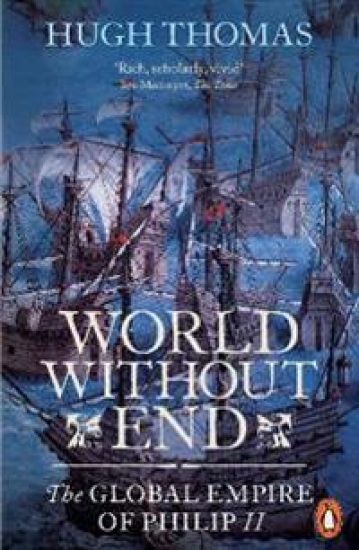
World Without End

World Without End

Hugh Thomas

Penguin Books Ltd
2015
pokkari
Following Rivers of Gold and The Golden Age, World Without End is the conclusion of a magisterial three-volume history of the Spanish Empire by Hugh Thomas, its foremost worldwide authorityWorld Without End is the climax of Hugh Thomas's great history of the Spanish Empire in the Americas. It describes the conquest of Paraguay and the River Plate, of the Yucatan in Mexico, the only partial conquest of Chile, and battles with the French over Florida, and then, in the 1580s, the extraordinary projection of Spanish power across the Pacific to conquer the Philippines. More significantly, it describes how the Spanish ran the greatest empire the world had seen since Rome - as well as conquistadores, the book is people with viceroys, judges, nobles, bishops, inquisitors and administrators of many different kinds, often in conflict with one another, seeking to organise the native populations into towns, to build cathedrals, hospitals and universities. Behind them - sometimes ahead of them - came the religious orders, the Franciscans, Dominicans, Augustinians, and finally the Jesuits, builders of convents and monasteries, many of them of astonishing beauty, and reminders of the pervasiveness of religion and the self-confidence of the age.Towering above them all, though moving rarely from the palace of the Escorial outside Madrid, is the figure of King Philip II, the central figure in the book. The Venetian ambassador thought him 'the arbiter of the world'. Once the Philippines had been consolidated, Philip's advisors contemplated an invasion of China: the Jesuit Father Sanchez called it 'the greatest enterprise which has ever been proposed to any monarch in the world'. It was an enterprise never undertaken, but never explicitly abandoned.Was it a great or a terrible empire? In contrast to other empire builders, the Spaniards entered upon arguments with each other about their right to rule other peoples, and their ruthlessness was often tempered by humanity. Hugh Thomas's conclusion is unequivocal: 'The speed with which the sixteenth-century conquistadores conquered such large territories on two vast continents, and the comparable success of missionaries with large populations of Indians, stands as one of the supreme epics of both valour and imagination by Europeans.'
The Golden Age

The Golden Age

Hugh Thomas

Penguin Books Ltd
2011
pokkari
Moving between Spanish conquest abroad and the court of the astute Charles V, Hugh Thomas's The Golden Age: The Spanish Empire of Charles V is the second volume in a planned trilogy on the Spanish Empire. When the Spanish conquistadors arrived in South America in the sixteenth century, they swept across the continent in a blaze of imperial expansion and brutal savagery. Beginning with the return of the remnants of Magellan's circumnavigation in 1522 and ending with Charles's death in 1558, Hugh Thomas's masterful work brilliantly brings to life one of the most extraordinary periods of the Renaissance, revealing how the Spaniards were able to conquer Guatemala, Yucatan, Columbia, Venezuela, Peru and Chile; how the audacious conquistador Francisco de Orellana sailed down the Amazon, why Cabeza de Vaca walked from Florida to Mexico and what drove Hernando de Soto to pursue worldly riches in Florida, Mississippi and Georgia. While adventurers and explorers like Cortés and Pizarro build entire cities and amassed vast wealth from the treasures of the land, they also killed thousands, and left the indelible mark of Spain's language and religion for centuries to come. 'Thomas tells the story of missionary zeal and military plunder with a zest worthy of a swashbuckling historical novelist' The Times 'A riveting story of adventure and cruelty ... a considerable scholarly accomplishment' Ben Wilson, Daily Telegraph 'This monumental history is an extraordinary achievement ... A beguilingly-written account of a fascinating subject' Alexander Samson, The Times Higher Education Supplement Hugh Thomas is the author of, among other books, The Spanish Civil War (1962), which won the Somerset Maugham Award, Cuba: The Pursuit of Freedom (1971), An Unfinished History of the World (1979), and the first volume of his Spanish Empire trilogy, Rivers of Gold (2003).
A History of Wales 1485-1660

A History of Wales 1485-1660

Hugh Thomas

University of Wales Press
2011
nidottu
The events of the period 1485 - 1660 were decisive in the development of modern Wales and, in Hugh Thomas' first in the four-volume "Welsh History Text Books" series, students are presented with a scholarly, balanced and informative discussion. From the crowning of Henry Tudor as King of England in 1485 to the profoundly transformed religious, cultural and economic conditions at the end of the period under survey, Wales and Welsh society would stride forward in a committed partnership within a greater Britain.
Rivers of Gold

Rivers of Gold

Hugh Thomas

Penguin Books Ltd
2010
pokkari
The first part of his trilogy on the Spanish Empire, Hugh Thomas's Rivers of Gold brings the rise of Spain's global empire vividly to life, capturing the spirit of an ebullient age. Inspired by hopes of both riches and of converting native people to Christianity, the Spanish adventurers of the fifteenth century convinced themselves that an Earthly Paradise existed in the Caribbean. This is the story of the hundreds of conquistadors who set sail on the precarious journey across the Atlantic - taking with them wheat, the horse, the guitar and the wheel as well as guns, malaria and slaves - to create an empire that made Spain the envy of the world. 'Affirms Hugh Thomas's record as one of the most productive and wide-ranging historians of modern times' The New York Times 'Splendid ... bold and strong in its outlines, rich in fasinating details' Paul Johnson, Literary Review 'So steeped is he in the spirit of the time, so familiar with its people and places that we almost feel he must have been there at the time' Sunday Telegraph 'A vivid, dramatic and compelling narrative' Arthur Schlesinger, Jr 'As a historian, Thomas is master of the big picture ... Rivers of Gold sweeps us restlessly on' Jonathan Keates, Spectator 'An epic history of an extraordinary age' Michael Kerrigan, Scotsman Hugh Thomas is the author of, among other books, The Spanish Civil War (1962) which won the Somerset Maugham Award, Conquest: Montezuma, Cortés and the Fall of Old Mexico (1994), An Unfinished History of the World (1979) and The Slave Trade (1997). The second volume of his planned trilogy on the Spanish Empire, The Golden Age: The Spanish Empire of Charles V was published in 2011.
Cuba

Cuba

Hugh Thomas

Penguin Books Ltd
2010
pokkari
From award-winning historian Hugh Thomas, Cuba: A History is the essential work for understanding one of the most fascinating and controversial countries in the world. Hugh Thomas's acclaimed book explores the whole sweep of Cuban history from the British capture of Havana in 1762 through the years of Spanish and United States domination, down to the twentieth century and the extraordinary revolution of Fidel Castro. Throughout this period of over two hundred years, Hugh Thomas analyses the political, economic and social events that have shaped Cuban history with extraordinary insight and panache, covering subjects ranging from sugar, tobacco and education to slavery, war and occupation. Encyclopaedic in range and breathtaking in execution, Cuba is surely one of the seminal works of world history. 'An astonishing feat ... the author does more to explain the phenomenon of Fidel's rise to power than anybody else has done so far' Spectator 'Brilliant' The New York Times 'Immensely readable. Thomas's notion of history's scope is generous, for he has not limited himself to telling old political and military events; he describes Cuban culture at all stages ... not merely accessible but absorbing. His language is witty but never mocking, crisp but never harsh' New Yorker 'Thomas seems to have talked to everybody not dead or in jail, and read everything. He is scrupulously fair' Time Hugh Thomas is the author of, among other books, The Spanish Civil War (1962), which won the Somerset Maugham Award, Cuba: The Pursuit of Freedom (1971), An Unfinished History of the World (1979), and the first two volumes of his Spanish Empire trilogy, Rivers of Gold (2003) and The Golden Age (2010).
Beaumarchais in Seville

Beaumarchais in Seville

Hugh Thomas

Yale University Press
2009
pokkari
A vivacious account of the journey to Spain that inspired The Marriage of Figaro and The Barber of Seville In 1764-65 the irrepressible playwright Beaumarchais traveled to Madrid, where he immersed himself in the life and society of the day. Inspired by the places he had seen and the people he had met, Beaumarchais returned home to create The Barber of Seville and The Marriage of Figaro, plays that became the basis for the operas by Rossini and Mozart that continue to delight audiences today. This book is a lively and original account of Beaumarchais’s visit to Madrid (he never went to Seville) and a re-creation of the society that fired his imagination. Drawing on Beaumarchais’s letters and commentaries, translated into English for the first time, Hugh Thomas investigates the full range of the playwright’s activities in Madrid. He focuses particular attention on short plays that Beaumarchais attended and by which he was probably influenced, and he probes the inspirations for such widely recognized characters as the barber-valet Figaro, the lordly Count Almaviva, and the beautiful but deceived Rosine. Not neglecting Beaumarchais’s many other pursuits (ranging from an endeavor to gain a contract for selling African slaves to an attempt to place his mistress as a spy in the bed of King Charles III), Lord Thomas provides a highly entertaining view of a vital moment in Madrid’s history and in the creative life of the energetic Beaumarchais.
The Slave Trade

The Slave Trade

Hugh Thomas

Weidenfeld Nicolson
2006
pokkari
The rise and fall of the business of slave trading - by a bestselling historianThe Atlantic slave trade was one of the largest and most elaborate maritime and commercial ventures. Between 1492 and about 1870, ten million or more black slaves were carried from Africa to one port or another of the Americas.In this wide-ranging book, Hugh Thomas follows the development of this massive shift of human lives across the centuries until the slave trade's abolition in the late nineteenth century.
Spirit of the Blue

Spirit of the Blue

Hugh Thomas

The History Press Ltd
2005
nidottu
Peter joined the R.A.F. in 1938 on a short-service commission and was despatched to France when war broke out. After serving with legendary fighter ace Douglas Bader, Peter was posted to North Africa in 1942, where he was forced to crash-land his Hurricane in a minefield. He flew Spitfires on intruder sorties over France before and during D-Day, on bomber escort duty against V-weapons sites and in support of mass daylight raids deep into Germany. Awarded the D.F.C. in December 1944, he also flew as fighter escort to King George VI's Dakota. By the war's end, Peter had flown every mark of Spitfire and Hurricane in the R.A.F.'s inventory.
Spirit of the Blue

Spirit of the Blue

Peter Ayerst; Hugh Thomas

Sutton Publishing Ltd
2004
sidottu
Few RAF pilots flew operationally from the beginning to the end of the Second World War. Fewer still can claim to have experienced action from Dunkirk and the Battle of Britain, El Alamein and the D-Day landings, to bomber escort duty in the closing days of the war in Europe. Peter Ayerst is one such man and his tale is, as yet, untold. Peter joined the RAF in 1938 on a short service commission and was despatched to France at the outbreak of war. He survived a confrontation with 27 enemy Messerschmitt Me109s but with his Spitfire riddled with bullets. During the Battle of Britain he shot down the first of his eight 'kills', a Heinkel He111. After serving with legendary fighter ace Douglas Bader, Peter was posted to North Africa in 1942 where he was forced to crash-land his Hurricane in a mine field. He later led repeated attacks on enemy motor transport, personally destroying a Junkers Ju52 and 17 vehicles. Peter flew Spitfires on intruder sorties over France before and during D-Day, on bomber escort duty against V-weapons sites and in support of mass daylight raids deep into Germany. Awarded the DFC in December 1944, he also flew as fighter escort to King George VI's Dakota. By th
The Spanish Civil War

The Spanish Civil War

Hugh Thomas

Penguin Books Ltd
2003
pokkari
Since its first publication, Hugh Thomas's The Spanish Civil War has become established as the definitive one-volume history of a conflict that continues to provoke intense controversy today. What was it that roused left-wing sympathizers from all over the world to fight against Franco between 1936 and 1939? Why did the British and US governments refuse to intervene? And why did the Republican cause collapse so violently? Now revised and updated, Hugh Thomas's classic account presents the most objective and unbiased analysis of a passionate struggle where fascism and democracy, communism and Catholicism were at stake - and which was as much an international war as a Spanish one. 'Remarkable ... a definitive account' Sunday Times 'A prodigy of a book ... about the most heroic and pitiful story of the twentieth century' Michael Foot 'His masterwork' Independent 'A full, vivid and deeply serious treatment of a great subject' The New York Times Book Review Hugh Thomas is the author of, among other books, The Spanish Civil War (1962), which won the Somerset Maugham Award, Cuba: The Pursuit of Freedom (1971), An Unfinished History of the World (1979), and the first volume of his Spanish Empire trilogy, Rivers of Gold (2003).