Kirjojen hintavertailu. Mukana 12 595 353 kirjaa ja 12 kauppaa.

Kirjailija

Huisheng Peng

Kirjat ja teokset yhdessä paikassa: 8 kirjaa, julkaisuja vuosilta 2015-2024, suosituimpien joukossa Flexible Batteries. Vertaile teosten hintoja ja tarkista saatavuus suomalaisista kirjakaupoista.

8 kirjaa

Kirjojen julkaisuhaarukka 2015-2024.

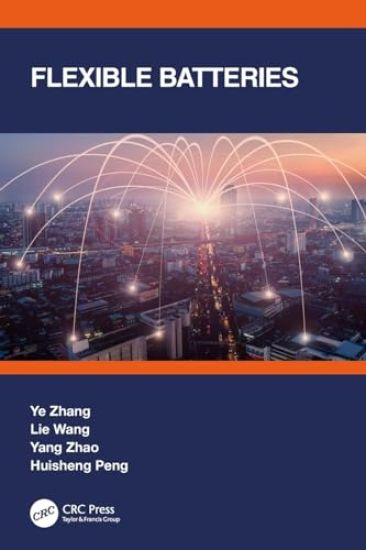
Flexible Batteries

Flexible Batteries

Ye Zhang; Lie Wang; Yang Zhao; Huisheng Peng

TAYLOR FRANCIS LTD
2024
nidottu
Flexible Batteries highlights the key advances in flexible batteries, a booming new direction in the energy storage field.The authors first introduce lithium-ion batteries, which are currently the most widely used batteries. Flexible aqueous batteries such as aqueous lithium-ion, sodium-ion, and zinc-ion batteries are discussed subsequently due to the safety concerns in organic electrolytes. Since flexible metal-air batteries are recognized as primary choices for the next generation, the authors take lithium-air and aluminum-air batteries as examples to explore their applications in flexible battery construction. They further summarize flexible batteries under the most challenging working conditions such as stretching and integrating flexible batteries with flexible energy harvesting devices, sensors, and supercapacitors.Covering both fundamental and application development, this book may effectively bridge academics and industry. It will be helpful not only to scholars and students studying materials science and engineering, chemical engineering, physics, energy science, and biomedical science but also to scientists and engineers in the industry.
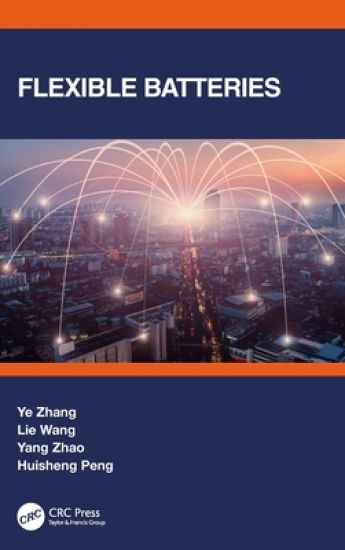
Flexible Batteries

Flexible Batteries

Ye Zhang; Lie Wang; Yang Zhao; Huisheng Peng

TAYLOR FRANCIS LTD
2022
sidottu
Flexible Batteries highlights the key advances in flexible batteries, a booming new direction in the energy storage field.The authors first introduce lithium-ion batteries, which are currently the most widely used batteries. Flexible aqueous batteries such as aqueous lithium-ion, sodium-ion, and zinc-ion batteries are discussed subsequently due to the safety concerns in organic electrolytes. Since flexible metal-air batteries are recognized as primary choices for the next generation, the authors take lithium-air and aluminum-air batteries as examples to explore their applications in flexible battery construction. They further summarize flexible batteries under the most challenging working conditions such as stretching and integrating flexible batteries with flexible energy harvesting devices, sensors, and supercapacitors.Covering both fundamental and application development, this book may effectively bridge academics and industry. It will be helpful not only to scholars and students studying materials science and engineering, chemical engineering, physics, energy science, and biomedical science but also to scientists and engineers in the industry.
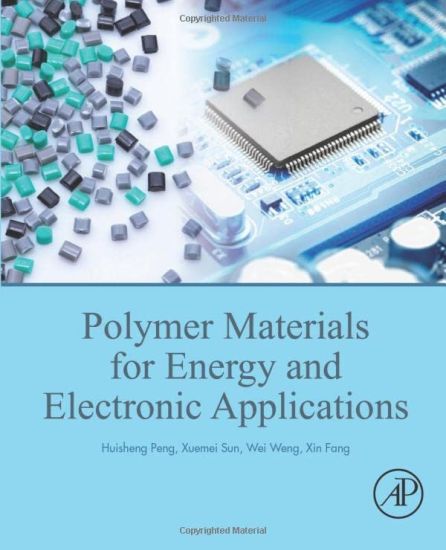
Polymer Materials for Energy and Electronic Applications

Polymer Materials for Energy and Electronic Applications

Huisheng Peng; Xuemei Sun; Wei Weng; Xin Fang

Academic Press Inc
2016
nidottu
Polymer Materials for Energy and Electronic Applications is among the first books to systematically describe the recent developments in polymer materials and their electronic applications. It covers the synthesis, structures, and properties of polymers, along with their composites. In addition, the book introduces, and describes, four main kinds of electronic devices based on polymers, including energy harvesting devices, energy storage devices, light-emitting devices, and electrically driving sensors. Stretchable and wearable electronics based on polymers are a particular focus and main achievement of the book that concludes with the future developments and challenges of electronic polymers and devices.
Wearable Solar Cells

Wearable Solar Cells

Hao Sun; Zhibin Yang; Longbin Qiu; Huisheng Peng

Wiley-VCH Verlag GmbH
2024
sidottu
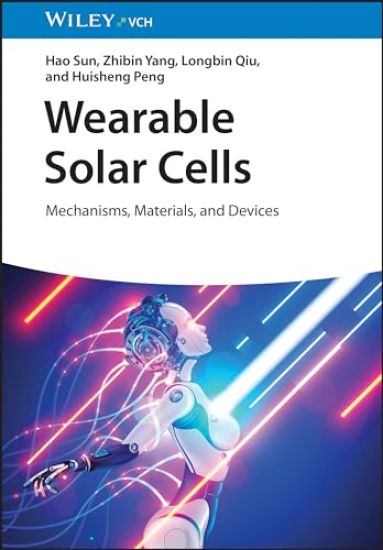
Wearable Solar Cells Understand a groundbreaking new energy technology Solar energy is one of the most important paths to a sustainable future. In recent years, extensive research and development has begun to produce wearable solar cells, whose novel planar and fiber format gives them enormous flexibility and a wide range of potential uses. The possibility of a solar energy source that can be fitted to the human body promises to become an extraordinary tool for meeting various kinds of personal energy needs. Wearable Solar Cells: Mechanisms, Materials, and Devices serves as a comprehensive introduction to this cutting-edge technology and its applications. Recent research pointing towards fiber-format solar cells as a bold new frontier is summarized and explored. The result is an essential resource for both experienced researchers and newcomers to the field. Wearable Solar Cells readers will also find: Close coverage of integrated energy harvesting and storage devicesDetailed discussion of dye-sensitized solar cells, polymer solar cells, perovskite solar cells, and moreAn authorial team with decades of combined research experience Wearable Solar Cells is ideal for materials scientists, polymer chemists, electrical engineers, solid-state physicists, and advanced students interested in these and related topics.
Fiber Electronics

Fiber Electronics

Huisheng Peng

SPRINGER VERLAG, SINGAPORE
2021
nidottu
This book highlights the main advances in fiber electronics, like fiber-shaped solar cells, batteries, supercapacitors, sensors, light-emitting devices, memristors and communication devices from the standpoints of material synthesis, structure design and property enhancement. It focuses on revealing the separation and transport mechanisms of charges, establishing transport equations for electrons and ions, and emphasizing integration methods in fiber devices. In closing, it reviews emerging applications based on fiber devices that could accelerate their large-scale production in the near future. Given its scope, the book offers a valuable resource for scientists, engineers, graduate students and undergraduate students in a wide variety of fields such as advanced materials, energy, electrochemistry, applied physics, nanoscience and nanotechnology, polymer science and engineering and biomedical science. It also benefits many non-specialist industrialists who are working to promote new technologies.
Fiber Electronics

Fiber Electronics

Huisheng Peng

Springer Verlag, Singapore
2020
sidottu
This book highlights the main advances in fiber electronics, like fiber-shaped solar cells, batteries, supercapacitors, sensors, light-emitting devices, memristors and communication devices from the standpoints of material synthesis, structure design and property enhancement. It focuses on revealing the separation and transport mechanisms of charges, establishing transport equations for electrons and ions, and emphasizing integration methods in fiber devices. In closing, it reviews emerging applications based on fiber devices that could accelerate their large-scale production in the near future. Given its scope, the book offers a valuable resource for scientists, engineers, graduate students and undergraduate students in a wide variety of fields such as advanced materials, energy, electrochemistry, applied physics, nanoscience and nanotechnology, polymer science and engineering and biomedical science. It also benefits many non-specialist industrialists who are working to promote new technologies.
Fiber-Shaped Energy Harvesting and Storage Devices

Fiber-Shaped Energy Harvesting and Storage Devices

Huisheng Peng

Springer-Verlag Berlin and Heidelberg GmbH Co. K
2016
nidottu
This comprehensive book covers flexible fiber-shaped devices in the area of energy conversion and storage. The first part of the book introduces recently developed materials, particularly, various nanomaterials and composite materials based on nanostructured carbon such as carbon nanotubes and graphene, metals and polymers for the construction of fiber electrodes. The second part of the book focuses on two typical twisted and coaxial architectures of fiber-shaped devices for energy conversion and storage. The emphasis is placed on dye-sensitized solar cells, polymer solar cells, lithium-ion batteries, electrochemical capacitors and integrated devices. The future development and challenges of these novel and promising fiber-shaped devices are summarized in the final part. This book is the first to introduce fiber-shaped electronic devices, which offer many fascinating advantages compared with the conventional planar structure. It is particularly designed to review the state-of-art developments in fiber-shaped devices for energy conversion and storage. The book will provide a valuable resource for researchers and students working in a wide variety of fields such as advanced materials, new energy, electrochemistry, applied physics, nanoscience and nanotechnology, and polymer science and engineering.Huisheng Peng, PhD, is a Professor and Associate Chair of the Department of Macromolecular Science and PI of the Laboratory of Advanced Materials, Fudan University, Shanghai, China.
Fiber-Shaped Energy Harvesting and Storage Devices

Fiber-Shaped Energy Harvesting and Storage Devices

Huisheng Peng

Springer-Verlag Berlin and Heidelberg GmbH Co. K
2015
sidottu
This comprehensive book covers flexible fiber-shaped devices in the area of energy conversion and storage. The first part of the book introduces recently developed materials, particularly, various nanomaterials and composite materials based on nanostructured carbon such as carbon nanotubes and graphene, metals and polymers for the construction of fiber electrodes. The second part of the book focuses on two typical twisted and coaxial architectures of fiber-shaped devices for energy conversion and storage. The emphasis is placed on dye-sensitized solar cells, polymer solar cells, lithium-ion batteries, electrochemical capacitors and integrated devices. The future development and challenges of these novel and promising fiber-shaped devices are summarized in the final part. This book is the first to introduce fiber-shaped electronic devices, which offer many fascinating advantages compared with the conventional planar structure. It is particularly designed to review the state-of-art developments in fiber-shaped devices for energy conversion and storage. The book will provide a valuable resource for researchers and students working in a wide variety of fields such as advanced materials, new energy, electrochemistry, applied physics, nanoscience and nanotechnology, and polymer science and engineering.Huisheng Peng, PhD, is a Professor and Associate Chair of the Department of Macromolecular Science and PI of the Laboratory of Advanced Materials, Fudan University, Shanghai, China.