Kirjojen hintavertailu. Mukana 12 478 851 kirjaa ja 12 kauppaa.
Kirjailija
Hyeran Kim-Cragg
Kirjat ja teokset yhdessä paikassa: 10 kirjaa, julkaisuja vuosilta 2012-2022, suosituimpien joukossa Interdependence. Vertaile teosten hintoja ja tarkista saatavuus suomalaisista kirjakaupoista.
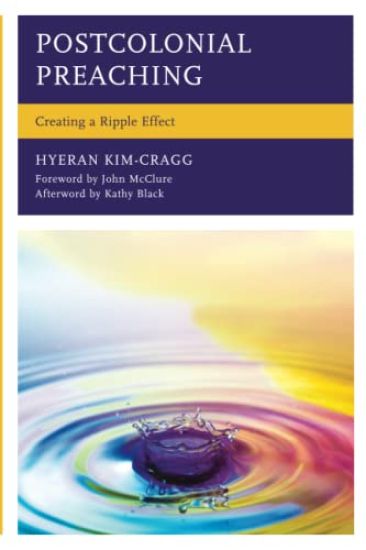
In Postcolonial Preaching, HyeRan Kim-Cragg argues that preaching is the act of dropping the stone of the Gospel into a lake, making waves to move hearts and transform the world wounded by colonial violence. The ripple effect serves as a metaphor and acronym to guide to preaching that takes postcolonial concerns seriously: Rehearsal, Imagination, Place, Pattern, Language and Exegesis (RIPPLE). Kim-Cragg explains each “ripple” in this approach and exercise of creating and delivering sermons. The author delivers fresh insights while drawing on some traditional homiletical perspectives in the service of a homiletic that takes the reality of racism, migration, and environmental degradation seriously. Moreover, Kim-Cragg demonstrates the postcolonial sermon in action by including annotated homilies. This book contributes to the very first wave of the application of postcolonial scholarship in preaching. Given the continuing extent and influence of colonial worldviews and legacies, this approach should become a staple in preaching over the next generation.
In Postcolonial Preaching, HyeRan Kim-Cragg argues that preaching is the act of dropping the stone of the Gospel into a lake, making waves to move hearts and transform the world wounded by colonial violence. The ripple effect serves as a metaphor and acronym to guide to preaching that takes postcolonial concerns seriously: Rehearsal, Imagination, Place, Pattern, Language and Exegesis (RIPPLE). Kim-Cragg explains each “ripple” in this approach and exercise of creating and delivering sermons. The author delivers fresh insights while drawing on some traditional homiletical perspectives in the service of a homiletic that takes the reality of racism, migration, and environmental degradation seriously. Moreover, Kim-Cragg demonstrates the postcolonial sermon in action by including annotated homilies. This book contributes to the very first wave of the application of postcolonial scholarship in preaching. Given the continuing extent and influence of colonial worldviews and legacies, this approach should become a staple in preaching over the next generation.
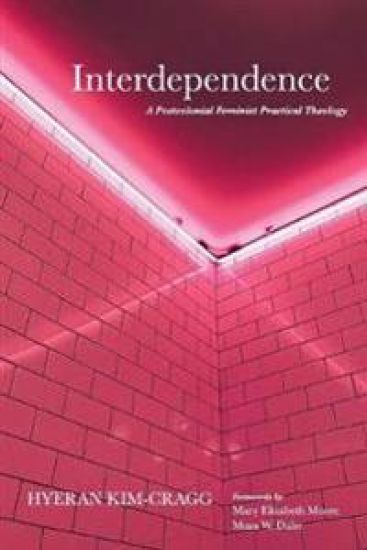
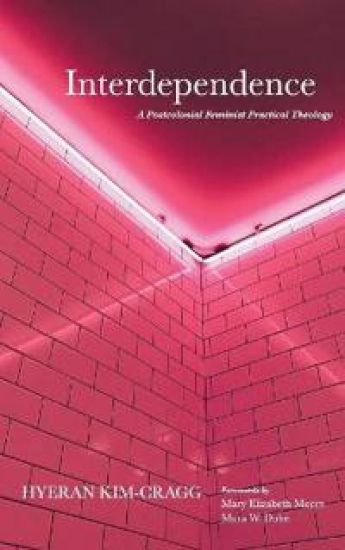
This book calls attention to an urgent need for postcolonial feminist approaches to practical theology. It not only advocates for the inclusion of colonialism as a critical optic for practical theology but also demands a close look at how colonialism is entangled with issues of race, ethnicity, gender, class, disability, and sexual orientation. Seeking to highlight the importance of the interdependence of life, the author challenges and contests the notion of independence as the desirable goal of the human being. Lifting up the experiences of overlooked groups--including children at adult-centered worship, queer and interracial youth in heterosexual and white normative family discourse, and non-human species in human-centered academic and theological realms--the book contributes to expanding the concerns of practical theology in ways that create healthy community for all human beings and non-human fellow creatures. It also takes up issues of multiple religious belonging and migration that practical theology has not sufficiently explored. These illuminating new possibilities promise to renew and even transform church communities through the inclusion of often-neglected groups with whom God is already present. ""This invaluable book brings postcolonial theory to bear on key issues of practical theology, such as the self, family, borders, migration, and ecology. Using 'interdependence of life' as a framework, it offers astute theological analyses and keen pastoral insights, challenging the false binary of practical and 'impractical' theology. This is a gift to students of theology, ministers, and pastoral workers."" --Kwok Pui-lan, author of Postcolonial Imagination and Feminist Theology ""In this wonderfully disruptive and transformative book, HyeRan Kim-Cragg breaks new ground, employing interdependence as a plumb line for Christian realignment. Pushing aside the veil of North American colonialism, she deftly reminds readers that all of us depend on the mercy of others for our very lives, and, suddenly, we see anew those repeatedly cast aside--children, mixed-race and queer youths, multinational immigrants, multi-religious persons, and nature itself. A much-needed contribution "" --Bonnie J. Miller-McLemore, Professor, the Divinity School and Graduate Department of Religion, Vanderbilt University ""HyeRan Kim-Cragg goes beyond borders and boundaries to probe the potential role of Practical Theology in communities often overlooked by our congregations and the academy, offering lament as well as rich insights from an array of scholars. Her postcolonial, feminist theology of interdependence grounds our diverse expressions of humanity with the earth itself and offers hope and compassion for those on the margins."" --Kathy Black, Professor of Homiletics and Liturgics, Claremont School of Theology ""HyeRan Kim-Cragg is an expert guide to feminist and postcolonial practical theology. Grounded in lived situations and ranging across various contemporary theological challenges, this excellent book is at once exciting, complex, adventurous, and careful--and much to be commended. Interdependence shows the promise of postcolonial practical theology. Both wide ranging in its concerns and kept close to lived situations, it is an ideal primer in (or manifesto for) contemporary practical theology that should not be missed "" --Stephen Burns, Stewart Professor of Liturgical and Practical Theology, Trinity College Theological School, University of Divinity, Melbourne, Australia HyeRan Kim-Cragg is Lydia Gruchy Professor of Pastoral Studies at St. Andrew's College at Saskatoon, Canada.
This book calls attention to an urgent need for postcolonial feminist approaches to practical theology. It not only advocates for the inclusion of colonialism as a critical optic for practical theology but also demands a close look at how colonialism is entangled with issues of race, ethnicity, gender, class, disability, and sexual orientation. Seeking to highlight the importance of the interdependence of life, the author challenges and contests the notion of independence as the desirable goal of the human being. Lifting up the experiences of overlooked groups--including children at adult-centered worship, queer and interracial youth in heterosexual and white normative family discourse, and non-human species in human-centered academic and theological realms--the book contributes to expanding the concerns of practical theology in ways that create healthy community for all human beings and non-human fellow creatures. It also takes up issues of multiple religious belonging and migration that practical theology has not sufficiently explored. These illuminating new possibilities promise to renew and even transform church communities through the inclusion of often-neglected groups with whom God is already present. ""This invaluable book brings postcolonial theory to bear on key issues of practical theology, such as the self, family, borders, migration, and ecology. Using 'interdependence of life' as a framework, it offers astute theological analyses and keen pastoral insights, challenging the false binary of practical and 'impractical' theology. This is a gift to students of theology, ministers, and pastoral workers."" --Kwok Pui-lan, author of Postcolonial Imagination and Feminist Theology ""In this wonderfully disruptive and transformative book, HyeRan Kim-Cragg breaks new ground, employing interdependence as a plumb line for Christian realignment. Pushing aside the veil of North American colonialism, she deftly reminds readers that all of us depend on the mercy of others for our very lives, and, suddenly, we see anew those repeatedly cast aside--children, mixed-race and queer youths, multinational immigrants, multi-religious persons, and nature itself. A much-needed contribution "" --Bonnie J. Miller-McLemore, Professor, the Divinity School and Graduate Department of Religion, Vanderbilt University ""HyeRan Kim-Cragg goes beyond borders and boundaries to probe the potential role of Practical Theology in communities often overlooked by our congregations and the academy, offering lament as well as rich insights from an array of scholars. Her postcolonial, feminist theology of interdependence grounds our diverse expressions of humanity with the earth itself and offers hope and compassion for those on the margins."" --Kathy Black, Professor of Homiletics and Liturgics, Claremont School of Theology ""HyeRan Kim-Cragg is an expert guide to feminist and postcolonial practical theology. Grounded in lived situations and ranging across various contemporary theological challenges, this excellent book is at once exciting, complex, adventurous, and careful--and much to be commended. Interdependence shows the promise of postcolonial practical theology. Both wide ranging in its concerns and kept close to lived situations, it is an ideal primer in (or manifesto for) contemporary practical theology that should not be missed "" --Stephen Burns, Stewart Professor of Liturgical and Practical Theology, Trinity College Theological School, University of Divinity, Melbourne, Australia HyeRan Kim-Cragg is Lydia Gruchy Professor of Pastoral Studies at St. Andrew's College at Saskatoon, Canada.
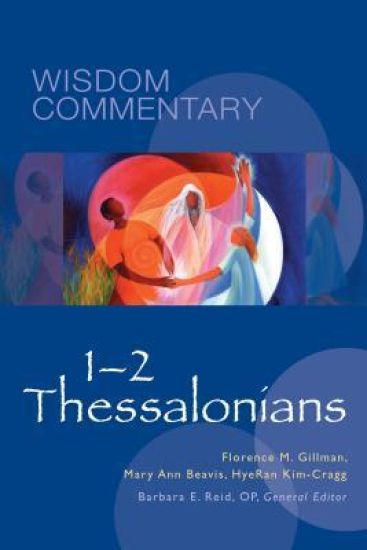
When Paul wrote First Thessalonians shortly after the recipients had accepted the Gospel, many significant issues had already arisen among them. Of great concern was the social complexity, and even persecution, they encountered because they had “turned to God from idols” (1:9). The countercultural stance of those earliest believers, and especially the impact that may have had for women, is addressed throughout this commentary. While Paul directs no remarks only to women in this letter, the ramifications of his preaching on their daily lives emerge vibrantly from the application of a feminist hermeneutics of suspicion to the text. While Second Thessalonians is a shorter letter, it has been disproportionately influential on Christian thought, especially apocalyptic doctrine and the “Protestant work ethic.” From a feminist perspective, it is androcentric, rhetorically manipulative, and even violent. In this commentary, Mary Ann Beavis and HyeRan Kim-Cragg explore this text from many angles to expose both constructive and destructive implications in the text. Notably, they suggest a perspective on the “afflictions” endured by the Thessalonian church that neither glorifies suffering nor wishes for revenge but rather sees the divine presence in women’s acts of compassion and care in circumstances of extreme duress and inhumanity.From the Wisdom Commentary series Feminist biblical interpretation has reached a level of maturity that now makes possible a commentary series on every book of the Bible. It is our hope that Wisdom Commentary, by making the best of current feminist biblical scholarship available in an accessible format to ministers, preachers, teachers, scholars, and students, will aid all readers in their advancement toward God’s vision of dignity, equality, and justice for all.The aim of this commentary is to provide feminist interpretation of Scripture in serious, scholarly engagement with the whole text, not only those texts that explicitly mention women. A central concern is the world in front of the text, that is, how the text is heard and appropriated by women. At the same time, this commentary aims to be faithful to the ancient text, to explicate the world behind the text, where appropriate, and not impose contemporary questions onto the ancient texts. The commentary addresses not only issues of gender (which are primary in this project) but also those of power, authority, ethnicity, racism, and classism, which all intersect.Each volume incorporates diverse voices and differing interpretations from different parts of the world, showing the importance of social location in the process of interpretation and that there is no single definitive feminist interpretation of a text.
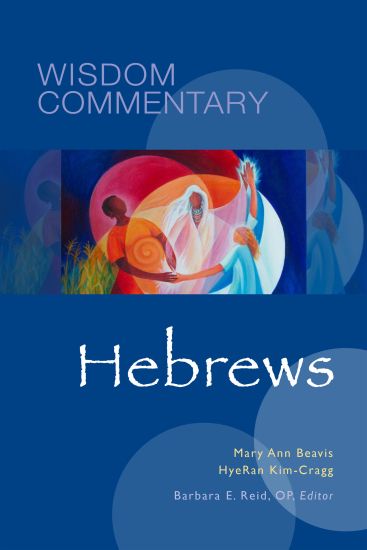
Hebrews seems like unpromising material for feminist interpretation, although it is the only New Testament writing for which female authorship has been seriously posited. Mary Ann Beavis and HyeRan Kim-Cragg highlight the similarities between Hebrews and the book of Wisdom/Sophia, which share cosmological, ethical, historical, and sapiential themes, revealing that Hebrews is in fact a submerged tradition of Sophia-Wisdom. They also tackle the sacrificial Christology of Hebrews, concluding that in its ancient context, far from symbolizing suffering and abjection, sacrifice was understood as celebratory and relational. Contributions from Filipina (Maricel and Marilou Ibita), Jewish (Justin Jaron Lewis), historical (Nancy Calvert-Koyzis), and First Nations (Marie Annharte Baker) perspectives bring additional scholarly, cultural, religious, and experiential wisdom to the commentary. From the Wisdom Commentary seriesFeminist biblical interpretation has reached a level of maturity that now makes possible a commentary series on every book of the Bible. It is our hope that Wisdom Commentary, by making the best of current feminist biblical scholarship available in an accessible format to ministers, preachers, teachers, scholars, and students, will aid all readers in their advancement toward God’s vision of dignity, equality, and justice for all.The aim of this commentary is to provide feminist interpretation of Scripture in serious, scholarly engagement with the whole text, not only those texts that explicitly mention women. A central concern is the world in front of the text, that is, how the text is heard and appropriated by women. At the same time, this commentary aims to be faithful to the ancient text, to explicate the world behind the text, where appropriate, and not impose contemporary questions onto the ancient texts. The commentary addresses not only issues of gender (which are primary in this project) but also those of power, authority, ethnicity, racism, and classism, which all intersect.Each volume incorporates diverse voices and differing interpretations from different parts of the world, showing the importance of social location in the process of interpretation and that there is no single definitive feminist interpretation of a text.
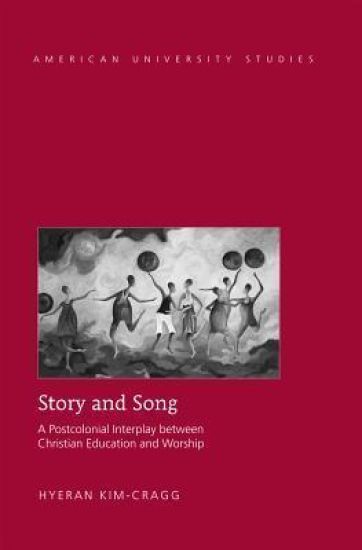
Story and Song: A Postcolonial Interplay between Christian Education and Worship examines the roles of Scripture and hymnody in a Christian community in the twenty-first century, an era marked by a growing awareness of complex issues and migrating contexts. This work identifies the divisions that have existed between these two disciplines. The postcolonial approach employed here offers insights that uncover the colonial assumptions that led to division rather than integration of worship and Christian education. Furthermore, this book seeks to employ qualitative research methods in studying a Korean-Canadian diasporic congregation and a Korean feminist Christian group. Such research demonstrates how the Gospel Story and the congregation’s stories can be woven together in a particular context, while the Song of Faith can help to build a postcolonial feminist community. Readers will be equipped to mend the divisions between Christian education and worship, to respond to the needs of non-Western Christian communities, and to attain postcolonial insights. A balanced theoretical work with reflective practical descriptions, this volume will be useful to those who are looking for a text to guide Christian education and worship courses and contribute to the readings of courses in practical theology, postcolonial studies, feminist pedagogies, and feminist liturgies.