Kirjojen hintavertailu. Mukana 12 595 353 kirjaa ja 12 kauppaa.
Kirjailija
I. M. Destler
Kirjat ja teokset yhdessä paikassa: 8 kirjaa, julkaisuja vuosilta 1976-2014, suosituimpien joukossa Our Own Worst Enemy. Vertaile teosten hintoja ja tarkista saatavuus suomalaisista kirjakaupoista.
Mukana myös kirjoitusasut: I M. Destler, I M Destler, I.M. Destler
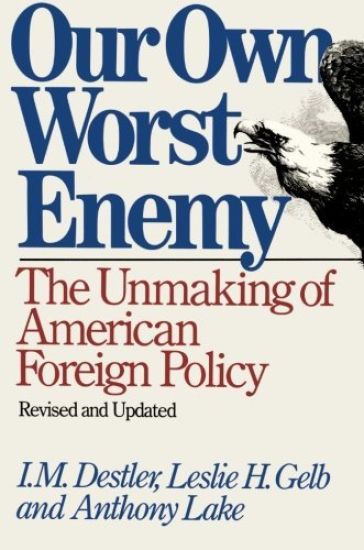
Three former government officials rethink the foreign policy decisions of America's leaders as they detail their failures and inadequacies and propose effective new moves the nation could make to self-correct. The authors of Our Own Worst Enemy, each of which have held high positions in the State Department and Pentagon, argue that for more than 20 years the United States has been experiencing a nervous breakdown concerning the making of foreign policy. As foreign policy continuously becomes more partisan and ideological, and each president disavows his predecessor as he starts anew, the authors describe how America has watched its leaders repeatedly trap themselves in foreign policy debacles. Within the pages of this book, I.M. Destler, Leslie H. Gelb, and Anthony Lake propose clear and effective measures by which America may extricate itself from the political quagmire it is repeatedly placed in.
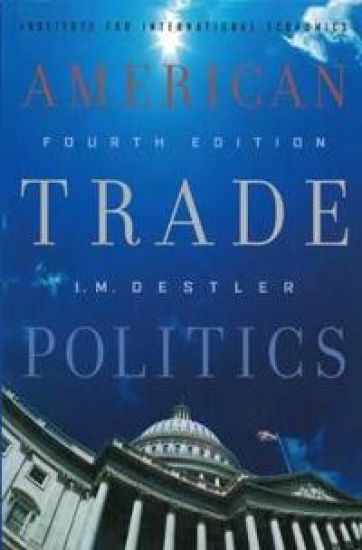
In this comprehensive revision of the most influential, widely read analysis of the US trade policymaking system, Destler addresses how globalization has reshaped trade politics, weakening traditional protectionism but intensifying concern about trade's societal impacts. Entirely new chapters treat the deepening of partisan divisions and the rise of "trade and..." issues (especially labor and the environment). The author concludes with a comprehensive economic and political strategy to cope with globalization and maximize its benefits. The original edition of American Trade Politics won the Gladys Kammerer Award of the American Political Science Association for the best book on US national policy.
In the wake of civil protest in Seattle during the 1999 World Trade Organization meeting, many issues raised by globalization and increasingly free trade have been in the forefront of the news. But these issues are not necessarily new. Taking Trade to the Streets describes how so many individuals and nongovernmental organizations came over time to see trade agreements as threatening national systems of social and environmental regulations. Using the United States as a case study, Susan Ariel Aaronson examines the history of trade agreement critics, focusing particular attention on NAFTA (the North American Free Trade Agreement between Canada, Mexico, and the United States) and the Tokyo and Uruguay Rounds of trade liberalization under the GATT. She also considers the question of whether such trade agreement critics are truly protectionist.The book explores how trade agreement critics built a fluid global movement to redefine the terms of trade agreements (the international system of rules governing trade) and to redefine how citizens talk about trade. (The "terms of trade" is a relationship between the prices of exports and of imports.) That movement, which has been growing since the 1980s, transcends borders as well as longstanding views about the role of government in the economy. While many trade agreement critics on the left say they want government policies to make markets more equitable, they find themselves allied with activists on the right who want to reduce the role of government in the economy.Aaronson highlights three hot-button social issues--food safety, the environment, and labor standards--to illustrate how conflicts arise between trade and other types of regulation. And finally she calls for a careful evaluation of the terms of trade from which an honest debate over regulating the global economy might emerge.Ultimately, this book links the history of trade policy to the history of social regulation. It is a social, political, and economic history that will be of interest to policymakers and students of history, economics, political science, government, trade, sociology, and international affairs.Susan Ariel Aaronson is Senior Fellow at the National Policy Institute and occasional commentator on National Public Radio's "Morning Edition."
Imports pour into the United States, up by 79 percent in six years. The trade deficit more than doubles. The House of Representatives solidly rejects a bill that would liberalize global and regional trade and endorses import quotas for a major manufactured product by a two-to-one margin. Although at first glance these events of the 1990s might sound like past chapters of US trade politics, in fact the political dynamics have changed in significant ways. As the impact of globalization comes into focus, politically important constituencies have begun to resist trade liberalization. Labor and environmental groups in particular, demanding that their concerns be addressed, have succeeded in fracturing the long-standing, bipartisan, protrade coalition in Congress, and in the process have undercut US leadership in liberalizing global trade. This new study reexamines the landscape of trade politics. It shows how trade advocates and labor and environmental skeptics differ significantly in both their substantive views and their political and organizational cultures.The authors demonstrate how this new challenge differs from that of traditional trade protectionism, likening it instead to the debate a century ago over whether and how to regulate American capitalism for social purposes. The analysis leads to a set of recommendations aimed at constructive compromise and a new political foundation for US trade policy leadership.
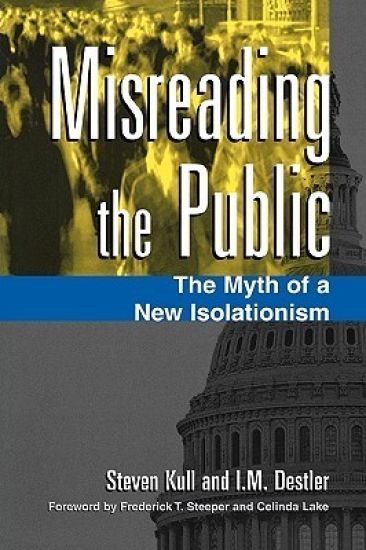
"Do American policymakers really know what the American public wants in U.S. foreign policy? Through extensive interviews with members of the policy community, the authors reveal a pervasive belief—especially in Congress—that, in the wake of the cold war, the public is showing a new isolationism: opposition to foreign aid, hostility to the United Nations, and aversion to contributing U.S. troops to peacekeeping operations. This view of the public has in turn had a significant impact on U.S. foreign policy. However, through a comprehensive review of polling data, as well as focus groups, the authors show that all these beliefs about the public are myths. The public does complain that the United States is playing the role of dominant world leader more than it should, but this does not lead to a desire to withdraw. Instead people prefer to share responsibility with other nations, particularly through the UN. The authors offer explanations of how such a misperception can occur and suggest ways to improve communication between the public and policymakers, including better presentation of polling data and more attention by practitioners to a wider public."
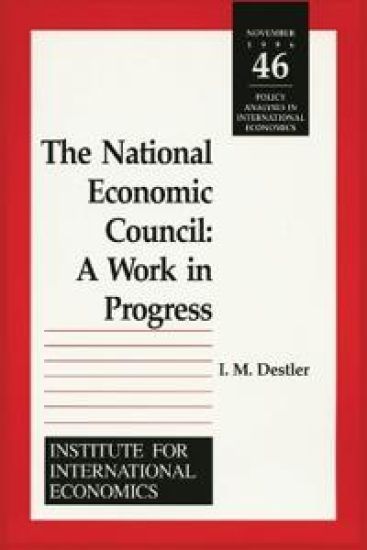
In January 1993, President Bill Clinton established in his Executive Office the National Economic Council, parallel to the National Security Council born 45 years before. Its official purpose was to "coordinate the economic policymaking process with respect to domestic and international economic issues." The NEC was the President's staff instrument for fulfilling his campaign promise to give top priority to the American economy. Under its first director, Robert E. Rubin, the NEC orchestrated the development of Clinton's comprehensive deficit reduction plan. Then and since, it has sought to coordinate policy on a range of issues, particularly in the area of international trade. Now, as the NEC nears its fourth anniversary, it is appropriate to assess its record. How effectively has it played the role the president assigned it? Has its role been institutionalized, so the NEC can endure as the NSC has endured? Destler reviews its performance across a range of issues, from its two years under Rubin to its role under his successor, Laura Tyson. The analysis concludes with recommendations for strengthening the NEC in 1997 and beyond.
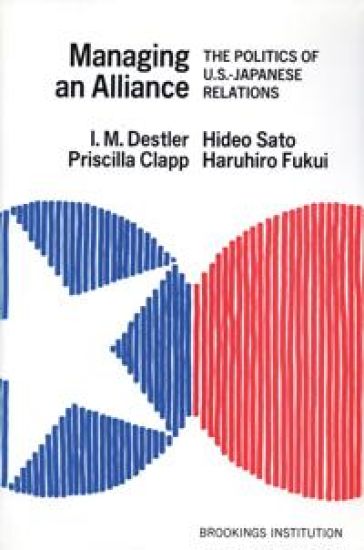
"The alliance between Japan and the United States has entered a new era. Successful in promoting mutually beneficial relations during the cold war era, it must now be adapted to a world of detente and new dealings with China. Effective in helping the vulnerable postwar Japanese economy recover domestically and expand its trade internationally, it is now confronted with the different issues accompanying Japan's rise to third rank among the world's economic powers.The alliance remains important because effective cooperation between Japan and the United States is indispensable to regional stability in East Asia and to a workable world economic order. This study of the politics and processes that influence U.S.-Japanese relations draws heavily on three episodes: revision of the bilateral security treaty in 1960; agreement on reversion of Okinawa to Japan in 1969; and the dispute in 1969-71 over Japanese textile exports to the United States. All three illustrate differences and similarities in the national political and bureaucratic institutions through which policy decisions and actions are taken, how officials in each government perceive actions taken by the other, and recurrent patterns of misperception.The authors' analysis of U.S. and Japanese negotiating tactics constitutes a guide to effective political management and consensus-building within each country. The study also accounts for the ways in which issues arise, the channels through which they are negotiated, and the effect of actions in one system on decisionmaking in the other. The authors conclude with suggestions about how to reduce tension and promote constructive bilateral relations—suggestions that they believe to be relevant to the conduct of U.S. relations with other major allies."