Kirjojen hintavertailu. Mukana 12 152 606 kirjaa ja 12 kauppaa.

Kirjailija

Iain Ferris

Kirjat ja teokset yhdessä paikassa: 11 kirjaa, julkaisuja vuosilta 2003-2025, suosituimpien joukossa The Mirror of Venus. Vertaile teosten hintoja ja tarkista saatavuus suomalaisista kirjakaupoista.

11 kirjaa

Kirjojen julkaisuhaarukka 2003-2025.

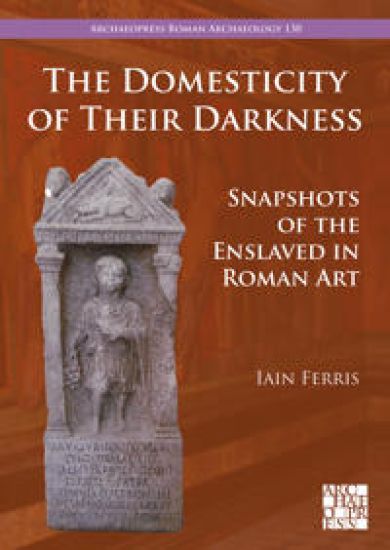
The Domesticity of Their Darkness

The Domesticity of Their Darkness

Iain Ferris

Archaeopress
2025
nidottu
The Domesticity of Their Darkness is about the appearance of images of the enslaved in Roman art and the analysis of this archive. The word snapshots has been used quite deliberately, and very specifically, in the subtitle of this study because of the impossibility of there ever being the material evidence and opportunity to write a full, linear, chronological narrative about images of the enslaved in Roman times. The ancient enslaved are now to us like shadows out of time: yet, most importantly, they seem to have existed between the images discussed in this study. In these works it was never their aesthetic value that counted: they were to be read and understood, so that their meaning came across. In the Roman world everything was art, including the history of enslavement and of the enslaved. The floating roots of so many of these enslaved individuals cannot be located in a world where for the Roman elite name, roots, and family lineage created an ideological geography of belonging, of being inside, reaching into the future as well as back to the past. For the enslaved the tranquillity of simply inhabiting space could never be enough. Images of the enslaved in Roman domestic interiors often appear now as being somehow quite weird, in terms of the strange within the familiar and the familiar as strange. The domestic world portrayed, its domesticity, does not coincide with itself. There is a wrongness here, a delusive envelope, yet all is depicted as being right. The book represents an attempt to foreground the background.

Food Safety and Inspection

Food Safety and Inspection

Madeleine Smith; Iain Ferris

TAYLOR FRANCIS LTD
2025
nidottu
The process of food inspection relies on an inspector's understanding of the intrinsic hazards associated with individual foods. Whereas spoilage can usually be determined through a simple organoleptic assessment, the judgment of whether a food is fit for human consumption requires an evaluation of health hazards, many of which may not be apparent through physical assessment. Instead, the inspector must analyse and integrate scientific and handling information to evaluate the potential health risk. Now fully updated and expanded in this second edition, Food Safety and Inspection: An Introduction focuses on food categories and describes common hazards associated with each, using published peer-reviewed research to explain and evaluate the health risk.With the adulteration of foods becoming an increasing problem, and the complexity of the food supply chain an understanding of risk points to allow targeted inspection and assessment is required. This book offers solutions to this as well as new chapters and material that centres on specialist products and processes that are challenging to inspect, including charcuterie, sous vide and allergen contamination. This practically minded book is designed to support the role of food inspection in the modern food industry.This book is an essential read for anyone interested in studying for certification to become a food inspector and those studying food safety courses at university or in practice.
Food Safety and Inspection

Food Safety and Inspection

Madeleine Smith; Iain Ferris

TAYLOR FRANCIS LTD
2025
sidottu
The process of food inspection relies on an inspector's understanding of the intrinsic hazards associated with individual foods. Whereas spoilage can usually be determined through a simple organoleptic assessment, the judgment of whether a food is fit for human consumption requires an evaluation of health hazards, many of which may not be apparent through physical assessment. Instead, the inspector must analyse and integrate scientific and handling information to evaluate the potential health risk. Now fully updated and expanded in this second edition, Food Safety and Inspection: An Introduction focuses on food categories and describes common hazards associated with each, using published peer-reviewed research to explain and evaluate the health risk.With the adulteration of foods becoming an increasing problem, and the complexity of the food supply chain an understanding of risk points to allow targeted inspection and assessment is required. This book offers solutions to this as well as new chapters and material that centres on specialist products and processes that are challenging to inspect, including charcuterie, sous vide and allergen contamination. This practically minded book is designed to support the role of food inspection in the modern food industry.This book is an essential read for anyone interested in studying for certification to become a food inspector and those studying food safety courses at university or in practice.
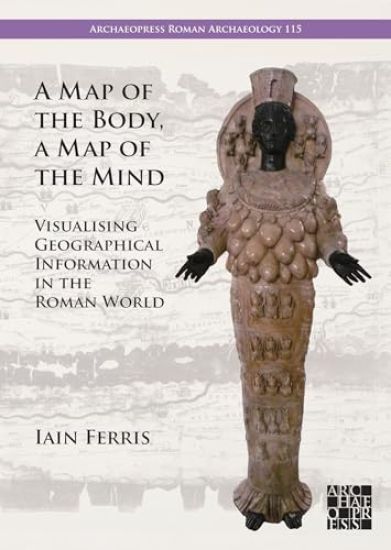
A Map of the Body, a Map of the Mind
A Map of the Body, a Map of the Mind is a study about the relationship between geography and power in the ancient Roman world, and most particularly about the visualisation of geographical knowledge in myriad forms of geography products, including geographical treatises, histories, poems, personifications, landscape representations, images of barbarian peoples, maps, itineraries, and imported foodstuffs. As Rome broke its political bounds and headed towards empire the whole city became the centre and the Roman world-view changed with it. The Roman state then needed to present to the Roman people an easily-digestible narrative about its imperial ambition and imperial possessions, in a way that went beyond the fact that servitude, enslavement, and misery for many underpinned this expansion. There needed to be a publicly-guided discourse centred around the smoothing out of difference, rather than its obliteration or elimination, and the presentation of many different lifeworlds in a familiar way using geographical information. This marked a way of directing how change could be managed and of reimagining how the world might be and might work at the intersection between selection, knowledge, and insight. Reflection and communication sought to create a communal sense of belonging. If not actually doors, these geographical images were at least windows onto self-identity and otherness, letting light in on a sombre struggle against accidie.
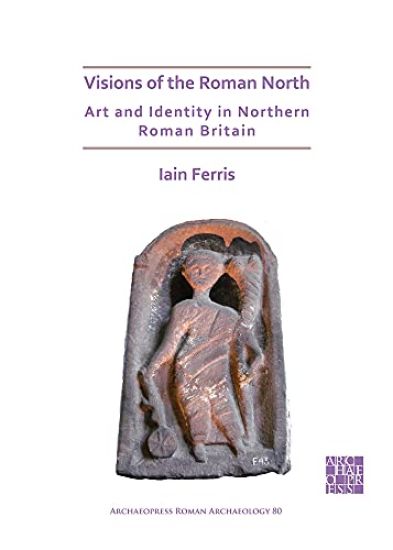
Visions of the Roman North: Art and Identity in Northern Roman Britain
Visions of the Roman North: Art and Identity in Northern Roman Britain is the first book to present an analysis of art from the northern frontier zones of Roman Britain and to interpret the meaning and significance of this art in terms of the formation of a regional identity at this time. It argues that a distinct and vibrant visual culture flourished in the north during the Roman period, primarily due to its status as a heavily militarized frontier zone. Artworks from forts and the frontier-works of Hadrian’s Wall and the Antonine Wall, along with funerary monuments from military and civilian cemeteries, are analysed and discussed. The book also explores religious sculpture depicting classical deities, Romano-British gods and goddesses and eastern deities such as Mithras in terms of the use of imagery in various belief systems and in terms of the establishment of individual and group identities.
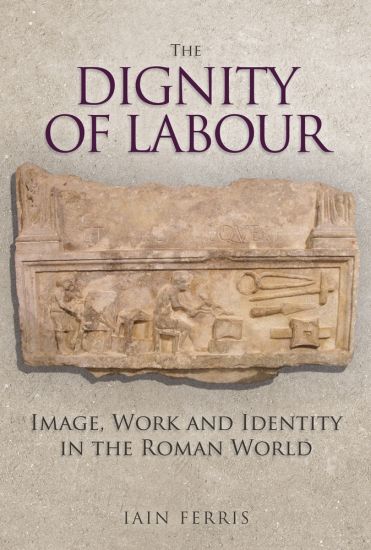
The Dignity of Labour

The Dignity of Labour

Iain Ferris

Amberley Publishing
2021
sidottu
This is the first book to present an analysis of images of working people in Roman society and to interpret their meaning and significance. What did work mean to the Romans? Numerous incidental illustrations of agricultural workers occur in Roman artworks, particularly mosaic pavements. More significantly, the names and trades of many individual working people, artisans, and professionals are known from inscriptions and funerary monuments in Rome and from across the empire. Indeed, the names and trades of over twelve hundred men and over two hundred women are known from inscriptions in Rome alone. The most extraordinary individual funerary monuments for working people are the Tomb of Eurysaces the Baker that still stands at Porta Maggiore in Rome and the Tomb of the Haterii in the Vatican Museums, the latter a monument to a family that had made their fortune in the construction industry in the city. Less grand but equally informative are the dozens of other funerary monuments to people such as Bassilla, the mime or actress from Aquileia, Longidienus the shipbuilder from Ravenna, and Vitalis, the pork butcher from Rome. This study encompasses consideration of both written and archaeological sources, but particularly of visual evidence in the form of sculptures, funerary monuments of various kinds, mosaics, and wall paintings.
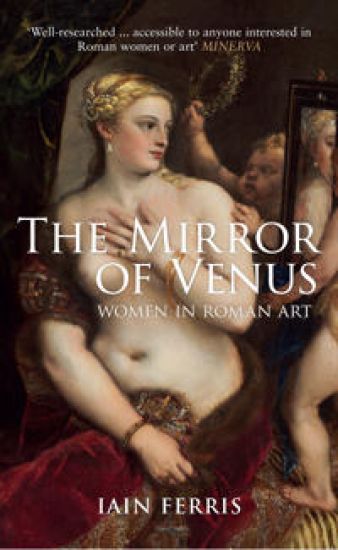
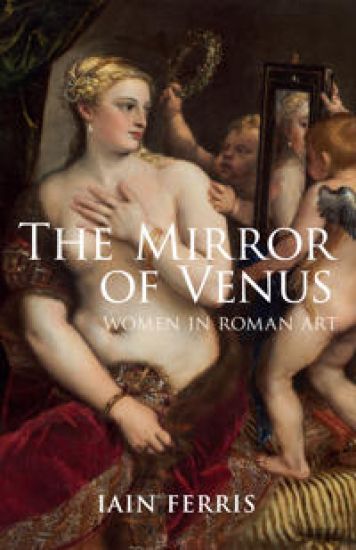
The Mirror of Venus

The Mirror of Venus

Iain Ferris

Amberley Publishing
2017
pokkari
Though images of women were ubiquitous in the Roman world, these were seldom intended to be taken simply at face value. The importance of marriage, motherhood and political stability was often conveyed to the Roman people through carefully constructed representations of the women of the ruling house. Mythological representations were used to present moral and political lessons to the women of Rome. Roman society was, on most levels, male dominated and women’s roles were sometimes subordinate to political and cultural needs and imperatives. Images of mortal women – empresses and other female members of the imperial family, elite women from around the empire and working women from Rome, Ostia, Pompeii and elsewhere – are analysed alongside images of goddesses and personifications and of complex mythological figures such as Amazons. This is the first general book to present a coherent, broad analysis of the numerous images of women in Roman art and to interpret their meaning and significance, all set against the broader geographical, chronological, political, religious and cultural context of the world of the Roman republic and empire and of Late Antiquity.
The Mirror of Venus

The Mirror of Venus

Iain Ferris

Amberley Publishing
2015
sidottu
Though images of women were ubiquitous in the Roman world, these were seldom intended to be taken simply at face value. The importance of marriage, motherhood and political stability was often conveyed to the Roman people through carefully constructed representations of the women of the ruling house. Mythological representations were used to present moral and political lessons to the women of Rome. Roman society was, on most levels, male dominated and women’s roles were sometimes subordinate to political and cultural needs and imperatives. Images of mortal women – empresses and other female members of the imperial family, elite women from around the empire and working women from Rome, Ostia, Pompeii and elsewhere – are analysed alongside images of goddesses and personifications and of complex mythological figures such as Amazons. This is the first general book to present a coherent, broad analysis of the numerous images of women in Roman art and to interpret their meaning and significance, all set against the broader geographical, chronological, political, religious and cultural context of the world of the Roman republic and empire and of Late Antiquity.
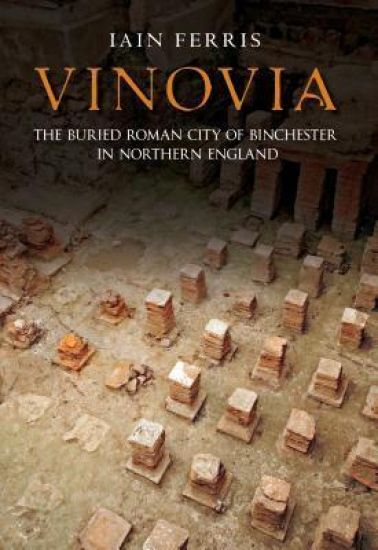
Vinovia

Vinovia

Iain Ferris

Amberley Publishing
2011
nidottu
Binchester Roman fort, Roman Vinovia, lies on a hilltop spur about two kilometres north of the modern town of Bishop Auckland in County Durham. This book draws on the results of large-scale excavations in the 1970s and 80s to describe the sequence of construction of the fort from 1st century timber beginnings, to the final phase of stone building in the 4th. Iain Ferris also looks at the evidence for daily life at the fort, its military significance, and asks what it can tell us about the end of Roman Britain in the north.
Hate and War

Hate and War

Iain Ferris

The History Press Ltd
2009
nidottu
One of the best-preserved and most significant Roman Imperial monuments, the column of Marcus Aurelius is depicts some of the most violent and harrowing scenes of warfare known from the Roman world. Commissioned by the Emperor Commodus, the column's shaft is decorated with a spiral frieze commemorating his father's campaigns in against the Marcomanni and the Samartians. In the first ever detailed study of this monument, Iain Ferris analyses the military campaigns recorded on the frieze and discusses the column in its broader political, artistic and cultural context. This is an important study of a period that proved to be a turning point in the history of the Roman Empire, with a growing and deep-seated fear of barbarian incursions dating from this time, a fear that was to prove justified for the Western Roman Empire.
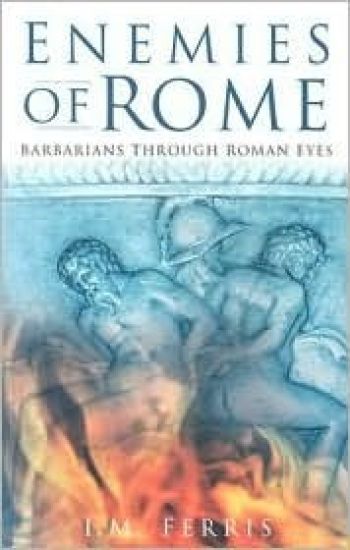
Enemies of Rome

Enemies of Rome

Iain Ferris

The History Press Ltd
2003
nidottu
The artists of Ancient Rome portrayed the barbarian enemies of the empire in sculpture, reliefs, metalwork and jewellery. Enemies of Rome shows how the study of these images can reveal a great deal about the barbarians, as well as Roman art and the Romans view of themselves.