Kirjojen hintavertailu. Mukana 12 595 353 kirjaa ja 12 kauppaa.

Kirjailija

Iain MacGregor

Kirjat ja teokset yhdessä paikassa: 18 kirjaa, julkaisuja vuosilta 2016-2026, suosituimpien joukossa Battle. Vertaile teosten hintoja ja tarkista saatavuus suomalaisista kirjakaupoista.

18 kirjaa

Kirjojen julkaisuhaarukka 2016-2026.

Battle

Battle

Iain MacGregor

BLOOMSBURY PUBLISHING PLC
2026
sidottu
'A majestic survey... Here are the military doctrines, weapons, luck and leadership that forged our world' DAN SNOW 'Elegantly crafted... and written with an eye for telling detail' JONATHAN DIMBLEBY For centuries, battles have determined the fate of nations, toppled empires and reshaped civilisations. In Battle, award-winning historian Iain MacGregor charts the key encounters that have shaped the evolution of warfare – from the clash of hoplite spears at Marathon and the storm of longbows at Agincourt, to the firestorms of Stalingrad and the drone warfare of modern Ukraine. Battle is far more than a chronicle of triumphs and defeats. MacGregor delves into the human and technological driving forces behind history’s most decisive clashes: the brilliance – and hubris – of leadership, the revolutionary impact of new weaponry, the fragile lifeline of supply, and, above all, the endurance of morale – the lifeblood of any army. Famous commanders from Julius Caesar to Napoleon are seen afresh as MacGregor examines the units they led, the weapons they used and the tactics that brought them victory, illuminating both the genius and the folly that turned battlefields into crucibles of history. Panoramic in scope yet alive with vivid detail, Battle is an exhilarating ride through centuries of conflict and innovation. MacGregor provides both an authoritative study and a gripping narrative of how war has been fought – and how it has shaped the world in which we live today. 'One of our finest writers of military history ... Whenever he puts pen to paper, the result is guaranteed to make you sit up and reconsider what you thought you knew' PETER CADDICK-ADAMS, bestselling author of War in the West
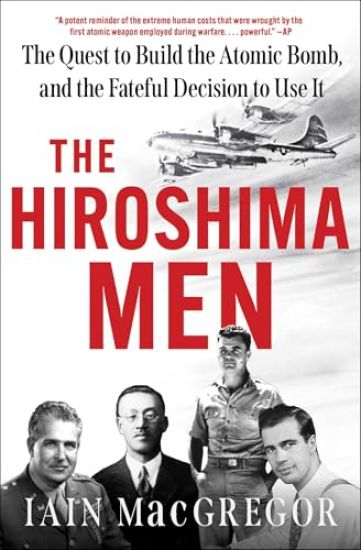
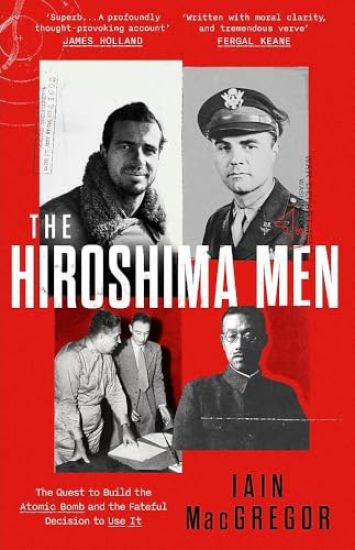
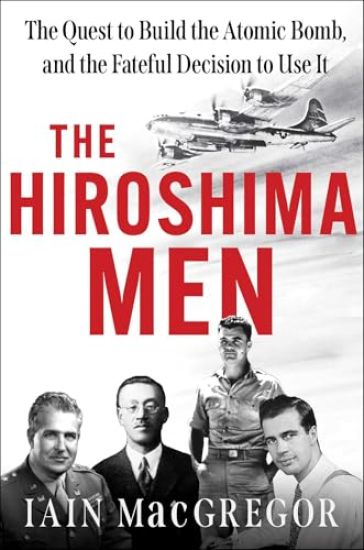
The Hiroshima Men: The Quest to Build the Atomic Bomb, and the Fateful Decision to Use It
An epic, riveting history based on new interviews and research that elucidates the approval, construction, and fateful decision to drop the atomic bomb on Hiroshima. At 8:15 a.m. on August 6, 1945, the Japanese port city of Hiroshima was struck by the world's first atomic bomb. Built in the US by the top-secret Manhattan Project and delivered by a B-29 Superfortress, a revolutionary long-range bomber, the weapon destroyed large swaths of the city, instantly killing tens of thousands. The world would never be the same. The Hiroshima Men's vivid narrative recounts the decade-long journey toward this first atomic attack. It charts the race for the bomb during World War II, as the Allies fought the Axis powers, and is told through several key characters: General Leslie Groves, leader of the Manhattan Project alongside Robert Oppenheimer; pioneering Army Air Force pilot Colonel Paul Tibbets Jr.; the mayor of Hiroshima, Senkichi Awaya, who would die alongside eighty thousand fellow citizens; and Pulitzer Prize-winning writer John Hersey, who traveled to Japan for the New Yorker to expose the devastation the bomb inflicted on the city and to describe in unflinching detail the dangers posed by radiation poisoning. This thrilling account takes the reader from the corridors of power in the White House and the Pentagon to the test sites of New Mexico; from the air war above Germany to the Potsdam Conference of Truman, Churchill, and Stalin; from the savage reconquest of the Pacific to the deadly firebombing air raids across Japan. The Hiroshima Men also includes Japanese perspectives--a vital aspect often missing from Western narratives--to complete Iain MacGregor's nuanced, deeply human account of the bombing's meaning and aftermath.
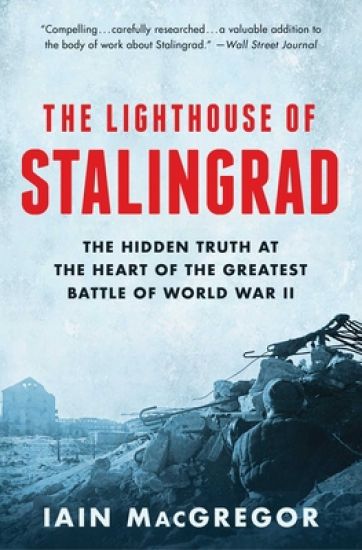
The Lighthouse of Stalingrad: The Hidden Truth at the Heart of the Greatest Battle of World War II
A thrilling, vivid, and "compelling" (Wall Street Journal) account of the epic siege during one of World War II's most important battles, told by the brilliant British editor-turned-historian and author of Checkpoint Charlie. To the Soviet Union, the sacrifices that enabled the country to defeat Nazi Germany in World War II were sacrosanct. The foundation of the Soviets' hard-won victory was laid during the battle for the city of Stalingrad, resting on the banks of the Volga River. To Russians, it is a pivotal landmark of their nation's losses, with more than two million civilians and combatants either killed, wounded, or captured during the bitter fighting from September 1942 to February 1943. Both sides endured terrible conditions in brutal, relentless house-to-house fighting. Within this life-and-death struggle, Soviet war correspondents lauded the fight for a key strategic building in the heart of the city, "Pavlov's House," which was situated on the frontline and codenamed "The Lighthouse." The legend grew of a small garrison of Russian soldiers from the 13th Guards Rifle Division holding out against the Germans of the Sixth Army, which had battled its way to the very center of Stalingrad. A report about the battle in a local Red Army newspaper would soon grow and be repeated on Moscow radio and in countless national newspapers. By the end of the war, the legend would gather further momentum and inspire Russians to rebuild their destroyed towns and cities. This story has become a pillar of the Stalingrad legend and one that can now be told accurately. Written with "impressive skill and relish" (Sunday Times), The Lighthouse of Stalingrad sheds new light on this iconic battle through the prism of the two units who fought for the very heart of the city itself. Iain MacGregor traveled to both German and Russian archives to unearth previously unpublished testimonies by soldiers on both sides of the conflict. His "utterly riveting" (Alex Kershaw) narrative lays to rest the questions as to the identity of the real heroes of this epic battle for one of the city's most famous buildings and provides authoritative answers as to how the battle finally ended and influenced the conclusion of the siege of Stalingrad.
Lighthouse of Stalingrad

Lighthouse of Stalingrad

Iain MacGregor

Little, Brown Book Group
2023
pokkari
An enthralling and insightful look into the most decisive battle of the Second World War - The Lighthouse of Stalingrad sheds new light on the heroic work of those who fought and died as we mark its 80th anniversary.
The Lighthouse of Stalingrad: The Hidden Truth at the Heart of the Greatest Battle of World War II
A thrilling, vivid, and "compelling" (Wall Street Journal) account of the epic siege during one of World War II's most important battles, told by the brilliant British editor-turned-historian and author of Checkpoint Charlie. To the Soviet Union, the sacrifices that enabled the country to defeat Nazi Germany in World War II were sacrosanct. The foundation of the Soviets' hard-won victory was laid during the battle for the city of Stalingrad, resting on the banks of the Volga River. To Russians, it is a pivotal landmark of their nation's losses, with more than two million civilians and combatants either killed, wounded, or captured during the bitter fighting from September 1942 to February 1943. Both sides endured terrible conditions in brutal, relentless house-to-house fighting. Within this life-and-death struggle, Soviet war correspondents lauded the fight for a key strategic building in the heart of the city, "Pavlov's House," which was situated on the frontline and codenamed "The Lighthouse." The legend grew of a small garrison of Russian soldiers from the 13th Guards Rifle Division holding out against the Germans of the Sixth Army, which had battled its way to the very center of Stalingrad. A report about the battle in a local Red Army newspaper would soon grow and be repeated on Moscow radio and in countless national newspapers. By the end of the war, the legend would gather further momentum and inspire Russians to rebuild their destroyed towns and cities. This story has become a pillar of the Stalingrad legend and one that can now be told accurately. Written with "impressive skill and relish" (Sunday Times), The Lighthouse of Stalingrad sheds new light on this iconic battle through the prism of the two units who fought for the very heart of the city itself. Iain MacGregor traveled to both German and Russian archives to unearth previously unpublished testimonies by soldiers on both sides of the conflict. His "utterly riveting" (Alex Kershaw) narrative lays to rest the questions as to the identity of the real heroes of this epic battle for one of the city's most famous buildings and provides authoritative answers as to how the battle finally ended and influenced the conclusion of the siege of Stalingrad.
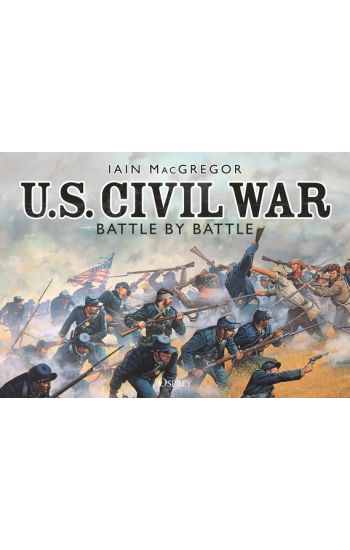
U.S. Civil War Battle by Battle

U.S. Civil War Battle by Battle

Iain MacGregor

Osprey Publishing
2022
nidottu
'Just the thing for US Civil War buffs: snappily written, informative and entertaining. A cracking read.' - Saul David, bestselling author and historianThis attractively packaged gift book offers a highly illustrated introduction to some of the U.S. Civil War's most famous and important battles, from the Battle of Fort Sumter in 1861 to the Battle of Appomatox Court House in 1865.The U.S. Civil War was the most cataclysmic military struggle of the late 19th century, and in four bloody years of fighting from 1861 to 1865 over 620,000 American soldiers and sailors lost their lives in more than 8,000 battles, engagements and skirmishes. U.S. Civil War Battle by Battle tells the story of 30 of the most significant of these battles. These include some of the most famous clashes, such as the battles of Gettysburg and Fredericksburg, which resonate through American military history, but also the less well known, such as the battles of Brandy Station and Cedar Creek. This highly illustrated introduction, packed full of colour artwork, covers every theatre of the war and details infantry, cavalry, artillery and seaborne units from both the Union and the Confederate forces to give a true sense of the scale of the War between the States.
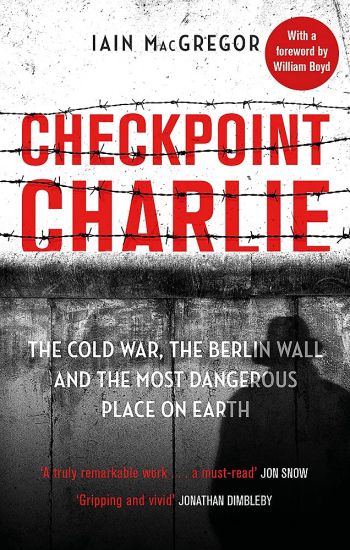
Checkpoint Charlie

Checkpoint Charlie

Iain MacGregor

Little, Brown
2021
nidottu
With a foreword by William Boyd'Gripping and revelatory' Tom Holland'As convoluted and deadly as the plot of a novel by John le Carre, but all too real' Daily Mail, Must Reads'With a gripping narrative and vivid interviews with those on all sides whose lives were directly affected by that grim symbol of the East-West divide that poisoned Europe for almost half a century, [MacGregor] has made an important contribution to the history of our times' Jonathan Dimbleby'Captures brilliantly and comprehensively both the danger and exhilaration that I and other reporters, soldiers, and people experienced intersecting with the wall - a must-read for anyone who wants to understand the Europe we have inherited' Jon SnowA powerful, fascinating, and ground-breaking history of Checkpoint Charlie, the legendary and most important military gate on the border of East and West Berlin where the United States and her allies confronted the USSR during the Cold War.As the sixtieth anniversary of the construction of the Berlin Wall approaches in 2021, Iain MacGregor captures the mistrust, oppression, paranoia, and fear that gripped the city throughout this period. Checkpoint Charlie is about the nerve-wracking confrontation between the West and the Soviet Union that contains never-before-heard interviews with the men who built and dismantled the Wall; lovers who crossed it; relatives and friends who lost family trying to escape over it; German, British, French, and Russian soldiers who guarded its checkpoints; CIA, MI6 and Stasi operatives who oversaw secret operations across its borders; politicians whose ambitions shaped it; journalists who recorded its story; and many more whose living memories contributed to the full story of Checkpoint Charlie. A brilliant work of historical journalism, Checkpoint Charlie is an invaluable record of this period.
Checkpoint Charlie: The Cold War, the Berlin Wall, and the Most Dangerous Place on Earth
A "constantly captivating...well-researched and often moving" (The Wall Street Journal) history of Checkpoint Charlie, the famous military gate on the border of East and West Berlin where the United States confronted the USSR during the Cold War. In the early 1960s, East Germany committed a billion dollars to the creation of the Berlin Wall, an eleven-foot-high barrier that consisted of seventy-nine miles of fencing, 300 watchtowers, 250 guard dog runs, twenty bunkers, and was operated around the clock by guards who shot to kill. Over the next twenty-eight years, at least five thousand people attempt to smash through it, swim across it, tunnel under it, or fly over it. In 1989, the East German leadership buckled in the face of a civil revolt that culminated in half a million East Berliners demanding an end to the ban on free movement. The world's media flocked to capture the moment which, perhaps more than any other, signaled the end of the Cold War. Checkpoint Charlie had been the epicenter of global conflict for nearly three decades. Now, "in capturing the essence of the old Cold War MacGregor] may just have helped us to understand a bit more about the new one" (The Times, London)--the mistrust, oppression, paranoia, and fear that gripped the world throughout this period. Checkpoint Charlie is about the nerve-wracking confrontation between the West and USSR, highlighting such important global figures as Eisenhower, Stalin, JFK, Nikita Khrushchev, Mao Zedung, Nixon, Reagan, and other politicians of the period. He also includes never-before-heard interviews with the men who built and dismantled the Wall; children who crossed it; relatives and friends who lost loved ones trying to escape over it; military policemen and soldiers who guarded the checkpoints; CIA, MI6, and Stasi operatives who oversaw operations across its borders; politicians whose ambitions shaped it; journalists who recorded its story; and many more whose living memories contributed to the full story of Checkpoint Charlie.
Checkpoint Charlie: The Cold War, the Berlin Wall, and the Most Dangerous Place on Earth
A "constantly captivating...well-researched and often moving" (The Wall Street Journal) history of Checkpoint Charlie, the famous military gate on the border of East and West Berlin where the United States confronted the USSR during the Cold War. In the early 1960s, East Germany committed a billion dollars to the creation of the Berlin Wall, an eleven-foot-high barrier that consisted of seventy-nine miles of fencing, 300 watchtowers, 250 guard dog runs, twenty bunkers, and was operated around the clock by guards who shot to kill. Over the next twenty-eight years, at least five thousand people attempt to smash through it, swim across it, tunnel under it, or fly over it. In 1989, the East German leadership buckled in the face of a civil revolt that culminated in half a million East Berliners demanding an end to the ban on free movement. The world's media flocked to capture the moment which, perhaps more than any other, signaled the end of the Cold War. Checkpoint Charlie had been the epicenter of global conflict for nearly three decades. Now, "in capturing the essence of the old Cold War MacGregor] may just have helped us to understand a bit more about the new one" (The Times, London)--the mistrust, oppression, paranoia, and fear that gripped the world throughout this period. Checkpoint Charlie is about the nerve-wracking confrontation between the West and USSR, highlighting such important global figures as Eisenhower, Stalin, JFK, Nikita Khrushchev, Mao Zedung, Nixon, Reagan, and other politicians of the period. He also includes never-before-heard interviews with the men who built and dismantled the Wall; children who crossed it; relatives and friends who lost loved ones trying to escape over it; military policemen and soldiers who guarded the checkpoints; CIA, MI6, and Stasi operatives who oversaw operations across its borders; politicians whose ambitions shaped it; journalists who recorded its story; and many more whose living memories contributed to the full story of Checkpoint Charlie.
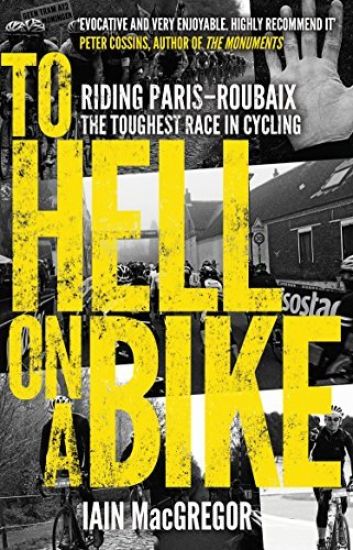
To Hell on a Bike

To Hell on a Bike

Iain MacGregor

Random House UK
2016
pokkari
SHORTLISTED FOR CYCLING BOOK OF THE YEAR AT THE BRITISH SPORTS BOOK AWARDS'Paris-Roubaix is the best race in the world and knocks spots off the Tour de France.' Sir Bradley Wiggins. Paris-Roubaix.