
Kirjailija
Ian Brown
Kirjat ja teokset yhdessä paikassa: 52 kirjaa, julkaisuja vuosilta 1990-2026, suosituimpien joukossa Santa is a what?. Vertaile teosten hintoja ja tarkista saatavuus suomalaisista kirjakaupoista.
52 kirjaa
Kirjojen julkaisuhaarukka 1990-2026.


Of all of Britain's great archaeological monuments the prehistoric and later hillforts have arguably had the most profound impact on the landscape, if only because there are so many; yet we know very little about them. Were they recognised as being something special by those who created them or is the ‘hillfort’ purely an archaeologist's 'construct'? How were they built, who lived in them and to what uses were they put?This book, which is richly illustrated with photography of sites throughout England and Wales, addresses these and many other questions. After discussing the difficult issue of definition and the great excavations on which our knowledge is based, Ian Brown investigates in turn the origins of hillforts, their architecture and the role they played in Iron Age society. He also discusses the latest theories about their location, social significance and chronology.The book provides a valuable synthesis of the rich vein of research carried out in England and Wales on hillforts over the last thirty years. The great variability of hillforts poses many problems, and this book should help guide both the specialist and non-specialist alike though the complex literature. Furthermore, it has an important conservation objective. Land use in the modern era has not been kind to these monuments, with a significant number either disfigured or lost. Public consciousness of their importance needs raising if their management is to be improved and their future assured.
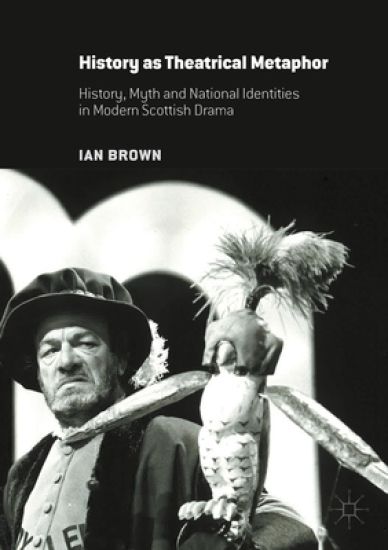
This revelatory study explores how Scottish history plays, especially since the 1930s, raise issues of ideology, national identity, historiography, mythology, gender and especially Scottish language. Covering topics up to the end of World War Two, the book addresses the work of many key figures from the last century of Scottish theatre, including Robert McLellan and his contemporaries, and also Hector MacMillan, Stewart Conn, John McGrath, Donald Campbell, Bill Bryden, Sue Glover, Liz Lochhead, Jo Clifford, Peter Arnott, David Greig, Rona Munro and others often neglected or misunderstood. Setting these writers’ achievements in the context of their Scottish and European predecessors, Ian Brown offers fresh insights into key aspects of Scottish theatre. As such, this represents the first study to offer an overarching view of historical representation on Scottish stages, exploring the nature of ‘history’ and ‘myth’ and relating these afresh to how dramatists use – and subvert – them. Engaging and accessible, this innovative book will attract scholars and students interested in history, ideology, mythology, theatre politics and explorations of national and gender identity.
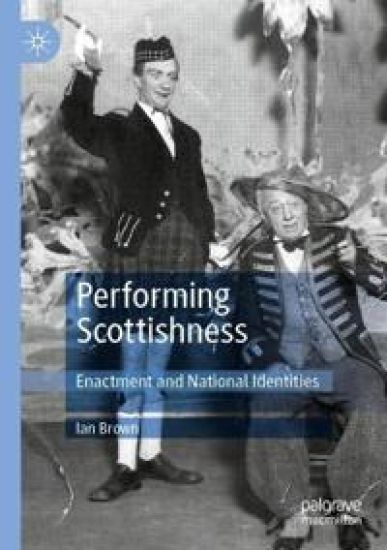
This wide-ranging and ground-breaking book, especially relevant given Brexit and renewed Scottish independence campaigning, provides in-depth analysis of ways Scottishness has been performed and modified over the centuries. Alongside theatre, television, comedy, and film, it explores performativity in public events, Anglo-Scottish relations, language and literary practice, the Scottish diaspora and concepts of nation, borders and hybridity. Following discussion of the 1320 Declaration of Arbroath and the real meanings of the 1706/7 Treaty of Union, it examines the differing perceptions of what the ‘United Kingdom’ means to Scots and English. It contrasts the treatment of Shakespeare and Burns as ‘national bards’ and considers the implications of Scottish scholars’ invention of ‘English Literature’. It engages with Scotland’s language politics –rebutting claims of a ‘Gaelic Gestapo’ – and how borders within Scotland interact. It replaces myths about ‘tartan monsters’ with level-headed evidence before discussing in detail representations of Scottishness in domestic and international media.
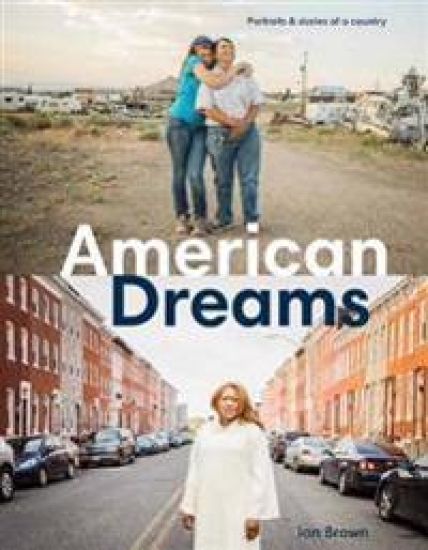
A powerful, moving collection of 170 portraits of Americans and their handwritten statements about what the American dream means to them. Shot by one photographer over twelve years, fifty states, and eighty thousand miles, American Dreams is a poignant, defining look at people from every walk of life and a remarkable exploration of what it means to be an American. Long fascinated by the idea of the "American Dream," Canadian photographer Ian Brown set out to document, in photographs and words, what that dream means to Americans of all ages, races, identities, classes, religions, and ideologies. Over the course of twelve years, Brown traveled more than eighty thousand miles in an old truck, visiting all fifty states and connecting with hundreds of Americans. He knocked on people's doors; met them at town halls, diners, and factories; and approached them on main streets in small towns. He shot their portraits and asked them to write down their own American dreams. Their dreams and stories--which range from hopeful, moving, and optimistic to defiant, bitter, and heartbreaking--offer a fascinating, unparalleled perspective of the striking diversity and deep nuance of the American experience.
This wide-ranging and ground-breaking book, especially relevant given Brexit and renewed Scottish independence campaigning, provides in-depth analysis of ways Scottishness has been performed and modified over the centuries. Alongside theatre, television, comedy, and film, it explores performativity in public events, Anglo-Scottish relations, language and literary practice, the Scottish diaspora and concepts of nation, borders and hybridity. Following discussion of the 1320 Declaration of Arbroath and the real meanings of the 1706/7 Treaty of Union, it examines the differing perceptions of what the ‘United Kingdom’ means to Scots and English. It contrasts the treatment of Shakespeare and Burns as ‘national bards’ and considers the implications of Scottish scholars’ invention of ‘English Literature’. It engages with Scotland’s language politics –rebutting claims of a ‘Gaelic Gestapo’ – and how borders within Scotland interact. It replaces myths about ‘tartan monsters’ with level-headed evidence before discussing in detail representations of Scottishness in domestic and international media.

Ian Brown spent almost thirty years in the police force, rising through the ranks to work on some of the best-known crimes of the twentieth century. From witnessing the brutality of the Kray twins to chasing the spoils from the Brink s-Mat gold bullion robbery, Brown was never too far away from someone's illicit deal or a hardened crook. Renowned for being one of the luckiest members of the Sweeney (Flyinq Squad), he foiled London s most dangerous armed robbers, had the ear of the Met s most prolific informants and helped put away murderers including the notorious killer Kenneth Noye. Commended for his bravery, Brown headed a drug squad in the Caribbean, where he became immersed in South American drug cartels and money laundering on an epic scale. He captured and destroyed the biggest haul of cocaine in Caribbean history, seized tons of cannabis and helped locate the whereabouts of America s Most Wanted. Written with honesty and disarming humour, Brown s personal experiences offer an insight into the real world of true crime.
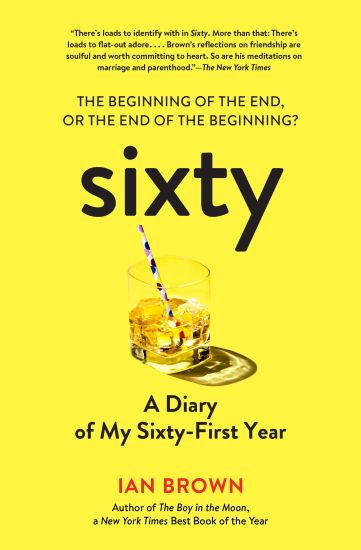
As acclaimed journalist and author Ian Brown's sixtieth birthday loomed, every moment seemed to present a choice: Confront, or deny, the biological fact that the end was now closer than the beginning. Brown chose instead to notice every moment--to try to capture precisely what he was experiencing, without panicking. Sixty is the result: an uncensored, seriocomic report, a slalom of day-to-day dramas (as husband, father, brother, friend, and neighbor), inquisitive reporting, and acute insights from the line between middle-aged and soon-to-be-elderly.

This revelatory study explores how Scottish history plays, especially since the 1930s, raise issues of ideology, national identity, historiography, mythology, gender and especially Scottish language. Covering topics up to the end of World War Two, the book addresses the work of many key figures from the last century of Scottish theatre, including Robert McLellan and his contemporaries, and also Hector MacMillan, Stewart Conn, John McGrath, Donald Campbell, Bill Bryden, Sue Glover, Liz Lochhead, Jo Clifford, Peter Arnott, David Greig, Rona Munro and others often neglected or misunderstood. Setting these writers’ achievements in the context of their Scottish and European predecessors, Ian Brown offers fresh insights into key aspects of Scottish theatre. As such, this represents the first study to offer an overarching view of historical representation on Scottish stages, exploring the nature of ‘history’ and ‘myth’ and relating these afresh to how dramatists use – and subvert – them. Engaging and accessible, this innovative book will attract scholars and students interested in history, ideology, mythology, theatre politics and explorations of national and gender identity.

Sixty: A Diary of My Sixty-First Year: The Beginning of the End, or the End of the Beginning?
Ian Brown
Experiment
2016
sidottu
As Ian Brown's sixtieth birthday loomed, every moment seemed to present a choice: Confront, or deny, the biological fact that the end was now closer than the beginning. True, he was beginning to notice memory lapses, creaking knees, and a certain social invisibility--and yet, it troubled him that many people think of sixty as "old," because he rarely felt older than at forty.An award-winning writer, Brown instead chose to notice every moment, try to understand it, capture it . . . all without panicking. Sixty is the result: Brown's uncensored account of his sixty-first year, and, informed by his reportorial gifts, his investigation of the many changes--physical, mental, and emotional--that come to all of us as we age.Brown is a master of the seriocomic, and his day-to-day dramas--as a husband, father, brother, son, friend, and neighbor--are rendered, inseparably, with wistfulness and laugh-out-loud wit. He is also a discerning, prolific reader, and it is a pure pleasure being privy to his thoughts on the dozens of writers--including Virginia Woolf, Philip Larkin, A. J. Liebling, Wislawa Szymborska, Clive James, Sharon Olds, and Karl Ove Knausgaard--who speak to him most, at sixty.From an author on whom the telling detail is never lost, Sixty is a richly informative, candid report from the line between middle-aged and soon-to-be-elderly. It perfectly captures the obsessions of a generation realizing that they are no longer young.
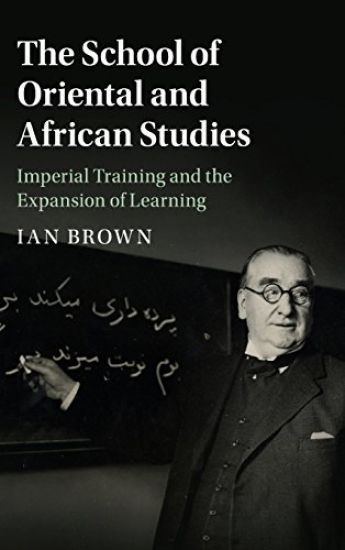
The School of Oriental and African Studies, a college of the University of London, was established in 1916 principally to train the colonial administrators who ran the British Empire in the languages of Asia and Africa. It was founded, that is, with an explicitly imperial purpose. Yet the School would come to transcend this function to become a world centre of scholarship and learning, in many important ways challenging that imperial origin. Drawing on the School's own extensive administrative records, on interviews with current and past staff, and on the records of government departments, Ian Brown explores the work of the School over its first century. He considers the expansion in the School's configuration of studies from the initial focus on languages, its changing relationships with government, and the major contributions that have been made by the School to scholarly and public understandings of Asia, Africa, and the Middle East.
A Growing Fear Of Sinkholes: Poems for the sidestepped journey
Ian Brown
Createspace Independent Publishing Platform
2016
nidottu
The Economies of Africa and Asia in the Inter-war Depression (Routledge Revivals)
Ian Brown
Routledge
2016
nidottu
The great inter-war depression has long been seen as an unprecedented economic disaster for the peoples of the non-European world. This book, with its detailed assessment of the impact of the depression on the economies of Africa and Asia, challenges the orthodox view, and is essential reading for those with a teaching or research interest in the modern economic history of those continents. Established specialists in the modern economic history of parts of Africa or Asia put forward a number of revisionist arguments. They show that some economies were left essentially unscathed by the depression, and that for many export-dependent peasant communities which did face a severe drop in cash income as world commodity prices collapsed from the late 1920s, there was a range of important responses and reactions by which they could defend their economic welfare. For many peasant communities the depression was not a disaster but an opportunity.