Kirjojen hintavertailu. Mukana 12 320 469 kirjaa ja 12 kauppaa.

Kirjailija

Ian Collard

Kirjat ja teokset yhdessä paikassa: 46 kirjaa, julkaisuja vuosilta 1997-2026, suosituimpien joukossa Birkenhead History Tour. Vertaile teosten hintoja ja tarkista saatavuus suomalaisista kirjakaupoista.

46 kirjaa

Kirjojen julkaisuhaarukka 1997-2026.

Coast Lines

Coast Lines

Ian Collard

Amberley Publishing
2015
nidottu
Formed on Merseyside in 1913, Coast Lines grew from a small fleet of sixteen coastal ships operating in the Irish Sea to the world’s largest coastal fleet. At the time, over 4 million tons of shipping sailed from the Mersey on coastal voyages. At its height, the company included Powell, Bacon & Hough Lines, British Channel Islands Shipping, Queenship Navigation, the Belfast Steamship Company, Burns & Laird Lines, the British & Irish Steam Packet, the North of Scotland, Orkney & Shetland Shipping Company, Tyne Tees Shipping and the Zillah Shipping Company. Pioneering the coordination of road transport with coastal shipping from the 1950s onwards, in 1971 Coast Lines was eventually taken over by P&O, by which time the fleet had declined from 110 passenger and cargo vessels in 1955 to only twenty-five. In this book, Ian Collard both examines the fascinating history of this famous Liverpool shipping company and provides a comprehensive fleet list.
Mersey Shipping Through Time

Mersey Shipping Through Time

Ian Collard

Amberley Publishing
2014
nidottu
The Mersey has changed over the past thirty years. The famous ships and shipping lines have changed or gone altogether, the means of shipping goods has changed and the numbers of people working in the docks have drastically fallen. With the advent of box boats and superfast ferries, we no longer see many of the traditional vessels that once called. Ian Collard calls upon his vast archive, as well as modern images, to show us the changing face of the Mersey over the past decades. Inside are views of the Mersey ferries, the changing face of the docklands itself, on both sides of the river, and the ships that now sail up the Mersey to discharge cargo and passengers in the dock system.
The British Cruise Ship an Illustrated History 1945-2014
When Arthur Anderson invited William Makepeace Thackeray to take a cruise in 1844, and to write about it, British shipping lines offered passage on their vessels for no other reason than leisure. By the 1880s, passenger ships designed solely for cruising were being built, and the cruise ships kept many a shipping line afloat during the Depression years, whether by offering booze cruises to nowhere for alcohol-starved Americans, or out of unlikely ports such as Immingham to Norway for the British middle classes. Ian Collard continues the story of British cruising from the end of the Second World War, when Cunard began construction of their 'green goddess', the Caronia, aimed squarely at the American market. The 1960s saw a shift from line voyages to cruising as the major money earner for all of the British passenger lines. The QE2 and Canberra made up the bulk of British cruise voyages in the 1970s and early 1980s. By the 1990s, there had been a resurgence in cruising, with new cruise ships and companies operating. From a low of 180,000 passengers in 1981 to some 1.5 million in 2013, British cruising is alive and well.
Pacific Steam Navigation Company

Pacific Steam Navigation Company

Ian Collard

Amberley Publishing
2014
nidottu
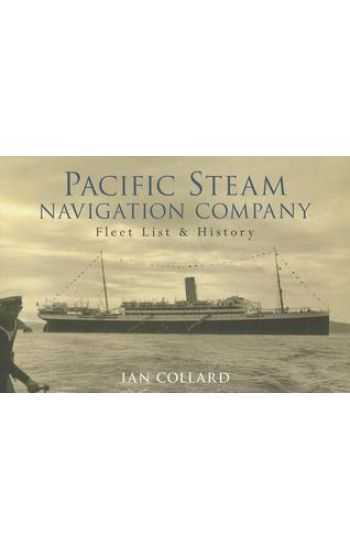
Founded in 1838 in Liverpool, the Pacific Steam Navigation Company was the first to operate steamships in the Pacific and primarily traded from the UK to the Pacific coasts of South America. Its most famous ships included the Reina del Pacifico and the Reina del Mar. With a line of notable firsts to its name, the Pacific Steam Navigation Company name had disappeared by 1984, part of the rationalization of Furness Withy Group. In 1990, Furness Withy itself was sold to Hamburg Sud, another line which had operated on the South Atlantic and Pacific routes. Many in Liverpool and in South and Central America, from Panama to Tierra del Fuego have fond memories of the Pacific Steam Navigation Company and this history and fleet list will bring back memories of those vessels of the line, both deep sea and coastal, which once operated on the South American run.
Ellerman Lines

Ellerman Lines

Ian Collard

The History Press Ltd
2014
nidottu
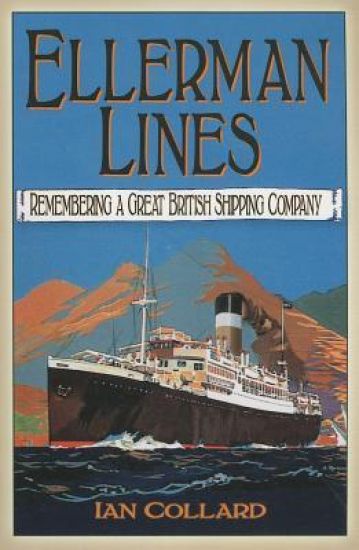
Ellerman Lines was formed by John Reeves Ellerman at the end of the nineteenth century. Ellerman left home at age 14, and at 24 he established J. Ellerman & Co. in London; by 1893, he had been appointed chair of a shipping company. Following the acquisition of various companies, Ellerman Lines Ltd was formed on 22 January 1902, becoming one of the greatest shipping lines in the world. Services were offered to the Mediterranean, India, South America and East and South Africa as the Ellerman group grew and grew. Ellerman Lines traded successfully throughout war and peace, heavily involved in the war effort, until the third quarter of the century, when many countries gained their independence from Britain and 1960s containerisation saw this once great shipping line close for good. Using many previously unpublished photographs illustrating the different types of vessels owned by Ellerman Lines, experienced maritime author Ian Collard turns his attention to the company’s history, from its establishment in 1886 until the shipping business was bought by its management in 1985. It was then sold to the Trafalgar House conglomerate, which merged it with its ownership of the Cunard Line to form Cunard-Ellerman in 1987. In 1991 it passed to the Andrew Weir Shipping Group and in 2003 the Mediterranean, Middle East, African, Indian and Pakistan services were acquired by Hamburg Süd and the Ellerman brand was replaced by them exactly two years later.
The British Cruise Ship An Illustrated History 1844-1939
Since Arthur Anderson invited William Makepeace Thackeray to take a cruise in 1844, and to write about it, British shipping lines have offered passage for no other reason than leisure on their vessels. By the 1880s, passenger ships designed solely for cruising were being built and the cruise ships kept many a shipping line afl oat during the Depression years, whether offering booze cruises to nowhere for alcohol-starved Americans, or out of unlikely ports such as Immingham to Norway for the British middle classes. Ian Collard tells the story of British cruising from these early days until the advent of the Second World War, when British cruise ships were caught in ports the world over. During the war years many cruise ships were used as armed merchant cruisers and a great number were sunk, sometimes in heroic circumstances, such as the loss of the SS Jervis Bay to the German battle cruiser Admiral Scheer, which saw a VC won by the Jervis Bay's captain
Blue Funnel Line

Blue Funnel Line

Ian Collard

Amberley Publishing
2013
nidottu
The Blue Funnel Line was formed by the visionary Alfred Holt, who saw the steamship as a better and more economical way of shipping cargo and passengers to the Far East, China and later Australia. Alfred Holt commenced ship-owning with Thomas Ainsworth in 1852, and they built their first new ship in 1854, which they immediately chartered to the French Government for use in the Crimean War. In 1864, they began sailing to China and the Far East, and have since become the major British company serving this area. The company was registered as the Ocean Steamship Co. in 1865. In 1891, a subsidiary company, Nederlandsche Stoomvaart Maatschappij 'Oceaan' was formed in Amsterdam to compete with Dutch companies serving the East Indies, and the company also formed the Singapore-based East India Ocean Steamship Co. the same year. The China Mutual Steam Navigation Co. was taken over in 1902 together with their fleet of thirteen steamers and their route between China and the West Coasts of Canada and the USA. Through various take-overs, the loss of forty-one ships during the Second World War, and later the need to come to terms with the transformation of freight in containers, the company prevailed. The name of Alfred Holt disappeared in 1967, and the company became Ocean Transport & Trading in 1972. Ian Collard, born and brought up less than half a mile from where the Blue Funnel Line ships berthed at Vittoria Dock, tells the varied and interesting story of this iconic shipping line. As well as providing a detailed history, this informative book contains a full fleet list and over 200 images.
Isle of Man

Isle of Man

Ian Collard

The History Press Ltd
2013
nidottu
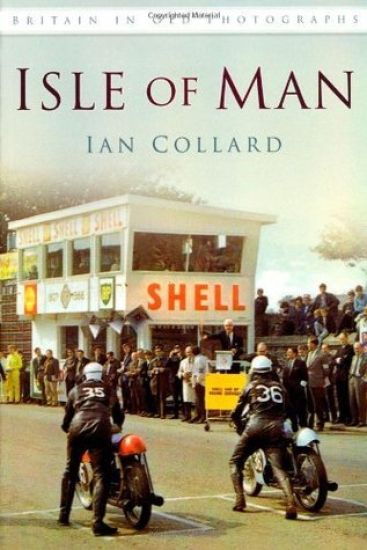
Over the course of 100 years, the Isle of Man developed from a collection of fishing villages into one of the main holiday destinations for people working in the Lancashire mills and coal mines. Hotels and other holiday accommodation were built and developed during the late Victorian era and people travelled to the Island by steamer from England, Scotland, Wales and Ireland. This influx of holiday makers brought great prosperity to the Island, which was also boosted by the annual TT motorcycle races. Illustrated with over 150 archive images, this collection of photographs and postcards provides a nostalgic insight into the changing history of the Isle of Man over the last century. Each image is accompanied by a detailed caption, bringing the past to life and describing many aspects of life on the Island, including work, recreation and leisure. This book will appeal to everyone with an interest in the history of the Isle of Man, and also awaken memories of a bygone time for those who worked, lived or have ever visited the Island.
Liverpool Landing Stage Through Time

Liverpool Landing Stage Through Time

Ian Collard

Amberley Publishing
2011
nidottu
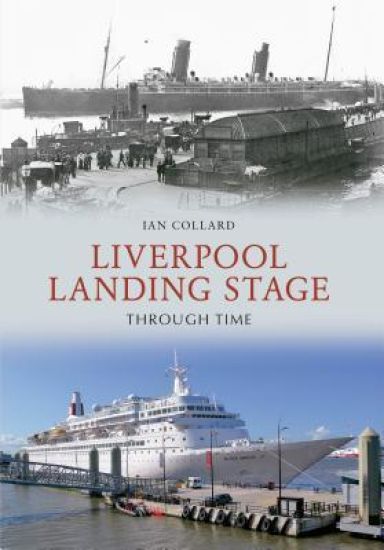
The Pier Head and landing stages have been places where the people of Liverpool have been able to view, participate in and enjoy many of the major maritime celebrations and events of the last hundred years. It is the city's equivalent to the Sydney Opera House, Fisherman's Wharf at San Francisco, the Manhattan Piers in New York and the Tower Bridge in London; a hub of transport, culture and transatlantic shipping. This book will take readers on a comprehensive photographic guide, past and present, not only of Liverpool Pier Head and Landing Stages and the architectural changes undergone, but also the regular visitors to Liverpool riverside, their own histories, and the technological changes of the shipping industry.
Holyhead to Ireland

Holyhead to Ireland

Justin Merrigan; Ian Collard

Amberley Publishing
2010
nidottu
The Port of Holyhead has a long history and is now operated by Stena Line Ports Ltd. The company took over ownership of the port from Sea Containers in 1990, which only six years previously assumed control of the harbour as part of the Sealink privatisation. Ranked as the United Kingdom's third-busiest ferry port, after Dover and Portsmouth, Holyhead handled a remarkable 1.9 million passengers in 2009. The operation is an impressive one, with world class tonnage operating for both Stena Line and Irish Ferries on sailings to Dublin Bay. In addition, cruise ship traffic continues to develop and grow and, with the recent availability of the Anglesey Aluminium jetty to the largest cruise ships, the future looks bright for this new trade. In Holyhead to Ireland, the authors aim to place on record the heritage on which today's successful port and trade is built - the era of railway ownership, for it is without doubt that Holyhead and the Stena Line routes to Ireland of today owe their existence to the railway companies of yesteryear. And why should the railways find themselves operating ships? Simply, they saw the benefits of extending their operations beyond the buffers! Co-ordinating rail and sea traffic for passengers, mail and cargo, they built first-rate ships and developed state-ofthe- art port facilities, pushing aside the irregular and unreliable services that had been run in a rather less than perfect fashion. Justin Merrigan and Ian Collard tell the story of the port in words and pictures, from the establishment of a harbour to the present day, from sailing packets that took a day or more to make the short crossing to the super-fast catamarans and the Irish Sea's largest ferries of today that can make the journey in less than two hours.
Blue Funnel Line

Blue Funnel Line

Ian Collard

Amberley Publishing
2010
nidottu
The Blue Funnel Line was formed by the visionary Alfred Holt, who saw the steamship as a better and more economical way of shipping cargo and passengers to the Far East, China and later Australia. Alfred Holt commenced ship-owning with Thomas Ainsworth in 1852, and they built their first new ship in 1854, which they immediately chartered to the French Government for use in the Crimean War. In 1864, they began sailing to China and the Far East, and have since become the major British company serving this area. The company was registered as the Ocean Steamship Co. in 1865. In 1891, a subsidiary company, Nederlandsche Stoomvaart Maatschappij 'Oceaan' was formed in Amsterdam to compete with Dutch companies serving the East Indies, and the company also formed the Singapore-based East India Ocean Steamship Co. the same year. The China Mutual Steam Navigation Co. was taken over in 1902 together with their fl eet of thirteen steamers and their route between China and the West Coasts of Canada and the USA. Through various take-overs, the loss of forty-one ships during the Second World War, and later the need to come to terms with the transformation of freight in containers, the company prevailed. The name of Alfred Holt disappeared in 1967, and the company became Ocean Transport & Trading in 1972. Ian Collard, born and brought up less than half a mile from where the Blue Funnel Line ships berthed at Vittoria Dock, tells the varied and interesting story of this iconic shipping line. As well as providing a detailed history, this informative book contains a full fleet list and over 200 images.

Wallasey Through Time

Wallasey Through Time

Ian Collard

Amberley Publishing
2009
nidottu
Wallasey Through Time is a unique insight into the illustrious history of this part of the country. Reproduced in full colour, this is an exciting examination of Wallasey, the famous streets and the famous faces, and what they meant to the people of this area throughout the 19th and into the 20th Century. Looking beyond the exquisite exterior of these well-kept photos, readers can see the historical context in which they are set, and through the author's factual captions for every picture, and carefully-selected choice of images, the reader can achieve a reliable view of this area's history. Readers are invited to follow a timeline of events and watch the changing face of this lively part of the country, as Ian Collard guides us through the local streets. There is something for everyone here, whether they have lived in this area all their lives, or whether they are just visiting Wallasey for the first time. This book also shows how photography has continually evolved to keep up with an ever changing society.
Wallasey From Old Photographs

Wallasey From Old Photographs

Ian Collard

Amberley Publishing
2009
nidottu
The County Borough of Wallasey, on the Wirral Penninsula, is famous as a seaside town. From the mid-nineteenth century, James Atherton's 'New Brighton' became a popular leisure resort, with visitors arriving on every ferry. It was adorned by magnificent structures such as the tower and ballroom, pier and promenades. The tower itself, tallest in the country and 100 feet higher than that at Blackpool, once visible all over Merseyside, has now vanished, along with the ballroom and the hoards of visitors who used to flock here. This book provides a valuable record of the physical and social history of the County Borough of Wallasey, documented from a selection of over 200 fascinating old photographs showing the changing face of the borough over the past century and a half.
Cammell Laird Volume Two

Cammell Laird Volume Two

Ian Collard

The History Press Ltd
2006
nidottu
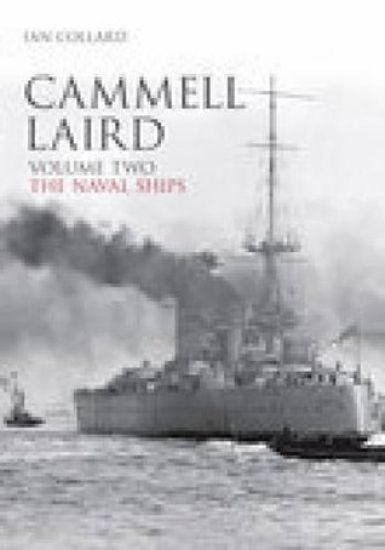
Since its founding as an engine manufacturer in the 1820s, Cammell Laird has had connections with the British and foreign navies. The Birkenhead shipbuilding yard has made many ships for the Royal Navy including many submarines, destroyers, dreadnoughts, aircraft carriers and cruisers.Once an employer of thousands, the yard is empty of the noise of welders, riveters, joiners, engineers and the myriad other skilled tradesmen needed to build a ship but its history remains – one that reads like a roll of honour for the British Navy; Ark Royal, Audacious, Birkenhead, Chester, Hardy, Hogue, HM/S Thetis, to name a few.Illustrated with many previously unpublished images, this will prove to be the definitive book on the most famous of the Cammell Laird-built Navy vessels.As well as British navy ships, the book includes a varied selection of foreign naval vessels from the Confederate blockade runner Alabama to many ships and submarines built for navies around the world.
Cammell Laird Volume One

Cammell Laird Volume One

Ian Collard

The History Press Ltd
2004
nidottu
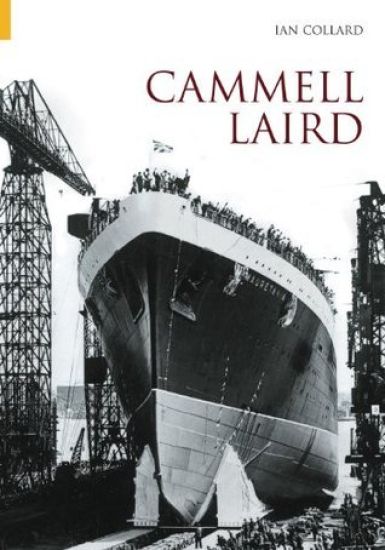
Cammell Laird's shipyard has brought tremendous benefit to the social and economic fabric of the area. For Ian Collard, who grew up in the Wirrall, it was a place he always imagined being there. However, severe competition from European and Far Eastern shipyards and the move to 'high technology' employment threatened its future. Furthermore, yards like Cammell Laird suffered when the size, type and numbers of naval ships were reduced.Ian Collard's interest in ships and shipping developed over the years as he witnessed the launch of many famous, illustrious ships, such as the Mauretania. He takes us on a voyage of discovery with absorbing captions to over 100 photographs of the vessels at Cammell Laird and the yard itself, which will appeal to ship enthusiasts and local people alike.