Kirjojen hintavertailu. Mukana 12 178 045 kirjaa ja 12 kauppaa.

Kirjailija

Ian Craib

Kirjat ja teokset yhdessä paikassa: 14 kirjaa, julkaisuja vuosilta 1990-2023, suosituimpien joukossa Anthony Giddens (Routledge Revivals). Vertaile teosten hintoja ja tarkista saatavuus suomalaisista kirjakaupoista.

14 kirjaa

Kirjojen julkaisuhaarukka 1990-2023.

Anthony Giddens (Routledge Revivals)
The Giddens phenomenon has been one of the most obvious and talked about features of world sociology since the late 1960’s. This book, first published in 1992, provides a prudent and essential critical introduction to one of the leading sociologists of our time. The book is intended to provide an accessible introduction to Gidden's work and also to situate structuration theory in the context of other approaches. The reissue will be of interest to students of Sociology and those working in the other social sciences.
Philosophy of Social Science

Philosophy of Social Science

Ted Benton; Ian Craib

BLOOMSBURY PUBLISHING PLC
2023
sidottu
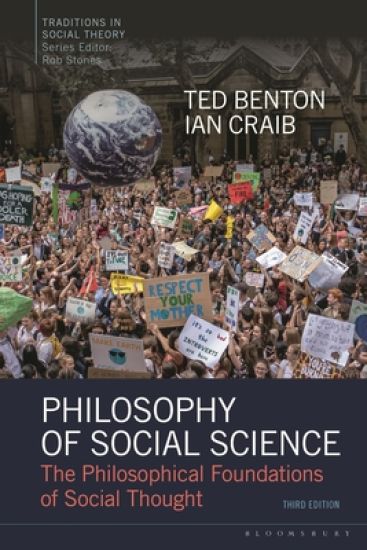
Philosophers and social scientists share a common goal: to explore fundamental truths about ourselves and the nature of the world in which we live. But in what ways do these two distinct disciplines inform each other and arrive at these truths? This third revised edition of this highly regarded text directly responds to such issues as it introduces students to the philosophy of social science.This classic text has been brought up to date with a new introduction and commentaries reflecting on the original chapters in the context of more recent developments. Two brand new chapters discuss critical social science and one of the most pressing issues concerning social scientists today - how we interrogate human society's complex relationship with nature and its impact on biodiversity and climate change. The book:- Clearly introduces the theoretical underpinnings of social science, assuming no prior knowledge- Addresses critical issues relating to the nature of social science- Interrogates the relationship between social science and natural science- Encompasses traditional and contemporary perspectives- Introduces and critiques a wide range of approaches, from empiricism and positivism to post structuralism and rationalism.Written in an engaging and student-friendly style, the book introduces key ideas and concepts while raising questions and opening debates. A cornerstone text in the Traditions in Social Theory series, this book remains essential reading for all students of social theory and social science research.
Philosophy of Social Science

Philosophy of Social Science

Ted Benton; Ian Craib

BLOOMSBURY PUBLISHING PLC
2023
nidottu
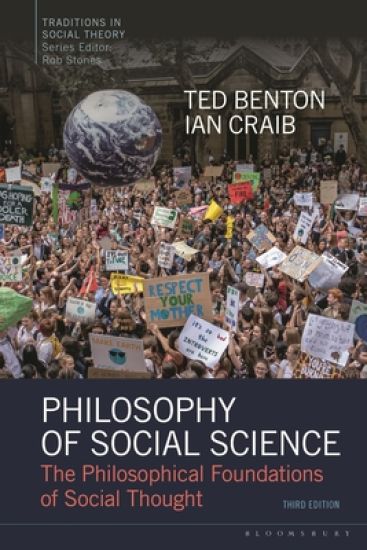
Philosophers and social scientists share a common goal: to explore fundamental truths about ourselves and the nature of the world in which we live. But in what ways do these two distinct disciplines inform each other and arrive at these truths? This third revised edition of this highly regarded text directly responds to such issues as it introduces students to the philosophy of social science.This classic text has been brought up to date with a new introduction and commentaries reflecting on the original chapters in the context of more recent developments. Two brand new chapters discuss critical social science and one of the most pressing issues concerning social scientists today - how we interrogate human society's complex relationship with nature and its impact on biodiversity and climate change. The book:- Clearly introduces the theoretical underpinnings of social science, assuming no prior knowledge- Addresses critical issues relating to the nature of social science- Interrogates the relationship between social science and natural science- Encompasses traditional and contemporary perspectives- Introduces and critiques a wide range of approaches, from empiricism and positivism to post structuralism and rationalism.Written in an engaging and student-friendly style, the book introduces key ideas and concepts while raising questions and opening debates. A cornerstone text in the Traditions in Social Theory series, this book remains essential reading for all students of social theory and social science research.
Modern Social Theory

Modern Social Theory

Ian Craib

Routledge
2015
sidottu
The revised edition of this widely acclaimed textbook provides a clear, accessible and comprehensive introduction to modern social theory.As with the first edition, the book is based around the themes of structure and action. After the introductory chapters which examine the nature of theory and its role in the social world, the book then turns to theories of action and the inability of those theories to comprehend social structures in a coherent way.Part 1 covers: Parson's structural-functionalism and the development of conlict theory and neofunctionalism; rational choice theory; symbolic interactionism; ethnomethodology and structuration theory.Part 2 looks at structuralism, structuralist Marxism, and the development of post-structuralist and postmodernist theory.Part 3 examines Critical Theory and the work of Jurgen Habermas.In conclusion, Ian Craib discusses current trends in theory and what might be expected in the future.This second edition has been revised throughout. There are new chapters on rational choice theory and structuration theory and existing chapters have been extended to deal with the development of neofunctionalism, postmodernism and the recent works of Habermas as well as recent developments in other approaches.Throughout, the aim of the book is to demystify a diffcult subject area, emphasising the practical and everyday nature of theoretical thinking in the context of making sense of a rapidly changing world. The late Ian Craib was Lecturer in Sociology at the University of Essex.
Anthony Giddens (Routledge Revivals)
The Giddens phenomenon has been one of the most obvious and talked about features of world sociology since the late 1960’s. This book, first published in 1992, provides a prudent and essential critical introduction to one of the leading sociologists of our time. The book is intended to provide an accessible introduction to Gidden's work and also to situate structuration theory in the context of other approaches. The reissue will be of interest to students of Sociology and those working in the other social sciences.
Psychoanalysis

Psychoanalysis

Ian Craib

Polity Press
2001
sidottu
Psychoanalysis: A Critical Introduction is a clearly written and accessible introduction to the main schools of psychoanalysis and the practice of psychotherapy. Unusually, it is written by an academic sociologist specializing in social theory who is also a practising psychotherapist. Craib emphasizes the complexity of psychoanalysis -- an approach that works at many different levels. The unique contribution of this perspective is to understand the creativity of the individual. Psychoanalyis is less about 'curing' mental illness or making people happy, Craib suggests, and more about the understanding of individual lives and about the importance of thinking as well as feeling. Craib argues that psychoanalysis is a depth psychology and a developmental psychology, as well as enabling an understanding of everyday feelings and thoughts. He explores the work of Freud, Klein, Lacan, the object-relations theorists, attachment theory and American self psychology, and feminist developments of Freud's work. In the final section he offers an account of psychoanalytic practice as a way of opening up a life and allowing it to develop in different directions, and of enabling people to deal with the inevitable failures, contradictions and disappointments of being alive. This fascinating book will bridge the gap between academic textbooks on psychoanalysis and the books written primarily for those training in the field. It will be of major interest to students of psychology, social psychology, sociology and social theory, as well as to psychoanalytic practitioners
Psychoanalysis

Psychoanalysis

Ian Craib

JOHN WILEY AND SONS LTD
2001
nidottu
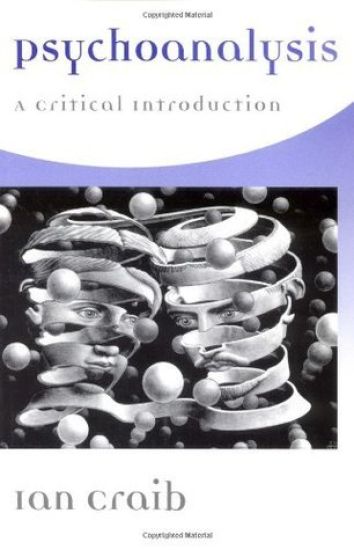
This is an accessible entry to the main schools of psychoanalysis and the practice of psychotherapy. Craib emphasizes the complexity of psychoanalysis - an approach which works at many different levels, and argues that psychoanalysis is both a depth psychology and a developmental psychology.
Experiencing Identity

Experiencing Identity

Ian Craib

SAGE Publications Ltd
1998
sidottu
`I recommend this book to all readers interested in thinking about the self; I am sure that anyone who reads it will come away with some new ideas' - Therapeutic Communities This critical and comprehensive examination of the relation of theory and identity discusses definitions of identity in classical social theory, modern social theory and psychoanalysis. The introduction is a critique of existing sociological accounts of identity, arguing that these are incurably cognitive, treating the people that they study as incapable of experiencing an internal life or internal space. The book then considers the implications of this in social theory and human practice.
Experiencing Identity

Experiencing Identity

Ian Craib

SAGE Publications Ltd
1998
nidottu
`I recommend this book to all readers interested in thinking about the self; I am sure that anyone who reads it will come away with some new ideas' - Therapeutic Communities This critical and comprehensive examination of the relation of theory and identity discusses definitions of identity in classical social theory, modern social theory and psychoanalysis. The introduction is a critique of existing sociological accounts of identity, arguing that these are incurably cognitive, treating the people that they study as incapable of experiencing an internal life or internal space. The book then considers the implications of this in social theory and human practice.
Classical Social Theory

Classical Social Theory

Ian Craib

Oxford University Press
1997
nidottu
Ian Craib compellingly shows the value of studying classic thinkers such as Marx, Weber, Durkheim, and Simmel alongside the more popular contemporary questions. Providing an account of the key ideas of classical social theory, Dr Craib establishes their relevance today, their enduring significance, and their contribution to understanding contemporary problems. Written in a direct, personal style, Classical Social Theory's thematic structure helps the reader compare the theorists systematically, and the book-by-book approach pays close attention to each thinker's key texts, quoting the most important passages and analysing them in a clear, straightforward way. Other student-friendly features include: * biographical details and an elementary overview of the work of Marx, Weber, Durkheim, and Simmel * Dramatis Personae with brief details of the life and thought of other relevant thinkers * Glossary covering important terms and phrases used in the text Classical Social Theory is an indispensable guide to the key thinkers in Sociology for anyone new to the subject.
The Importance of Disappointment
This sane and insightful discussion explores the nature of identity in late modern societies to criticize the way in which psychotherapy has become an ideology of late modernity and to emphasize the importance of `negative' messages in psychoanalytic theory.
The Importance of Disappointment
This sane and insightful discussion explores the nature of identity in late modern societies to criticize the way in which psychotherapy has become an ideology of late modernity and to emphasize the importance of `negative' messages in psychoanalytic theory.
Modern Social Theory

Modern Social Theory

Ian Craib

Prentice-Hall
1992
nidottu
The revised edition of this widely acclaimed textbook provides a clear, accessible and comprehensive introduction to modern social theory.As with the first edition, the book is based around the themes of structure and action. After the introductory chapters which examine the nature of theory and its role in the social world, the book then turns to theories of action and the inability of those theories to comprehend social structures in a coherent way.Part 1 covers: Parson's structural-functionalism and the development of conlict theory and neofunctionalism; rational choice theory; symbolic interactionism; ethnomethodology and structuration theory.Part 2 looks at structuralism, structuralist Marxism, and the development of post-structuralist and postmodernist theory.Part 3 examines Critical Theory and the work of Jurgen Habermas.In conclusion, Ian Craib discusses current trends in theory and what might be expected in the future.This second edition has been revised throughout. There are new chapters on rational choice theory and structuration theory and existing chapters have been extended to deal with the development of neofunctionalism, postmodernism and the recent works of Habermas as well as recent developments in other approaches.Throughout, the aim of the book is to demystify a diffcult subject area, emphasising the practical and everyday nature of theoretical thinking in the context of making sense of a rapidly changing world. The late Ian Craib was Lecturer in Sociology at the University of Essex.