Kirjojen hintavertailu. Mukana 12 595 353 kirjaa ja 12 kauppaa.

Kirjailija

Ian D. Rotherham

Kirjat ja teokset yhdessä paikassa: 31 kirjaa, julkaisuja vuosilta 2011-2025, suosituimpien joukossa B&W Working & Walking Vol1. Vertaile teosten hintoja ja tarkista saatavuus suomalaisista kirjakaupoista.

Mukana myös kirjoitusasut: Ian D Rotherham

31 kirjaa

Kirjojen julkaisuhaarukka 2011-2025.

B&W Working & Walking Vol1

B&W Working & Walking Vol1

Ian D Rotherham; Melvyn Jones; Christine Handley (Eds )

wildtrack publishing
2012
pokkari
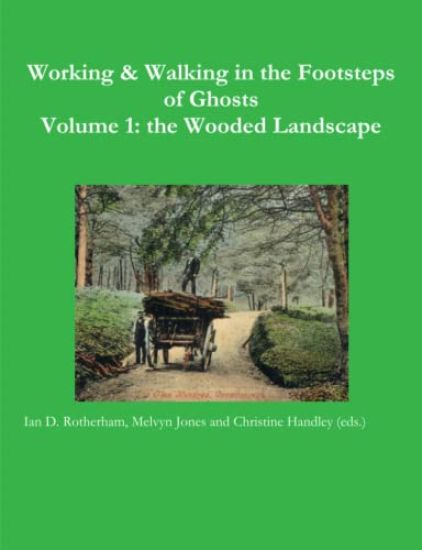
The conference at which the chapters in this book were originally presented as papers - Working and Walking in the Footsteps of Ghosts - took place at Sheffield Hallam University between 29th May and 1st June 2003. The conference proceedings were published at the event as a bound volume of abstracts and longer papers. This was a landmark conference. It was a large conference of more than 300 delegates who came from all parts of Britain including the Republic of Ireland and from continental Europe - Belgium, France, Hungary, Italy, the Netherlands and Sweden. It marked the tenth anniversary of the first national woodland conference in Sheffield organised by The Landscape Conservation Forum. The delegates came from a very wide range of backgrounds, academic, professional forestery, land managers, Wildlife Trusts, the Forestry Commission, English Nature, English Heritage, Scottish Natural Heritage, the Woodland Trust and members of woodland conservation and wildlife groups.
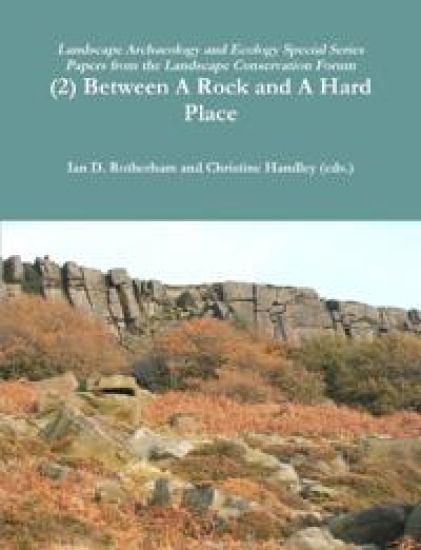
(2) Between a Rock and a Hard Place

(2) Between a Rock and a Hard Place

Ian D Rotherham; Christine Handley (Eds )

wildtrack publishing
2012
pokkari
Organised by The Landscape Conservation Forum, the Between a Rock and a Hard Place seminar was aimed at all those involved in the conservation of rural sites and landscapes. It considered the impacts, both individual and cumulative, of mineral extraction on our landscapes. The debate addressed why we are so concerned about these impacts, and what steps are being, and could or should, be taken to conserve our natural and historic environments. The seminar considered the impacts of mineral extraction on our natural and historic environments; how they have and are being assessed and how those impacts can be mitigated.
Nottingham in 50 Buildings

Nottingham in 50 Buildings

Ian D. Rotherham

Amberley Publishing
2025
nidottu
From its status as a producer of the world-famous Nottingham lace to its current role as a vibrant university city and major centre of sport and culture in the East Midlands of England, Nottingham has a proud and distinctive identity. This extraordinary history is embodied in the buildings that have shaped the city. Nottingham in 50 Buildings explores the history of the city through a selection of its greatest architectural treasures, from the iconic neo-baroque Council House to more recent additions such as the cutting-edge Nottingham Contemporary arts centre. Author and historian Professor Ian D. Rotherham celebrates Nottingham's architectural heritage in a new and accessible way as he guides the reader around the city's historic and modern buildings.
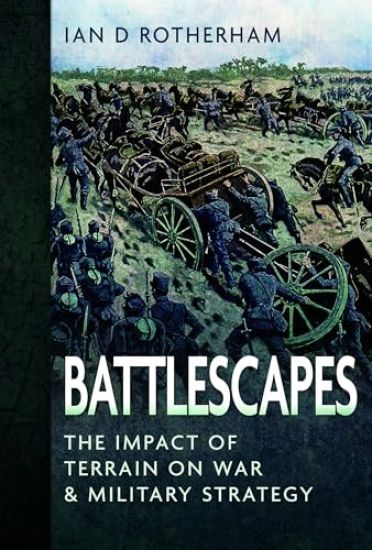
Battlescapes

Battlescapes

Ian D Rotherham

PEN SWORD BOOKS LTD
2024
sidottu
Throughout history, nature – its resources, landscape and terrain – has shaped the tactics of warfare and determined its outcomes. From the medieval English Fens to the 20th century Iraqi Marsh Arabs, landscapes have fostered resistance and dissention. Harnessed by people under threat the landscape has influenced strategies and tactics. Water and wetland halted campaigns in the Florida Everglades and in the Franco-Prussian War of the late 1800s. In the Second World War the Dutch flooded the drained polders to halt the Nazi advance and in 1938 the Chinese nationalist forces breached the flood-dykes of the Yellow River to halt the Japanese advance. Mountain ranges and deserts have long provided landscapes for resistance fighters. From the former Yugoslavia to Afghanistan these gnarly battlescapes traverse time and space. Libyan fighters held off invading Italian forces by operating from the caves and valleys of the Green Mountains and the Welsh defended their mountainous principalities against the Angevin Normans. The landscapes and heritage of past conflicts, defensive and offensive structures, and much more are brough together in this comprehensive study.
50 Gems of South Yorkshire

50 Gems of South Yorkshire

Christine Handley; Ian D. Rotherham

Amberley Publishing
2023
nidottu
The county of South Yorkshire covers Barnsley, Doncaster, Rotherham and Sheffield districts. Although each are major urban centres with their own range of civic buildings, museums and galleries, the county also ranges from low-lying farmlands in the east to high moorlands on the edge of the Peak District National Park. It has a rich and diverse landscape including ancient woodlands, rivers and wetlands alongside the legacy of its history as an industrial powerhouse built on coal, steel and heavy engineering, including Kelham Island in Sheffield, Wortley Top Forge and Silkstone Tramway in Barnsley, and Clifton Museum in Rotherham. Away from the urban centres there are picturesque market towns and villages, such as Penistone, Tickhill, Bawtry, Bradfield, Thorpe Salvin and Tankersley which still serve rural farming communities, and stunning stately homes and parkland, for example at Wentworth Woodhouse, Canon Hall and Brodsworth Hall. Earlier medieval remains survive at Roche Abbey and Monk Bretton Priory, the castle keep at Conisbrough, the Lady Chapel on the bridge in central Rotherham and Ecclesfield Church, ‘the Minster of the Moors’. There are also examples of the earliest human settlement and activity at Wharncliffe Crags and Wincobank Hill in Sheffield. Other places have associations with historical figures such as the sculptor Francis Chantrey and William Bradford, one of the Pilgrim Fathers. In 50 Gems of South Yorkshire authors Christine Handley and Ian Rotherham explore the many places and their history that make this part of northern England so special, including many lesser known gems.
Bialowieza Primeval Forest: Nature and Culture in the Nineteenth Century

Bialowieza Primeval Forest: Nature and Culture in the Nineteenth Century

Tomasz Samojlik; Anastasia Fedotova; Piotr Daszkiewicz; Ian D. Rotherham

Springer Nature Switzerland AG
2021
nidottu
Understanding the current state and dynamics of any forest is extremely difficult - if not impossible - without recognizing its history. Bialowieza Primeval Forest (BPF), located on the border between Poland and Belarus, is one of the best preserved European lowland forests and a subject of myriads of works focusing on countless aspects of its biology, ecology, management. BPF was protected for centuries (15th-18th century) as a game reserve of Polish kings and Lithuanian grand dukes. Being, at that time, a part of the Grand Duchy of Lithuania, BPF was subject to long-lasting traditional, multi-functional utilisation characteristic for this part of Europe, including haymaking on forest meadows, traditional bee-keeping and fishing in rivers flowing through forest. This traditional model of management came to an abrupt end due to political change in 1795, when Poland and Grand Duchy of Lithuania ceased to exist in effect of partitioning by neighbouring countries, and the territory ofBPF was taken over by the Russian Empire. The new Russian administration, influenced by the German trends in forestry, attempted at introducing the new, science-based forestry model in the BPF throughout the 19th century. The entire 19th century in the history of BPF is a story of struggle between new trends and concepts brought and implemented by new rulers of the land, and the traditional perception of the forest and forest uses, culturally rooted in this area and originating from mediaeval (or older) practices.The book will show the historical background and the outcome of this struggle: the forest’s history in the long 19th century focusing on tracking all cultural imprints, both material (artificial landscapes, introduced alien species, human-induced processes) and immaterial (traditional knowledge of forest and use of forest resources, the political and cultural significance of the forest) that shaped the forest’s current state and picture. Our book will deliver a pictureof a crucial moment in forest history, relevant not only to the Central Europe, but to the continent in general. Moment of transition between a royal hunting ground, traditional type of use widespread throughout Europe, to a modern, managed forest. Looking at main obstacles in the management shift, the essential difference in perceptions of the forest and goods it provides in both modes of management, and the implications of the management change for the state of BPF in the long 19th century could help in better understanding the changes that European forests underwent in general.
Peatlands

Peatlands

Ian D. Rotherham

Routledge
2020
sidottu
This book provides an introduction to peatlands for the non-specialist student reader and for all those concerned about environmental protection, and is an essential guide to peatland history and heritage for scientists and enthusiasts.Peat is formed when vegetation partially decays in a waterlogged environment and occurs extensively throughout both temperate and tropical regions. Interest in peatlands is currently high due to the degradation of global peatlands which is disrupting hydrology and contributing to greenhouse gas emissions. This book opens by explaining how peat is formed, its properties and worldwide distribution, and defines related terms such as mires, wetlands, bogs and marshes. There is discussion of the ecology and wildlife of peatlands as well as their ability to preserve pollen and organic remains as environmental archives. It also addresses the history, heritage and cultural exploitation of peat, extending back to pre-Roman times, and the degradation of peatlands over the centuries, particularly as a source of fuel but more recently for commercial horticulture. Other chapters discuss the ecosystem services delivered by peatlands, and how their destruction is contributing to biodiversity loss, flooding or drought, and climate change. Finally, the many current peatland restoration projects around the world are highlighted. Overall the book provides a wide-ranging but concise overview of peatlands from both a natural and social science perspective, and will be invaluable for students of ecology, geography, environmental studies and history.
Peatlands

Peatlands

Ian D. Rotherham

Routledge
2020
nidottu
This book provides an introduction to peatlands for the non-specialist student reader and for all those concerned about environmental protection, and is an essential guide to peatland history and heritage for scientists and enthusiasts.Peat is formed when vegetation partially decays in a waterlogged environment and occurs extensively throughout both temperate and tropical regions. Interest in peatlands is currently high due to the degradation of global peatlands which is disrupting hydrology and contributing to greenhouse gas emissions. This book opens by explaining how peat is formed, its properties and worldwide distribution, and defines related terms such as mires, wetlands, bogs and marshes. There is discussion of the ecology and wildlife of peatlands as well as their ability to preserve pollen and organic remains as environmental archives. It also addresses the history, heritage and cultural exploitation of peat, extending back to pre-Roman times, and the degradation of peatlands over the centuries, particularly as a source of fuel but more recently for commercial horticulture. Other chapters discuss the ecosystem services delivered by peatlands, and how their destruction is contributing to biodiversity loss, flooding or drought, and climate change. Finally, the many current peatland restoration projects around the world are highlighted. Overall the book provides a wide-ranging but concise overview of peatlands from both a natural and social science perspective, and will be invaluable for students of ecology, geography, environmental studies and history.
Bialowieza Primeval Forest: Nature and Culture in the Nineteenth Century

Bialowieza Primeval Forest: Nature and Culture in the Nineteenth Century

Tomasz Samojlik; Anastasia Fedotova; Piotr Daszkiewicz; Ian D. Rotherham

Springer Nature Switzerland AG
2020
sidottu
Understanding the current state and dynamics of any forest is extremely difficult - if not impossible - without recognizing its history. Bialowieza Primeval Forest (BPF), located on the border between Poland and Belarus, is one of the best preserved European lowland forests and a subject of myriads of works focusing on countless aspects of its biology, ecology, management. BPF was protected for centuries (15th-18th century) as a game reserve of Polish kings and Lithuanian grand dukes. Being, at that time, a part of the Grand Duchy of Lithuania, BPF was subject to long-lasting traditional, multi-functional utilisation characteristic for this part of Europe, including haymaking on forest meadows, traditional bee-keeping and fishing in rivers flowing through forest. This traditional model of management came to an abrupt end due to political change in 1795, when Poland and Grand Duchy of Lithuania ceased to exist in effect of partitioning by neighbouring countries, and the territory ofBPF was taken over by the Russian Empire. The new Russian administration, influenced by the German trends in forestry, attempted at introducing the new, science-based forestry model in the BPF throughout the 19th century. The entire 19th century in the history of BPF is a story of struggle between new trends and concepts brought and implemented by new rulers of the land, and the traditional perception of the forest and forest uses, culturally rooted in this area and originating from mediaeval (or older) practices.The book will show the historical background and the outcome of this struggle: the forest’s history in the long 19th century focusing on tracking all cultural imprints, both material (artificial landscapes, introduced alien species, human-induced processes) and immaterial (traditional knowledge of forest and use of forest resources, the political and cultural significance of the forest) that shaped the forest’s current state and picture. Our book will deliver a pictureof a crucial moment in forest history, relevant not only to the Central Europe, but to the continent in general. Moment of transition between a royal hunting ground, traditional type of use widespread throughout Europe, to a modern, managed forest. Looking at main obstacles in the management shift, the essential difference in perceptions of the forest and goods it provides in both modes of management, and the implications of the management change for the state of BPF in the long 19th century could help in better understanding the changes that European forests underwent in general.
Historic England: Sheffield

Historic England: Sheffield

Ian D. Rotherham; Christine Handley

Amberley Publishing
2018
nidottu
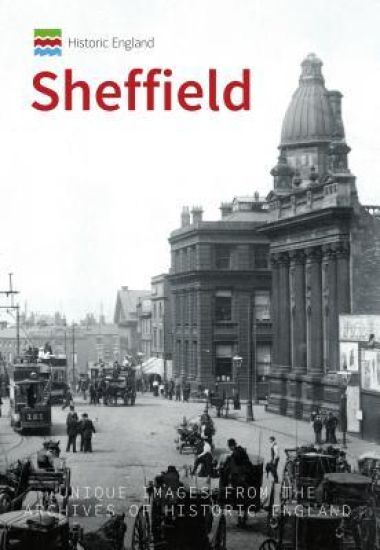
This illustrated history portrays one of England’s finest cities. It provides a nostalgic look at Sheffield’s past and highlights the special character of some of its most important historic sites. The photographs are taken from the Historic England Archive, a unique collection of over 12 million photographs, drawings, plans and documents covering England’s archaeology, architecture, social and local history. Pictures date from the earliest days of photography to the present and cover subjects from Bronze Age burials and medieval churches to cinemas and seaside resorts. Historic England: Sheffield shows the city as it once was, from its streets and alleyways to its many steel factories. The ‘Steel City’ was once a place of international renown and Sheffield plate and Sheffield cutlery have been marques of the best in the world. The city’s fortunes changed dramatically in the twentieth century. Post-war decline was particularly brutal in Sheffield and by 1980 the city was synonymous with high unemployment and economic decline. Today Sheffield has reinvented itself as a vibrant developing centre of retail, commerce and education. This book will help you discover the rich and colourful history of England’s fourth largest city.
Steel City

Steel City

Ian D. Rotherham

AMBERLEY PUBLISHING
2018
nidottu
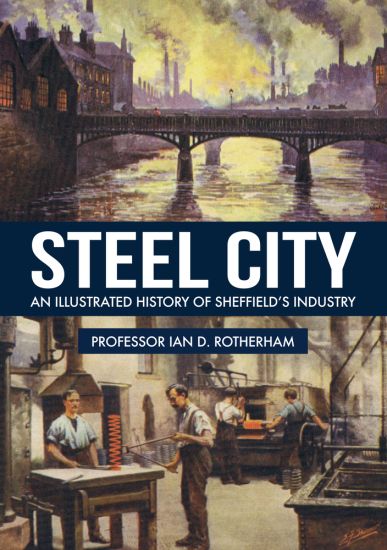
Sheffield has an enviable reputation for manufacturing quality, and as a global ‘steel city’, the home of major innovations in steel manufacture and processing. Furthermore, ‘Sheffield plate’ and Sheffield cutlery have been marques of the best in the world. Yet the story of Sheffield industry is much more than simply a catalogue of the rise of steel manufacturing and processing. One of the first major industries was located to the north of Sheffield at Wharncliffe Crags (Quern-cliff Crags), the site of one of the Roman Empire’s largest grindstone or quern-stone manufacturing sites. Like later and better known industrial ventures, the querns were made here because the quarried stone was the best and most suitable that could be found. In the wake of steel, or alongside it, came glass making, brewing, refractory products, power generation, joinery and more. With a wealth of illustrations and an accessible style, Ian D. Rotherham offers a fascinating overview of one of Britain’s great industrial centres.
Sheffield in 50 Buildings

Sheffield in 50 Buildings

Ian D. Rotherham

AMBERLEY PUBLISHING
2018
nidottu
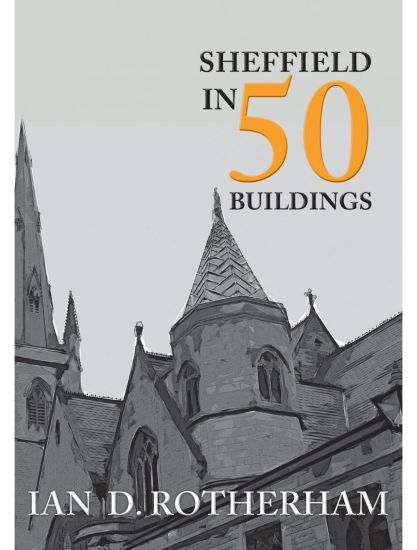
From the time when it was a major producer of high-quality steel and internationally renowned for its cutlery, through decline and recession in the twentieth century, to its twenty-first-century reinvention and revival as a vibrant developing centre of retail and commerce, Sheffield has a proud and distinctive identity. Sheffield in 50 Buildings explores the extraordinary history of England’s fourth largest city through a selection of its greatest architectural treasures. From the nineteenth-century Gothic Revival Town Hall to the popular Millenium Gallery, which opened in 2001 as part of the successful Heart of the City Project, this unique study celebrates the city’s architectural heritage in a new and accessible way. Local author and historian Ian Rotherham guides the reader on a tour of the city’s historic buildings and modern architectural marvels.
The Industrial Legacy & Landscapes of Sheffield and South Yorkshire

The Industrial Legacy & Landscapes of Sheffield and South Yorkshire

Ian D Rotherham; Christine Handley (Eds)

wildtrack publishing
2017
pokkari
The chapters in the book reflect some of the breadth of industrial development and its effects that took place in and around Sheffield, South Yorkshire from the eighteenth century onwards. It looks at great landowners and at ordinary townsfolk and the impacts that industrial development had on them and their environment. Containing chapters by Professors Ian Rotherham, David Hey and Melvyn Jones; and Dr Leonie Skelton
The Rise and Fall of Countryside Management
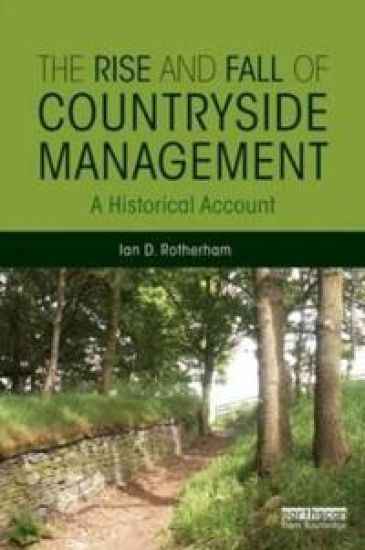
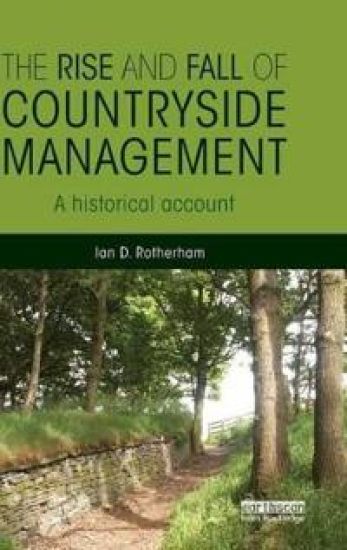
For at least half a century since the emergence of Country Parks and Forest Parks, countryside services have provided leisure, tourism, conservation, restoration and regeneration across Britain. Yet these services are currently being decimated as public services are sacrificed to the new era of austerity. The role and importance of countryside management have been barely documented, and the consequences and ramifications of cuts to these services are overlooked and misunderstood. This volume rigorously examines the issues surrounding countryside management in Britain. The author brings together the results of stakeholder workshops and interviews, and in-depth individual case studies, as well as a major study for the Countryside Agency which assessed and evaluated every countryside service provision in England. A full and extensive literature review traces the ideas of countryside management back to their origins, and the author considers the wider relationships and ramifications with countryside and ranger provisions around the world, including North America and Europe. The book provides a critical overview of the history and importance of countryside management, detailing the achievements of a largely forgotten sector and highlighting its pivotal yet often underappreciated role in the wellbeing of people and communities. It serves as a challenge to students, planners, politicians, conservationists, environmentalists, and land managers, in a diversity of disciplines that work with or have interests in countryside, leisure and tourism, community issues, education, and nature conservation.
Shadow Woods - A Search for Lost Landscapes

Shadow Woods - A Search for Lost Landscapes

Ian D Rotherham

wildtrack publishing
2017
pokkari
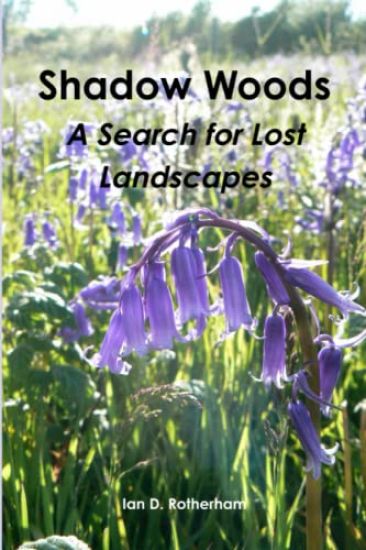
Shadow Woods: a search for lost landscapes is intended to view ecology and landscapes in a somewhat different way from that which we normally do; to effectively view the countryside through a different lens. Considering ancient woods and treed countryside, the intention is to raise awareness about our ecological and landscape origins and through this to open up new possibilities and exciting opportunities. It is suggested that we need to understand the past to inform the present, and from this knowledge we can influence the future The author also introduces a number of key issues and ideas that are new - shadow woods, ghost woods, lost woods, eco-cultural landscapes, cultural severance, grubby landscapes, ecological filtration, biodiversity time-capsules, futurescapes, and more. This edition, revised in march 2018, contains updated figures / diagrams.
Recombinant Ecology - A Hybrid Future?

Recombinant Ecology - A Hybrid Future?

Ian D. Rotherham

Springer International Publishing AG
2017
nidottu
This is a challenging new approach to understanding ecological systems especially in urban and urbanised areas. Synthesising current ideas and approaches the book develops an historic context to ecological fusion and recombinant or hybrid ecosystems. With massive climate change and other environmental fluxes, this volume provides insight into consequences for future ecologies. Invasive and non-native or alien species are spreading, often aggressively around the globe. However, much current thinking in ecology and nature conservation fails to accommodate the consequences of changing environmental conditions and fusion of both species and ecological communities. Whether or not conservationists accept ecological change, factors such as urbanisation and globalisation combine with climate and other changes to trigger new hybrid communities and ecologies. Embedding this approach into current ecological thinking this book presents an overview of ideas set in the exemplar case study area of the British Isles. However, the approaches, ideas and conclusions presented here will find application in ecosystem studies and in nature conservation around the world.
The Rise and Fall of Countryside Management
For at least half a century since the emergence of Country Parks and Forest Parks, countryside services have provided leisure, tourism, conservation, restoration and regeneration across Britain. Yet these services are currently being decimated as public services are sacrificed to the new era of austerity. The role and importance of countryside management have been barely documented, and the consequences and ramifications of cuts to these services are overlooked and misunderstood. This volume rigorously examines the issues surrounding countryside management in Britain. The author brings together the results of stakeholder workshops and interviews, and in-depth individual case studies, as well as a major study for the Countryside Agency which assessed and evaluated every countryside service provision in England. A full and extensive literature review traces the ideas of countryside management back to their origins, and the author considers the wider relationships and ramifications with countryside and ranger provisions around the world, including North America and Europe. The book provides a critical overview of the history and importance of countryside management, detailing the achievements of a largely forgotten sector and highlighting its pivotal yet often underappreciated role in the wellbeing of people and communities. It serves as a challenge to students, planners, politicians, conservationists, environmentalists, and land managers, in a diversity of disciplines that work with or have interests in countryside, leisure and tourism, community issues, education, and nature conservation.