Kirjojen hintavertailu. Mukana 12 595 353 kirjaa ja 12 kauppaa.

Kirjailija

Ian G. Wallis

Kirjat ja teokset yhdessä paikassa: 6 kirjaa, julkaisuja vuosilta 1995-2020, suosituimpien joukossa Reluctant Patient: A Journey of Trust, The. Vertaile teosten hintoja ja tarkista saatavuus suomalaisista kirjakaupoista.

Mukana myös kirjoitusasut: Ian G Wallis

6 kirjaa

Kirjojen julkaisuhaarukka 1995-2020.

Monotheism and Faith in God

Monotheism and Faith in God

Ian G. Wallis

Cambridge University Press
2020
pokkari
After offering a brief overview of the role of faith within Judaism, Christianity and Islam, an interdisciplinary analysis of faith, belief, belief systems and the act of believing is undertaken. The debate over the nature of doctrine between George Lindbeck and Alister McGrath brings into focus four ways in which beliefs can be employed: expressive, interpretative, formative and referential/relational. An analysis of monotheistic belief ensues which demonstrates how it can function meaningfully in each of these modes, including the last, where insights from phenomenology and relational ontology, as well as philosophical theology, favour a participatory approach in which God is encountered not as an object of investigation, but as that transcendent Other whose worship is the fulfilment of human being. The study concludes by highlighting convergences between the nature of faith presented in the initial scriptural overview and that developed throughout the rest of the study.
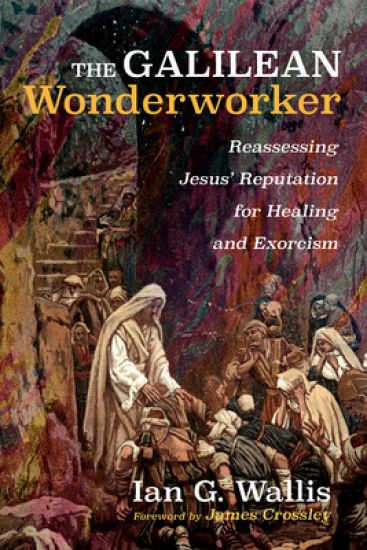
The Galilean Wonderworker

The Galilean Wonderworker

Ian G Wallis; James Crossley

Cascade Books
2020
pokkari
What are the origins of Jesus' reputation for healings and exorcisms? Few questions in Jesus studies are more hotly contested or elicit more diverse responses. Adopting an interdisciplinary approach and in dialogue with recent scholarly literature, The Galilean Wonderworker offers a compelling account. Recognizing the reciprocal relationship between personal and communal well-being within Israelite faith, this study offers new insights into how sickness and healing were understood in first-century Palestine. This, in turn, supplies the backcloth for a fresh evaluation of the evidence for Jesus' healings and exorcisms, where the emphasis falls firmly upon the dynamics of personal encounter. Jesus emerges as a spirit-person, capable of engendering faith and exercising authority to the extent that sufferers experienced liberation from debilitating symptoms and oppressive behaviors, many of which reflected contemporary sociopolitical conditions. Further, by vesting theological significance in these outcomes, they simultaneously constituted manifestations of God's sovereign presence, signaling restoration of covenantal well-being. Acknowledging that Jesus expected his disciples to heal and exorcize, the investigation concludes with an overview of how this legacy was embraced by the early church--noting how exorcism becomes incorporated into Christian initiation while spiritual healing, though continuing, is eclipsed by pastoral care and conventional medical practice.
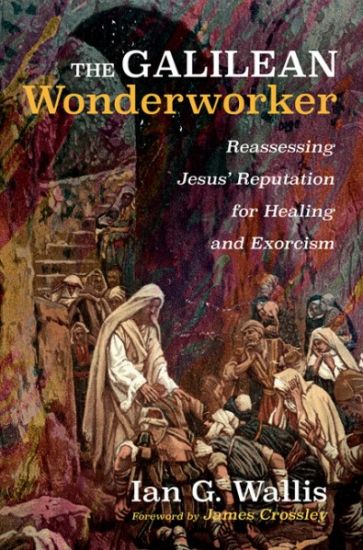
The Galilean Wonderworker

The Galilean Wonderworker

Ian G Wallis; James Crossley

Cascade Books
2020
sidottu
What are the origins of Jesus' reputation for healings and exorcisms? Few questions in Jesus studies are more hotly contested or elicit more diverse responses. Adopting an interdisciplinary approach and in dialogue with recent scholarly literature, The Galilean Wonderworker offers a compelling account. Recognizing the reciprocal relationship between personal and communal well-being within Israelite faith, this study offers new insights into how sickness and healing were understood in first-century Palestine. This, in turn, supplies the backcloth for a fresh evaluation of the evidence for Jesus' healings and exorcisms, where the emphasis falls firmly upon the dynamics of personal encounter. Jesus emerges as a spirit-person, capable of engendering faith and exercising authority to the extent that sufferers experienced liberation from debilitating symptoms and oppressive behaviors, many of which reflected contemporary sociopolitical conditions. Further, by vesting theological significance in these outcomes, they simultaneously constituted manifestations of God's sovereign presence, signaling restoration of covenantal well-being. Acknowledging that Jesus expected his disciples to heal and exorcize, the investigation concludes with an overview of how this legacy was embraced by the early church--noting how exorcism becomes incorporated into Christian initiation while spiritual healing, though continuing, is eclipsed by pastoral care and conventional medical practice.
Reluctant Patient: A Journey of Trust, The

Reluctant Patient: A Journey of Trust, The

Ian G. Wallis

John Hunt Publishing
2014
nidottu
Illness tends to be viewed in a negative light as something to be avoided at all costs. Yet most of us become ill at some point and many will suffer prolonged periods of failing health. In this insightful and entertaining book, Ian invites us to accompany him through one such experience and to discover how, despite its debilitating effects, illness can yield a deeper appreciation of living as well as of those who share our journeys. Here is an honest, amusing and, at times, profound account, full of wisdom, humanity and faith.
The Faith of Jesus Christ in Early Christian Traditions

The Faith of Jesus Christ in Early Christian Traditions

Ian G. Wallis

Cambridge University Press
2005
pokkari
We are used to the idea of people believing in Christ, but did the early church consider that Jesus also had faith in God? This book evaluates the evidence, starting with a survey of the meaning of faith in Judaism and Graeco-Roman literature and proceeding to a detailed exegesis of the relevant New Testament material from the synoptic Gospels, the Pauline and Deutero-Pauline Epistles, Hebrews and Revelation. Two trajectories of interest in Jesus's faith are identified: the paradigmatic, concerned with matters of discipleship, and the theological, relating Christ to God's gift of salvation. The examination is then broadened to trace the progress of these trajectories through the literature of the first four Christian centuries and concludes by identifying the Arian controversy as the christological development which rendered reference to Jesus' faith untenable.
The Faith of Jesus Christ in Early Christian Traditions

The Faith of Jesus Christ in Early Christian Traditions

Ian G. Wallis

Cambridge University Press
1995
sidottu
We are used to the idea of people believing in Christ, but did the early church consider that Jesus also had faith in God? This book evaluates the evidence, starting with a survey of the meaning of faith in Judaism and Graeco-Roman literature and proceeding to a detailed exegesis of the relevant New Testament material from the synoptic Gospels, the Pauline and Deutero-Pauline Epistles, Hebrews and Revelation. Two trajectories of interest in Jesus’s faith are identified: the paradigmatic, concerned with matters of discipleship, and the theological, relating Christ to God’s gift of salvation. The examination is then broadened to trace the progress of these trajectories through the literature of the first four Christian centuries and concludes by identifying the Arian controversy as the christological development which rendered reference to Jesus’ faith untenable.